
Industrial Automation Supply Chain Bottlenecks Explained

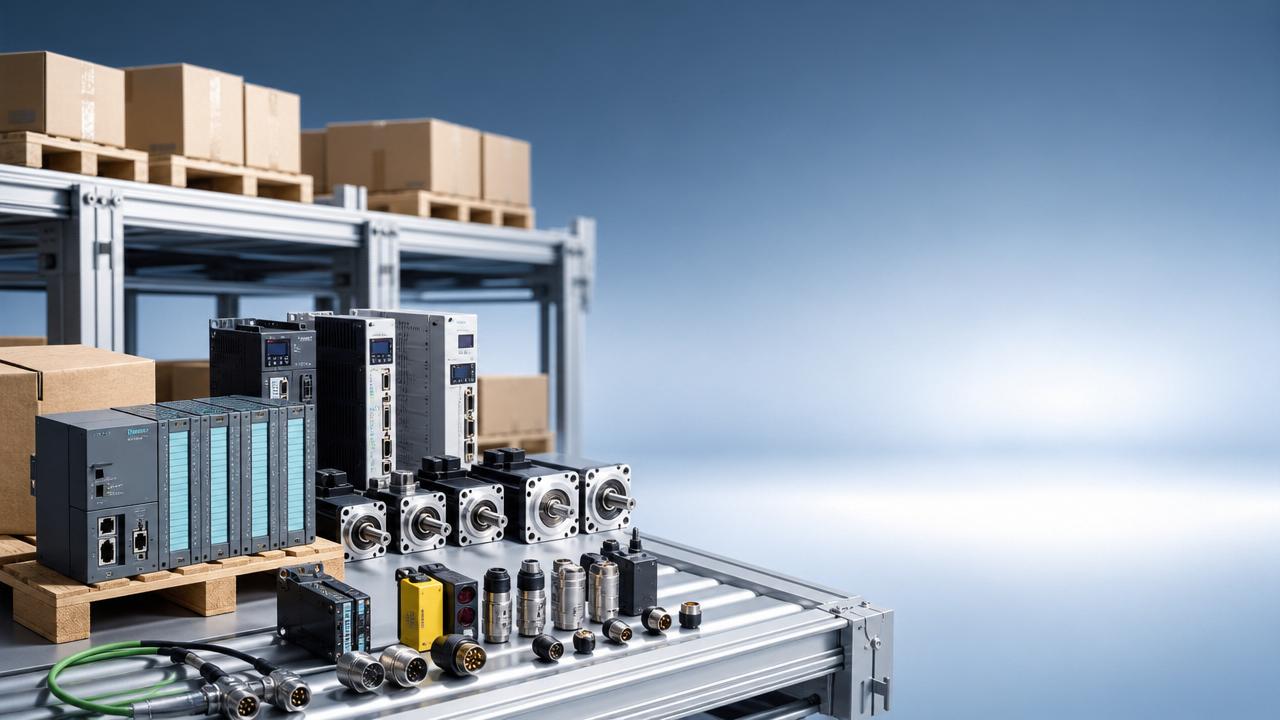
Industrial automation projects are increasingly affected by shifting lead times, component shortages, logistics disruptions, and regional policy changes. In this article, we break down the main supply chain bottlenecks shaping equipment availability, procurement planning, and cost control, while connecting them to the latest global supply chain updates for industrial automation. For technical evaluators, this overview offers a practical starting point to assess sourcing risks, supplier resilience, and operational impact.
Why a Structured Review Matters for Industrial Automation Supply Chains
Industrial automation systems rely on a tightly linked mix of PLCs, HMIs, servo drives, sensors, connectors, power supplies, industrial PCs, communication modules, and low-voltage electrical components. When one critical item is delayed, machine commissioning, factory upgrades, and maintenance schedules can all slip. That is why a structured review is more effective than reacting only when a shortage appears.
The value of using a consistent review method has grown because the latest global supply chain updates for industrial automation show that disruption no longer comes from a single source. It may start with semiconductor allocation, then expand through freight rate volatility, customs delays, export controls, energy pricing, or labor shortages in a key region. A clear framework helps compare suppliers, anticipate cost swings, and avoid underestimating lead-time risk.
This matters across the broader industrial ecosystem as well. Manufacturing & processing machinery, industrial equipment & components, and electrical equipment & supplies all depend on upstream materials and electronics that move through shared logistics networks. In practice, global supply chain updates for industrial automation are not only about parts availability; they also influence engineering decisions, installation timing, spare-parts strategy, and lifecycle support.
The Main Bottlenecks to Check First
Before reviewing part numbers or freight quotations, it helps to identify where bottlenecks tend to form. The most common pressure points in global supply chain updates for industrial automation can be grouped into supply, logistics, compliance, and demand-side shocks. Each of these areas affects project cost and delivery in different ways.
- Check whether core control components depend on a single chip platform or one qualified production site, because this often causes hidden allocation risk and unstable replenishment timing.
- Verify published lead times against real shipment history, not catalog data alone, since many automation items show rolling delays across multiple planning cycles.
- Review freight mode flexibility for urgent equipment, including air, sea, rail, and road alternatives, because route congestion can offset any apparent unit-price savings.
- Confirm regional compliance exposure such as export controls, local certification, tariff updates, and customs documentation requirements before locking a sourcing decision.
- Assess substitute compatibility at the system level, including protocols, mounting, voltage range, and software integration, rather than evaluating components only by price.
- Track supplier financial stability and capacity signals, especially during uneven demand cycles, because weak upstream partners can create sudden delivery interruptions.
- Measure spare-parts exposure for maintenance-critical lines, since aftersales availability often becomes a larger operational bottleneck than new equipment delivery.
- Review packaging, handling, and storage constraints for sensitive electronic parts, as damage, shelf-life loss, or ESD issues may quietly reduce usable inventory.
These points are closely aligned with current global supply chain updates for industrial automation, where the biggest disruptions often come from interaction between several small constraints rather than one dramatic event. For example, a servo drive may be available, but the required communication card, certified cable assembly, or protective circuit breaker may not be. A checklist-based review makes such dependencies easier to surface early.
How Bottlenecks Affect Availability, Planning, and Cost Control
Equipment availability is usually the first visible impact. In automation, shortages frequently hit configurable products harder than standard items. A base controller may be in stock, but the exact I/O expansion, motion module, or industrial Ethernet option may have a much longer queue. This is why global supply chain updates for industrial automation should be interpreted at the configuration level, not just at the brand or category level.
Procurement planning is the second area affected. Long lead times force earlier commitment, but early ordering can create its own risks when project specifications are still changing. The practical answer is to divide items into freeze-early components and flexible-later components. Controllers, drives, semiconductors, and custom electrical assemblies often need earlier lock-in than mechanical accessories or non-critical peripherals.
Cost control becomes more difficult when pricing changes no longer reflect only raw material inflation. Expedite fees, split shipments, redesign costs, requalification testing, and higher buffer stock can all raise total landed cost. Many global supply chain updates for industrial automation now point to this broader cost picture, where the cheapest quotation may become the most expensive option once delays, engineering hours, and downtime exposure are included.
A practical comparison table
Key Considerations Across Different Operating Situations
New equipment builds
For new machine builds or line expansion, the largest risk usually comes from long-tail components that seem minor during design review. Cable glands, safety relays, specialty connectors, panel cooling units, or local-certified breakers can delay the release of a complete control cabinet. Global supply chain updates for industrial automation suggest that bill-of-material completeness should be reviewed earlier than in stable-market periods.
It is also useful to separate “must-match” components from “functionally acceptable alternatives.” For example, protocol compatibility, software libraries, and customer approval requirements may limit substitution more than electrical ratings do. That distinction reduces redesign pressure later.
Retrofits and modernization
Retrofit projects face a different challenge: legacy compatibility. An older drive family or controller generation may be discontinued, leaving only partial stock or uncertain repair options. In this case, global supply chain updates for industrial automation should be paired with lifecycle status checks and migration-path reviews. A short-term replacement that creates future service gaps can be a poor decision.
Downtime windows are usually tighter in modernization work, so pre-staging, FAT timing, and spare-unit availability should be reviewed together. A delayed adapter module can have more impact here than a delayed main unit.
Maintenance and spare parts support
For installed equipment, the main issue is continuity. A line may continue running until one low-cost sensor, encoder, or power supply fails and no equivalent item is locally available. Recent global supply chain updates for industrial automation show that spare-parts strategy is shifting from broad stockpiling to risk-ranked stocking based on failure impact, replacement time, and interchangeability.
Where uptime is critical, it is worth validating repair lead times, refurbishment channels, and firmware alignment before a failure occurs. Service readiness is part of supply chain resilience, not a separate issue.
Often Overlooked Risks That Distort Decisions
One overlooked risk is assuming lead time equals delivery certainty. Some suppliers quote standard lead times but do not guarantee allocation. In a volatile market, global supply chain updates for industrial automation should be tested against confirmed capacity, not only ERP estimates. A shorter quoted lead time with weak allocation may be less dependable than a longer but contractually protected one.
Another common gap is incomplete total-cost analysis. Tooling changes, reprogramming, recertification, and extra commissioning hours can turn an acceptable substitute into a costly workaround. This is especially relevant in electrical equipment and integrated machinery, where technical fit affects both safety and productivity.
A third issue is poor visibility below the first-tier supplier. A distributor may appear stable while a niche subcomponent maker is struggling with energy cost, labor, or raw material shortages. This hidden dependency appears often in global supply chain updates for industrial automation, particularly for custom assemblies and high-mix, low-volume items.
Execution Steps That Improve Resilience
- Create a tiered parts list that separates critical-path items, long-lead electronics, compliance-sensitive products, and easy-to-substitute accessories before scheduling commitments are finalized.
- Update approved alternatives with engineering validation in advance, including protocol testing, fit checks, and firmware review, so substitutions remain practical under time pressure.
- Build a supplier review rhythm using real delivery performance, backlog status, and policy exposure instead of relying only on periodic price comparison.
- Use landed-cost scenarios that include expedite freight, split delivery, redesign effort, and downtime exposure to support more accurate sourcing choices.
- Monitor global supply chain updates for industrial automation monthly and tie them to internal project milestones, safety stock triggers, and contract review points.
These actions are practical because they connect market intelligence with day-to-day execution. They also support stronger communication between sourcing, engineering, logistics, and aftersales teams without requiring a full process redesign. In many cases, better timing and clearer prioritization reduce disruption more effectively than simply increasing inventory.
FAQ on Current Industrial Automation Supply Chain Pressure
Which components are most vulnerable to bottlenecks?
PLCs, servo systems, industrial communication modules, semiconductors, specialty sensors, and custom electrical assemblies tend to face the highest volatility. However, global supply chain updates for industrial automation also show that small supporting parts can delay final delivery when they are not treated as critical dependencies.
Is dual sourcing always the best answer?
Not always. Dual sourcing helps only when the second source is technically qualified, commercially realistic, and exposed to different risk factors. If both suppliers depend on the same chipmaker, freight lane, or certification pathway, the resilience benefit may be limited.
How often should supply risk assumptions be updated?
In a volatile environment, monthly review is a reasonable baseline. For critical projects or constrained categories, shorter cycles may be needed. The pace should reflect the frequency of meaningful global supply chain updates for industrial automation and the sensitivity of the installation timeline.
Final Takeaways and Next Steps
Industrial automation supply chain bottlenecks are no longer limited to isolated shortages. They emerge from the interaction of electronics availability, logistics constraints, trade rules, supplier capacity, and compatibility requirements across machinery, industrial components, and electrical systems. That is why global supply chain updates for industrial automation are most useful when translated into a clear review process rather than read as general market news.
A strong next step is to review current projects and installed assets using a simple priority lens: which items are single-source, long-lead, compliance-sensitive, or difficult to substitute? Then compare those findings with recent global supply chain updates for industrial automation, real shipment performance, and service-level expectations. This approach supports better availability, more stable planning, and stronger cost control without adding unnecessary complexity.

Industry Briefing
Get the top 5 industry headlines delivered to your inbox every morning.