
Machinery Makers Face New Supply Chain Pressures

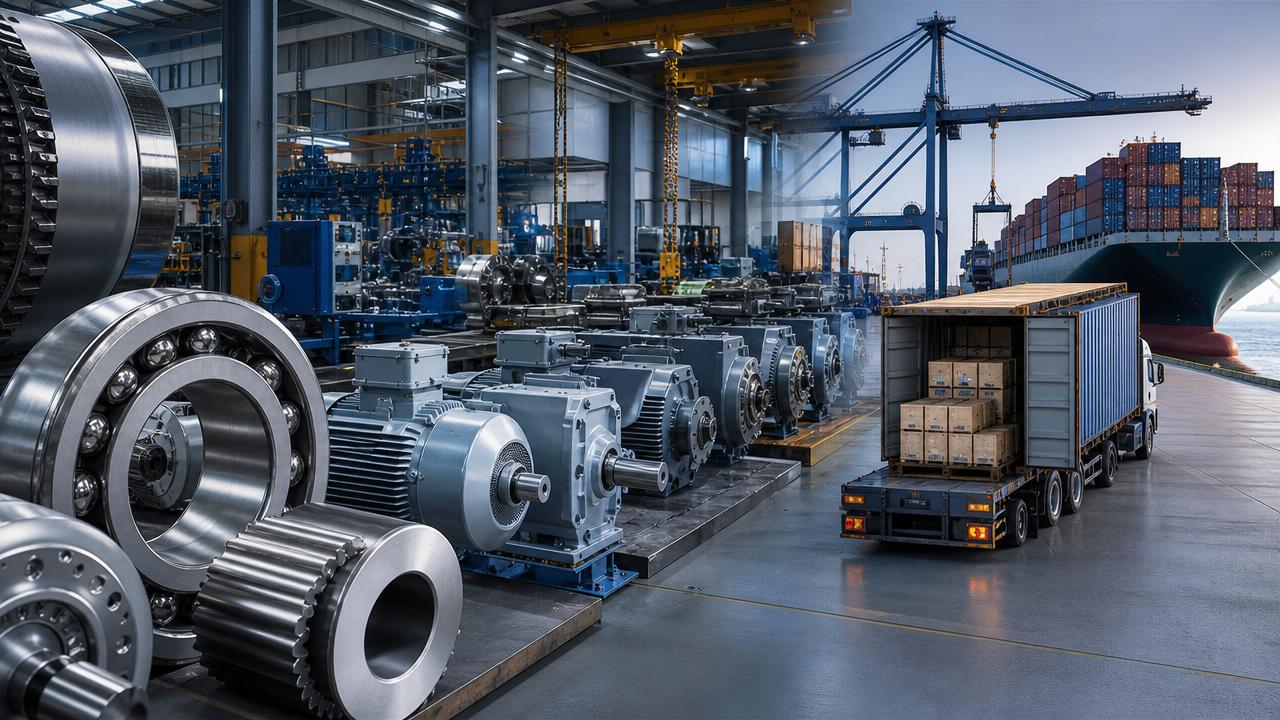
Global supply chains are entering a more fragile phase for machinery production
Machinery makers are navigating rising costs, shifting demand, and tighter sourcing conditions that are reshaping global operations. For business decision-makers, staying ahead of global supply chain updates for machinery manufacturers is essential to managing risk, protecting margins, and securing reliable supply. This article explores the latest market signals, policy impacts, and sourcing trends to help industry leaders make faster, smarter decisions in a more uncertain competitive landscape.
Across manufacturing and industrial equipment markets, supply chain pressure is no longer limited to freight delays or one-off shortages. It now includes longer lead-time volatility, higher compliance costs, regional trade adjustments, energy-sensitive production planning, and more aggressive inventory discipline from downstream buyers. These shifts are changing how industrial firms evaluate suppliers, allocate capacity, and plan exports. In that context, global supply chain updates for machinery manufacturers have become a core input for strategic planning rather than a background operational issue.
The latest signals point to a supply environment that is improving in some corridors but becoming more complex overall. Delivery performance has stabilized in selected categories, yet critical components such as precision castings, control systems, bearings, motors, semiconductors, and electrical assemblies remain exposed to regional bottlenecks. At the same time, demand is fragmenting: some end markets are delaying capital expenditure, while others are accelerating automation, energy efficiency upgrades, and localized production investment. These mixed conditions make timely global supply chain updates for machinery manufacturers especially valuable for pricing, sourcing, and production decisions.
Recent market signals show pressure is shifting, not disappearing
One of the clearest developments is that supply chain stress has become uneven rather than universal. Ocean freight rates may cool on one route and rise sharply on another. Some suppliers are offering shorter lead times to win volume, while others are holding back capacity due to labor shortages, financing costs, or policy uncertainty. For machinery-related industries, this creates a planning challenge: average market conditions look manageable, but specific parts of the bill of materials can still trigger production delays.
Another signal is the growing separation between standard components and specialized inputs. Commodity steel or standard fasteners may be easier to source than highly engineered valves, servo systems, industrial electronics, or custom-machined assemblies. This matters because even a minor shortage in a specialized input can stop final assembly. As a result, global supply chain updates for machinery manufacturers now need to be tracked at the component level, not only at the country or logistics level.
Cost behavior is also changing. Material prices are no longer moving in one direction across categories. Instead, companies are dealing with cross-currents: metals may soften while energy, compliance, financing, insurance, or expedited shipping costs remain elevated. This reduces the value of broad market assumptions and increases the importance of supply chain intelligence tied to specific machinery segments, export destinations, and supplier tiers.
Why these global supply chain updates for machinery manufacturers are intensifying
Several overlapping factors are driving the current pressure. The table below highlights the main forces reshaping procurement and production decisions across machinery and industrial equipment markets.
Taken together, these drivers explain why global supply chain updates for machinery manufacturers are increasingly tied to policy interpretation, supplier capability tracking, and regional market intelligence. The challenge is not only disruption itself, but the speed at which sourcing assumptions can become outdated.
The impact is spreading across sourcing, pricing, delivery, and export planning
The first impact appears in sourcing strategy. Firms that relied on a narrow supplier base for critical components are now under pressure to diversify without sacrificing quality or certification consistency. This is particularly relevant in sectors linked to processing machinery, industrial equipment, electrical systems, and integrated assemblies, where parts compatibility and after-sales support matter as much as initial price. In many cases, supplier resilience has become a commercial differentiator.
The second impact is margin management. When quotations remain valid for shorter periods and input costs move unevenly, pricing models become harder to maintain. Companies may face a mismatch between fixed customer commitments and variable procurement costs. This is one reason global supply chain updates for machinery manufacturers are now closely connected to contract design, quote validity periods, index-linked adjustments, and freight allocation policies.
Delivery performance is also under pressure. Even when final demand is not surging, partial shortages can disrupt assembly schedules and service response times. For export-oriented businesses, the problem extends beyond factory output to customs lead time, inland transport reliability, and local inventory positioning. As a result, supply chain visibility must extend from upstream materials to final destination logistics.
- Procurement teams are spending more time validating second-source readiness.
- Sales teams are under pressure to set realistic lead times and protect margins.
- Operations teams need tighter coordination between production planning and material arrivals.
- Export planning increasingly depends on route flexibility and destination-specific compliance checks.
The most important signals to monitor over the next planning cycle
For companies following global supply chain updates for machinery manufacturers, not every data point deserves the same attention. The highest-value indicators are usually those that directly affect lead time, substitution options, and total landed cost. Tracking too many generic metrics can create noise; focusing on decision-grade signals improves response speed.
- Component-level lead time changes: especially for motors, drives, sensors, PLC-related parts, hydraulic components, and precision mechanical assemblies.
- Supplier financial health: smaller specialist suppliers may face cash flow pressure from high working capital needs and slower customer payments.
- Trade and customs policy developments: updates affecting tariffs, origin rules, certification, and export controls can quickly alter sourcing economics.
- Freight corridor reliability: transit time consistency is often more valuable than headline spot-rate declines.
- End-market order behavior: shorter booking windows and changing project schedules are early indicators of inventory risk.
- Energy and commodity pass-through: watch where upstream suppliers are likely to revise pricing despite stable raw material trends.
This monitoring approach makes global supply chain updates for machinery manufacturers more actionable. It shifts analysis away from broad headlines and toward the specific inputs that influence quoting, supplier selection, and production scheduling.
Practical responses should balance resilience, cost control, and commercial flexibility
The right response is rarely a single move such as carrying more stock or changing one supplier. Effective action usually combines sourcing discipline, commercial safeguards, and better visibility across the order-to-delivery cycle. The framework below can support a more balanced response to current market conditions.
These measures are especially relevant in a cross-industry environment where machinery, components, and electrical equipment are closely linked. A delay in one category can ripple into others, making integrated intelligence more useful than isolated procurement data.
The next advantage will come from faster interpretation, not just more data
The most effective organizations will not necessarily be those with the largest supplier networks or the lowest nominal input costs. The stronger position will likely belong to those that can interpret global supply chain updates for machinery manufacturers quickly, distinguish temporary noise from structural change, and convert that insight into clear sourcing and pricing decisions. In a market shaped by policy shifts, fragmented demand, and selective shortages, response time is becoming a competitive asset.
A practical next step is to build a recurring review around five questions: which components carry the highest disruption risk, which suppliers face the greatest operating pressure, which routes show declining reliability, which customer segments are changing order behavior, and which policy developments could alter landed cost within the next quarter. That process turns broad market watching into a disciplined decision routine.
For companies involved in manufacturing machinery, industrial equipment, components, and electrical supply chains, staying current with global supply chain updates for machinery manufacturers is no longer optional. It is a practical tool for protecting delivery performance, reducing avoidable cost swings, and positioning for growth when market conditions stabilize. The firms that act early on these signals will be better prepared to navigate uncertainty and capture opportunities across regional and global markets.



Industry Briefing
Get the top 5 industry headlines delivered to your inbox every morning.