
Industrial Equipment Environmental News to Watch
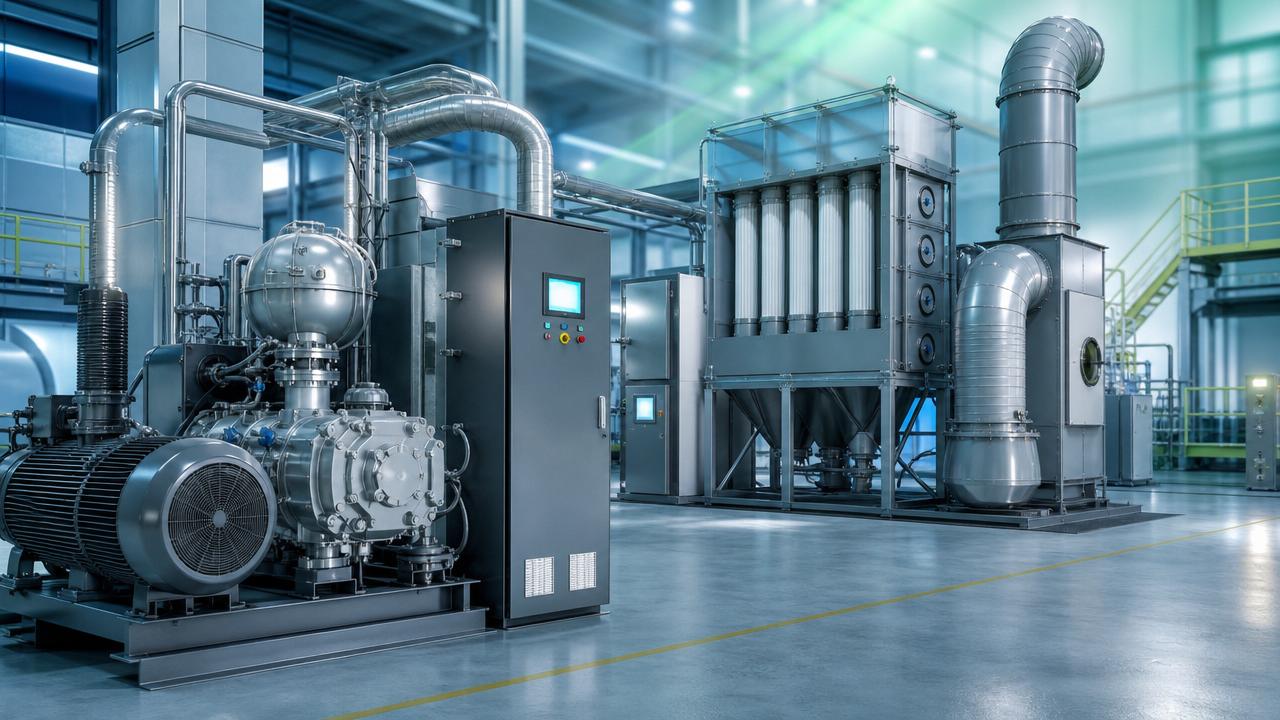
For technical evaluators tracking compliance, innovation, and operational risk, industrial environmental news for industrial equipment has become essential reading. From emissions rules and energy-efficiency standards to cleaner production technologies and supply chain shifts, these developments directly influence equipment selection, lifecycle performance, and investment decisions. Staying informed helps professionals compare solutions more accurately and respond faster to changing industrial requirements.
In manufacturing and processing environments, environmental updates are no longer limited to sustainability teams. They now affect specification reviews, equipment retrofit plans, plant expansion timing, and even supplier qualification. For professionals responsible for technical assessment, the value of industrial environmental news for industrial equipment lies in turning policy signals and technology shifts into practical evaluation criteria.
Whether the focus is on motors, pumps, compressors, machine tools, power distribution systems, or auxiliary components, environmental developments can change total cost of ownership by 10% to 25% over a typical equipment lifecycle. News about emissions limits, energy pricing, waste-handling rules, and low-carbon process technology helps evaluators identify which systems are becoming riskier, which suppliers are better prepared, and which upgrades deserve budget priority.
Why Environmental News Now Matters in Industrial Equipment Evaluation
Technical evaluation used to emphasize output, reliability, installation footprint, and maintenance intervals. Those factors remain important, but environmental performance is now a parallel decision layer. In many industrial categories, a difference of 3% to 8% in energy efficiency can materially affect annual operating cost, especially when equipment runs 16 to 24 hours per day.
Industrial environmental news for industrial equipment is especially relevant when regulations change faster than normal replacement cycles. A machine purchased today may remain in service for 8 to 15 years. If new discharge rules, refrigerant restrictions, or efficiency thresholds appear within the first 2 to 4 years, the buyer may face retrofit costs, reduced utilization, or early obsolescence.
The Main Drivers Behind the Shift
Three forces are reshaping industrial evaluation. First, compliance requirements are becoming more specific across emissions, dust collection, wastewater treatment, noise, and energy consumption. Second, cleaner production technology is improving quickly, making high-efficiency alternatives more commercially realistic. Third, supply chain pressure is growing as exporters and OEMs increasingly ask suppliers to document energy use, material content, and environmental controls.
Typical areas under review
- Motor efficiency classes and variable frequency drive integration
- Air emission control for furnaces, coating lines, and thermal processes
- Dust, oil mist, and particulate capture in machining and material handling
- Coolant, lubricant, wastewater, and chemical management systems
- Power consumption per unit output, often tracked by shift or batch
- Material recyclability and replacement part availability over 5 to 10 years
For a technical evaluator, the challenge is not simply reading headlines. It is identifying which news items deserve immediate action, which require supplier clarification, and which should reshape future procurement specifications. The table below shows how common environmental news topics translate into equipment-level evaluation points.
The key lesson is that industrial environmental news for industrial equipment is not just informational. It directly affects specifications, sourcing risk, and long-term operating assumptions. Teams that translate news into measurable checkpoints usually make stronger comparisons during RFQ and tender review.
How Technical Evaluators Should Read and Prioritize Environmental Signals
Not every environmental update deserves equal weight. A useful approach is to sort developments into four priority levels: immediate compliance risk, near-term cost impact, medium-term technology shift, and low-priority background trend. This method helps evaluation teams avoid overreacting to broad headlines while still identifying issues that can influence equipment selection within 6, 12, or 24 months.
A Four-Layer Screening Method
- Check whether the news changes mandatory operating limits or approval requirements.
- Estimate whether it can shift annual energy, maintenance, or waste-handling cost by more than 5%.
- Review whether current suppliers already offer compliant or upgraded configurations.
- Assess whether the issue could affect exports, customer audits, or plant expansion decisions.
This framework is useful across industrial equipment categories. For example, a machining plant may prioritize coolant recycling and oil mist control, while a packaging line may focus more on motor efficiency and material waste. An electrical equipment buyer may pay closer attention to transformer losses, insulation materials, and switchgear compliance documentation.
Questions Evaluators Should Ask Suppliers
When industrial environmental news for industrial equipment points to possible change, supplier interviews should go beyond brochure claims. Evaluators should ask for test conditions, operating ranges, maintenance schedules, and retrofit limits. For many systems, a 2-page technical clarification can prevent months of procurement delay later.
- What is the rated energy consumption at 50%, 75%, and 100% load?
- Which consumables require disposal, and at what typical interval: 500 hours, 2,000 hours, or 6 months?
- Does the system need add-on filtration, catalytic treatment, or enclosure upgrades to meet stricter site rules?
- Are spare parts for efficiency-critical components stocked locally or imported with 4 to 12 week lead times?
- Can the control system support future monitoring of emissions, power quality, or process loss?
A disciplined review process reduces the risk of selecting equipment that performs well in factory tests but becomes expensive in real operation. It also helps technical evaluators present clearer investment recommendations to procurement managers, operations leaders, and finance teams.
Key Environmental News Themes Affecting Industrial Equipment Decisions
Several recurring themes dominate industrial environmental news for industrial equipment. These topics appear across machinery, components, and electrical systems, and they often shape both replacement strategy and capital planning. Understanding them in practical terms makes equipment comparison far more effective.
1. Energy Efficiency and Load Optimization
Energy remains one of the most visible environmental and cost variables. Equipment with better control logic, variable speed operation, and lower idle loss can improve energy performance without changing output targets. In plants operating 300 to 330 days per year, even a modest efficiency gain may justify a higher purchase price within 18 to 36 months.
2. Emissions, Dust, and Air Quality Controls
News on local air quality rules often affects combustion systems, finishing lines, and high-dust process areas first. Evaluators should check whether proposed equipment includes extraction points, sensor interfaces, and enough installation space for filters or treatment modules. A machine that fits production needs but leaves no room for future abatement can create major layout constraints.
3. Water Use, Coolants, and Waste Handling
Water-intensive and fluid-intensive operations are receiving more scrutiny. Machine tools, cleaning systems, heat exchangers, and surface treatment lines may face tighter management requirements. Evaluators should compare recirculation capability, separation efficiency, sludge handling frequency, and cleaning chemical compatibility. These factors influence not only compliance but also labor input and downtime.
4. Materials, Electrical Components, and End-of-Life Design
Environmental news also affects industrial components and electrical equipment through material restrictions and lifecycle expectations. For switchgear, cable systems, motors, and control cabinets, documentation on material composition, replaceable subassemblies, and service life matters more than before. Buyers increasingly prefer designs that simplify maintenance over 5 to 12 years instead of sealed systems that require full replacement.
The comparison table below highlights how these environmental themes influence equipment categories often tracked by technical assessment teams.
A broad reading of industrial environmental news for industrial equipment becomes more useful when each theme is tied to a specific equipment family. That makes review meetings more concrete and helps stakeholders prioritize measurable risks rather than abstract sustainability language.
From News Monitoring to Procurement Action
The best technical teams build a repeatable process for converting environmental news into procurement action. Instead of reacting project by project, they update specification templates, supplier scorecards, and site acceptance criteria. A quarterly review cycle is often enough for stable sectors, while fast-changing segments may require monthly tracking.
A Practical Implementation Workflow
- Monitor policy, market, technology, and supply chain updates relevant to the equipment category.
- Filter items by compliance risk, operating cost impact, and replacement urgency.
- Convert selected signals into revised bid requirements and technical checklists.
- Request supporting documentation from suppliers before final comparison.
- Validate performance during FAT, SAT, and the first 30 to 90 days of operation.
Common mistakes to avoid
- Using only rated performance without reviewing part-load or standby conditions
- Ignoring future retrofit space for filters, enclosures, or monitoring hardware
- Assuming all compliant equipment has the same maintenance burden
- Overlooking spare parts availability for high-efficiency electrical components
- Failing to involve operations and maintenance staff before final approval
For B2B buyers, environmental awareness should improve commercial outcomes, not complicate them. Clearer technical requirements reduce rework during bidding, support more realistic lifecycle cost comparisons, and make supplier communication more precise. In many cases, that leads to shorter evaluation cycles by 1 to 3 weeks and fewer post-installation changes.
As industrial markets continue to evolve, industrial environmental news for industrial equipment will remain a strategic input for technical assessment. It helps evaluators align compliance, efficiency, reliability, and sourcing resilience in one decision framework. For companies covering manufacturing machinery, industrial components, and electrical equipment, this kind of intelligence is increasingly central to better procurement and stronger operational planning.
If your team needs clearer guidance on market updates, technology trends, supply chain signals, or equipment comparison criteria, now is the right time to strengthen your information workflow. Contact us to explore tailored industry content, get a customized evaluation perspective, and learn more solutions for tracking environmental and industrial equipment developments with greater confidence.
Industry Briefing
Get the top 5 industry headlines delivered to your inbox every morning.