
Cold Storage Equipment Supply Chain Outlook 2026
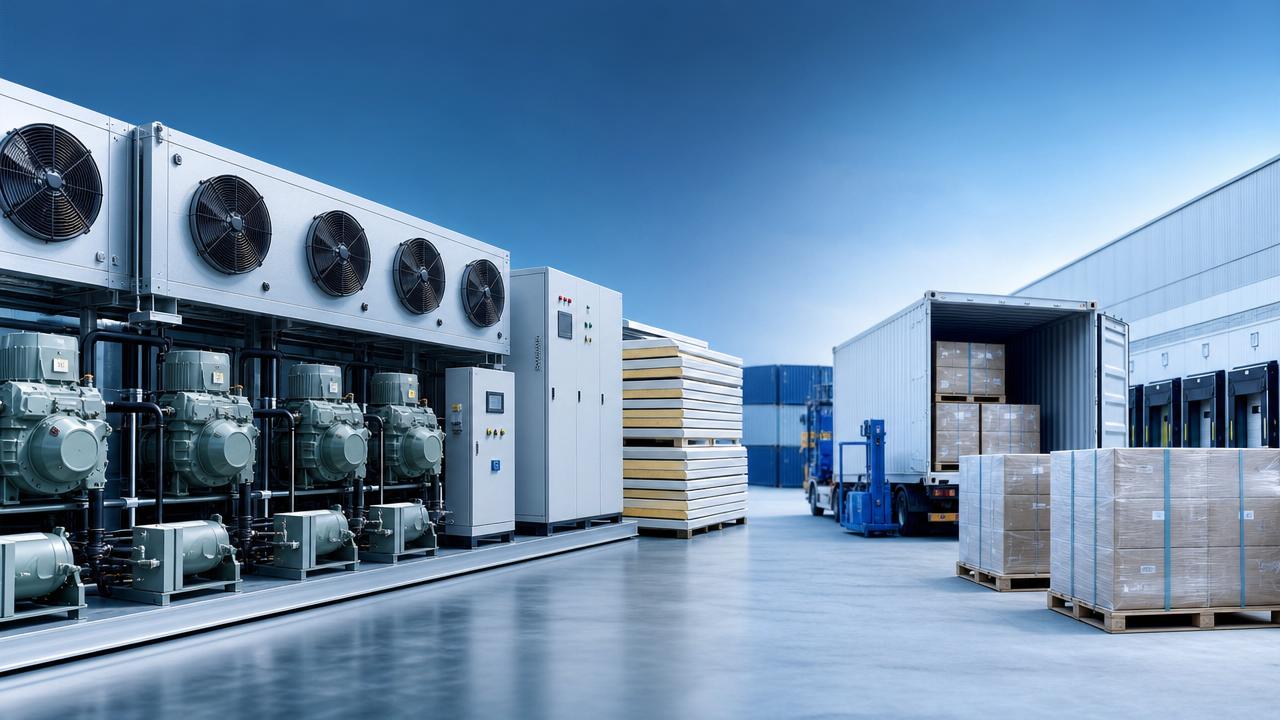
As 2026 approaches, project managers and engineering leaders are watching global supply chain updates for cold storage equipment more closely than ever. From component availability and freight volatility to energy-efficiency standards and regional sourcing shifts, the market is entering a new phase of adjustment. This outlook highlights the trends, risks, and procurement signals that matter most for planning resilient cold storage projects and securing long-term operational value.
For teams responsible for warehouse expansion, food processing facilities, pharmaceutical storage, or integrated logistics hubs, the challenge is no longer limited to buying compressors, insulated panels, condensing units, and controls at the lowest quoted price. In 2026, the more practical question is how to secure supply continuity, reduce commissioning delays, and protect lifecycle performance over the next 10 to 15 years.
The latest global supply chain updates for cold storage equipment point to a market shaped by longer planning cycles, tighter compliance checks, and more regionalized sourcing strategies. Project leaders now need visibility across component lead times, energy regulations, contractor readiness, and after-sales service capacity before issuing final purchase orders.
Why 2026 Will Be a Critical Planning Year for Cold Storage Projects
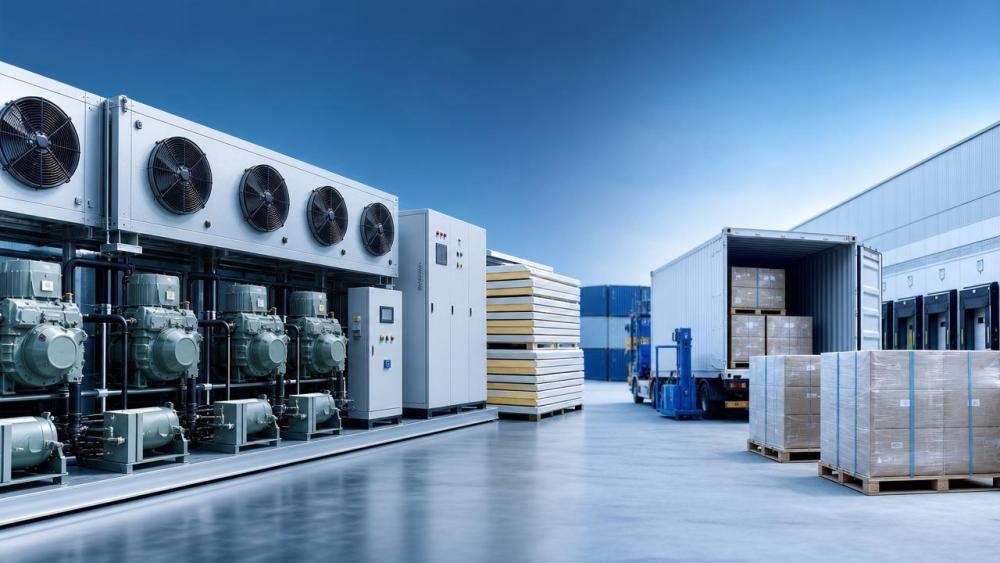
The cold storage equipment market is entering 2026 with mixed signals. Some core components have improved from the severe bottlenecks seen in earlier disruption cycles, yet not all categories are moving at the same pace. Standard evaporators, modular cold room panels, and basic control cabinets may return to 4 to 8 week procurement windows in some regions, while premium compressors, variable-frequency drives, and natural refrigerant compatible systems can still require 10 to 20 weeks depending on specification.
For project managers, that uneven recovery matters because cold storage systems are highly interdependent. A delay in one pressure vessel, electronic expansion valve, or PLC interface can shift the entire installation sequence. Even a 2-week slip in delivery can create a 30 to 45 day impact when civil works, MEP coordination, insulation finishing, and commissioning teams are tightly scheduled.
Key supply chain forces shaping procurement decisions
Several supply-side forces are driving the latest global supply chain updates for cold storage equipment. First, manufacturers are prioritizing higher-margin and higher-efficiency product lines, which can reduce availability for legacy specifications. Second, shipping reliability has improved in many corridors, but inland transport and customs processing still show wide variation, especially for projects requiring multi-country sourcing. Third, energy compliance is shifting buying behavior from low-capex equipment toward systems with stronger part-load efficiency and digital monitoring.
In practical terms, this means engineering teams should evaluate suppliers not only by quoted lead time, but by 4 additional dimensions: component origin, substitute part compatibility, commissioning support, and spare parts coverage for the first 12 to 24 months of operation.
Where project risk is rising
Risk is increasing in customized projects that involve blast freezers, low-temperature storage below -25°C, ammonia or CO2 refrigerant systems, and integrated automation. These projects often rely on specialized valves, sensors, safety components, and trained service teams. If one imported subsystem does not match the approved control logic or site conditions, rework can quickly add 5% to 12% to project cost and push startup dates into the next budget cycle.
Another concern is specification drift. During extended procurement cycles, stakeholders may change room dimensions, door frequency assumptions, or loading patterns. When that happens after equipment approval, projects risk under-sizing or over-sizing units by 10% to 20%, directly affecting operating cost and temperature stability.
Priority checklist for engineering leaders
- Lock performance specifications before final vendor comparison.
- Separate critical-path components from standard replaceable items.
- Build a 2-stage procurement schedule: long-lead items first, balance-of-system items later.
- Confirm spare parts lists for at least the first 6 to 12 months.
- Review local installer and commissioning capacity before shipment release.
Component Availability, Lead Times, and Sourcing Patterns in 2026
One of the most important global supply chain updates for cold storage equipment is the widening gap between standard modular systems and engineered low-temperature solutions. Standard cold rooms serving retail backrooms or light industrial use may still be sourced regionally with moderate lead times. By contrast, large distribution centers, food export plants, and pharmaceutical cold chains often depend on a broader multinational supplier network.
The table below outlines common 2026 procurement patterns by equipment category. These are not fixed market statistics, but widely used planning ranges that help project teams build more realistic schedules and buffer assumptions.
The key takeaway is that a cold storage project should not be scheduled around the fastest-available item. It should be scheduled around the slowest critical component with the least substitution flexibility. That approach reduces the risk of fragmented deliveries and idle site labor.
Regional sourcing is becoming more strategic
Regionalization is a defining trend in global supply chain updates for cold storage equipment. Buyers are increasingly balancing three sourcing models: local assembly, nearshore manufacturing, and global specialist procurement. Local and nearshore options typically reduce transit uncertainty by 7 to 21 days, but they may offer fewer customization choices in advanced low-temperature or natural refrigerant applications.
For industrial projects, the best sourcing model often combines at least 2 layers. For example, insulated envelope materials and standard doors may come from domestic or regional suppliers, while high-efficiency compressor racks or specialized controllers are imported from established technical partners. This hybrid strategy can improve schedule control without sacrificing system performance.
Freight and logistics still require contingency planning
Ocean freight rates may be less extreme than earlier volatility peaks, but they remain sensitive to route disruption, seasonal congestion, and customs review cycles. For oversized machinery, project cargo handling can add 5 to 10 days beyond normal port clearance. For electrical and control components, document errors or labeling mismatches may trigger additional inspections.
Engineering procurement teams should include a logistics buffer of at least 10% of total transit time for imported cold storage equipment, especially when the project sequence depends on one consolidated shipment. A realistic transport plan is now as important as a competitive equipment quote.
Energy Efficiency, Refrigerants, and Compliance Pressures
Another major theme in global supply chain updates for cold storage equipment is the shift from simply buying available systems to buying compliant and future-ready systems. Energy performance expectations are influencing equipment selection across food storage, central kitchens, process cooling, and healthcare cold chain applications. In many projects, the lowest upfront bid no longer wins if it creates higher utility loads or limited refrigerant flexibility over a 10-year operating horizon.
Project managers should now compare systems by at least 3 performance layers: temperature stability, energy consumption under part-load conditions, and ease of maintenance. In facilities with 24/7 operation, a 6% to 12% difference in power consumption can materially affect payback calculations, especially where electricity tariffs are volatile.
What buyers should review before approval
Cold storage installations increasingly require closer review of refrigerant suitability, defrost strategy, insulation thickness, and control logic. A project storing fresh produce at 0°C to 4°C has different priorities from a frozen-food room at -18°C or a deep-freeze process area at -30°C. Matching the wrong control package to the operating profile can increase compressor cycling, reduce equipment life, and raise service frequency.
The following table provides a practical decision framework for project teams comparing equipment options during design and procurement.
The most resilient projects are not necessarily the most complex. They are the ones where performance targets, compliance requirements, and maintenance assumptions are aligned before orders are released. That discipline helps avoid late-stage redesign and budget compression.
Natural refrigerants and higher-efficiency systems will expand
Natural refrigerant systems such as CO2 or ammonia-based configurations will continue gaining attention in large industrial and export-oriented cold chains, although adoption speed will vary by region and service ecosystem. These systems can support long-term compliance goals, but they also demand stronger engineering validation, trained operators, and more rigorous safety planning.
For many mid-sized projects, the realistic 2026 path may be a high-efficiency conventional system with clear upgrade flexibility, rather than a rushed transition into a technology platform the local maintenance base cannot support. The correct choice depends on facility scale, ambient climate, skill availability, and total lifecycle strategy.
Procurement Strategy for Project Managers and Engineering Teams
The most useful response to global supply chain updates for cold storage equipment is not passive monitoring. It is a more structured procurement method. Project managers should treat cold storage sourcing as a phased risk-control process rather than a one-time purchasing event.
A practical 5-step buying framework
- Define operating conditions, load assumptions, and future expansion needs.
- Identify long-lead components and issue early technical clarifications.
- Compare at least 3 supplier offers on lifecycle fit, not only capex.
- Confirm logistics, installation sequence, and documentation readiness.
- Secure spare parts, training, and post-commissioning service response terms.
This 5-step approach helps reduce a common mistake in industrial equipment purchasing: evaluating the refrigeration package separately from the installation, controls, and service ecosystem. In practice, a lower equipment price can be offset by longer startup time, poor diagnostics, or higher maintenance visits within the first 18 months.
Questions to ask suppliers before contract award
Technical and delivery review
- Which items are standard stock and which are built-to-order?
- What are the longest lead components in the package?
- Can critical controls or valves be replaced with equivalent approved alternatives?
- What documentation is available before shipment: wiring diagrams, P&ID, control logic, spare lists?
- How many commissioning days are typically required on site: 2, 5, or 10?
Operational continuity review
- What consumables and wear parts should be stocked locally?
- Is remote fault diagnosis available for controls and alarms?
- What is the recommended preventive maintenance interval: monthly, quarterly, or semi-annually?
- How quickly can replacement sensors, drives, or boards be delivered?
These questions are especially important for multi-room industrial projects, where one delayed startup can affect packaging lines, inventory turnover, and export commitments. A cold storage asset is rarely isolated; it usually sits inside a larger manufacturing, processing, or logistics workflow.
Common procurement mistakes to avoid in 2026
One frequent mistake is approving generic specifications that do not reflect actual operating duty. Another is choosing incompatible combinations of imported controls and locally assembled mechanical systems without verifying interface logic. A third is failing to budget for startup consumables, training, and critical spares. Each of these gaps can appear minor during tendering, yet they often become the real source of cost overruns during commissioning.
The more complex the application, the more valuable early coordination becomes. For projects above 500 m² of cold room area or operations requiring multiple temperature zones, cross-functional review between procurement, engineering, site management, and operations should happen before final PO release.
Outlook and Action Points for 2026 Project Execution
The direction of global supply chain updates for cold storage equipment is clear: planning discipline is becoming a stronger competitive advantage than price-only buying. In 2026, successful projects will be the ones that align sourcing strategy, technical specification, logistics timing, and service readiness from the start.
For project managers and engineering leaders, the priority is to build flexibility where the market is least predictable. That means reserving time for long-lead items, validating compliance early, and selecting suppliers that can support not only delivery but also commissioning, troubleshooting, and parts continuity.
If your team is planning a new facility, retrofit, or expansion in manufacturing, industrial storage, food processing, or cold chain logistics, now is the right time to review specifications and procurement pathways. Contact us to explore tailored market intelligence, compare sourcing options, and get a more resilient cold storage equipment strategy for 2026.

Industry Briefing
Get the top 5 industry headlines delivered to your inbox every morning.