
Environmental Equipment News for Circular Economy: Key Supply Moves

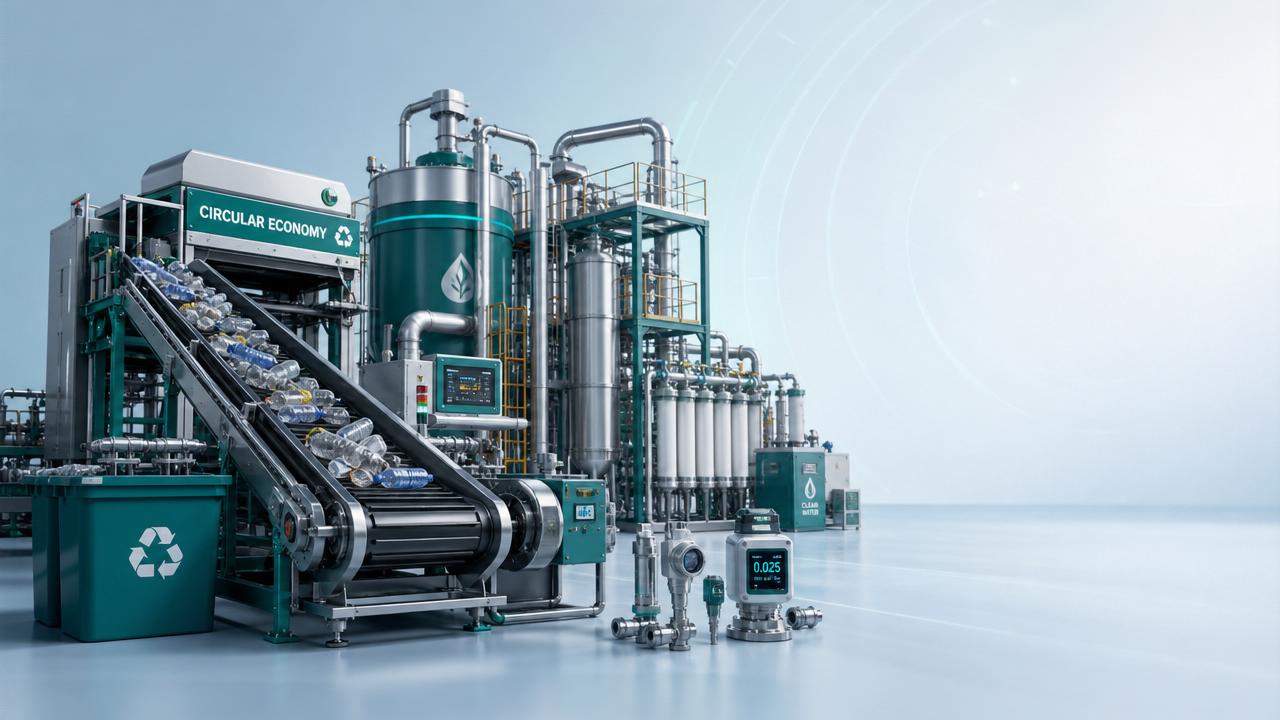
For project planning tied to sustainability goals, environmental equipment news for circular economy matters because supply conditions now shift faster than many budgets do.
Updates on recycling machinery, filtration systems, waste treatment units, sensors, motors, and control parts can affect lead times, compliance pathways, and total lifecycle cost.
Across manufacturing, industrial equipment, and electrical supply chains, key supply moves often signal where demand is rising, where risk is forming, and where alternatives are becoming practical.
The value of environmental equipment news for circular economy is not only trend awareness. It also supports sourcing decisions, project timing, technology screening, and policy-ready equipment selection.
What does environmental equipment news for circular economy actually cover?
Environmental equipment news for circular economy covers the tools, systems, and supply movements that help materials stay in use longer and waste leave the process later.
This includes recycling lines, sorting equipment, shredders, compactors, wastewater treatment systems, dust collection units, heat recovery devices, and energy-saving electrical components.
It also includes less visible supply shifts. Examples are changes in motor availability, PLC substitutions, membrane pricing, sensor shortages, and export policy updates.
In a circular economy context, the news is useful when it connects equipment performance with reuse, remanufacturing, closed-loop processing, and emissions reduction targets.
A good reading approach is to separate headlines into four buckets: supply, technology, policy, and market demand. That prevents noise from shaping equipment strategy.
- Supply: lead times, component access, freight, and regional production shifts.
- Technology: efficiency upgrades, automation, data monitoring, and material recovery improvements.
- Policy: waste rules, efficiency standards, recycling mandates, and trade restrictions.
- Demand: investment cycles in packaging, metals, electronics, water, and process industries.
Why are recent supply moves so important for industrial circular economy projects?
Recent supply moves matter because environmental systems rarely depend on one machine alone. They depend on coordinated availability across mechanical, electrical, and control components.
One delayed blower, VFD, pump, or instrumentation package can push commissioning dates and delay compliance or output gains from a circular economy investment.
That is why environmental equipment news for circular economy should be read as supply chain intelligence, not only as industry media.
Several supply moves now appear repeatedly across industrial markets. Regionalized production is increasing. Buyers are asking for second-source designs. Service access is becoming a bigger selection factor.
Trade developments can also reshape project economics. A tariff change on motors, cables, valves, or fabricated frames may alter the best equipment package.
Technology adoption adds another layer. Smarter equipment may reduce waste and energy use, but it can require semiconductors, software support, and training availability.
When tracking environmental equipment news for circular economy, focus on whether a supply move changes one of these essentials:
- Delivery certainty for core equipment.
- Compliance with emissions, water, or recycling rules.
- Operating cost over the system lifecycle.
- Future maintenance and spare parts support.
Which application areas are most affected by environmental equipment news for circular economy?
The strongest impact is usually seen where waste streams are variable, regulations are tightening, and recovery value is measurable.
Metal processing is one major area. Dust collection, scrap sorting, coolant treatment, and energy recovery systems all depend on stable component supply.
Packaging and plastics also react quickly to environmental equipment news for circular economy. Sorting accuracy, washing capacity, and pelletizing uptime directly affect recycled output quality.
Water-intensive operations watch membrane systems, pumps, valves, and controls closely. Small shifts in these categories can change implementation timing.
Electrical and electronics recycling is another sensitive area. Recovery lines need precise separation, stable automation, and safe handling technologies.
Process industries also use the news to assess heat recovery, filtration, compressed air efficiency, and by-product reuse options.
Common application signals to monitor
- Recycling lines: sorting sensors, conveyors, shredders, granulators, and balers.
- Water systems: membranes, pumps, instrumentation, chemical dosing units, and controls.
- Air systems: filters, fans, ducts, collectors, and energy-efficient drives.
- Energy upgrades: high-efficiency motors, heat exchangers, monitoring software, and power components.
How can teams judge whether a supply update is a real risk or just background noise?
Not every headline deserves action. The best filter is to test whether the update affects specification, timing, cost, or compliance in a measurable way.
A temporary logistics issue may matter less than a design-level change, such as a discontinued controller or a new discharge requirement.
Use a simple screening method when reading environmental equipment news for circular economy.
This kind of screening keeps environmental equipment news for circular economy tied to practical action instead of passive monitoring.
What selection mistakes are common when sourcing circular economy equipment?
One common mistake is choosing based on nameplate capacity alone. Circular economy equipment often performs differently under mixed, contaminated, or seasonal feedstock conditions.
Another mistake is ignoring service infrastructure. A technically strong unit can become a weak choice if spare parts or trained support are hard to access.
Some buyers also underestimate integration risk. Controls, data protocols, electrical compatibility, and footprint constraints can change installation cost sharply.
Reading environmental equipment news for circular economy helps avoid these mistakes when the news is linked to specification review.
Watch for these warning signs before shortlisting options:
- Performance claims without feedstock range or test conditions.
- No clear spare parts roadmap for motors, sensors, or wear items.
- Limited documentation for standards, emissions, or discharge quality.
- Unclear energy profile under real operating load.
- Vendor dependence on a single imported control platform.
How should budgets, timelines, and compliance planning adapt to new market signals?
The safest approach is to turn market signals into scenario planning. Build one base case, one constrained supply case, and one accelerated compliance case.
For budgets, separate equipment price from installed system cost. Freight, commissioning, software, consumables, and operator training can move independently.
For timelines, identify long-lead items early. In many projects, drives, switchgear, membranes, fabricated vessels, and instrumentation create the real schedule risk.
For compliance, check whether policy interpretation is stable. New waste handling, water reuse, or energy efficiency requirements can change preferred configurations.
This is where environmental equipment news for circular economy becomes especially valuable. It helps align procurement windows with policy timing and production plans.
Practical planning checklist
- Track three comparable suppliers for every critical subsystem.
- Ask for lead-time validity and spare availability in writing.
- Request energy and throughput data under realistic operating conditions.
- Review local standards, import rules, and documentation requirements.
- Reserve time for controls integration and operator training.
FAQ summary: what should be checked first when reading environmental equipment news for circular economy?
Environmental equipment news for circular economy is most useful when treated as a decision tool. It should inform specification updates, sourcing priorities, and compliance preparation.
The strongest next step is to build a simple watchlist covering equipment categories, critical components, relevant policies, and regional trade changes.
With that structure, supply moves become easier to interpret, and circular economy projects stay more resilient, cost-aware, and implementation-ready.

Industry Briefing
Get the top 5 industry headlines delivered to your inbox every morning.