
Global Trade in Machinery Parts: Cost and Lead Time

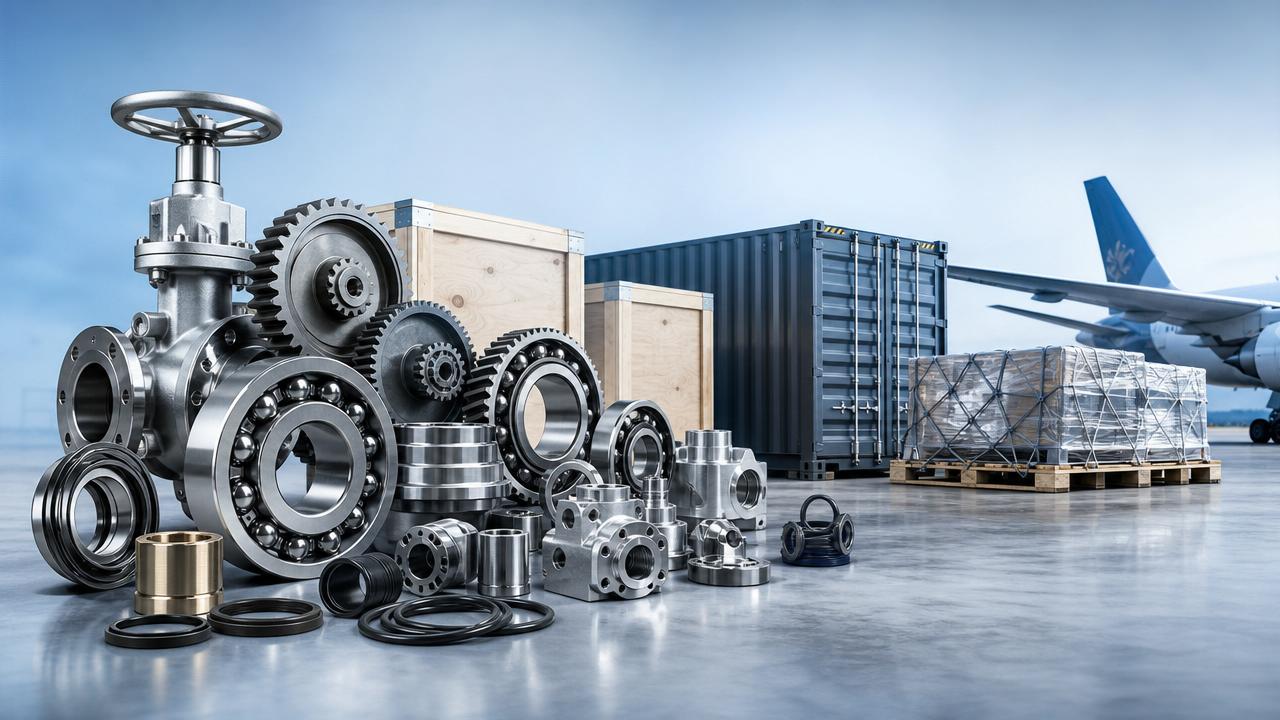
For procurement teams navigating global trade in machinery parts, balancing cost and lead time is critical to maintaining supply continuity and margin control. From supplier location and freight mode to customs policies and market volatility, every factor can affect purchasing decisions. This article explores the key cost drivers, delivery risks, and sourcing strategies buyers should understand to improve efficiency, reduce delays, and make smarter cross-border procurement decisions.
In manufacturing, industrial equipment, and electrical supply chains, machinery parts procurement is rarely a simple price comparison exercise. A lower unit price can be offset by longer transit times, higher defect risk, larger minimum order quantities, or customs delays that stop production for 48 hours or more. Buyers responsible for motors, bearings, castings, seals, valves, fabricated components, control parts, and replacement assemblies need a sourcing framework that weighs landed cost against delivery reliability.
The reality of global trade in machinery parts is that purchasing decisions are shaped by multiple moving variables at once: raw material fluctuations, supplier capacity, tooling lead time, export compliance, route congestion, and inventory strategy. Procurement teams that understand these variables can protect service levels, negotiate better terms, and reduce emergency freight costs.
Key Cost Drivers in Global Machinery Parts Sourcing
The total cost of global trade in machinery parts goes well beyond the quoted ex-works or FOB price. Buyers should evaluate at least 6 cost layers: base product price, tooling or setup charges, packaging, inland transport, international freight, and import-related expenses such as duties, customs brokerage, and local delivery. In many cases, freight and handling can add 8% to 25% to the final landed cost, especially for low-density or urgent shipments.
Unit Price Is Only the Starting Point
A supplier offering a 7% lower unit price may still be less competitive if their batch consistency is weak or if they require a 12-week production slot. Machinery parts often involve tolerance-sensitive processes such as CNC machining, casting, forging, stamping, winding, or assembly. When rework rates rise above 2% to 3%, the apparent purchase savings can disappear quickly through inspection, replacement, and downtime costs.
Factors that commonly change quoted prices
- Material type and grade, such as carbon steel, stainless steel, brass, aluminum, or engineering plastics
- Tolerance level, surface finish, and heat treatment requirements
- Order volume, with breakpoints often appearing at 500, 1,000, or 5,000 units
- Custom drawings, tooling development, or sample approval cycles
- Inspection requirements, including dimensional reports or electrical testing
Freight Mode Has a Direct Margin Impact
Freight choice is one of the clearest trade-offs between cost and lead time. For standard machinery parts, sea freight is usually the lowest-cost option for full or shared container loads, while air freight is used for urgent replenishment, new product launch support, or line-down scenarios. Transit time differences can range from 3–7 days by air versus 20–45 days by sea, depending on origin, destination, and transshipment.
The table below outlines common freight options used in global trade in machinery parts and their typical procurement implications.
For procurement teams, the key lesson is to align freight mode with part criticality, order value, and inventory cover. Air shipping every urgent order usually indicates a weak planning process, while relying only on ocean freight for critical consumables can expose plants to avoidable stoppages.
Tariffs, Duties, and Compliance Can Reshape Sourcing Economics
In cross-border procurement, import duty classifications, origin rules, and documentation quality affect both cost and clearance speed. A part shipped with incomplete packing lists, inaccurate HS codes, or missing material declarations may face inspection holds of 3–10 business days. Buyers dealing with electrical equipment components should also confirm whether destination markets require additional test records, labeling, or restricted substance compliance.
Even when the product itself is competitively priced, avoidable customs friction can raise total acquisition cost through storage, demurrage, broker correction fees, and internal expediting labor. That is why global trade in machinery parts should be managed through landed-cost analysis rather than invoice-price comparison alone.
Lead Time Risks and How They Affect Procurement Planning
Lead time is not a single number. For machinery parts, it usually includes 4 stages: quotation and technical clarification, production scheduling, outbound logistics, and import clearance. A supplier may quote 25 days, but the true door-to-door cycle can easily become 40–60 days once document review, port handling, and inland transport are included.
Where Delays Usually Occur
The most common delay points in global trade in machinery parts are upstream production bottlenecks and downstream logistics interruptions. On the production side, tooling revision, raw material shortages, machine loading, and final inspection queues can add 5–15 days. On the logistics side, vessel rollover, airport capacity limits, customs checks, and local truck shortages may extend delivery by another 3–14 days.
Typical lead time risk signals buyers should monitor
- Supplier response time slows from 24 hours to 72 hours or longer
- Raw material validity is shortened or frequently revised
- Sample approval takes more than 2 rounds without clear root-cause notes
- Shipment booking is postponed within 5 days of ready date
- Commercial invoice or packing list errors repeat across orders
These signs often appear before the formal lead time slips. Procurement teams that track them early can escalate issues before production lines or aftermarket service commitments are affected.
Supplier Geography Matters More Than Many Buyers Expect
Supplier location influences more than shipping distance. It affects factory cluster maturity, subcontractor access, port efficiency, labor availability, and even the speed of engineering communication. A supplier in a mature industrial region may offer better process stability and a shorter 30-day production cycle, while a lower-cost source in a less developed area may require 45 days plus more follow-up on quality and packaging standards.
For custom-machined parts, castings, motor components, electrical enclosures, and fabricated assemblies, a practical comparison should include not only country cost but also industrial ecosystem support. If secondary operations such as plating, balancing, coating, or electrical testing require multiple subcontractors, lead time risk rises with every handoff.
The following table helps procurement teams compare major lead time variables when sourcing machinery parts internationally.
The most resilient procurement plans do not treat lead time as fixed. They use a planning range, such as 35–50 days instead of a single 40-day assumption, and adjust safety stock for critical A-class parts accordingly.
How Buyers Can Balance Cost and Speed More Effectively
Cost control and shorter lead time do not always conflict, but they require segmentation. Procurement teams should avoid managing all machinery parts the same way. A standard MRO fastener, a custom gearbox component, and an electrical control subassembly each need a different sourcing model. The most effective programs classify parts by criticality, annual spend, technical complexity, and replacement urgency.
Build a Tiered Sourcing Strategy
A practical approach is to divide parts into at least 3 categories. First, strategic and custom parts with long qualification cycles. Second, repeat parts with stable demand. Third, emergency replacement parts with high downtime impact. This allows buyers to set different reorder windows, buffer policies, and logistics methods instead of overpaying across the entire portfolio.
Recommended procurement actions by category
- Strategic custom parts: dual-source where possible, hold 4–8 weeks of safety stock, validate tooling and PPAP-like approval steps
- Repeat standard parts: use blanket orders, quarterly price reviews, and sea freight as the default option
- Emergency spares: keep local inventory or regional consignment stock for 24–72 hour response needs
This type of segmentation reduces the risk of using premium logistics on low-priority items while still protecting critical equipment uptime. In global trade in machinery parts, disciplined categorization often delivers more savings than chasing the lowest quote on every line item.
Negotiate Beyond Price
Experienced buyers know that commercial terms strongly affect procurement outcomes. Instead of focusing only on unit price, negotiate batch flexibility, packaging standards, order visibility, production slot reservation, and document turnaround times. A supplier that can hold semi-finished stock or commit to a 7-day release window may create more value than one offering a 3% discount with no schedule flexibility.
Useful negotiation points in machinery parts sourcing include MOQ reduction, sample lead time, spare capacity during peak season, defect replacement terms, and readiness notice requirements. These terms directly influence working capital, replenishment speed, and administrative workload.
Use Better Forecasting and Supplier Communication
For many industrial buyers, delays are not caused by supplier failure alone but by weak forecast visibility. Rolling forecasts of 8–12 weeks help suppliers plan material and capacity more accurately, especially for castings, wound components, machined housings, and electrical assemblies with subcomponent dependencies. A stable release plan can reduce rush orders and improve on-time performance without changing the supply base.
At the operational level, buyers should define 5 basic communication checkpoints: drawing confirmation, production start, mid-process update, pre-shipment inspection, and shipping document review. These checkpoints reduce the chance that issues are discovered only after cargo has departed.
Common Procurement Mistakes in Global Trade in Machinery Parts
Even experienced sourcing teams can lose control of cost and lead time when procurement decisions rely on incomplete comparisons. One of the most common mistakes is selecting suppliers based on invoice value without validating process capability, export readiness, or packaging performance. For fragile or precision machinery parts, inadequate corrosion protection or carton strength can cause avoidable damage during a 30-day transit cycle.
Mistake 1: Ignoring Total Landed Cost
A low-price offer can become expensive when freight surcharges, customs handling, rejection rates, and urgent reorders are considered. Total landed cost reviews should include at least 8 elements: piece price, tooling, inspection, packaging, inland transport, international freight, duty, and internal handling. This gives a more realistic comparison across countries and suppliers.
Mistake 2: Treating All Lead Times as Commitments
Quoted lead times are often estimates rather than guaranteed service levels. Buyers should ask whether the timeline includes raw material booking, external processing, holiday closures, and port booking. If not, a nominal 28-day lead time may become 38 days in routine conditions. Using a lead time range and supplier scorecard is a more reliable planning practice.
Mistake 3: Underestimating Documentation Discipline
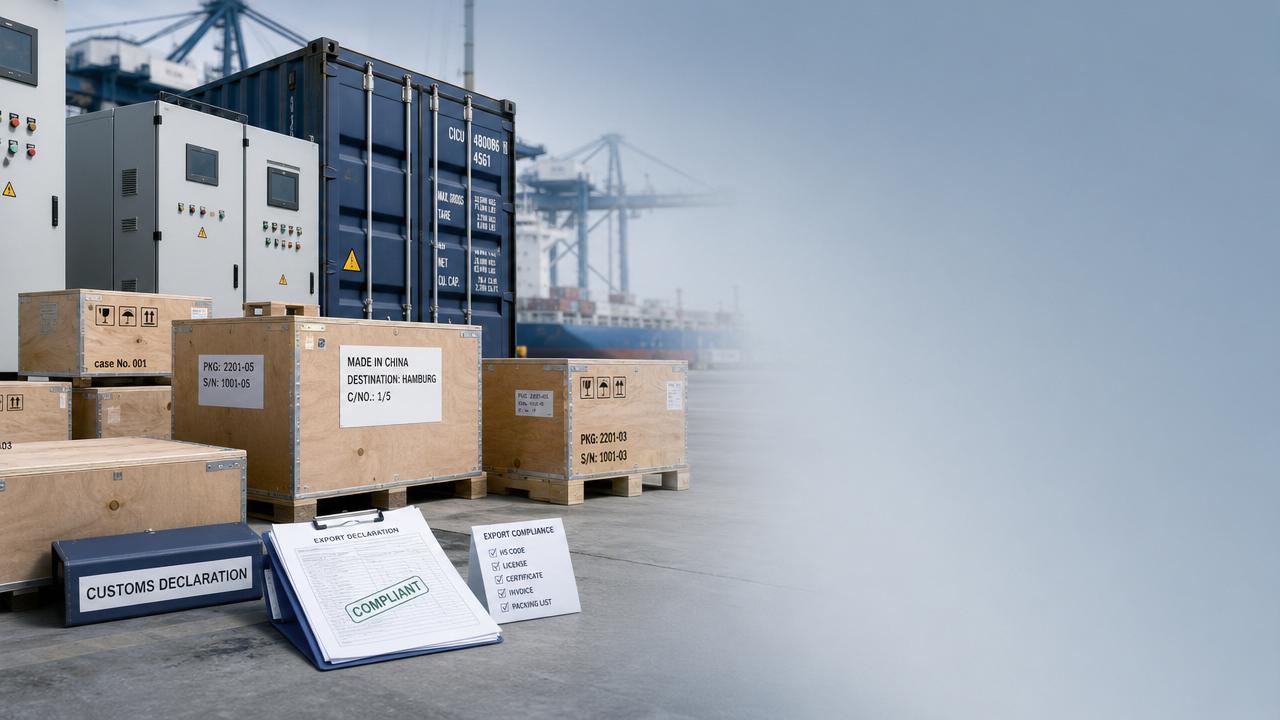
In global trade in machinery parts, paperwork errors are operational problems, not minor clerical issues. Incorrect part descriptions, packing quantity mismatches, or missing country-of-origin details can delay customs release and invoice processing. A standardized document checklist covering 6 items or more can prevent repeated disruptions and shorten receiving time at destination warehouses.
Basic document checklist for cross-border parts shipments
- Commercial invoice with accurate product description and HS code
- Packing list with carton count, net weight, and gross weight
- Purchase order reference and line-item match
- Country of origin declaration where required
- Inspection or test records for controlled components
- Shipping notice and carrier details before departure
For procurement teams handling industrial equipment and electrical components, disciplined execution of these basics often prevents more disruption than expensive corrective action later.
Practical Decision Framework for Procurement Teams
A useful buying framework for global trade in machinery parts should answer 4 questions before every major sourcing decision. First, how critical is the part to production or customer service? Second, what is the realistic landed cost range under normal and urgent scenarios? Third, what is the dependable lead time range, not just the quoted number? Fourth, what backup options exist if the primary source fails?
If procurement teams can answer those four questions with clear data, they are in a stronger position to allocate orders, set stock policies, and negotiate supply terms. This approach is especially valuable in markets where price volatility, port congestion, and changing trade requirements create uncertainty from quarter to quarter.
What a Strong Supplier Review Should Include
- On-time delivery trend over the last 3–6 months
- Quality consistency and defect response speed
- Capacity for both routine orders and peak demand
- Export documentation accuracy and responsiveness
- Ability to support engineering changes and urgent replenishment
When buyers combine supplier review discipline with better forecasting, transport planning, and landed-cost analysis, they create a more resilient sourcing model. That is the practical path to controlling both cost and lead time in international industrial procurement.
For companies involved in manufacturing machinery, industrial equipment, components, and electrical supply chains, smarter procurement starts with clearer visibility into the real drivers behind global trade in machinery parts. By evaluating total landed cost, planning around realistic lead time ranges, segmenting parts by criticality, and tightening supplier communication, buyers can reduce disruption and improve purchasing efficiency. If you want support with market intelligence, sourcing analysis, supply chain updates, or cross-border procurement insights for machinery parts and related industrial sectors, contact us today to get a tailored solution and learn more practical sourcing options.


Industry Briefing
Get the top 5 industry headlines delivered to your inbox every morning.