
Oil and Gas Equipment Suppliers: Common Quality Gaps to Avoid

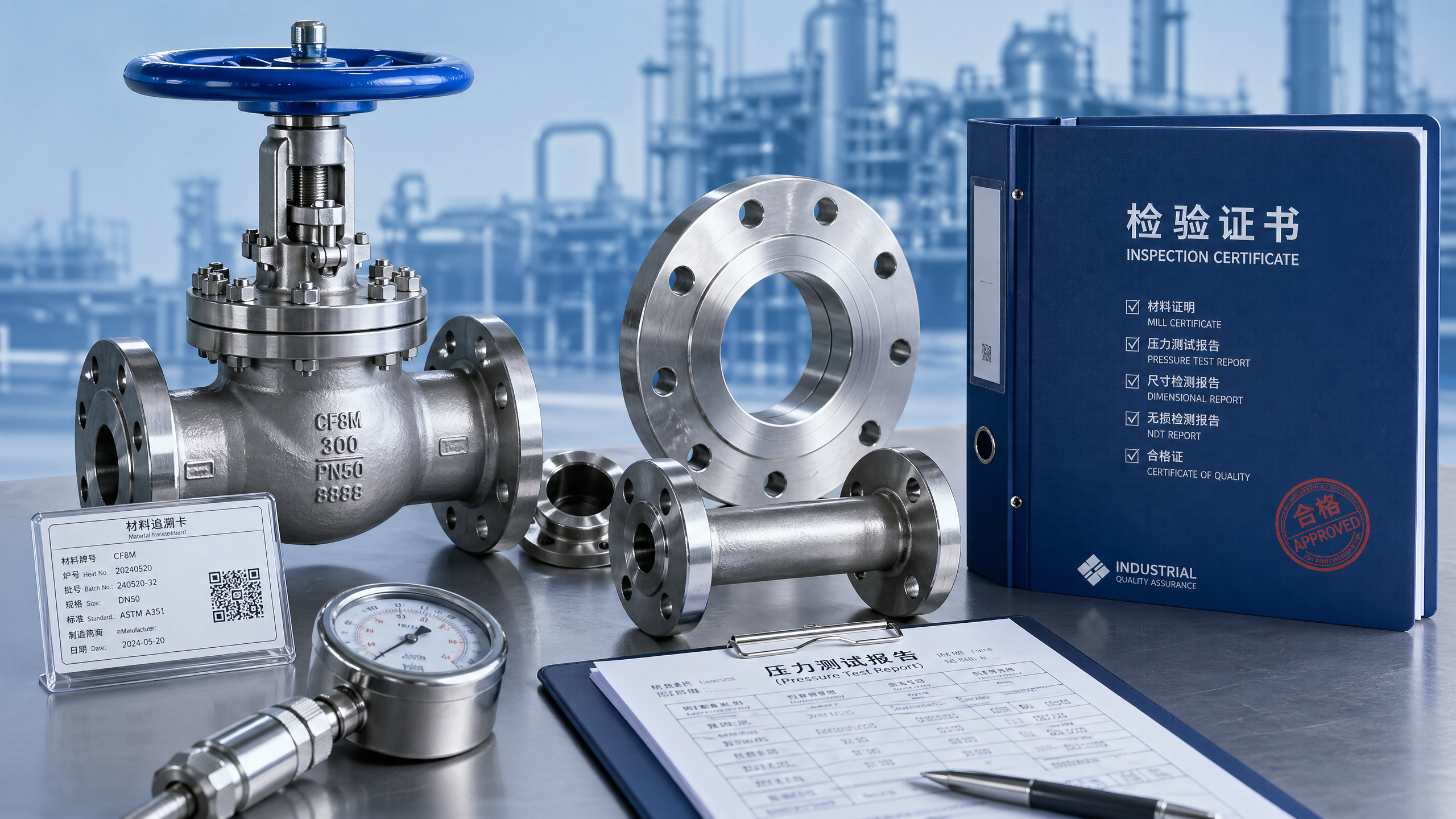
Choosing reliable heavy industry equipment suppliers for oil and gas is critical for quality control and operational safety. Yet many buyers still overlook common gaps in material traceability, certification accuracy, inspection standards, and after-sales support. This article highlights the quality risks that matter most to QC and safety managers, helping you identify weak points early and strengthen supplier evaluation before they affect compliance, performance, or project timelines.
Why quality gaps look different across oil and gas supply scenarios
For QC and safety teams, the biggest mistake is treating all purchasing cases as if they carry the same level of technical risk. In reality, heavy industry equipment suppliers for oil and gas may serve upstream drilling, midstream transport, refinery maintenance, or emergency replacement programs, and each scenario changes what “acceptable quality” means. A valve body ordered for a planned turnaround in 10 weeks is assessed differently from a pressure-bearing fitting needed for an unplanned shutdown within 72 hours.
This difference matters because supplier qualification often appears complete on paper while operational suitability remains weak. Certificates may exist, but heat numbers are incomplete. Inspection reports may be provided, but witness points are not aligned with project criticality. Delivery promises may look competitive, but packaging, preservation, and spare documentation are not suitable for offshore storage periods of 6 to 12 months. These gaps create avoidable rework, delayed release, and safety exposure.
For teams sourcing through industrial content portals or comparing multiple vendors, the first practical question is not simply whether a supplier can manufacture. It is whether that supplier can support your exact operating scenario with stable documentation, repeatable quality control, and response discipline under pressure. That is why heavy industry equipment suppliers for oil and gas should be evaluated by use case, not only by product category.
Three common business situations where hidden gaps emerge
- Capital project procurement, where long lead items may involve 8 to 24 weeks of production and multiple hold points.
- Maintenance, repair, and operations purchasing, where equipment must match installed systems with limited shutdown windows.
- Export or cross-border sourcing, where customs documents, marking, and packaging can be as important as the product itself.
When these situations are mixed together under one supplier scorecard, quality risk becomes blurred. A vendor suitable for standard industrial equipment may not be suitable for critical oil and gas service, especially when pressure class, corrosion allowance, testing scope, and site acceptance protocols are strict. QC managers therefore need a scenario-based review method that goes beyond generic vendor approvals.
Typical application scenarios and the quality weaknesses most often missed
The following comparison is useful when screening heavy industry equipment suppliers for oil and gas across different operating environments. It shows why the same supplier may perform well in one context yet introduce risk in another. For quality and safety managers, this is where supplier evaluation becomes practical rather than theoretical.
The table shows a key pattern: quality failures are often not dramatic manufacturing defects at first glance. They are process-level gaps that only become visible when the equipment enters a specific field condition. A supplier with acceptable machining quality can still fail a refinery turnaround if dossier preparation is slow or if positive material identification is not available at the right checkpoint.
Scenario 1: New project procurement with long lead equipment
In project procurement, buyers often focus on lead time, price, and drawing compliance. However, for heavy industry equipment suppliers for oil and gas, the larger risk is late discovery of nonconformity. If raw material substitution happens in week 4, but review only happens during final inspection in week 10, the project may face rejection, concession requests, or rescheduling of downstream assembly.
QC teams should therefore define control points early. For example, document review can be split into at least 4 stages: purchase order review, raw material verification, in-process inspection, and pre-shipment release. This staged method reduces dependence on final inspection and helps identify whether the supplier’s internal quality system actually functions under production pressure.
A common weak point in this scenario is overreliance on generic certificates. Material certificates should be checked for chemical composition, mechanical properties, heat references, and consistency with marking on both the component and the package. Where pressure-containing equipment is involved, requested test coverage should be aligned with service risk rather than left at the supplier’s default level.
Scenario 2: Maintenance shutdowns and urgent replacement orders
During shutdowns, timing pressure can distort quality discipline. A supplier that promises shipment within 48 hours may still create major problems if flange dimensions, face finish, or sealing surfaces are not checked against the installed base. In urgent replacement work, dimensional mismatch is one of the most expensive forms of “fast failure” because it consumes crane time, technician hours, and restart windows.
For this reason, safety managers should ask for verification evidence that directly supports field fit-up: actual measurement records, revision-controlled drawings, nameplate photographs, and confirmation of preservation method. If storage before installation exceeds 30 days, packaging quality also becomes a performance issue rather than a logistics detail.
In this scenario, after-sales responsiveness is part of quality assurance. Heavy industry equipment suppliers for oil and gas should be assessed on technical clarification speed, document turnaround within the same business day where feasible, and the ability to support nonconformance decisions without delaying site action. A low unit price loses value quickly when response time is weak.
Scenario 3: Cross-border sourcing and export supply
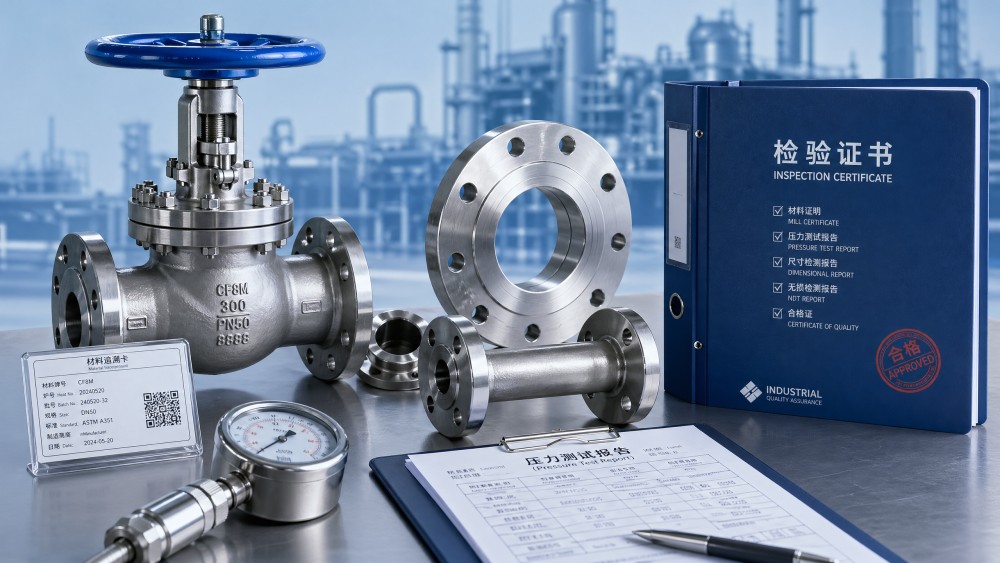
Export trade introduces an additional layer of quality exposure. Even when the product itself is acceptable, errors in marking, packing declarations, or certificate consistency can delay customs clearance or site receiving. For industrial equipment moving across regions, transit may last 3 to 8 weeks, which raises the importance of corrosion protection, moisture control, and shock-resistant packing for instruments or machined surfaces.
QC personnel should review whether the supplier can issue a coherent final package: commercial and technical documents must align in item number, quantity, revision, and origin statement where required. In export situations, document accuracy is often a stronger predictor of supplier maturity than brochure claims or catalog breadth.
This is especially relevant for buyers using manufacturing and industrial sourcing portals. Listings can help identify options, but supplier screening still needs a practical validation step. Heavy industry equipment suppliers for oil and gas should be evaluated for export readiness, not just manufacturing capacity, if the equipment must pass through multiple logistics and compliance checkpoints.
The four quality gaps that create the highest downstream risk
Across different applications, four quality gaps appear repeatedly and deserve priority attention from QC and safety managers. These are not abstract concerns. They directly affect acceptance, maintenance reliability, and safety controls in manufacturing, processing, and industrial equipment supply chains linked to oil and gas operations.
1. Material traceability breaks
Traceability is often assumed rather than proven. A supplier may provide a material test certificate, yet the linkage between raw stock, machining batch, and final item marking can be weak. The risk increases when subcontracting is involved or when mixed lots are processed within the same 2 to 3 week manufacturing window.
What to verify
- Heat number continuity from incoming material to final product marking.
- Clear separation of accepted, rejected, and reworked items.
- Records for subcontracted processes such as heat treatment, coating, or NDT.
If the traceability chain cannot be shown within a short review session, the supplier may struggle during audits or incident investigations. In critical applications, that weakness alone can justify closer surveillance or restricted approval status.
2. Certificate and document inconsistency
Certificate issues are rarely limited to missing pages. More often, the problem is inconsistency between the purchase order, drawing revision, marking, test report, and packing list. A single mismatch in size, grade, or revision can stop receiving inspection and add 1 to 5 days of avoidable clarification work.
This is why document review should not be left until goods arrive on site. Request draft dossiers before shipment, especially for pressure-related, rotating, or electrically integrated items. Early review allows commercial, logistics, and technical teams to correct errors while the goods are still under supplier control.
3. Inspection scope that is too generic
Many suppliers rely on standard internal inspection routines that are acceptable for general industrial components but too limited for oil and gas duty. The gap may involve sampling frequency, witness points, calibration validity, or missing records of dimensional checks on critical surfaces. A generic checklist is not enough when service conditions are severe.
QC teams should ask whether the inspection plan reflects service demands such as pressure class, corrosion exposure, temperature range, or rotating duty cycle. If the answer remains general, the supplier may not understand operational consequences at the level your site requires.
4. Weak after-sales and nonconformance handling
A supplier’s quality performance does not end at shipment. In real projects, questions arise after receipt, during installation, or after startup. If corrective actions take more than 24 to 48 hours to initiate, shutdown planning and safety controls may be affected. This is especially true where replacement decisions depend on immediate technical confirmation.
For heavy industry equipment suppliers for oil and gas, response capability should be measured in practical terms: named contact persons, escalation path, document reissue process, and readiness to support root-cause review. Strong after-sales control often separates stable suppliers from merely competitive sellers.
How to evaluate supplier fit before the quality problem reaches site
A useful supplier review process should match the operating scenario, the criticality of the item, and the tolerance for delay. For QC and safety managers, the goal is not to create unnecessary approval layers. It is to identify where tighter control is needed and where standard commercial review is sufficient. This prevents both over-inspection and under-control.
The checklist below can help compare heavy industry equipment suppliers for oil and gas in a more disciplined way. It is especially relevant when sourcing through broad industrial supplier channels where product availability is visible but process maturity is not always obvious.
This kind of matrix makes supplier comparison more objective. It also helps align procurement, engineering, and HSE teams around the same decision criteria. In practice, one or two strong answers in a sales meeting are not enough; the supplier should show process evidence that matches the risk level of the equipment being sourced.
A practical review sequence for QC and safety managers
- Classify the item by service criticality, shutdown impact, and replacement difficulty.
- Match the sourcing case to a scenario: project, MRO, export, or mixed demand.
- Request sample documents, not just declarations, before approving the supplier.
- Define 3 to 4 control gates from order review to shipment release.
- Include after-sales and NCR handling in the quality assessment, not only production capability.
This sequence is especially effective for industrial buyers dealing with multiple product families, including machinery components, industrial fittings, electrical items, and related equipment packages. It creates a repeatable way to control variation between suppliers while keeping the review tied to real operational needs.
Common misjudgments when selecting heavy industry equipment suppliers for oil and gas
Even experienced teams can misread supplier suitability when deadlines are tight. One common error is assuming that previous supply to general industry automatically means readiness for oil and gas service. Another is treating a complete quotation package as proof of process maturity. In reality, many quality failures appear in execution details that are not visible during commercial comparison.
A second misjudgment is focusing too heavily on unit price. For critical items, the true cost includes inspection effort, document corrections, site delay, and replacement risk. If a low-cost supplier adds just 2 days to shutdown duration or forces emergency reinspection, the commercial advantage may disappear immediately. Safety managers often see this impact first because operational pressure rises when uncertainty remains unresolved.
A third error is approving suppliers without testing communication performance. In high-risk industrial sourcing, communication is part of quality control. If technical clarifications, revised certificates, or packing corrections require several rounds over 5 to 7 days, the supplier may not be suitable for urgent or compliance-sensitive applications. This is particularly relevant when sourcing from broad international supplier networks.
Use this warning list before final supplier selection
- The supplier can describe products clearly but cannot explain quality records in a structured way.
- Inspection documents are available only after repeated follow-up.
- Material traceability depends on manual explanation rather than visible control logic.
- Export packing, preservation, or labeling requirements are treated as secondary issues.
- No named technical contact is assigned for quality clarifications after shipment.
These signs do not always mean the supplier is unsuitable. However, they usually indicate where closer validation is needed. For heavy industry equipment suppliers for oil and gas, the safest approach is to connect approval level with scenario risk, rather than trying to label every supplier as simply good or bad.
Why choose us for supplier insight and sourcing support
Our portal focuses on manufacturing and processing machinery, industrial equipment and components, and electrical equipment and supplies. That means we do more than list products. We support buyers with industry news, market analysis, price trend tracking, technology updates, policy interpretation, company news, exhibition coverage, export trade developments, and supply chain intelligence that help teams judge supplier fit in real business contexts.
For QC personnel and safety managers, this broader view is valuable because supplier quality is rarely a product-only issue. Lead time volatility, export process readiness, documentation discipline, and technical responsiveness are all part of sourcing risk. By following industrial developments across multiple equipment categories, we help users compare heavy industry equipment suppliers for oil and gas with more practical context and better preparation.
If you are reviewing supplier options for a new project, a shutdown order, or a cross-border procurement plan, contact us for support on parameter confirmation, product selection, delivery cycle review, custom sourcing direction, certification requirements, sample support, and quotation communication. The earlier your team checks these points, the easier it becomes to avoid quality gaps before they reach the field.



Industry Briefing
Get the top 5 industry headlines delivered to your inbox every morning.