
Electrical Equipment Supply Updates: What Changed in 2026?
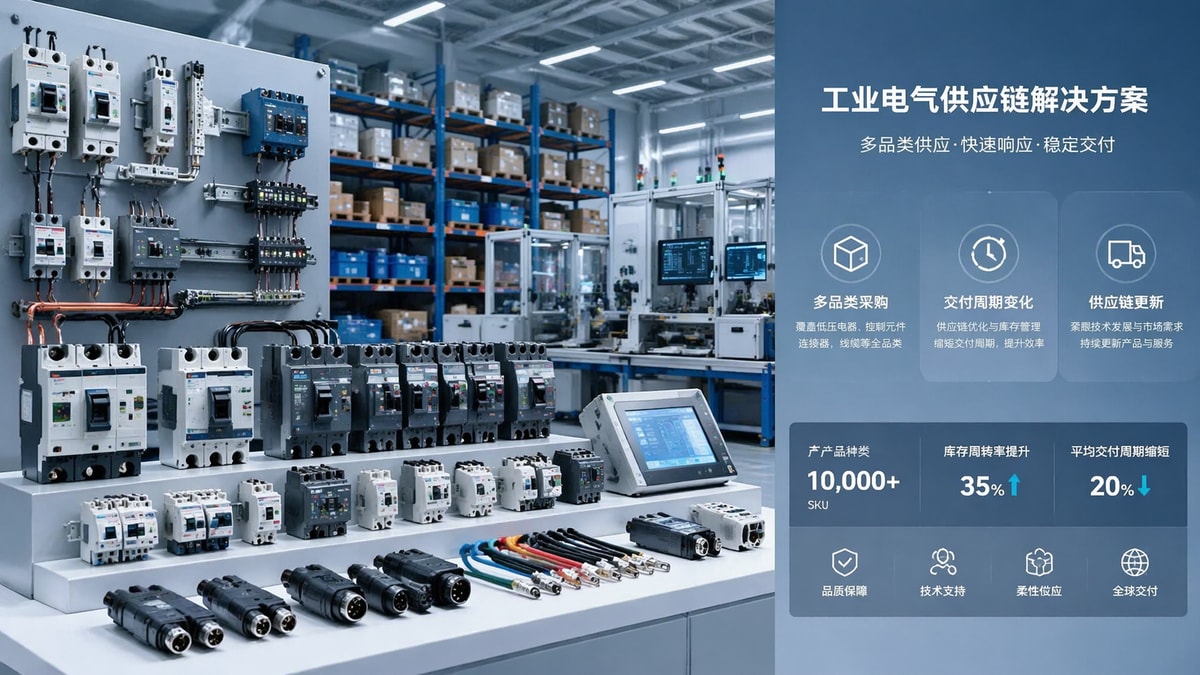
In 2026, global sourcing conditions for electrical and industrial markets shifted faster than many buyers expected. This overview tracks global supply chain updates for electrical equipment, highlights the latest global supply chain updates affecting pricing, lead times, and sourcing strategies, and connects them with broader global supply chain updates trends across manufacturing. For procurement teams, operators, researchers, and decision-makers, it offers a practical starting point to understand what changed and what matters next.
What changed first in the electrical equipment supply chain in 2026?
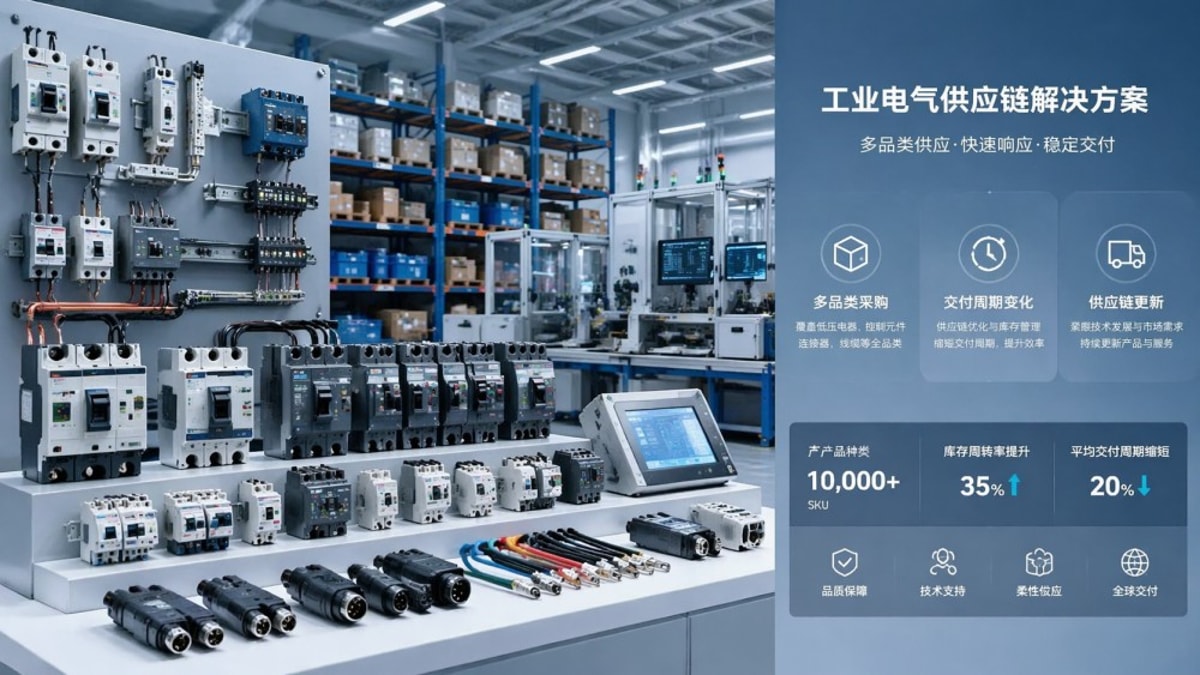
The most visible change in 2026 was not a single shortage or a single price spike. It was the speed of fluctuation across sourcing, logistics, and compliance. In electrical equipment supply, many buyers saw lead times move from relatively stable 3–6 week windows to more fragmented ranges such as 2–4 weeks for standard items and 8–14 weeks for customized or certification-sensitive components. That gap changed procurement behavior across manufacturing, industrial equipment, and plant maintenance teams.
A second shift came from regional supply rebalancing. Buyers who previously depended on one sourcing country increasingly added a second or third option to reduce disruption risk. This was especially relevant for low-voltage components, switchgear accessories, cable management products, control panels, relays, connectors, and power distribution assemblies. The result was not simply supplier diversification. It was a move toward layered sourcing strategies built around standard stock, backup capacity, and compliance review.
For information researchers and decision-makers, the challenge is that electrical equipment supply updates now have to be read together with machinery demand, export trade developments, and industrial policy changes. A shortage in industrial enclosures, copper-based parts, insulation materials, or semiconductor-linked control modules can affect multiple downstream categories at once. This is why market monitoring in 2026 became less about headline news and more about cross-category signal tracking.
For operators and maintenance teams, the practical impact was simple: replacement cycles became harder to predict. A part once replaced in 5–7 days may now require alternate specifications, substitute brands, or advance reservation. In facilities that run continuous operations across 2 or 3 shifts, even a small delay in breakers, contactors, sensors, or terminal blocks can interrupt repair planning and increase downtime costs.
Key signals buyers started watching more closely
- Lead time split between standard stocked items and engineered-to-order assemblies, often with a difference of 4–8 weeks.
- Material-linked pricing sensitivity, especially where copper, aluminum, steel fabrication, and resin-based insulation affect landed cost.
- Port congestion, customs review, and inland delivery variability that can add 3–10 days even when factory output is on schedule.
- Regulatory documentation quality, including product labeling, test files, and destination-market declarations required before shipment release.
How did pricing and lead times change across common electrical equipment categories?
Not every category moved in the same direction. In 2026, standard low-complexity items often remained available, but buyers still faced cost changes from packaging, freight, energy input, and currency pressure. Higher-complexity products, especially those involving control electronics, molded components, or project-based assembly, showed wider variation in both price and delivery windows. This made comparison analysis more important than broad market assumptions.
The table below summarizes common sourcing patterns seen in electrical equipment supply updates. These are not fixed market prices. They reflect typical procurement observations used by sourcing teams to compare risk, cost sensitivity, and likely planning pressure across product groups.
The most important takeaway is that price and lead time now need to be reviewed together. A lower unit quote can still produce a higher project cost if it adds 3 weeks to commissioning, extends spare-parts downtime, or creates mismatch with local certification requirements. Procurement teams increasingly compare total supply reliability rather than invoice price alone.
This matters even more in manufacturing and processing machinery environments. A delayed control component can hold back a complete equipment build, while a missing cable gland or terminal accessory can prevent final electrical closure. In 2026, small parts often created outsized schedule risk because assembly sequencing became tighter and buffer inventory became leaner.
Why many buyers misread 2026 pricing signals
One common mistake was treating a stable ex-works quote as proof of stable supply. In reality, freight booking costs, local trucking, packaging adjustments, compliance testing, and exchange-rate movement could still change the landed cost by a meaningful margin over a 30–90 day procurement cycle. Another mistake was assuming that all substitute products carry the same installation or performance implications. They do not.
For buyers managing multiple plants or multiple SKUs, the better approach is to build a shortlist by risk tier. Separate items into routine stock, moderate-risk supply, and high-impact critical spares. That structure helps teams reserve engineering review time for the products where specification drift or late delivery would be most expensive.
What should procurement teams and plant users evaluate before placing orders?
In 2026, procurement decisions in electrical equipment and supplies became more operational. Teams can no longer rely only on catalog equivalence or past supplier performance. They need a structured review that combines technical fit, supply continuity, and destination-market compliance. This matters for purchasers, operators, and enterprise managers alike because a sourcing error now affects installation, maintenance, and audit readiness at the same time.
A useful evaluation model is to score each purchase across 5 key checks: specification accuracy, stock position, lead time confidence, documentation completeness, and substitute availability. For repeat industrial orders, this can shorten internal review cycles from several fragmented email rounds to a 1–2 step approval process. It also reduces the risk of buying an acceptable-looking item that fails during integration.
A practical sourcing checklist for 2026
- Confirm the electrical rating range, interface type, mounting method, and operating environment before requesting quotes.
- Ask whether the quoted model is standard stock, assembly-to-order, or project-built, because each route carries a different delivery risk.
- Check whether the shipment includes test reports, labels, manuals, and export documents required by the destination market or end customer.
- Verify interchangeability limits if using alternatives, especially for panel space, wiring layout, control logic, and maintenance tools.
- Reserve time for incoming inspection and commissioning verification, particularly for orders supporting 24/7 or multi-line operations.
The table below can help procurement teams compare sourcing options more consistently. It is especially useful when buyers need to balance urgent delivery against technical certainty and budget discipline across electrical equipment supply categories.
This framework works across several buyer types. Researchers can use it to map market intelligence. Plant users can focus on compatibility and maintenance. Procurement teams can compare lead time and landed risk. Decision-makers can use it to decide whether to standardize, dual-source, or localize more of their electrical equipment supply chain.
When is a substitute product acceptable?
A substitute is usually reasonable when 4 conditions are satisfied: core electrical ratings match, installation geometry remains manageable, compliance documentation is available, and lifecycle support is clear for at least the next 12–24 months. If any of these conditions fail, the apparent delivery gain may create hidden engineering or maintenance costs later.
How do standards, certification, and trade compliance affect supply decisions?
In electrical equipment supply updates, compliance has become a sourcing variable rather than a final paperwork step. Buyers in 2026 increasingly evaluate whether a supplier can support the required market entry documentation before confirming the order. This is particularly important for export-oriented machinery, industrial assemblies, replacement parts for audited facilities, and projects that move across several regional jurisdictions.
Common checks include product labeling consistency, traceable specification sheets, test documentation, and destination-specific declarations where applicable. Even when a product is technically usable, missing files can delay customs clearance, machine acceptance, or internal quality sign-off. For teams handling 2 or more destination markets, this administrative friction can be as disruptive as a production delay.
Compliance areas buyers should review early
- Electrical safety and installation suitability for the intended industrial environment, including enclosure level and operating conditions.
- Market-specific labeling and documentation expectations, especially where importers or end users require consistent technical files.
- Material and component declarations that may be requested during customer audits or export compliance checks.
- Routine test or inspection records for assemblies such as panels, distribution boxes, or project-built control systems.
For many buyers, the issue is not knowing every standard in advance. The issue is identifying which 3–5 compliance points could stop the order from moving smoothly. A portal focused on industrial equipment, market analysis, policy interpretation, export trade developments, and supply chain intelligence can help narrow this quickly by connecting product changes with regional trade and regulatory developments.
This is one reason 2026 sourcing decisions increasingly involve cross-functional review. Engineering checks function. Procurement checks supply continuity. Operations checks serviceability. Trade and quality teams check documentation. When these steps happen in sequence rather than in parallel, project cycles get longer. When they happen in a coordinated 4-step review, approval speed usually improves.
A simple 4-step internal review flow
- Define technical requirements and acceptable substitution limits.
- Screen supply options by lead time, inventory visibility, and logistics route.
- Confirm compliance documents needed for shipment, installation, and audit records.
- Approve the order with a contingency plan for delay, replacement, or phased delivery.
What are the biggest sourcing risks and opportunities for the rest of 2026?
The largest risk is not necessarily a global shortage. It is decision lag. Many companies still react to electrical equipment supply updates only after a line-down event, a delayed shipment, or a failed substitute. In 2026, that reactive model is expensive because supply chain conditions can change within one planning cycle of 2–6 weeks. Firms that review sourcing signals monthly or quarterly are generally better positioned than those waiting for urgent exceptions.
At the same time, there are opportunities. More suppliers are improving transparency around lead time segmentation, minimum order quantity, and customization scope. Buyers that define specifications clearly can often secure better outcomes by splitting orders into standard stock plus engineered items, or by approving phased shipment plans rather than waiting for full order completion. This approach helps reduce production stoppage risk while keeping project milestones moving.
Another opportunity lies in better use of market intelligence. Electrical equipment supply no longer operates in isolation. It is tied to manufacturing cycles, export demand, energy-related infrastructure investment, and industrial replacement activity. Teams that monitor industry news, price trends, technology updates, exhibition coverage, policy interpretation, and supply chain intelligence together can identify sourcing shifts earlier than teams using only supplier quotes as a signal.
For enterprise decision-makers, the strategic question is whether to centralize procurement or allow local flexibility. In 2026, a hybrid model often works best: standardize high-volume common parts, while allowing plant-level substitution rules for urgent maintenance categories. This preserves purchasing leverage without slowing emergency response.
Common misconceptions in 2026 electrical sourcing
One misconception is that longer lead times always mean lower capacity. Sometimes they reflect documentation review, export batching, or assembly sequencing. Another is that local availability always means lower total cost. If the product does not match the equipment baseline, installation rework and future spare-part fragmentation can cancel any short-term savings. A third misconception is that all compliance risk sits with the importer. In practice, poor upstream documentation can disrupt the whole chain.
The better sourcing mindset is to ask three questions early: What must be exact? What can be substituted within a defined range? What should be stocked before demand becomes urgent? Those questions support more resilient purchasing than comparing price lists in isolation.
FAQ: what do buyers most often ask about electrical equipment supply updates?
How long is the typical delivery cycle for electrical equipment in 2026?
For standard stocked items, many orders can still move within 1–4 weeks. For customized assemblies, panel builds, or products requiring extra documentation, 4–12 weeks is a more realistic planning range. International logistics and customs can add another 3–10 days depending on route and documentation quality.
Which products should be prioritized for early procurement?
Priority should go to products with one or more of these traits: long replacement approval cycles, plant-critical downtime impact, narrow compatibility, or project-specific engineering. In many industrial settings, this includes control modules, project-built panels, specialty connectors, uncommon breaker ratings, and spare parts tied to legacy equipment.
What should operators check when a substitute product is offered?
Operators should verify mounting, wiring method, operating environment, reset or control behavior, and maintenance access. Even when voltage and current ratings match, differences in terminal layout, enclosure fit, or control logic can increase installation time by several hours and complicate future servicing.
How can buyers reduce risk when sourcing across several countries?
Use a shared sourcing matrix. Include at least 5 fields: technical fit, lead time confidence, document status, shipping route, and fallback source. Review it monthly for fast-moving categories and quarterly for stable categories. This gives teams a repeatable way to compare options without restarting the entire evaluation process for every order.
Why choose us for market intelligence and sourcing insight?
If you are tracking electrical equipment supply updates, you need more than isolated product information. You need a reliable view across manufacturing and processing machinery, industrial equipment and components, electrical equipment and supplies, export trade developments, pricing movements, technology changes, exhibition trends, company updates, and policy interpretation. That broader perspective helps you understand why supply conditions changed, not just that they changed.
Our portal is built for information researchers, plant users, procurement teams, and business decision-makers who need actionable industry content. We focus on supply chain intelligence that supports practical decisions: which categories require earlier planning, where cost pressure is likely to emerge, how lead times differ by product type, and what compliance questions should be raised before order confirmation.
You can contact us for specific support on parameter confirmation, product selection logic, typical delivery cycle assessment, sourcing comparison, certification-related document checks, sample support planning, and quote communication preparation. If you are reviewing substitutes, planning multi-source procurement, or building a category watchlist for the next 3–6 months, we can help you structure the right information before purchasing risk becomes operational loss.
For companies facing tight budgets, urgent delivery targets, or complex export requirements, a clear intelligence workflow saves time. Start with the category, application, target market, and timing window. Then compare supply options with a practical checklist. When you need a more focused view of electrical equipment supply trends, procurement priorities, or cross-industry market signals, reach out with your product scope and sourcing questions.


Industry Briefing
Get the top 5 industry headlines delivered to your inbox every morning.