
Custom solutions now take longer when parts are region-locked


As region-locked parts delay project timelines, businesses are turning to global supply chain updates for custom solutions to stay informed and responsive. For buyers, operators, and decision-makers across manufacturing and industrial sectors, timely insights on sourcing shifts, lead times, and alternatives are now essential. This article explores how these disruptions affect delivery, cost, and planning in today’s global equipment market.
Why region-locked parts are now a serious sourcing risk
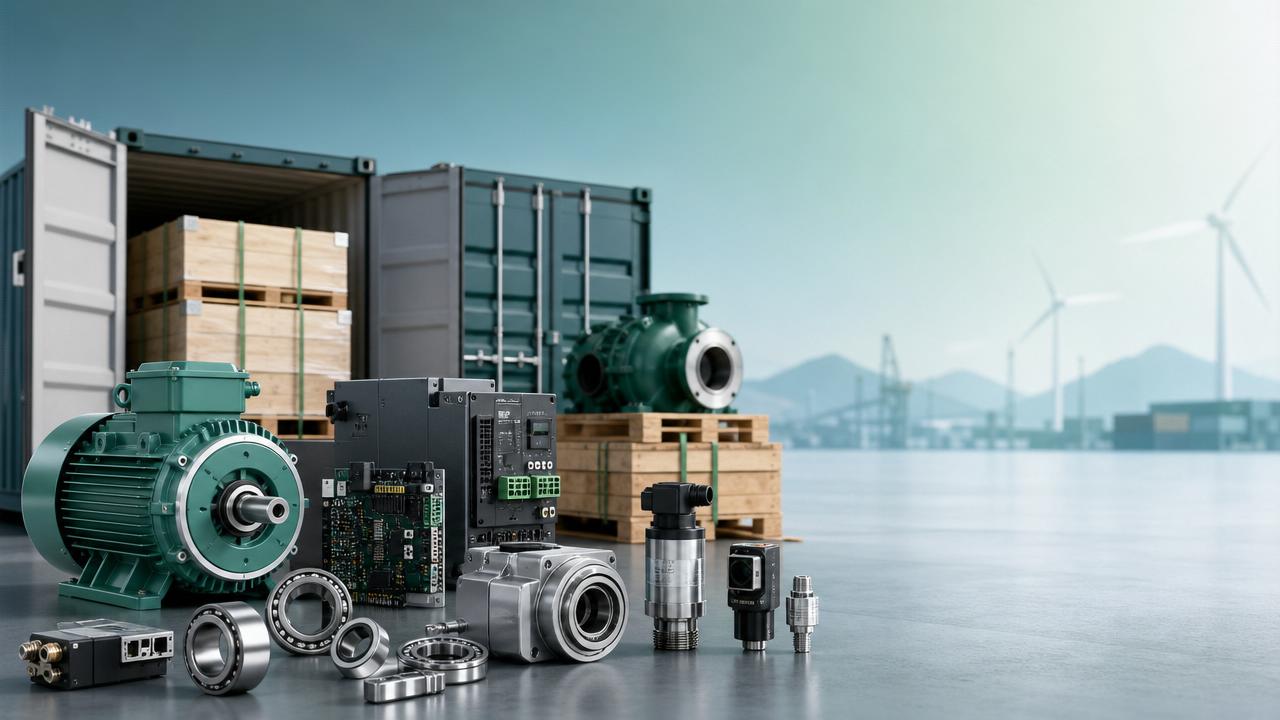
[[IMG:img_01]]In manufacturing machinery, industrial components, and electrical equipment, a region-locked part is not simply a hard-to-find item. It is a component tied to one geography by design approval, supplier authorization, software compatibility, or regulatory pathway. When that part becomes unavailable, a custom solution often cannot move into fabrication, assembly, testing, or commissioning on the original schedule.
The disruption is more visible now because supply chains operate across more countries, while many critical components still remain concentrated in 1–2 approved sources. In practical terms, a buyer may secure a machine frame, motor, and control cabinet on time, yet still face a 4–12 week delay because one sensor, connector, relay, drive module, or sealed bearing cannot be substituted without engineering review.
For operators, this creates a difficult gap between production expectations and actual machine readiness. For procurement teams, the challenge is not only price. It is also whether the supplier can confirm interchangeability, maintain documentation, and preserve warranty conditions. For decision-makers, the issue becomes a planning problem that affects launch dates, maintenance windows, and customer commitments.
The wider industrial market has also become more sensitive to export trade developments, policy changes, and logistics bottlenecks. Port congestion, customs review, restricted channels, and regional certification checks can stretch a nominal 7–15 day replenishment cycle into 3–6 weeks. That is why supply chain intelligence now matters as much as component pricing when evaluating a custom solution.
Where the bottlenecks usually appear
The most common bottlenecks are not always the most expensive parts. They are often the items with narrow approval scope or embedded compatibility requirements. A programmable controller extension, a power semiconductor, a safety switch, or a specialty seal may represent a small share of total equipment cost, but it can still block 100% of final assembly.
- Electrical control components that must match local voltage, enclosure, and communication requirements.
- Industrial wear parts approved only by an original design package or by a specific regional distributor.
- Software-linked modules that require the same firmware family, interface standard, or commissioning tool.
- Export-sensitive items where shipping documentation, dual-use review, or customs classification extends the lead time.
How delays affect delivery, cost, and project planning
When a part is region-locked, the first impact is usually schedule distortion rather than immediate budget shock. A custom machine project may appear 80% complete, yet remain unable to proceed to FAT, site installation, or operator training because one missing component prevents full functional verification. In many industrial projects, that single delay can push dependent tasks by 2–8 weeks.
The second impact is hidden cost. Procurement teams often focus on unit price differences, but the real cost includes expediting, re-engineering hours, retesting, inventory imbalance, and idle labor. If a machine builder has to hold semi-finished assemblies in storage for 10–20 days, the financial effect can exceed the price premium of the original part.
The third impact is planning uncertainty. Decision-makers need confidence in whether a delay is a short interruption, a quarter-long issue, or a structural sourcing risk. Without current market analysis and supplier updates, teams may keep outdated production plans, misjudge customer delivery dates, or approve substitutions too late in the process.
This is especially important in mixed portfolios where manufacturing equipment, industrial components, and electrical supplies overlap. A delayed part can affect not only one build, but also spare parts planning, after-sales support, field maintenance, and future RFQs. In B2B purchasing, timing errors often cascade across 3 stages: sourcing, integration, and commissioning.
Typical business impact by function
The table below shows how region-locked parts create different risks for research teams, operators, buyers, and executives. This comparison is useful when evaluating whether a custom solution needs an alternate design path, a phased shipment plan, or a revised maintenance strategy.
The key takeaway is that not every delay should be solved by paying more for the same part. In many cases, the better decision is earlier visibility, technical screening, and a structured escalation process that identifies whether the real issue is approval lock, logistics, software compatibility, or regional compliance.
What buyers should check before approving a custom solution
A custom solution affected by region-locked parts should be reviewed through a procurement lens, not just an engineering lens. Buyers need to know which items are single-source, which are region-dependent, and which can be replaced within the same performance envelope. A useful starting point is a 5-point review covering function, compatibility, compliance, lead time, and total cost.
This review matters across processing machinery, industrial equipment, and electrical supply projects because not all substitutions are equal. A bearing replacement may be straightforward if dimensions and operating limits match. A drive, breaker, or control module may require a deeper check of communication protocol, enclosure rating, startup sequence, and local approval expectations.
For urgent projects, a 2-step purchasing method is often more realistic than waiting for a perfect answer. First, confirm whether the original part is still practical within the required delivery window. Second, assess whether an alternate can support operation, serviceability, and documentation without creating downstream installation problems. This avoids reactive decisions made in the final week before shipment.
Buyers should also request visibility beyond the quoted lead time. A supplier that offers only a date is not giving enough decision support. Useful sourcing guidance includes the supply region, current shipping route, approval constraints, expected documentation package, and whether the item can be reserved, staged, or partially delivered.
A practical selection checklist for custom solutions
- Confirm whether the critical part is single-source, dual-source, or approved only through one region. This determines whether the risk is temporary or structural.
- Check technical fit across 3 layers: mechanical dimensions, electrical ratings, and control interface. One matched layer is not enough for complex equipment.
- Review service implications such as spare stock planning, operator training, and maintenance tools. A lower purchase price can create a higher lifecycle burden.
- Ask for a realistic lead time range, such as 2–3 weeks, 4–6 weeks, or 8–12 weeks, rather than a single promised day without context.
- Verify documentation support, including manuals, electrical drawings, and replacement guidance needed for installation and after-sales continuity.
Selection factors buyers often underestimate
One common mistake is treating all alternates as equivalent if the headline specification looks similar. In practice, acceptable substitution depends on duty cycle, ambient range, mounting constraints, and integration logic. In industrial environments, even a difference such as IP rating, connector format, or response threshold can affect installation time and system reliability.
Another mistake is ignoring documentation timing. If the alternate part can ship in 10 days but revised drawings take another 7–10 days, the real schedule gain may be smaller than expected. That is why procurement and engineering must review material availability and documentation readiness together, not in separate steps.
Cost, alternatives, and when substitution makes sense
The question is rarely whether an alternate exists. The real question is whether it reduces total project risk. In some cases, waiting for the original region-locked part is the right decision because the part is deeply embedded in control logic, safety validation, or customer approval. In other cases, a qualified substitute can shorten lead time and improve future sourcing flexibility.
A sound comparison should include at least 4 cost layers: purchase price, logistics, engineering adjustment, and lifecycle support. For example, an alternate component may cost 8%–15% more at purchase, but still lower total cost if it avoids a 3-week production hold, repeated site mobilization, or emergency freight. Without this broader view, buyers may select the cheaper line item but the more expensive project outcome.
In custom machinery projects, substitution also depends on where the part sits in the delivery sequence. If the locked item affects a non-critical accessory, the build may proceed in parallel. If it affects control integration, safety logic, or load-bearing performance, even a small change can trigger additional testing or revised acceptance steps. That is why alternate planning should start before final PO release whenever possible.
The portal’s value in this environment lies in connecting market analysis, price trends, policy interpretation, company updates, and supply chain intelligence. This broader view helps buyers avoid isolated decisions. It supports better judgment on whether to hold specification, redesign locally, or develop a phased sourcing strategy across more than one region.
Original part versus approved alternative
The comparison below can help teams decide when a region-locked part should remain in the design and when an alternative path is commercially smarter. It is particularly useful for RFQ evaluation, engineering change review, and urgent delivery planning.
In short, substitution makes sense when it improves total delivery confidence without creating disproportionate technical or compliance risk. If the custom solution involves high integration complexity, buyers should ask for a change-impact summary before approving the alternate path.
How to manage compliance, implementation, and cross-team communication
Region-locked parts are not only a sourcing issue. They are also a compliance and execution issue. A substitute part may be mechanically suitable yet still create gaps in labeling, wiring diagrams, operator manuals, or customer approval records. In industrial projects, these gaps often appear late, usually during inspection, FAT, shipment release, or site startup.
That is why implementation needs a structured process. A practical model includes 4 steps: critical part mapping, alternate screening, documentation update, and schedule confirmation. Each step should have an owner and a review window, often within 3–5 working days for urgent projects. Without this discipline, the team may solve material availability while leaving installation risk unresolved.
For electrical equipment and integrated machinery, common compliance checks include rating consistency, enclosure suitability, safety function alignment, and required marking or file updates. The exact standard depends on market and application, but the principle is universal: if the alternate changes system behavior, the documentation package must reflect that change before shipment or handover.
Cross-team communication is equally important. Procurement may know the latest lead time. Engineering may understand compatibility. Operations may know the maintenance burden. Decision-makers need one combined picture. Supply chain intelligence is most useful when it connects these viewpoints into a clear recommendation rather than leaving each team with partial information.
A workable implementation flow
- Identify critical parts with no easy substitute and flag them at RFQ or design freeze stage, not after full build release.
- Classify alternates into low-impact, medium-impact, and high-impact changes based on mechanical, electrical, and software effect.
- Update drawings, BOM, manuals, and acceptance records before shipment so the field team does not discover mismatches onsite.
- Review revised delivery commitments with all stakeholders, including procurement, operations, project management, and the end customer.
What good communication looks like
Good communication is specific. It should state which part is delayed, what the current lead time range is, whether an alternative exists, what changes are required, and which date is still achievable. Vague updates such as “component shortage” do not help a procurement manager compare options or help an operator prepare a maintenance plan.
In many B2B transactions, the best support partner is not the one with the broadest catalog, but the one that can connect market movement, supplier updates, trade developments, and implementation detail into a usable sourcing decision.
FAQ: common questions about custom solutions and region-locked parts
How long can region-locked parts delay a custom solution?
The delay depends on the component type, the supply region, and whether the part is approval-sensitive. In common industrial scenarios, a quoted lead time can move from 7–15 days to 4–8 weeks. If the part also requires engineering review or revised documentation, the total project impact may extend further. The most important question is whether the delay blocks testing, shipment, or commissioning.
What should procurement ask suppliers first?
Start with 3 questions: Is the part single-source or region-restricted? Is there an approved alternative? What is the realistic lead time range under the current route? After that, ask for change-impact details covering fit, ratings, documentation, and future spare support. These points are often more valuable than a simple unit price comparison.
Are substitutes always risky in industrial equipment?
No. Many substitutes are workable if they are screened properly. The risk is highest when the component affects safety function, software logic, certification records, or tightly constrained mechanical space. For lower-impact items, substitution can improve delivery stability and long-term serviceability. The decision should be based on compatibility and implementation effort, not on brand similarity alone.
How can operators prepare for these delays?
Operators should maintain a critical spare list, confirm acceptable replacement ranges, and coordinate with procurement before planned shutdowns. A practical review cycle is every quarter for key wear and control parts. If a site depends on continuous operation, even a small stock of approved items can reduce the impact of regional supply interruptions.
Why choose us for supply chain intelligence and sourcing decisions
When custom solutions take longer because parts are region-locked, companies need more than generic market commentary. They need decision-ready information that connects industry news, market analysis, price trends, technology updates, policy interpretation, company developments, exhibition insights, export trade movement, and supply chain intelligence across manufacturing machinery, industrial components, and electrical supplies.
Our content focus is built for information researchers, equipment users, procurement teams, and business decision-makers who need to evaluate sourcing risk quickly. We help you understand where lead times are shifting, which supply regions are changing, how substitution decisions affect delivery, and what questions should be asked before approving a custom solution.
You can contact us for practical support around parameter confirmation, product selection, delivery cycle review, custom solution comparison, certification-related considerations, sample feasibility, and quotation communication. If your project is facing a 2–6 week delay risk, an uncertain alternate path, or a cross-border sourcing question, we can help you frame the issue with clearer market context and procurement logic.
For teams managing urgent projects, the most useful next step is to organize 4 inputs before inquiry: the critical part list, target delivery date, required operating conditions, and any approval or documentation constraints. With that information, the discussion on custom solutions becomes faster, more precise, and easier to act on.

Industry Briefing
Get the top 5 industry headlines delivered to your inbox every morning.