
Eco-friendly production claims facing tougher scrutiny

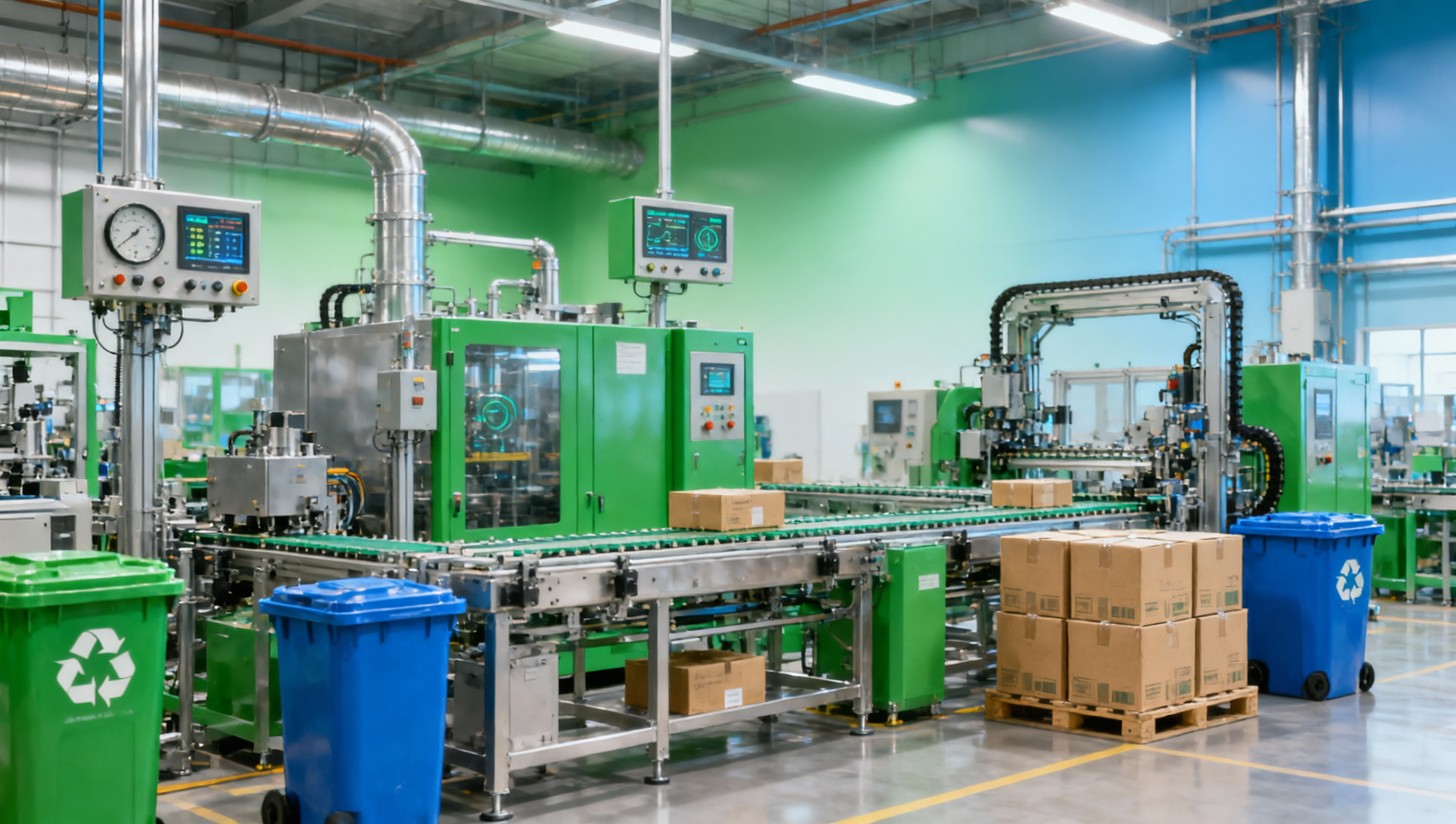
As eco-friendly production claims face tighter verification across global supply chains, industrial environmental news for eco-friendly production is becoming essential for manufacturers, buyers, operators, and decision-makers. From smart manufacturing and automation to renewable energy, waste reduction, and carbon emission reduction, businesses need reliable insight to navigate compliance, technology shifts, and market expectations with confidence.
Why are eco-friendly production claims facing tougher scrutiny now?
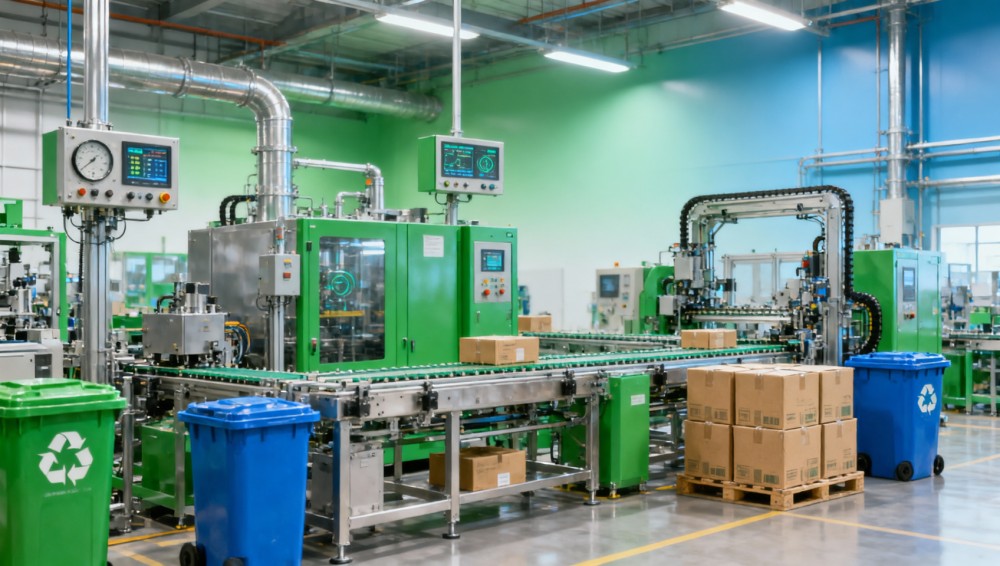
Eco-friendly production is no longer judged by broad marketing language alone. In manufacturing, processing machinery, industrial components, and electrical equipment supply chains, buyers increasingly ask for verifiable evidence covering material inputs, energy use, waste handling, emissions control, and traceability. What changed is not only public attention, but also procurement practice. In many B2B transactions, a sustainability claim now needs supporting records from the factory floor to shipment documents, often reviewed over a 12-month reporting cycle.
For information researchers, this means industrial environmental news for eco-friendly production must go beyond headlines. They need policy interpretation, technology updates, market signals, and supplier developments in one place. For operators, scrutiny appears in daily work through meter readings, material segregation, waste logs, maintenance records, and batch tracking. For procurement teams, the core question is practical: can a supplier prove a claim within normal audit timelines of 2–4 weeks rather than relying on general statements?
Decision-makers face a wider risk picture. If a factory promotes lower carbon production without process-level verification, the result may be delayed approvals, contract renegotiation, or lost export opportunities. This is especially relevant where supply chains cross multiple regions and standards are interpreted differently. A company may meet one customer’s checklist yet fail another’s because the second buyer requests stronger chain-of-custody evidence, documented energy baselines, or third-party test records for specific product categories.
What is driving verification pressure across industrial supply chains?
Several factors are converging. First, more buyers are integrating environmental criteria into RFQs, supplier scorecards, and annual reviews. Second, trade-facing industries are seeing more document checks connected to export compliance and product declarations. Third, digitalization has raised expectations. When factories can collect machine-level energy data every shift or every 24 hours, vague estimates become less acceptable. The market now expects measurable proof, not only intent.
- Procurement teams increasingly request 3 types of evidence: process data, supplier declarations, and documented improvement actions.
- Operators are asked to maintain 4 routine records: energy consumption, material loss, waste treatment, and maintenance intervals.
- Decision-makers need cross-functional alignment between EHS, production, sourcing, and export compliance within 1 reporting framework.
This is where an industry-focused content portal becomes valuable. When environmental claims are being challenged, companies need linked intelligence rather than isolated news items. Market analysis helps explain why demand is shifting. Price trend coverage shows how material substitutions affect cost. Policy interpretation clarifies compliance expectations. Exhibition coverage reveals technology directions. Supply chain intelligence highlights where risk is rising or where new supplier options may be emerging.
Which verification points matter most for manufacturers, buyers, and operators?
Not every eco-friendly production claim carries the same burden of proof. In industrial settings, the most scrutinized statements usually involve recycled content, renewable energy usage, lower emissions, reduced water consumption, safer chemical handling, and waste diversion. Buyers tend to test these claims against production records, purchase invoices, utility contracts, process adjustments, and shipment-level documentation. The stronger the commercial value of the claim, the stronger the expected evidence.
A practical mistake is to focus only on finished product claims while ignoring process integrity. Operators may reduce scrap by 5%–10% through better machine calibration, but if that change is not logged, traced by batch, and reviewed monthly, the improvement becomes hard to defend. Likewise, a factory may install energy-efficient drives or compressed-air controls, yet fail to establish a before-and-after baseline over 3–6 months. Without that baseline, the claim remains weak during customer review.
For procurement personnel, the challenge is selection under limited time. A supplier may appear competitive on price and lead time but provide uneven evidence across material sourcing, waste treatment, and energy use. For enterprise leaders, the challenge is governance. If different plants define eco-friendly production differently, the group brand may carry inconsistent risk across regions and customer sectors.
Core evaluation dimensions in industrial environmental news for eco-friendly production
The table below organizes 5 common verification dimensions used in industrial sectors. It helps researchers, users, and sourcing teams compare whether a claim is operationally supported or still too general for serious B2B review.
The key insight is that verification strength depends on consistency. A supplier does not need every metric to be perfect, but it does need records that match the claim, cover a reasonable time window, and connect to real operating conditions. In industrial environmental news for eco-friendly production, the most useful reports are those that explain not just the promise, but the measurable implementation path behind it.
Operational checkpoints that should not be skipped
- Review whether machine settings, maintenance cycles, and operator practices support the environmental claim over at least 1 quarter.
- Check if utility data can be normalized by output, runtime, or product family instead of using only total monthly consumption.
- Confirm that waste contractors, transport documents, and internal logs use matching categories and dates.
- Compare marketing language with technical evidence before sharing sustainability statements with overseas buyers.
How should procurement teams compare suppliers making eco-friendly production claims?
Supplier selection becomes harder when several vendors present similar environmental narratives. In machinery, components, and electrical equipment sourcing, procurement should compare not only the claim itself but also the cost impact, evidence depth, delivery implications, and audit readiness. A supplier with a lower quote may require extra verification time, while a supplier with stronger documentation may reduce onboarding friction and customer-side review costs. The right decision often depends on total risk, not headline price.
This is particularly important when projects run on tight schedules. If your delivery window is 4–8 weeks, missing sustainability documents can become a hidden bottleneck. For operators and plant managers, an unverified material substitution can also create process instability, affecting welding, coating, thermal performance, insulation properties, or equipment compatibility. In other words, eco-friendly production claims must be assessed as both compliance items and process variables.
A structured comparison model helps. It allows sourcing teams to score suppliers against a consistent framework and gives decision-makers a better basis for approval. It also helps information researchers distinguish between promotional updates and operationally meaningful news.
Supplier comparison framework for B2B purchasing
Use the following comparison table when reviewing industrial environmental news for eco-friendly production or when screening potential suppliers. The goal is to identify which vendors can support claims under commercial pressure, customer audits, and export documentation checks.
This comparison does not mean every purchase should favor the most documented option. It means buyers should understand trade-offs early. In some projects, a basic supplier may still be acceptable if the environmental claim is not central to the contract. In others, especially export-facing or brand-sensitive business, verification readiness can save far more than it costs.
A 4-step procurement check before approval
- Define the exact claim being evaluated, such as recycled input, lower energy intensity, reduced waste, or lower process emissions.
- Request evidence linked to a clear time window, usually the last 3 months, 6 months, or 12 months depending on production stability.
- Confirm whether process changes affect product performance, delivery schedule, or maintenance requirements on site.
- Align procurement, quality, operations, and management on acceptable risk before issuing approval or nomination.
A specialized portal supports this workflow by combining company news, market analysis, policy interpretation, and technology updates. That combination helps buyers judge whether a supplier’s environmental claim reflects a real operating trend, a temporary adjustment, or simply a communications strategy not yet anchored in production discipline.
What standards, certifications, and compliance signals should companies watch?
In eco-friendly production, companies often ask the wrong question first: “Which certificate do we need?” The better question is: “What evidence does our customer, market, or product category require?” Standards and certifications can help, but they are not interchangeable. Some focus on management systems, others on product content, process control, emissions accounting, or supply chain responsibility. A certificate may support credibility, yet it does not automatically validate every environmental marketing claim.
For industrial sectors, common compliance attention points include environmental management systems, energy management practices, restricted substances management, product declarations, waste handling rules, and traceability of raw materials. Export-oriented suppliers should also monitor changes in destination-market documentation requirements. Even when no new law applies immediately, customer contracts may tighten expectations faster than regulation does, often with implementation windows of 6–12 months.
Operators and technical users should understand that compliance is not only a paperwork exercise. If chemical storage labels, calibration records, and maintenance logs are outdated, the weakness can affect both operational safety and the credibility of eco-friendly production claims. For leaders, the implication is clear: compliance readiness must be integrated into plant routines, not handled only when a buyer asks questions.
How to interpret common compliance signals without overclaiming
The table below outlines common categories of compliance signals relevant to industrial environmental news for eco-friendly production. It is designed as a practical interpretation guide rather than a legal checklist.
A disciplined interpretation prevents two common mistakes: underestimating useful signals and overreading limited ones. Good industrial reporting should explain both. That is why policy interpretation and standards tracking matter. They help teams understand what a requirement is, what evidence range is typical, and where a claim may become vulnerable under customer review.
Three compliance habits that reduce risk
- Update internal claim language every 6–12 months so sales materials match the latest verified operating data.
- Maintain one evidence map linking claims, documents, responsible departments, and renewal frequency.
- Run cross-functional reviews before major exhibitions, customer audits, or export tenders to avoid inconsistent statements.
How can companies implement credible eco-friendly production without slowing operations?
The best eco-friendly production strategy is not the most complicated one. It is the one that fits production reality, data availability, and customer expectations. In many factories, a practical implementation path can start with 3 layers: measurement, process control, and communication discipline. Measurement identifies what is happening. Process control stabilizes improvement. Communication discipline ensures that public claims do not get ahead of evidence. This sequence helps companies move faster with fewer reversals.
For operators, implementation usually begins with routine visibility. Examples include shift-based energy checks, compressed-air leak inspections every month, scrap categorization by line, and maintenance logs tied to machine efficiency. For procurement teams, it includes supplier questionnaires, traceability requirements, and claim review before vendor approval. For management, it means setting review cycles, usually quarterly, and deciding which indicators are material enough to report to customers.
Importantly, companies do not need to transform every plant at once. A pilot on 1 production line, 1 workshop, or 1 product family over 8–12 weeks can produce a more reliable baseline than a rushed site-wide campaign. Once the data quality improves, scaling becomes easier and communication becomes safer.
A realistic 4-stage implementation path
- Map the claim: define what will be claimed, at which level, and for which customer or market segment.
- Build the evidence set: collect 3–5 core records such as utility data, material inputs, waste logs, and process adjustments.
- Validate the process: confirm that product performance, operator instructions, and delivery timelines remain stable.
- Control the communication: release only claims that can be explained clearly by sales, quality, and operations teams.
Common misconceptions and practical answers
Does installing efficient equipment automatically justify eco-friendly production claims?
Not by itself. Equipment upgrades are important, but buyers usually want to see operating results over time. A new motor, inverter, or filtration unit should ideally be linked to baseline and follow-up data over at least several production cycles. Without that, the claim is still incomplete.
Is a higher price always justified for a verified eco-friendly production supplier?
Not always. The premium must be judged against risk reduction, approval speed, export readiness, and customer expectations. In some categories, stronger documentation can prevent delays or rework that cost more than the price difference. In others, the premium may only matter if environmental performance is part of the bid requirement.
How often should evidence be updated?
That depends on claim sensitivity and production variability. High-volume lines or frequently changing inputs may need monthly updates. More stable processes may work with quarterly reviews. The key is consistency. A claim reviewed once and then left untouched for 18 months can become misleading even if the original data was valid.
Why choose our portal for industrial environmental news for eco-friendly production?
When eco-friendly production claims are under tougher scrutiny, companies need more than scattered information. They need industrial environmental news for eco-friendly production that connects policy interpretation, market analysis, price trends, technology updates, company developments, exhibition signals, export trade changes, and supply chain intelligence. That combination helps different teams make faster and more consistent decisions from research through sourcing and operational follow-up.
For information researchers, our coverage helps identify which sustainability topics are becoming commercially relevant and which are still early-stage. For users and operators, we highlight practical implications for equipment, processes, maintenance, and material handling. For procurement teams, we provide context for supplier evaluation, documentation expectations, and shifting buyer demands. For decision-makers, we turn fragmented developments into a usable view of risk, timing, and opportunity across industrial sectors.
If you are comparing suppliers, preparing a sourcing plan, tracking export-related environmental requirements, or evaluating technology upgrades, you can use our content support to shorten research time and improve internal alignment. We can help you focus on the questions that matter most: which claims are credible, what evidence is typically needed, how long verification may take, what trade-offs affect cost, and which market signals deserve immediate attention.
What you can contact us about
- Parameter confirmation for production-related environmental indicators, including energy, waste, process stability, and material traceability.
- Supplier screening and solution comparison for manufacturing machinery, industrial components, and electrical equipment supply chains.
- Lead time expectations, documentation readiness, and common approval cycles for export or audit-sensitive projects.
- Customized content direction on standards, policy changes, technology updates, exhibition trends, and sourcing risks by sector.
- Quote communication support, sample-related inquiry preparation, and claim verification checkpoints before commercial discussions.
If your team is facing tighter sustainability questions from customers or internal stakeholders, contact us with your target market, product category, current claim, and expected delivery window. We can help you sort the information priorities, compare the right signals, and build a clearer path from environmental messaging to credible industrial execution.

Industry Briefing
Get the top 5 industry headlines delivered to your inbox every morning.