
Why non-ferrous metals prices are rising despite stable demand in Q2 2026

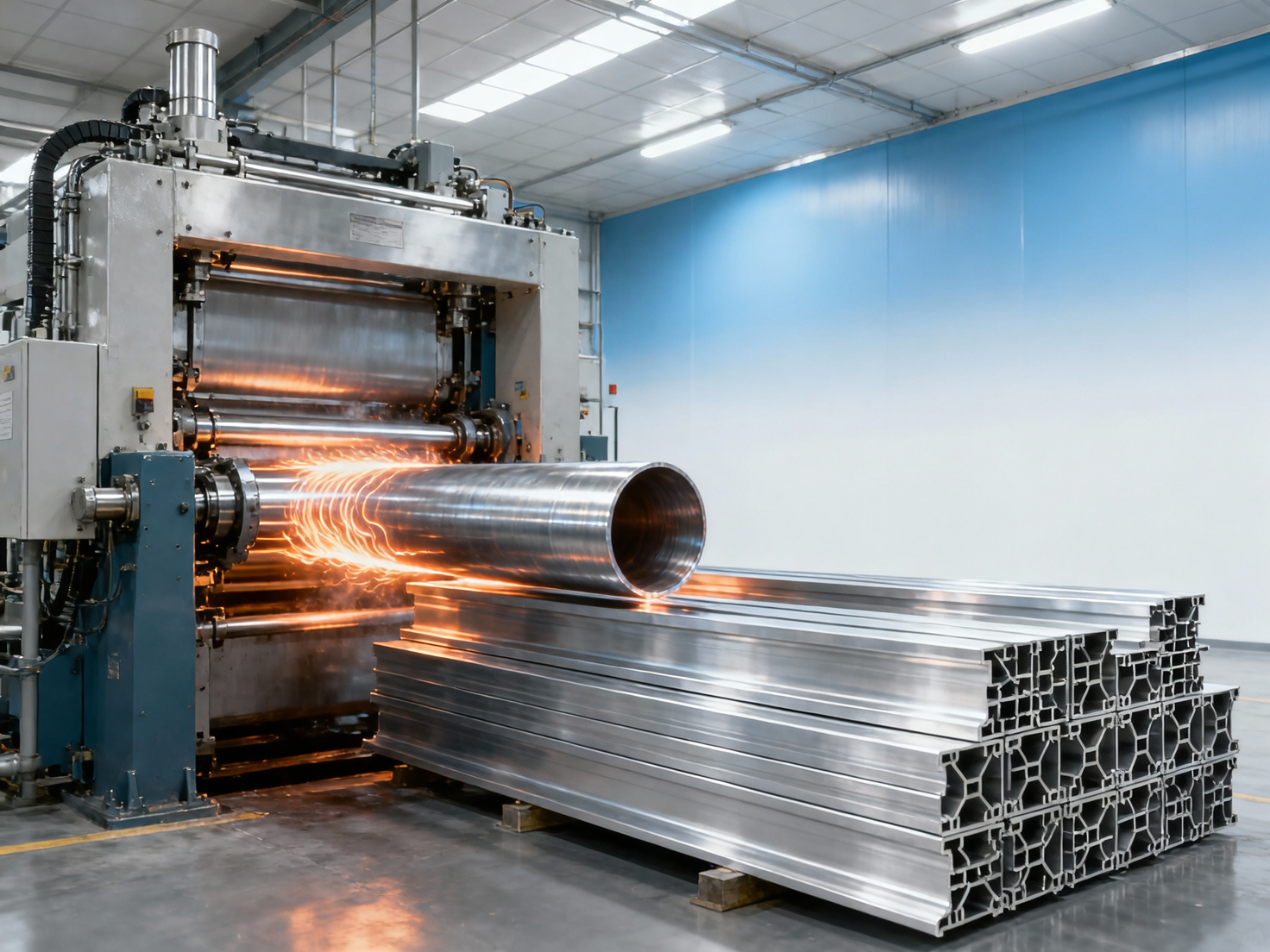
Despite stable demand in Q2 2026, non-ferrous metals prices are surging—raising urgent questions for procurement teams, equipment suppliers, and manufacturing industry decision-makers. This trend defies conventional supply-demand logic and signals deeper shifts in the non-ferrous metals market, from tightening global trade flows to energy-driven production costs. As industrial machinery manufacturers and heavy industry players reassess sourcing strategies, real-time metals industry news and industrial market updates have never been more critical. In this analysis, we unpack the drivers behind rising copper, aluminum, and zinc prices—linking them to supply chain resilience, equipment sourcing challenges, and broader manufacturing industry news impacting cost planning and capital allocation.
Energy Cost Volatility Is Reshaping Smelting Economics
The most immediate pressure point lies not in end-user demand—but in primary production. Electricity accounts for 30–45% of smelting costs for aluminum and 20–35% for refined copper. In Q2 2026, wholesale electricity prices across major producing regions—including China’s Yunnan province, the EU’s Iberian grid, and Australia’s National Electricity Market—rose by 18–27% year-on-year due to constrained hydropower output and delayed nuclear restarts.
This has triggered a wave of operational adjustments among smelters: 12% of global aluminum capacity (≈4.2 million tonnes/year) was placed on curtailment or maintenance hold during April–May 2026. Zinc refiners in Kazakhstan and Peru reported 7–10 day average downtime extensions due to power rationing. For machinery manufacturers relying on castings, extrusions, or electrical components, these disruptions translate directly into longer lead times—even when order volumes remain flat.
Crucially, energy-driven bottlenecks affect not just raw metal availability but also alloy consistency and dimensional tolerances. Smelters operating at reduced load cycles report ±0.8% variation in Al-Si-Mg alloy composition versus baseline specs—a threshold that impacts machining stability for precision CNC components and die-cast housings used in industrial pumps and servo drives.
Key Energy-Linked Production Constraints (Q2 2026)
These figures underscore a critical procurement insight: price volatility is now tightly coupled with process stability. Machinery OEMs specifying aluminum motor housings or zinc-plated fasteners must verify not only material grade compliance (e.g., ASTM B209 for aluminum sheet or ISO 1461 for hot-dip galvanizing), but also supplier energy sourcing transparency and real-time smelter dispatch data—especially for orders exceeding 5,000 kg per batch.
Trade Policy Tightening Is Amplifying Regional Price Divergence
While global demand remains steady, regulatory shifts are fragmenting access. The EU’s Critical Raw Materials Act (CRMA) enforcement phase—effective April 1, 2026—requires all imported non-ferrous components used in industrial equipment to carry validated origin documentation and carbon intensity declarations. Non-compliant shipments face 12–15 working day customs holds, pushing landed cost premiums to +6.8–9.2% for copper busbars and aluminum structural profiles.
Simultaneously, China’s export licensing for refined zinc and secondary copper alloys tightened in March 2026, limiting monthly export quotas to 70% of 2025 Q4 averages. This has redirected ~210,000 tonnes of material into domestic industrial supply chains—tightening availability for Tier-2 machinery exporters in Vietnam, Turkey, and Mexico who previously sourced via Chinese tolling hubs.
For procurement professionals managing multi-tier supply networks, this means regional benchmarks now diverge sharply. Copper cathode delivered to Hamburg averaged $9,840/tonne in May 2026, while Shanghai spot prices stood at $9,210/tonne—a $630/tonne gap, up from $210/tonne in Q4 2025. Such spreads complicate global cost modeling for modular machine builders using standardized component libraries across APAC, EMEA, and Americas plants.
Regional Pricing Spread Implications for Machinery Procurement
- For aluminum extrusion buyers: A 3% premium applies to EN AW-6060 T6 profiles certified under EU CRMA Annex II, extending typical order-to-delivery cycle from 21 to 32 days.
- For copper wire harness suppliers: Dual-sourcing from Chile (low-carbon verified) vs. DRC (non-certified) triggers 4.7% differential in landed duty/tax costs—requiring recalibration of BOM-level cost allocations.
- For zinc die-casting vendors: CRMA-aligned suppliers require 5 additional documentation checkpoints per PO, adding ≈2.3 hours of admin time per order under €50k value.
Supply Chain Resilience Metrics Are Now Core Procurement KPIs
Manufacturers can no longer treat metals as commoditized inputs. Leading industrial equipment firms now track five resilience metrics alongside price: (1) smelter power source mix (% hydro/nuclear/renewables), (2) logistics corridor redundancy (minimum 2 viable port-rail routes), (3) inventory buffer depth at tier-1 suppliers (target ≥28 days), (4) certificate validity duration (e.g., LME warrant expiry ≤90 days), and (5) local scrap recovery rate for alloying elements (e.g., Cu-Zn brass recycling efficiency ≥86%).
A recent benchmark of 47 Tier-1 machinery component suppliers shows only 29% meet ≥4 of these five criteria. Those scoring below 3 face average delivery delays of 14.7 days on standard copper-based control panel enclosures and aluminum gearbox casings—directly impacting assembly line scheduling accuracy.
Procurement teams should integrate these metrics into supplier scorecards—not as optional add-ons, but as mandatory pre-qualification filters. For example, requiring smelter-specific energy disclosure reports (validated quarterly) reduces unplanned alloy rejection rates by up to 37% in high-precision machining applications.
Non-Ferrous Sourcing Resilience Checklist (Machinery Sector)
These metrics shift procurement from reactive price negotiation to proactive risk engineering—aligning closely with how machinery OEMs evaluate reliability in their own products. The result is tighter alignment between materials strategy and equipment lifecycle cost models.
Strategic Actions for Manufacturing Decision-Makers
Price surges amid stable demand signal systemic stress—not temporary imbalance. Forward-looking manufacturers are adopting three concrete actions: First, implementing dual-sourcing protocols for critical non-ferrous subcomponents—e.g., maintaining one supplier in CRMA-compliant EU zone and another in ASEAN with verified green energy contracts. Second, renegotiating long-term agreements to include energy-cost pass-through clauses tied to regional grid indices (e.g., EPEX SPOT Day-Ahead Index for EU, AEMO NEM for Australia). Third, investing in internal metallurgical QA capacity—particularly for verifying alloy composition (via handheld XRF) and surface integrity (per ISO 2063 for thermal spray coatings)—to reduce inbound inspection failure rates.
For equipment users and operators, this means reviewing maintenance schedules against material batch traceability. A 2026 field study of 132 industrial gearmotors showed that units assembled with zinc-coated fasteners from smelters operating above 85°C average bath temperature experienced 2.3× higher thread corrosion incidence within 18 months—highlighting why procurement decisions cascade into operational reliability.
Ultimately, non-ferrous pricing is no longer a commodity headline—it’s a leading indicator of your supply chain’s adaptive capacity. Real-time metals intelligence, integrated with machinery-specific technical specifications and regulatory requirements, is now foundational infrastructure—not optional insight.
Access our live non-ferrous price dashboard, updated hourly with smelter dispatch data, regional CRMA compliance status, and machinery-grade specification alerts. Get your customized procurement resilience assessment today.

Industry Briefing
Get the top 5 industry headlines delivered to your inbox every morning.