
Export Trade Policy Shifts Exporters Should Watch in 2026

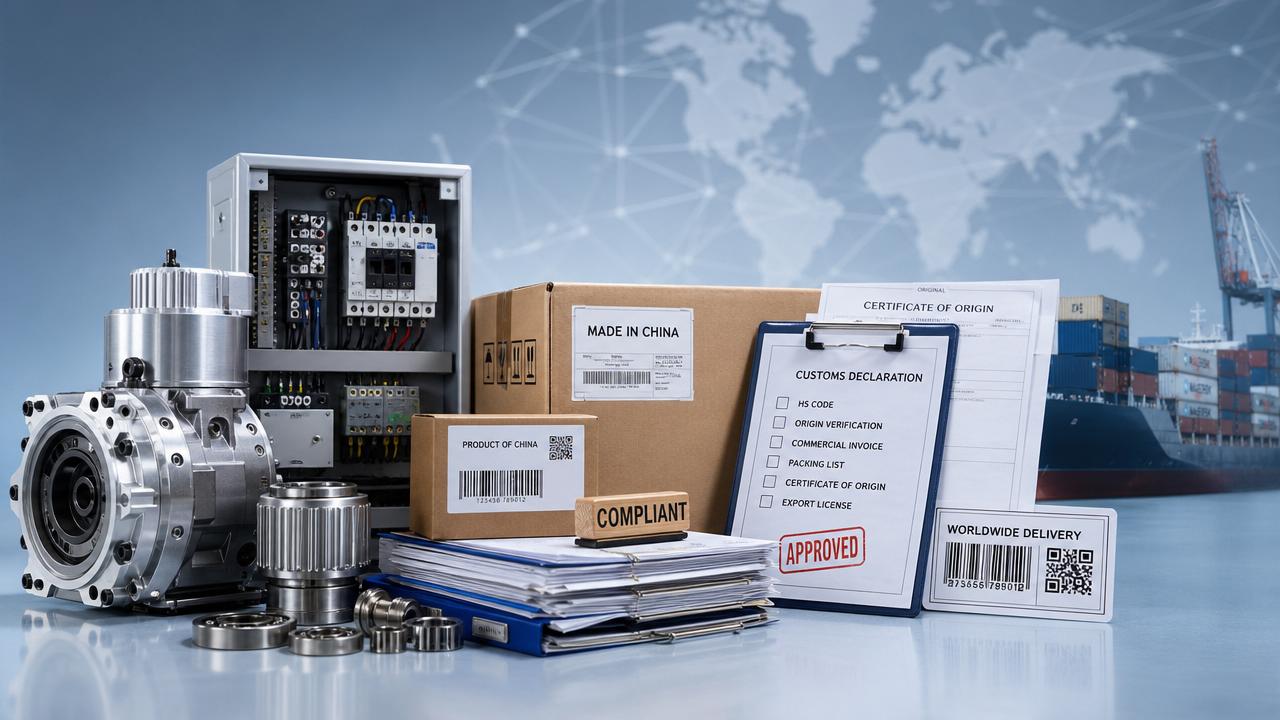
As 2026 approaches, export trade policy changes are becoming a decisive factor in global business planning. For companies linked to machinery, industrial components, and electrical equipment, policy signals now affect pricing, documentation, sourcing, and market access.
This article explains which export trade policy shifts exporters should watch in 2026, why they matter, and how an exporter can prepare for practical compliance and competitiveness challenges.
What export trade policy changes are most likely to matter in 2026?
The biggest export trade policy trends point to tighter control, not looser trade. Governments are focusing on supply chain security, strategic technologies, emissions reporting, and origin verification.
For an exporter, this means policy is no longer only about tariffs. It now includes customs data quality, sanctions screening, end-use reviews, and product-level traceability.
Several policy areas deserve close attention in 2026:
- Expanded export control lists for dual-use goods and sensitive components
- Stricter rules of origin reviews in free trade arrangements
- Carbon-related trade measures affecting energy-intensive products
- Digital customs filing and real-time reporting requirements
- More aggressive anti-dumping and anti-circumvention investigations
- Country-specific security reviews for industrial and electrical equipment
These export trade policy moves may emerge unevenly across markets. Still, the direction is clear: higher compliance expectations and more evidence-based border checks.
Why does export trade policy affect costs beyond tariffs?
Many exporters still link export trade policy mainly with duty rates. That view is now too narrow. Compliance costs often grow faster than tariffs, especially in technical sectors.
A new licensing rule can delay shipment release. A missing origin record can remove preferential duty benefits. A carbon disclosure rule can add reporting, audit, and software costs.
Indirect cost impacts usually appear in five areas:
- Documentation labor and broker coordination
- Shipment delays and inventory buffer increases
- Testing, certification, and technical file preparation
- System upgrades for traceability and restricted-party screening
- Contract renegotiation with suppliers and logistics providers
In machinery and electrical supply chains, product configurations also matter. A minor component change may trigger a new classification, licensing review, or local content reassessment.
That is why every exporter should connect export trade policy tracking with cost modeling, not only legal review. Policy risk often becomes margin risk before it becomes a customs issue.
Which exporters and products could feel the strongest impact?
Not every exporter faces the same pressure. The strongest impact usually falls on goods with technical complexity, strategic applications, or multi-country sourcing.
Products in these categories are especially exposed:
- Industrial control systems and power distribution equipment
- Machinery containing advanced sensors, chips, or automation modules
- Components with steel, aluminum, copper, or high-energy manufacturing inputs
- Products assembled across several countries under preferential trade programs
- Items shipped to markets with sanctions, licensing, or end-user restrictions
An exporter of basic parts may assume lower risk. However, origin disputes, product misclassification, and anti-circumvention reviews can still affect standard industrial components.
Electrical equipment exporters should also watch product safety and environmental reporting rules. These often interact with export trade policy and create overlapping compliance obligations.
How should an exporter judge whether a policy shift is temporary or structural?
This is one of the most important questions in 2026. Not every announcement changes long-term strategy. Some export trade policy actions are political signals, while others reshape trade for years.
A useful judgment method is to test each change against four indicators:
If a policy shift scores high on all four indicators, an exporter should treat it as structural. That means planning for process redesign, not only temporary workaround measures.
If a shift depends on short-term diplomatic friction, limited sectors, or provisional enforcement, it may still matter, but scenario planning is more useful than full redesign.
What are the biggest export trade policy mistakes to avoid in 2026?
A common mistake is reacting only after customs delays appear. By then, the exporter already faces disruption, cost leakage, and potential customer dissatisfaction.
Another mistake is treating compliance as a document issue only. In reality, export trade policy often starts with product design, supplier mapping, and contract terms.
The most frequent risk areas include:
- Using outdated HS codes for revised product specifications
- Assuming a free trade agreement automatically guarantees origin eligibility
- Ignoring end-use and end-user screening for industrial equipment
- Separating sustainability reporting from export documentation controls
- Relying on one-country sourcing for sensitive materials or modules
- Waiting too long to update ERP, customs, and supplier data systems
A strong response starts with internal visibility. Every exporter should know product composition, supplier origin, classification logic, and market-specific documentation requirements.
How can exporters prepare now for 2026 export trade policy shifts?
Preparation does not always require major investment at the start. What matters first is a structured review of exposure across markets, products, and supply chain nodes.
A practical readiness plan can follow these steps:
- Map top export markets by revenue, growth potential, and policy sensitivity
- Review product classifications, origin rules, and licensing status
- Check supplier declarations, raw material traceability, and contract language
- Model cost impact under tariff, carbon, and delay scenarios
- Build a policy watchlist covering customs, sanctions, and technical regulations
- Create escalation rules for high-risk shipments and market changes
For industrial equipment and machinery trade, it is also wise to review after-sales obligations. Spare parts, software updates, and remote service can carry separate export trade policy implications.
The best preparation combines regulatory monitoring with commercial flexibility. Dual sourcing, modular product design, and data-ready documentation can reduce policy shock.
Quick FAQ table: export trade policy questions exporters should ask
Export trade policy in 2026 will likely be shaped by control, transparency, and resilience. For any exporter, the challenge is not only understanding rules, but linking them to cost, timing, and market strategy.
The most effective next step is a focused review of product classification, origin proof, supply chain traceability, and market-specific policy exposure. Early preparation can protect margins and support more confident cross-border growth.

Industry Briefing
Get the top 5 industry headlines delivered to your inbox every morning.