
2026 Export Trade Policy Shifts Exporters Must Track

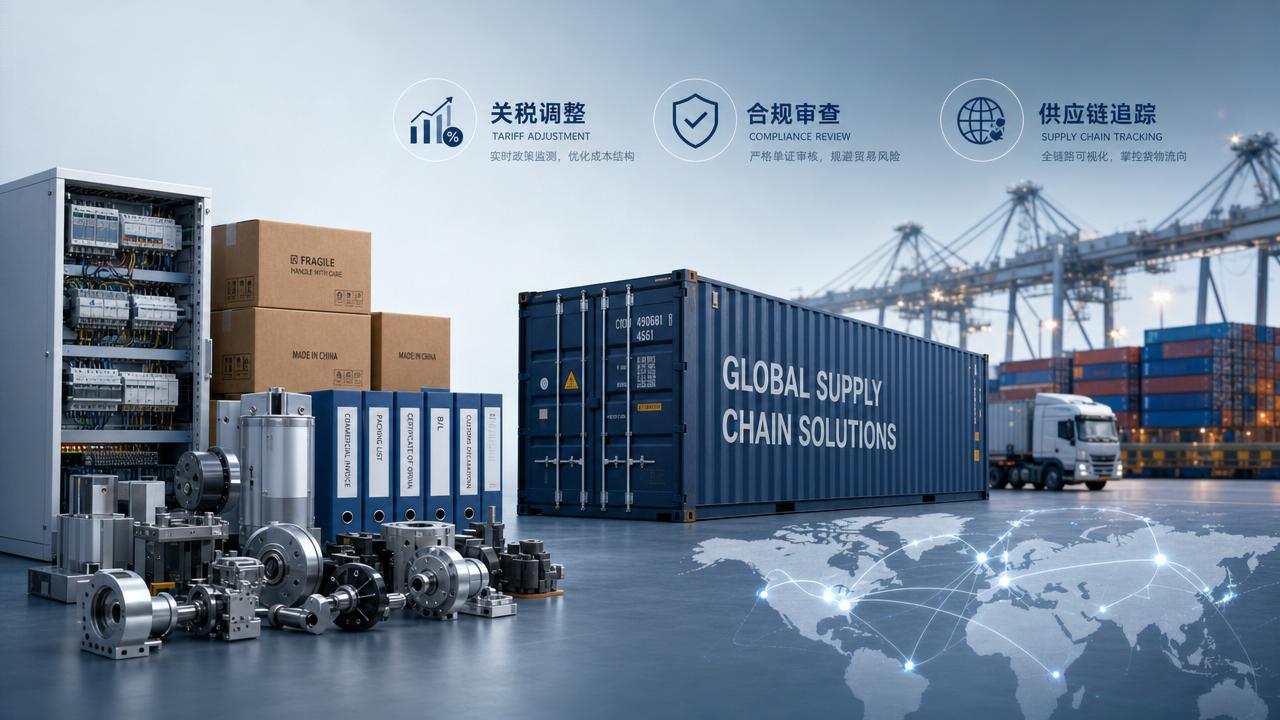
As 2026 approaches, every exporter must prepare for accelerating export trade policy changes that could reshape market access, compliance costs, and supply chain decisions. From tariff adjustments to evolving customs rules and sustainability requirements, understanding each export trade policy shift is essential for business leaders seeking to protect margins, reduce risk, and capture new cross-border opportunities in a highly competitive global environment.
For companies involved in manufacturing machinery, industrial components, and electrical equipment, policy risk is no longer a back-office issue. It now directly affects landed cost, delivery reliability, customs clearance speed, and even the commercial viability of serving certain markets.
Decision-makers need a practical view of which export trade policy developments matter most, how fast they can influence contracts, and what internal adjustments should start in the next 3 to 12 months. The most resilient exporter in 2026 will not simply react to regulation; it will build policy awareness into pricing, sourcing, documentation, and customer communication.
Why 2026 Will Be a More Demanding Year for Export Compliance
The operating environment for any exporter is becoming more layered. Instead of watching only tariffs, firms now need to track at least 4 policy dimensions at the same time: customs procedures, product conformity rules, trade defense measures, and sustainability-related obligations.
In industrial sectors, a single export trade policy update can affect multiple nodes in one shipment cycle. A revised HS classification may alter duty treatment, while a new reporting requirement may add 2 to 5 extra compliance steps before cargo can leave port.
The main forces behind policy volatility
Three forces are driving faster change. First, governments are using trade policy to support domestic manufacturing and strategic industries. Second, digital customs systems are increasing documentation scrutiny. Third, climate and supply chain due diligence rules are moving from voluntary disclosure toward mandatory compliance.
- More frequent tariff reviews and product-specific duty changes
- Expanded certificate, origin, and technical file checks
- Stricter screening for dual-use, safety, and environmental content
- Greater buyer demand for traceability within 30 to 90 days of order confirmation
Why industrial exporters face above-average exposure
Manufacturing and processing machinery, industrial equipment, and electrical supplies often cross borders with complex bills of materials, mixed-origin inputs, and multiple technical standards. That means an exporter may face not one policy checkpoint, but 5 or more checkpoints from quotation to final delivery.
For example, a motor assembly, control cabinet, or processing line may require origin analysis, voltage or safety conformity review, packaging compliance, restricted substance documentation, and destination-specific labeling. Missing one document can delay customs release by 3 to 10 working days.
Typical pressure points in 2026 planning
Business leaders should assess risk at the quotation stage, not after production begins. Once materials are purchased and delivery terms are fixed, even a small export trade policy shift can compress margin by 2% to 8%, especially on medium-volume industrial orders with tight lead times.
Five Export Trade Policy Shifts Exporters Should Track Closely
Not every regulatory headline deserves the same level of attention. The table below highlights 5 policy areas that are most likely to affect industrial exporters in 2026 through cost, market access, or operational disruption.
The key lesson is that export trade policy is no longer confined to customs duty. It now spans data governance, technical documentation, supplier records, and end-use review. A prepared exporter treats these as one connected compliance system rather than separate tasks.
1. Tariff changes will continue to reshape pricing strategy
For many exporters, tariff risk remains the most visible policy variable. But the bigger issue is timing. Duty changes can occur faster than annual contract renegotiations, leaving suppliers locked into price commitments for 6 to 12 months without room to recover higher import costs at destination.
A disciplined exporter should build at least 3 pricing layers: base quotation, tariff-adjusted quotation, and contingency quotation for sensitive product groups. This approach is especially useful in industrial equipment projects where freight, duty, and installation timelines are interlinked.
2. Customs digitization will reward data accuracy
As customs systems become more automated, mismatches between invoice description, HS code, and product specification are more likely to trigger inspection. For electrical and machinery exports, generic descriptions such as “parts” or “equipment” are increasingly risky.
A practical target is to reduce manual data re-entry points from 5 or 6 down to 2 or fewer. Fewer handoffs mean fewer declaration errors, shorter clearance cycles, and lower exposure to post-entry review.
3. Sustainability rules will move closer to core market access
Many industrial buyers now require environmental and material declarations before approving suppliers. In 2026, more of these requests will be driven by regulation rather than procurement preference. An exporter that cannot provide traceable material information may lose tenders before price negotiations even begin.
This is particularly relevant for electrical assemblies, coated metal parts, wire products, and packaging-intensive shipments. Preparing compliance files 2 to 4 weeks before dispatch is safer than trying to collect declarations after cargo is ready.
How Exporters Can Build a 2026 Policy Response Framework
Tracking export trade policy is only valuable if it leads to operational decisions. The most effective response framework combines commercial, compliance, procurement, and logistics teams into one review cycle. In many firms, a monthly 60-minute policy review can prevent far more expensive last-minute corrections.
A 4-step internal action model
- Identify product lines with the highest policy sensitivity by value, market, and technical complexity.
- Map the documents required for each destination, including origin, safety, and substance-related records.
- Test the impact of tariff, lead time, and compliance changes on margin under 2 to 3 scenarios.
- Update customer communication, contract terms, and shipment approval workflow before peak season.
This model works well for exporters handling mixed portfolios, such as machinery plus spare parts, electrical accessories plus control systems, or project equipment with phased delivery. It helps management prioritize where a policy change is a minor paperwork issue and where it is a board-level margin risk.
Which capabilities matter most by business function
The table below shows how different departments should respond when export trade policy becomes more dynamic. In practice, firms that spread responsibility across 4 key functions tend to react faster than those relying on one trade specialist alone.
A cross-functional structure reduces the chance that an exporter discovers a policy problem only after production completion. It also supports better customer confidence, because commercial teams can explain lead times and compliance requirements with greater clarity.
Useful KPIs for policy readiness
Executives should monitor a few measurable indicators. Examples include document error rate, customs hold frequency, average clearance delay, percentage of shipments with complete origin support, and the number of supplier declarations updated within the last 12 months.
Common Mistakes Exporters Still Make When Policy Changes Accelerate
Even experienced exporters can misjudge policy risk when business volume is growing. The most common problem is treating export trade policy as a compliance-only issue, when in fact it affects bid strategy, inventory design, market selection, and after-sales planning.
Mistake 1: Waiting for customers or brokers to define requirements
Brokers and buyers are important sources of information, but they should not be the exporter’s only source. By the time a buyer requests a new declaration or a broker flags an issue, the order may already be committed. That reactive approach often increases expedite cost and weakens negotiation leverage.
Mistake 2: Using inconsistent product descriptions across systems
When ERP, invoice, packing list, and customs declaration use different wording, the chance of review rises sharply. This issue is common in spare parts, electrical accessories, and bundled machinery packages. A controlled product naming library can reduce rework and strengthen classification consistency.
Mistake 3: Ignoring supplier-side compliance weakness
A finished product may look compliant, yet still fail a buyer or customs review if supplier declarations are missing or origin records are weak. Exporters should focus first on the top 10 to 20 suppliers that drive most value or technical risk, rather than attempting to audit every supplier equally.
Mistake 4: Building no buffer into contracts or delivery schedules
In 2026, a prudent exporter should consider adding compliance review buffers of 3 to 7 days for sensitive destinations or complex equipment. This does not mean slower business. It means setting more realistic commitments and protecting on-time delivery performance.
What Business Leaders Should Do in the Next 90 Days
The next quarter is the right window to strengthen readiness before 2026 policy pressure intensifies. For executive teams in machinery, industrial components, and electrical supply chains, the priority is not to predict every rule change. It is to build a faster response mechanism.
Immediate priorities
- Rank your top 5 export markets by revenue and policy sensitivity
- Review the top 20 SKUs or product families for tariff, origin, and technical document exposure
- Audit whether pre-shipment files can be completed 7 days before dispatch
- Check if commercial teams have updated terms for duty fluctuation and compliance delays
- Confirm that alternative suppliers exist for at least 2 critical material categories
For an exporter serving industrial buyers, these actions can improve both risk control and sales quality. Clear policy readiness supports more reliable quotations, smoother project delivery, and stronger credibility in negotiations where customers are comparing multiple international suppliers.
2026 will reward companies that connect policy intelligence with daily execution. If your business is navigating changing export trade policy across machinery, industrial equipment, or electrical products, now is the time to refine your compliance workflow, supplier coordination, and market strategy. Contact us to explore tailored insights, practical policy tracking, and more solutions for stronger export decisions.


Industry Briefing
Get the top 5 industry headlines delivered to your inbox every morning.