
What to avoid in environmental equipment news reports


In a fast-moving industrial landscape, reporting on environmental equipment demands accuracy, relevance, and context. From latest environmental equipment news to environmental equipment news for waste management, energy efficiency, and wastewater treatment, weak reporting can mislead buyers and decision-makers. This article explores what to avoid in environmental equipment news reports to help researchers, operators, procurement teams, and business leaders identify reliable insights for green technology and sustainable development.
Why poor environmental equipment news reports create real business risk

Environmental equipment news is not just content. In industrial markets, it often influences supplier screening, budget timing, retrofit planning, and compliance preparation. A weak report can distort how readers interpret emission control systems, filtration equipment, wastewater treatment units, dust collection technology, or energy recovery solutions across manufacturing and processing environments.
For information researchers, the first risk is incomplete context. A report may highlight a product launch but omit application limits, operating conditions, or installation constraints. For operators, missing details around maintenance intervals, power load, or media replacement cycles can lead to unrealistic expectations during continuous operation over 8–24 hours per day.
For procurement teams, poor reporting often hides the difference between a technology update and a commercially mature solution. A pilot-scale system, a lab-tested component, and a production-grade unit should never be discussed as if they are equal. In B2B buying, lead times can range from 2–6 weeks for stocked components to 8–16 weeks for customized systems, so reporting must separate concept from deliverable reality.
For business decision-makers, low-quality environmental equipment news can trigger wrong investment signals. Reports that ignore policy interpretation, export trade conditions, spare-part availability, or price trend fluctuations make it harder to compare total project value. This is especially important in integrated industries where machinery, electrical systems, controls, and consumables must work together rather than in isolation.
What reliable industrial reporting should help readers judge
- Whether the news concerns a new product, a system upgrade, a market shift, a regulation change, or a supply chain event.
- Whether the equipment is suited to waste gas, wastewater, solid waste, dust, odor control, or energy efficiency applications.
- Whether the report includes operating range, installation requirements, service cycle, and compatibility with existing industrial equipment.
- Whether procurement and management teams can extract actionable information in 3 key areas: cost, compliance, and delivery risk.
A professional portal serving manufacturing machinery, industrial equipment, and electrical supplies should go beyond headlines. It should connect company news, market analysis, policy changes, exhibition signals, and supply chain intelligence into one decision-ready picture. That broader frame is what many environmental equipment news reports still lack.
What to avoid when reading or publishing latest environmental equipment news
The most common mistake is reporting without a clear use case. If a story mentions a high-efficiency filtration system but does not state whether it is for metal processing dust, chemical vapor control, municipal sludge handling, or food plant wastewater treatment, the information remains too vague for practical evaluation.
Another problem is mixing technical claims with marketing language. Terms such as low energy use, high treatment efficiency, or smart monitoring sound attractive, but in environmental equipment news they require boundaries. Readers need to know the process medium, flow rate range, inlet load condition, and routine service expectation before any claim becomes useful in a plant setting.
A third issue is ignoring comparison baselines. Environmental equipment news for energy efficiency, for example, should compare upgrades against a prior system, a common industry configuration, or an alternative process. Without a baseline, a 10% improvement, a 20–30% maintenance reduction, or a shorter cleaning cycle cannot be interpreted correctly.
The fourth issue is weak sourcing discipline. In industrial reporting, it matters whether a claim comes from a manufacturer announcement, an exhibition demonstration, a distributor briefing, a field application note, or a regulation update. These sources do not carry the same decision weight, especially when readers are trying to shortlist suppliers or time a capital expenditure cycle.
Five reporting faults that reduce decision value
The table below summarizes what to avoid in environmental equipment news reports and why each fault matters to industrial users and buyers.
For readers, the practical rule is simple: if a report cannot help you answer fit, timing, cost impact, and compliance relevance within 5–10 minutes, it may still be informative, but it is not decision-grade environmental equipment news.
Questions that should be answered before you trust the report
- What exact environmental problem is the equipment addressing: dust, VOCs, sludge, wastewater, odor, or energy loss?
- Is the report discussing a component, a skid-mounted unit, or a full integrated treatment line?
- Are the operating conditions stated, such as flow variability, daily runtime, or maintenance cycle?
- Does the report indicate whether this is suitable for retrofit projects, new production lines, or export-oriented facilities?
How to judge environmental equipment news for waste management, energy efficiency, and wastewater treatment
Different application areas require different reading standards. Environmental equipment news for waste management should explain material characteristics, throughput variability, separation logic, and disposal path. News for energy efficiency should focus on baseline energy consumption, control strategy, load profile, and payback logic. Wastewater treatment coverage should identify influent fluctuation, treatment stage, sludge handling, and discharge management constraints.
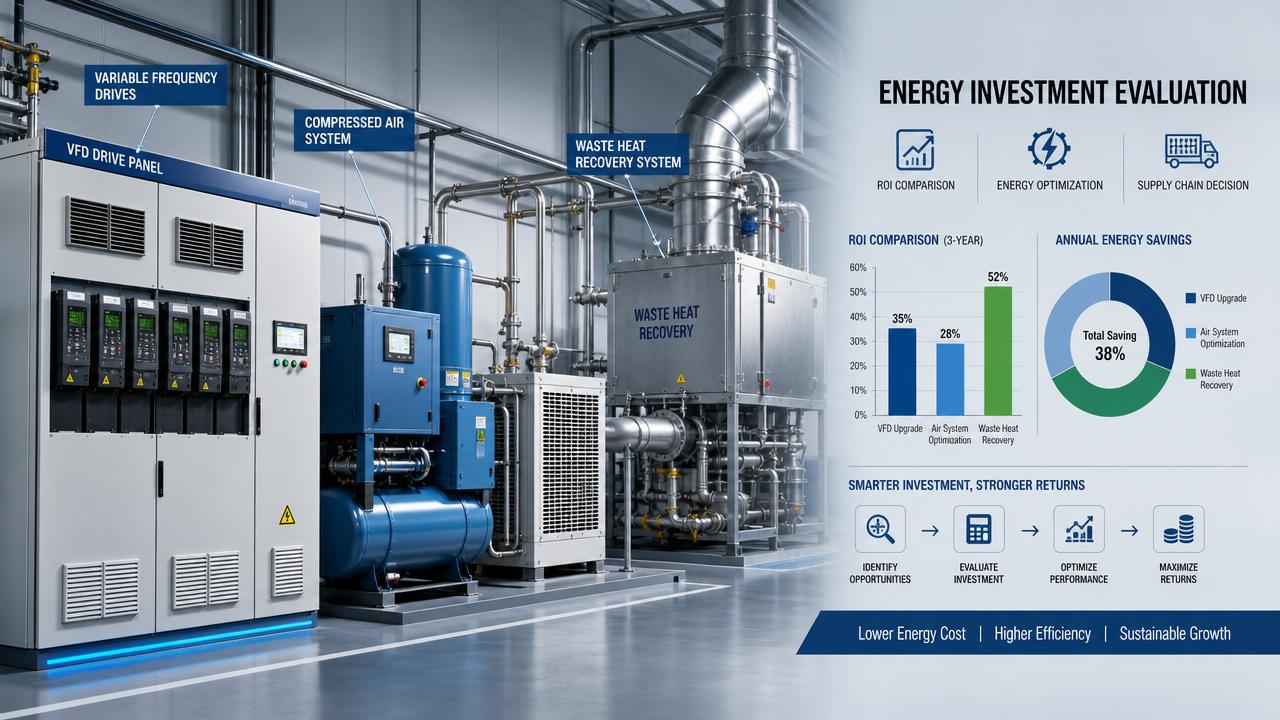
This matters because industrial readers do not buy “environmental equipment” in general. They evaluate systems within a process chain. A wastewater report may affect pump selection, dosing control, filtration, and instrumentation. A waste management report may influence shredding, sorting, compaction, conveyor design, and safety systems. An energy efficiency story may involve motors, VFD integration, heat recovery, and power quality management.
A useful report should also indicate whether the solution is best for small-batch, medium-throughput, or large continuous operations. In many facilities, production schedules shift by season or export orders, so a design that performs well under stable load may struggle under variable load. That is why industrial news must translate technology updates into operating realities.
Another critical point is implementation complexity. Some environmental equipment upgrades can be installed during a 1–3 day maintenance window, while others require line shutdown, civil work, electrical modification, and operator retraining over 2–8 weeks. Reports that ignore this difference often overstate project readiness.
Application-specific reading checklist
Use the following comparison to judge whether a report delivers enough context for each environmental equipment news category.
The comparison shows a clear pattern: what makes environmental equipment news useful is not the announcement itself, but the operational detail behind it. That is the difference between content that attracts clicks and content that supports procurement, maintenance, and investment decisions.
Three signs a report is worth saving for later sourcing work
- It links technology updates to practical process constraints, such as variable load, chemical compatibility, or available installation space.
- It clarifies whether the information is relevant for new projects, line upgrades, replacement cycles, or export compliance planning over the next 6–12 months.
- It includes enough terminology for cross-checking with suppliers, engineers, and internal stakeholders without creating confusion.
What procurement teams and decision-makers should check before acting on a report
For procurement, environmental equipment news is only the starting point. A good report helps create a shortlist, but it should never replace supplier verification. Buyers should convert the report into a 5-point review: technical fit, compliance relevance, delivery risk, operating cost, and service support. If one of these points is missing, the sourcing process slows down later.
For plant operators, the practical concern is whether the reported solution can perform under actual operating conditions. A system may appear suitable on paper but become difficult to maintain if consumables need replacement every 2–4 weeks, calibration must be done monthly, or the unit requires stable utility conditions that the facility cannot guarantee.
For business leaders, reports should be evaluated against larger business triggers. These include policy deadlines, customer sustainability requirements, export documentation expectations, and energy cost pressure. In some sectors, the right timing matters as much as the right technology, especially when machinery upgrades, electrical integration, and environmental compliance must be scheduled together.
A professional industry portal adds value by connecting environmental equipment news with market analysis, price trends, company movements, exhibition coverage, and trade developments. That integrated view helps decision-makers avoid single-source bias and see whether a reported innovation is commercially relevant, regionally available, or still at an early adoption stage.
A practical evaluation process for industrial readers
- Identify the application boundary. Confirm the process type, runtime pattern, and whether the equipment is standalone or part of a larger line.
- Check the maturity level. Distinguish between a launch announcement, a field deployment note, and a repeatable supply offering.
- Map the sourcing impact. Review likely lead time, replacement parts, electrical compatibility, and installation complexity.
- Verify compliance relevance. Determine whether the report affects planned audits, customer requirements, or plant upgrade schedules within the next quarter or fiscal year.
This 4-step approach is especially useful in cross-functional buying teams. Researchers can validate terminology, operators can assess maintenance practicality, procurement can compare supplier readiness, and executives can evaluate strategic timing. That shared framework reduces the chance that environmental equipment news is interpreted differently by each department.
Common signals of overhyped reporting
- The report emphasizes smart, digital, green, or efficient features but does not explain instrumentation, controls, or monitoring scope.
- It cites exhibition attention or company expansion without connecting those facts to equipment availability, service range, or after-sales capability.
- It mentions certifications or standards in broad terms without stating whether the issue is product safety, environmental compliance, electrical compatibility, or documentation format.
FAQ: common misunderstandings in environmental equipment news reports
Many readers search for quick answers, but quick answers can still be rigorous. The following questions reflect typical concerns from industrial users, sourcing staff, and managers who rely on environmental equipment news to monitor markets and technologies.
How can I tell if latest environmental equipment news is useful for procurement?
Look for four essentials: application fit, indicative delivery window, operating requirement, and compliance relevance. If a report does not indicate whether the equipment is for retrofit or new installation, whether delivery is typically 2–6 weeks or 8–16 weeks, and what support items are needed, it is not yet procurement-ready.
Is environmental equipment news for wastewater treatment different from general industrial news?
Yes. Wastewater treatment reporting should discuss influent variability, treatment stage, sludge handling, and reuse or discharge objectives. General industrial news may focus on company announcements or exhibitions, but wastewater-related environmental equipment news must include process detail to support engineering and purchasing decisions.
What should operators look for in environmental equipment news for energy efficiency?
Operators should focus on baseline condition, control method, maintenance effect, and stability under fluctuating load. A reported energy-saving solution may sound compelling, but if it depends on narrow operating conditions or frequent tuning every few weeks, it may not fit a facility with variable production schedules.
Why do some environmental equipment news reports feel informative but still fail to help decisions?
Because they stop at announcement level. They tell you that a company launched a product, attended an exhibition, or entered a partnership, but they do not explain process compatibility, project stage, or supply chain implications. Decision-grade reporting must connect market events to technical and commercial consequences.
Why choose us for industrial environmental equipment insight and sourcing support
In complex B2B environments, readers need more than headlines. They need environmental equipment news that connects technology updates with market movement, price trends, policy interpretation, exhibition signals, export trade changes, and supply chain intelligence. That is where a specialized industrial content platform creates practical value.
Our coverage is built around manufacturing and processing machinery, industrial equipment and components, and electrical equipment and supplies. This means environmental equipment news is examined in relation to actual production systems, retrofit constraints, automation interfaces, and procurement timelines rather than treated as a stand-alone topic.
If you are evaluating environmental equipment news for waste management, energy efficiency, wastewater treatment, or broader sustainability upgrades, you can contact us for support on 6 practical topics: parameter confirmation, application matching, supplier comparison, delivery cycle review, certification and compliance questions, and quotation communication. We can also help organize information for internal reporting across research, operations, procurement, and management teams.
When time is limited, the most valuable content is the kind that shortens the path from news reading to informed action. Reach out if you need structured insight on technology updates, sourcing direction, market signals, or implementation risk before your next purchasing round, plant upgrade, or budget decision.
Industry Briefing
Get the top 5 industry headlines delivered to your inbox every morning.
- industrial equipment
- manufacturing machinery
- supply chain
- procurement
- manufacturing
- environmental equipment news
- environmental equipment news for wastewater treatment
- latest environmental equipment news
- environmental equipment news for energy efficiency
- environmental equipment news for waste management