
How to Choose Carbon Steel Plate for Industrial Projects: A Practical Evaluation Guide for Global Buyers

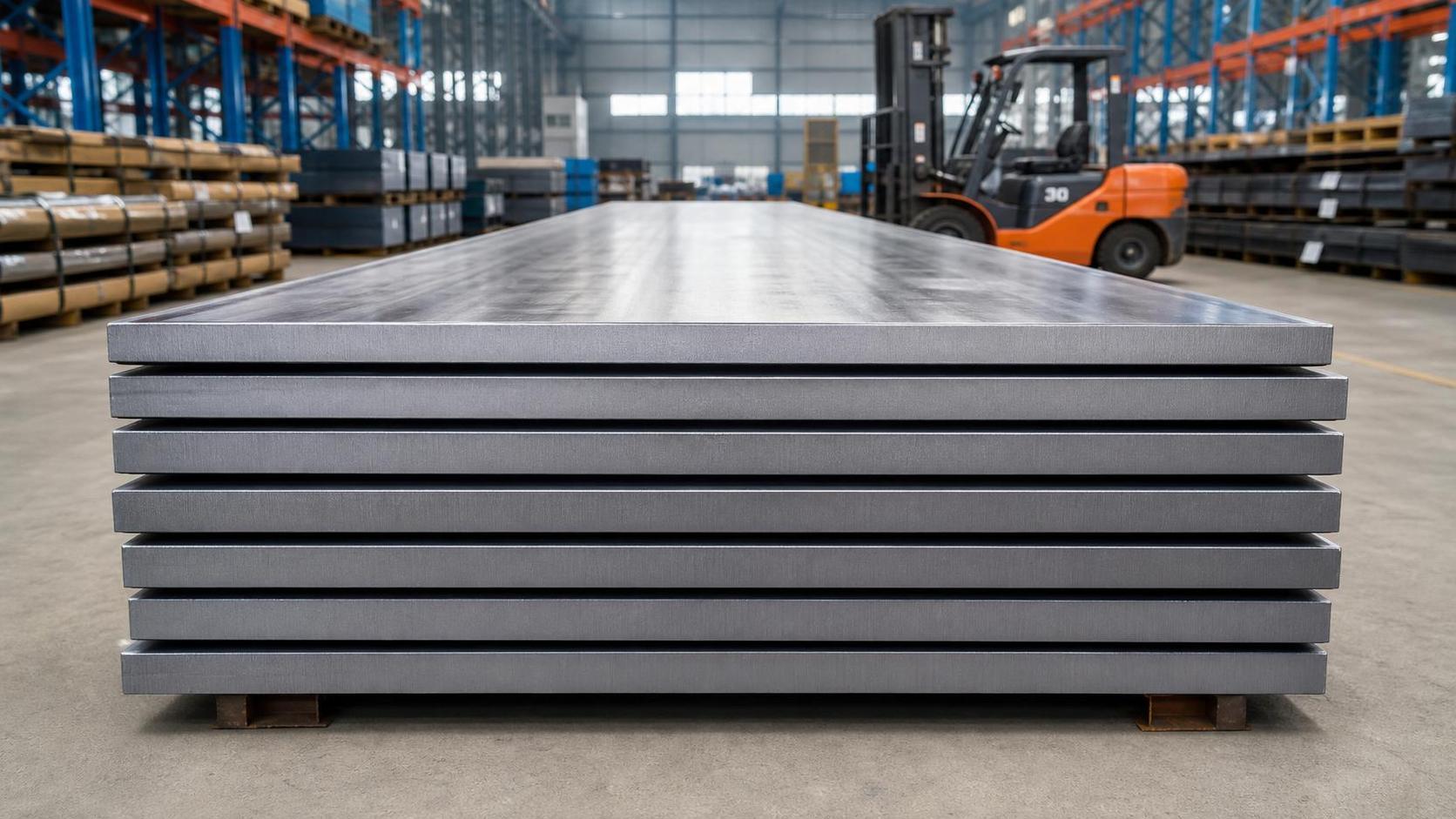
Choosing the right steel material is one of the most important decisions in industrial procurement. For construction companies, machinery manufacturers, equipment fabricators, infrastructure contractors, shipyards, warehouse builders, and general metal processors, the wrong material choice can create higher costs, delayed production, poor welding results, or reduced structural reliability. This is why the selection of carbon steel plate should be treated as a technical and commercial evaluation, not simply a price comparison.
Carbon steel plate is widely used because it offers a practical balance of strength, formability, weldability, availability, and cost efficiency. It can be used in structural components, base plates, brackets, machinery frames, pressure-related parts, transportation equipment, storage systems, agricultural equipment, building structures, and general fabrication. However, the material category is broad. Different grades, thicknesses, surface conditions, tolerances, and processing requirements can lead to very different performance results.
For international buyers, selection becomes even more complex. Procurement teams must consider project application, mechanical properties, dimensional requirements, cutting and welding methods, inspection documents, delivery schedule, packaging, and supplier reliability. A steel plate may look acceptable in a product list, but it must be matched to real working conditions before purchase.
Start With the Application Environment
The first question in carbon steel plate selection is not price or thickness. It is application. Buyers should clearly define where the plate will be used, what loads it must carry, how it will be processed, and what environment it will face.
For building structures, buyers may focus on yield strength, weldability, dimensional consistency, and standard compliance. For machinery frames, flatness, thickness tolerance, cutting performance, and vibration resistance may be more important. For base plates or support brackets, load-bearing ability and hole-processing accuracy may influence selection. For storage tanks, containers, or equipment housings, forming performance and surface condition may matter more.
Outdoor environments create additional concerns. Carbon steel plate can be strong and economical, but it may require surface protection if exposed to moisture, rain, chemical environments, or marine air. Painting, galvanizing, coating, or other anti-corrosion treatments should be considered early. If corrosion resistance is ignored, maintenance costs may rise after installation.
A good procurement decision begins by connecting the steel plate to the real use scenario. Buyers should avoid selecting material only by a familiar grade name. The same grade may perform differently depending on thickness, processing, supplier quality control, and project environment.
Evaluate Steel Grade and Mechanical Properties
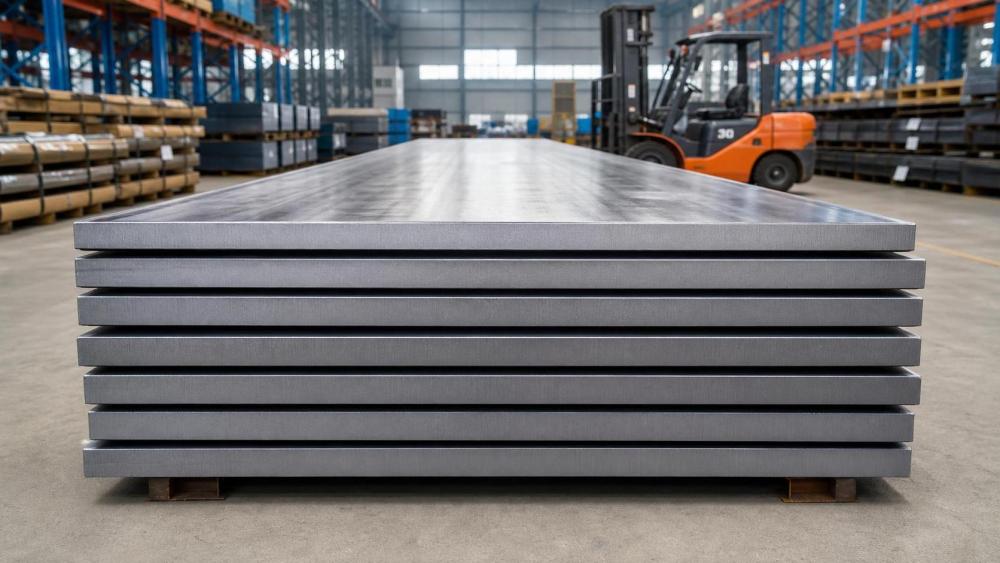
Steel grade is one of the most important selection factors. Common carbon steel plate grades may vary by regional standards such as ASTM, EN, JIS, GB, or other project-specific requirements. Each standard may define chemical composition, yield strength, tensile strength, elongation, impact performance, and testing methods.
Buyers should confirm the grade required by the project design or end-use application. For general fabrication, a common structural grade may be sufficient. For heavy machinery, bridge components, or high-load structures, stronger grades may be needed. For applications involving cold conditions or impact loads, toughness requirements may become more important.
Mechanical properties should be reviewed carefully. Yield strength indicates the stress level at which the material begins to deform permanently. Tensile strength shows the maximum stress the material can withstand before failure. Elongation reflects ductility and forming capability. These values help determine whether the plate can meet structural and processing needs.
Chemical composition also matters. Carbon, manganese, silicon, sulfur, phosphorus, and other elements affect strength, weldability, machinability, and toughness. Higher carbon content may improve strength but can make welding more difficult. Buyers planning welding or forming should not ignore composition data.
Match Thickness and Size to Processing Needs
Thickness selection is not only about strength. It also affects weight, cutting method, drilling efficiency, welding procedure, bending performance, and transportation cost. A plate that is too thin may not meet load requirements. A plate that is too thick may increase cost and processing difficulty.
Buyers should evaluate thickness based on engineering design and fabrication workflow. For structural use, thickness must support load and safety requirements. For machinery parts, thickness may be determined by stiffness, vibration control, and assembly design. For formed components, excessive thickness may create bending challenges.
Plate size is also important. Larger plates can reduce welding seams and improve fabrication efficiency, but they may require stronger handling equipment and careful transportation planning. Smaller plates may be easier to handle but can increase joint work and cutting waste.
Tolerance should be reviewed before purchase. Thickness tolerance, width tolerance, length tolerance, and flatness can influence downstream processing. For CNC cutting, drilling, bending, or automated welding, dimensional consistency becomes especially valuable. If tolerance is poor, the buyer may face alignment issues, extra machining, or material waste.
Consider Cutting, Welding, and Forming Performance
Carbon steel plate is often selected because it can be processed by common fabrication methods. However, processing performance still varies by grade, thickness, surface condition, and internal quality.
Cutting may involve flame cutting, plasma cutting, laser cutting, waterjet cutting, or mechanical shearing. Each method has different requirements. Thicker plates may be more suitable for flame or plasma cutting, while thinner and medium plates may be suitable for laser cutting depending on equipment capability. Buyers should confirm whether the selected plate can be processed efficiently by their available equipment.
Welding is a major concern. Many carbon steel plates are weldable, but welding performance depends on carbon equivalent, thickness, preheating requirements, filler material, and welding procedure. If the plate will be used in a load-bearing structure, welding quality can directly affect safety. Buyers should check whether the plate grade is suitable for the planned welding process.
Forming and bending require ductility. Plates with insufficient elongation or unsuitable thickness may crack during forming. If bending is required, buyers should discuss minimum bending radius and material suitability with the supplier before ordering.
A strong material is not always the best choice if it cannot be processed efficiently. The right plate must match both performance requirements and workshop capability.
Review Surface Quality and Internal Defects
Surface quality affects appearance, coating performance, cutting quality, and final product value. Buyers should inspect or request information about rust, scale, scratches, pits, lamination, edge defects, and surface cleanliness. For parts that will be painted or coated, surface condition can influence adhesion and long-term corrosion protection.
Mill scale may be acceptable for some structural uses, but it may need removal before coating or precision fabrication. If the plate is used for visible products or high-quality equipment, surface defects may not be acceptable.
Internal quality is also important. Lamination, inclusions, or uneven structure can affect cutting, welding, and mechanical performance. For critical applications, buyers may request ultrasonic testing or other inspection methods. This is especially relevant for thicker plates or components used in heavy-load applications.
The required inspection level should match the application risk. Not every plate needs advanced testing, but buyers should identify critical projects where additional inspection is necessary.
Confirm Standards, Certificates, and Traceability
Documentation is essential in international steel procurement. Buyers should request mill test certificates or material test reports when required. These documents usually include grade, heat number, chemical composition, mechanical properties, production standard, size, and testing results.
Traceability helps buyers connect delivered materials to production batches and certificates. This is important for project approval, quality management, and future maintenance records. For export orders, documentation also supports customs clearance and customer acceptance.
Different markets may require different standards. A buyer in Europe may ask for EN standards, while a buyer in North America may refer to ASTM standards. Some projects may allow equivalent grades, but equivalency should be confirmed carefully. Similar names do not always mean identical performance.
Good suppliers should communicate standards clearly and help buyers understand grade options. If the project has strict requirements, buyers should provide specifications in writing before production or shipment.
Compare Supplier Capability, Not Only Product Price
Price matters, but supplier capability often determines the real procurement outcome. A low-price offer may become expensive if delivery is late, specifications are unclear, documents are incomplete, or plate quality is inconsistent.
Buyers should evaluate whether the supplier can provide stable inventory, multiple sizes, processing support, export packaging, inspection documents, and responsive communication. For repeated orders, consistency becomes especially important. A supplier that can deliver stable quality over time is more valuable than one that offers a one-time low price.
Processing capability can also be an advantage. Some buyers need cut-to-size plates, special lengths, surface treatment, drilling, or packaging customization. Suppliers that can support these services help reduce buyer workload and improve project efficiency.
Communication should not be underestimated. International steel procurement often involves technical questions, shipping schedules, inspection requests, and documentation details. A responsive supplier can reduce risk and save time.
Evaluate Logistics, Packaging, and Delivery Risk
Carbon steel plate is heavy, bulky, and sensitive to improper handling. Packaging and logistics planning should be part of the selection process. Buyers should confirm loading method, bundle weight, moisture protection, labeling, edge protection, and shipping documents.
For sea freight, moisture and salt exposure may create rust risk. Protective packaging, oiling, wrapping, or proper storage conditions may be required depending on the product and destination. Buyers should discuss packaging expectations before shipment.
Delivery schedule also matters. Construction and fabrication projects often depend on material arrival dates. Late delivery can affect production planning and installation. Buyers should ask about lead time, stock availability, production schedule, and shipping route.
For large projects, staged delivery may be useful. Instead of receiving all plates at once, buyers may arrange shipments according to production phases. This can reduce storage pressure and improve cash flow.
Build a Practical Selection Checklist
A clear checklist helps buyers avoid mistakes. Before ordering carbon steel plate, procurement teams should confirm application, grade, thickness, size, tolerance, surface condition, processing method, standard, certificate, inspection requirement, packaging, delivery schedule, and payment terms.
Technical teams should be involved early, especially when the plate will be welded, bent, machined, or used in load-bearing structures. Procurement decisions made without technical review can lead to mismatched materials.
Buyers should also compare total value. The best option is not always the cheapest plate. It is the material that meets technical requirements, processes smoothly, arrives on time, includes proper documentation, and reduces downstream risk.
Outlook: Better Selection Will Define Better Steel Procurement
Carbon steel plate will continue to be a core material in global construction, machinery, infrastructure, energy, and manufacturing markets. Its broad availability and cost-performance balance make it attractive for many industrial applications. However, as buyers become more professional, selection standards are rising.
Future procurement will be more technical, more documented, and more focused on lifecycle value. Buyers will expect clearer specifications, better traceability, stable quality, and supplier support. This trend creates opportunities for steel suppliers that can provide not only products, but also practical selection guidance.
For global buyers, the key is to treat carbon steel plate selection as a structured evaluation. By reviewing application environment, grade, mechanical properties, processing needs, surface quality, documentation, supplier capability, and logistics risk, buyers can make better decisions and reduce project uncertainty.
In a competitive industrial market, the right steel plate is not just a material purchase. It is a foundation for safer structures, smoother fabrication, stronger equipment, and more reliable project delivery.


Industry Briefing
Get the top 5 industry headlines delivered to your inbox every morning.