
Petrochemical Price Trends: Key Signals Behind Recent Swings

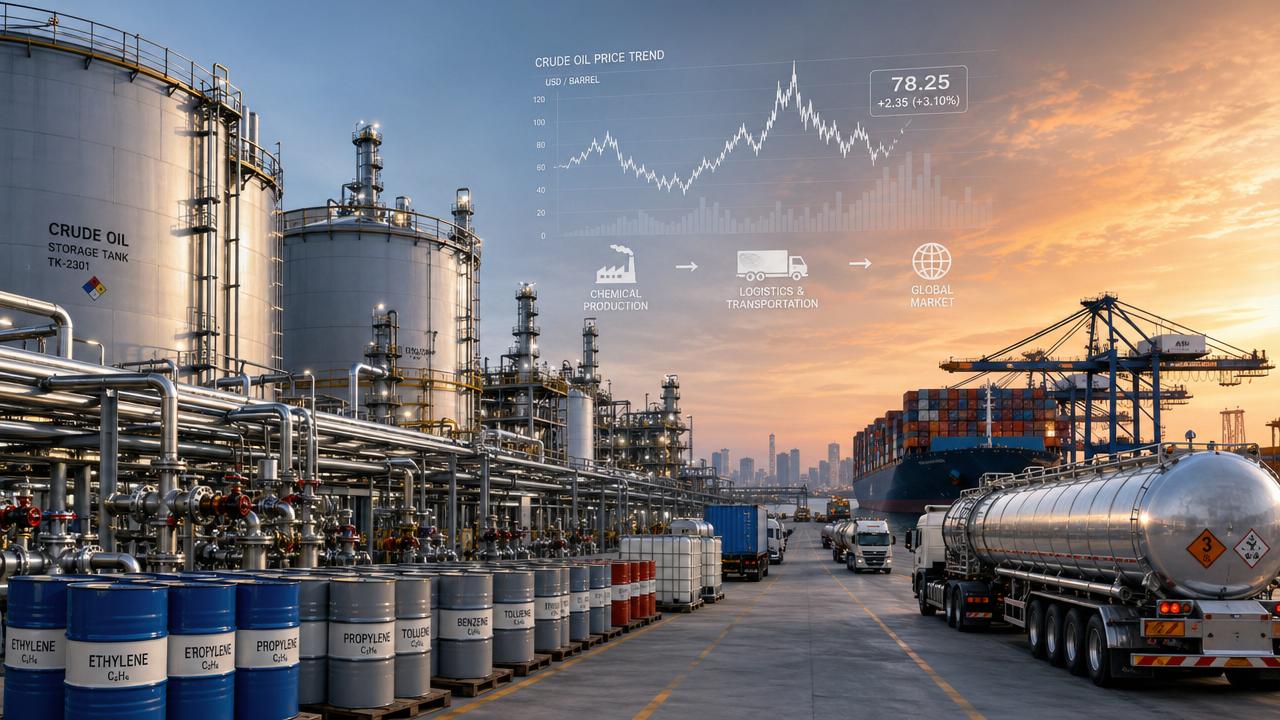
Petrochemical price trends have turned increasingly volatile, sending mixed signals across manufacturing, industrial supply chains, and export markets. For researchers tracking market direction, understanding what is driving these recent swings—from feedstock costs and policy shifts to demand cycles and logistics pressure—is essential. This article highlights the key signals behind the latest movements and what they may mean for near-term industry decisions.
What Petrochemical Price Trends Mean in an Industrial Context
In practical terms, petrochemical price trends describe the direction and speed of price changes across upstream and downstream chemical chains linked to crude oil, natural gas, refining, and polymer production. These movements affect basic feedstocks such as ethylene, propylene, benzene, methanol, and aromatics, and then flow into plastics, resins, fibers, coatings, packaging materials, electrical components, industrial parts, and machinery-related consumables.
For an information researcher, the value of following petrochemical price trends is not limited to knowing whether prices are rising or falling. The more important task is identifying the signals behind each swing. A sharp increase may point to supply outages or freight constraints. A gradual decline may reflect weak end-market orders, high inventories, or capacity expansion. In other words, price movement is often a compressed signal of broader industrial conditions.
Because petrochemicals sit near the center of modern manufacturing, their pricing behavior matters to a wide set of industries covered by industrial content platforms: processing machinery, equipment components, cable insulation, engineering plastics, adhesives, housings, films, and technical packaging. When petrochemical price trends become unstable, they influence quoting cycles, contract planning, export timing, and inventory strategies across the supply chain.
Why Recent Swings Have Drawn So Much Attention
Recent volatility has not come from a single source. Instead, it reflects overlapping pressure from energy markets, uneven global demand recovery, regional policy changes, and logistics disruptions. This matters because mixed signals make forecasting harder. In a stable cycle, researchers can rely on clear seasonal patterns. In a volatile cycle, short-term jumps may conflict with weak medium-term fundamentals.
Another reason attention has intensified is that price transmission has become less uniform. In some segments, feedstock inflation is quickly passed through to downstream buyers. In others, converters and manufacturers absorb higher costs because demand is too soft to support price increases. This creates distortion between upstream confidence and downstream caution, which is why reading petrochemical price trends now requires more than tracking benchmark charts.
For export-oriented businesses, the stakes are even higher. Currency movements, destination-market inventories, anti-dumping policy signals, and freight rates can magnify or offset raw material changes. A market that appears favorable on a domestic pricing basis may still be unattractive after logistics and trade costs are considered.
The Main Signals Behind Petrochemical Price Trends
To understand current market direction, researchers should break petrochemical price trends into several core signals rather than treating prices as an isolated outcome.
1. Feedstock and energy costs
Crude oil, naphtha, LPG, and natural gas remain the most visible drivers. When energy input costs rise sharply, petrochemical producers face immediate pressure on margins and offer prices. However, the effect differs by product chain. Naphtha-linked products may move faster than gas-based products, while integrated producers with stronger cost control may delay pass-through. Tracking feedstock spreads often gives a better signal than watching crude prices alone.
2. Operating rates and supply disruptions
Planned maintenance, unplanned shutdowns, weather events, and geopolitically sensitive shipping routes can quickly tighten supply. In periods of low inventory, even a short outage can trigger a strong price reaction. On the other hand, if new capacity is entering the market, temporary disruptions may have only a limited impact. This is why researchers should compare outage news with actual operating rates and stock positions.
3. Demand cycles in manufacturing
Many downstream sectors such as packaging, automotive parts, consumer goods, construction materials, wires and cables, and appliance components buy petrochemical derivatives based on order visibility. If factory orders weaken, buyers reduce restocking and resist higher prices. If industrial production improves, restocking can accelerate quickly. Therefore, petrochemical price trends often mirror changes in manufacturing confidence before they appear clearly in broader macro data.
4. Inventory and restocking behavior
Inventories shape price sensitivity. When traders, converters, and end users hold low inventories, the market becomes more reactive to even minor supply-side disruptions. When inventories are high, price rallies may fade because buyers postpone replenishment. In recent swings, many markets have seen cautious “hand-to-mouth” buying, which increases short-term volatility while limiting sustained uptrends.
5. Policy, trade, and environmental compliance
Policy interpretation is an essential part of petrochemical market analysis. Emission controls, safety inspections, energy-use targets, tariffs, sanctions, and regional industrial policy can all alter supply or cost competitiveness. Environmental regulation may raise compliance costs or force some plants to reduce operating rates. Trade rules can redirect export flows and reshape regional pricing relationships.
6. Freight, port congestion, and lead-time risk
Even when base chemical prices appear stable, logistics pressure can create localized price swings. Ocean freight changes, port delays, container availability, inland transport bottlenecks, and insurance costs all affect landed cost. For international buyers and sellers, petrochemical price trends should be read alongside logistics indicators rather than in isolation.
Industry Overview Table: How Key Signals Influence Market Direction
The table below summarizes how common drivers typically affect short-term interpretation of petrochemical price trends in industrial research.
Why These Trends Matter Across Industrial Segments
The importance of petrochemical price trends extends beyond chemical producers. In manufacturing and processing machinery, buyers track resin and engineering plastic costs because these affect housings, seals, insulation materials, and packaging inputs. In industrial equipment and components, cost changes influence everything from protective coatings to elastomer parts. In electrical equipment and supplies, polymer and specialty chemical pricing matters for cable sheathing, connectors, insulation systems, and molded parts.
For market researchers using an industry portal, petrochemical price trends also help interpret related content categories. Price movement connects with company announcements, expansion projects, export trade shifts, policy interpretation, and supply chain intelligence. A capacity expansion story becomes more meaningful when viewed against weak margins. A logistics report becomes more actionable when linked to tight downstream inventories.
This cross-sector relevance is why petrochemical analysis should not be isolated from broader industrial indicators. The strongest insights usually emerge when price signals are connected to demand from machinery, construction, automotive, packaging, electronics, and infrastructure applications.
Typical Research Scenarios for Following Petrochemical Price Trends
Different users read the same market differently. The table below shows how common research objectives shape the interpretation of petrochemical price trends.
How to Read Volatility Without Overreacting
One of the biggest mistakes in market interpretation is treating every short-term movement as the start of a major cycle. In volatile conditions, petrochemical price trends can be driven by temporary sentiment, speculative buying, or isolated logistics events. Researchers should therefore separate short-lived noise from changes that alter the underlying balance of supply and demand.
A useful approach is to combine three layers of analysis. First, monitor cost drivers such as crude, naphtha, gas, and freight. Second, verify physical market conditions through operating rates, inventories, and maintenance plans. Third, test demand reality using downstream order books, export flows, and end-use sector performance. When all three layers point in the same direction, the signal is usually stronger and more durable.
It is also important to track relative performance, not just absolute price change. If feedstock prices rise but derivative prices fail to follow, margin stress may build and eventually pressure production decisions. If regional markets diverge sharply, trade flows may adjust. These secondary effects often become the next driver of petrochemical price trends.
Practical Suggestions for Researchers and Market Watchers
For readers focused on industrial intelligence, several practical habits can improve decision quality. Build a signal dashboard instead of relying on a single benchmark. Include feedstock prices, plant operating news, inventory direction, freight indicators, and downstream demand references. This makes it easier to explain why petrochemical price trends are moving and whether that move is likely to continue.
Second, compare regional markets regularly. A price swing in one geography does not always reflect the global picture. Regional oversupply, policy intervention, or trade restrictions may create local distortions. Third, pay attention to timing. Markets often react to expectations before data fully confirms them, which means early signals from maintenance schedules, policy drafts, or export order changes can be highly valuable.
Finally, connect petrochemical price trends with adjacent industrial content. Technology updates may point to material substitution. Company expansion plans may indicate future oversupply risk. Exhibition coverage may reveal buyer sentiment and application demand. This wider reading creates a more complete and useful market view than price charts alone.
Conclusion: Turning Market Signals Into Better Industry Judgement
Petrochemical price trends are best understood as a live indicator of how energy, production, demand, trade, and logistics interact across modern industry. Recent swings have been sharp because these forces are shifting at the same time, often in conflicting directions. For information researchers, the goal is not simply to record price changes but to interpret the signals underneath them.
By reading feedstock moves alongside operating rates, policy developments, downstream orders, and freight conditions, researchers can form a more reliable view of market direction. That approach is especially valuable for manufacturing-related sectors, industrial equipment supply chains, and export-oriented businesses that depend on timely, structured market intelligence. In the near term, disciplined tracking of petrochemical price trends will remain an important tool for understanding risk, spotting opportunity, and supporting better industry decisions.


Industry Briefing
Get the top 5 industry headlines delivered to your inbox every morning.