
Mining Equipment Supply Chain Updates and Parts Availability Trends

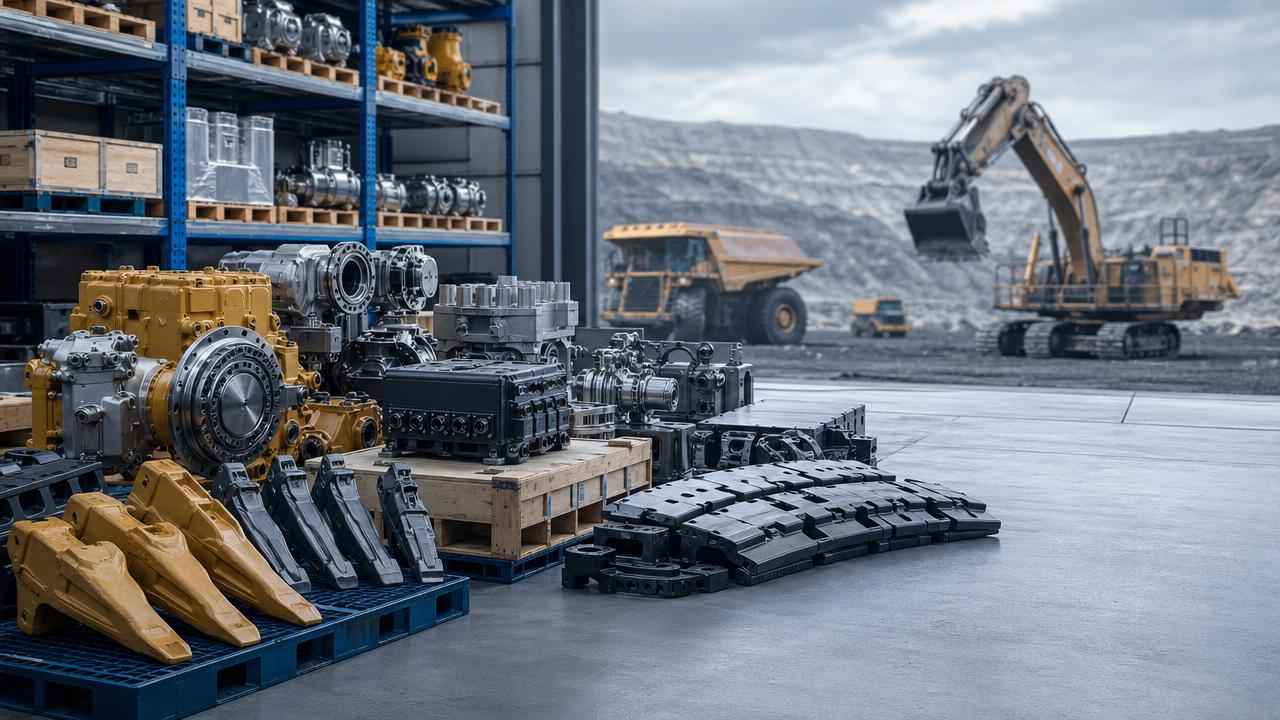
For aftermarket maintenance teams, staying ahead of downtime starts with understanding global supply chain updates for mining equipment. From longer lead times on critical wear parts to shifting availability of hydraulic, electrical, and engine components, supply conditions are directly affecting service planning and repair efficiency. This overview highlights the latest parts availability trends, key risk points, and practical signals maintenance professionals should watch to improve inventory decisions and keep equipment operating reliably.
Why supply chain shifts matter differently across maintenance scenarios
For aftermarket teams, the value of tracking global supply chain updates for mining equipment depends on where and how the machines operate. A high-volume open-pit mine with round-the-clock haulage has very different parts exposure than a contractor running mixed fleets across multiple short-term sites. In one case, a delayed final drive or pump can halt a production-critical asset; in another, the biggest issue may be slow replenishment of filters, sensors, hoses, and electrical connectors that quietly extend repair cycles.
That is why maintenance planning cannot rely on broad market headlines alone. Teams need to translate mining equipment supply chain updates into practical scenario judgments: which assets are most vulnerable, which parts should be stocked locally, which components can be repaired instead of replaced, and which supplier promises require verification. The same global trend can create very different risks depending on utilization rate, remoteness, fleet age, and whether service windows are scheduled or emergency-driven.
In the current market, the most important pattern is not a universal shortage of everything. It is uneven availability. Some consumables remain stable, while specialized castings, electronic control units, driveline assemblies, and certain OEM-only parts face longer or less predictable lead times. For maintenance professionals, that unevenness is what makes scenario-based planning essential.
Current parts availability trends maintenance teams should watch
Recent global supply chain updates for mining equipment suggest that availability pressure is clustering around specific categories rather than across all SKUs. Large structural parts and low-volume engineered assemblies often face the longest replenishment cycles because they depend on foundry capacity, machining slots, and specialized logistics. Electronic modules also remain exposed due to semiconductor allocation, firmware matching, and OEM validation requirements. Meanwhile, common maintenance items may appear easier to source, but quality variation between suppliers has become a growing concern.
For aftermarket service teams, the practical trend lines usually look like this: wear parts can still move, but price volatility and batch consistency matter more; hydraulic components may be available in repair-kit form before complete assembly form; engine parts vary widely depending on emissions tier, brand, and regional distribution; and electrical parts increasingly require serial-number accuracy because incompatible revisions can create repeat failures.
Another trend is the rise of dual-path sourcing. Many operators are combining OEM channels, authorized distributors, component rebuilders, and selected aftermarket manufacturers. This can improve resilience, but only when the maintenance team has strong fitment control, warranty clarity, and clear approval rules for critical versus non-critical parts.
Typical maintenance scenarios and what each one should monitor
Scenario 1: Production-critical fleets at large mining sites
This scenario includes haul trucks, hydraulic shovels, drills, loaders, and crushers tied directly to output targets. In these operations, downtime cost per hour is high, so global supply chain updates for mining equipment should be filtered through the question: which parts can stop production instantly? The answer usually includes drivetrain parts, high-pressure hydraulic pumps, wheel motors, ECU-related components, brake systems, and major wear liners tied to throughput.
For this setting, teams should prioritize failure history, lead-time variance, and emergency freight feasibility. Even if a part is technically available, an eight-week wait makes it strategically unavailable for a critical machine. Safety stock is often justified here, especially for assets with no operational substitute.
Scenario 2: Remote operations with long inbound logistics chains
In remote mines, logistics amplify every supply constraint. A component that ships in three days to a regional hub may still take weeks to reach the site. In this scenario, the most useful mining equipment supply chain updates are not only supplier-side, but also route-side: customs delays, port congestion, inland transport bottlenecks, and weather disruption.
Maintenance teams in remote areas should focus on modular kits, standardized fast-moving parts, and field-repair options. Rebuild capability becomes more valuable because sending a failed unit out and waiting for a replacement can stretch downtime beyond acceptable limits. Here, the best stock item is often not the full assembly, but the repair kit, seal kit, harness section, or spare sensor bundle that restores function faster.
Scenario 3: Mixed-brand fleets managed by contractors
Contractors often operate excavators, trucks, and support machines from several brands across changing job sites. Their challenge is not only parts availability, but parts complexity. Global supply chain updates for mining equipment affect them through SKU proliferation, inconsistent dealer support, and variable interchangeability between models.
In this scenario, maintenance teams should map common failure points across brands and identify opportunities to simplify stockholding. Filters, hoses, connectors, undercarriage items, and frequently replaced sensors deserve standardization review. The goal is to reduce the number of unique parts that can trap working capital while still leaving the fleet exposed to emergency shortages.
Scenario 4: Aging equipment kept in service beyond original planning horizons
Older machines create a different supply chain risk profile. Parts may be officially available on paper but sourced only through limited reman programs, dealer transfers, or non-OEM channels. Lead times can be unpredictable, and engineering changes over the years may complicate fitment. In this case, global supply chain updates for mining equipment should be interpreted alongside obsolescence risk.
For aging fleets, maintenance teams need serial-number discipline, component rebuild partnerships, and a stronger repair-or-replace decision process. Holding selected legacy stock can make sense, but only when failure probability and machine replacement timing have been clearly reviewed.
Scenario comparison: where supply pressure hits hardest
The table below helps translate global supply chain updates for mining equipment into practical maintenance priorities by scenario.
How demand priorities differ by part category
Not every part should be managed the same way. One of the most useful lessons from global supply chain updates for mining equipment is that category-based control often beats generic stocking rules.
Wear parts and consumables
These usually move in higher volumes and are easier to forecast. The real risk is price movement, quality inconsistency, or supplier substitution without notice. Maintenance teams should monitor consumption rate, supplier consistency, and site-specific wear patterns.
Hydraulic components
Hydraulic pumps, valves, cylinders, and seal kits are highly scenario-dependent. In severe-duty sites, contamination and heat exposure can accelerate failure. Here, it is often better to stock kits and core exchange options rather than every full assembly.
Electrical and control parts
These parts carry outsized disruption risk because a small module can immobilize a large machine. Part number verification, software compatibility, and approved alternates matter as much as physical availability. For many teams, the most important mining equipment supply chain updates now involve electronics rather than steel.
Engine and powertrain items
Availability varies with brand support, emissions configuration, and regional rebuild infrastructure. Teams should separate fast-moving service parts from failure-critical hard parts and build different reorder rules for each.
Common misjudgments that create avoidable downtime
A common mistake is treating quoted lead time as reliable lead time. During unstable periods, supplier estimates may shift after order confirmation because upstream allocation changes. Another misjudgment is assuming that alternate brands are automatically interchangeable. For critical assemblies, dimensional fit is only one factor; performance curve, software revision, connector type, and warranty treatment also matter.
Many maintenance teams also underreact to low-cost items that have high downtime leverage. A missing sensor, relay, harness adapter, or seal can keep a machine idle just as effectively as a major pump failure. Global supply chain updates for mining equipment should therefore include not only high-value components, but also small bottleneck parts that delay closure of work orders.
Finally, some operations overstock slow-moving parts without validating fleet life, failure probability, or repair turnaround. That ties up budget while leaving genuinely vulnerable categories underprotected. Better inventory decisions come from matching stock depth to scenario risk, not from broad fear of shortages.
Practical adaptation steps for aftermarket maintenance teams
To act on global supply chain updates for mining equipment, maintenance teams should build a simple but disciplined review routine. First, classify parts into production-critical, repair-critical, and convenience-critical groups. Second, overlay actual supplier lead times with logistics reality by site. Third, flag any component where the replenishment cycle is longer than the maintenance planning window. Those items need either stock, rebuild coverage, or pre-approved alternates.
Next, align planners, warehouse teams, and field technicians around failure signals. If technicians report repeated contamination, connector damage, or premature wear, that information should trigger parts exposure review before shortages become downtime. Maintenance data is often the earliest warning system for future supply stress.
It is also wise to review supplier communication quality, not only price. The most valuable suppliers are often those who provide serial-level validation, realistic availability updates, and alternatives with clear technical documentation. In volatile markets, transparency can be more useful than nominally lower quotes.
FAQ: scenario-based questions maintenance professionals often ask
Which sites should monitor global supply chain updates for mining equipment most closely?
Remote mines, high-utilization fleets, aging asset operations, and mixed-brand contractor fleets should watch most closely because they face either high downtime exposure or higher sourcing complexity.
Should aftermarket teams increase stock across the board?
No. Broad inventory expansion is expensive and often ineffective. The better approach is selective stocking based on failure impact, lead-time risk, logistics exposure, and repair options.
Are remanufactured parts a good response to supply pressure?
In many scenarios, yes. Reman parts can shorten downtime and reduce cost, especially for hydraulic, engine, and driveline components, but quality standards and warranty terms must be reviewed carefully.
Turning supply intelligence into better uptime decisions
The main takeaway from today’s global supply chain updates for mining equipment is that maintenance success depends on matching response strategy to operating scenario. Large production sites need stronger protection around downtime-critical assemblies. Remote operations need logistics-aware stocking and repair flexibility. Contractors need SKU discipline. Aging fleets need obsolescence planning and rebuild pathways.
For aftermarket maintenance teams, the right next step is to audit your top twenty downtime-causing parts, compare them against current lead times and logistics risk, and then decide where to stock, where to rebuild, and where to qualify alternates. When supply chain intelligence is translated into scenario-specific action, parts planning becomes more accurate, repairs move faster, and equipment availability becomes easier to protect.


Industry Briefing
Get the top 5 industry headlines delivered to your inbox every morning.