
Pharmaceutical Packaging Equipment: Key Selection Criteria
Pharmaceutical Packaging Equipment: Key Selection Criteria
Selecting the right pharmaceutical packaging equipment shapes output quality, audit readiness, and long-term operating cost.
For technical evaluation, the decision is rarely about speed alone.
The better question is whether the equipment can keep performance stable under regulatory pressure and changing production plans.
In pharmaceutical production, minor packaging errors can trigger batch holds, rework, recalls, or validation delays.
That is why pharmaceutical packaging equipment must be reviewed through compliance, process control, maintainability, and total lifecycle value.
This article breaks down the practical selection criteria that matter most during equipment comparison and supplier review.
It also highlights common tradeoffs that influence procurement decisions across solid dose, liquid, sterile, and consumer health applications.
Start With Product and Pack Compatibility
The first screen for pharmaceutical packaging equipment is compatibility with the actual product and packaging format.
A machine that runs fast on paper may still perform poorly with sensitive materials or unstable containers.
Technical review should cover tablets, capsules, powders, vials, syringes, blister packs, bottles, sachets, and cartons.
Material behavior matters just as much as product type.
Foil thickness, film stiffness, seal layer response, bottle geometry, and label adhesion can all affect stability and sealing quality.
Ask suppliers for proven case data using pack materials close to your own specifications.
This reduces the risk of discovering forming, feeding, or sealing problems during factory acceptance testing.
- Check supported pack formats and format change parts.
- Review contact materials for chemical compatibility and cleanability.
- Confirm sealing windows for different films, foils, and laminates.
- Test fragile or dust-generating products under real operating conditions.
When pharmaceutical packaging equipment fits the product well, downstream quality problems become far easier to control.
Evaluate Throughput in Real Operating Conditions
Nominal speed is useful, but it should never be treated as the main selection benchmark.
The more reliable measure is sustained throughput after changeovers, cleaning, inspection stops, and material replenishment.
In practice, pharmaceutical packaging equipment often runs below brochure speed because line balance is uneven.
That also means upstream and downstream integration must be reviewed early.
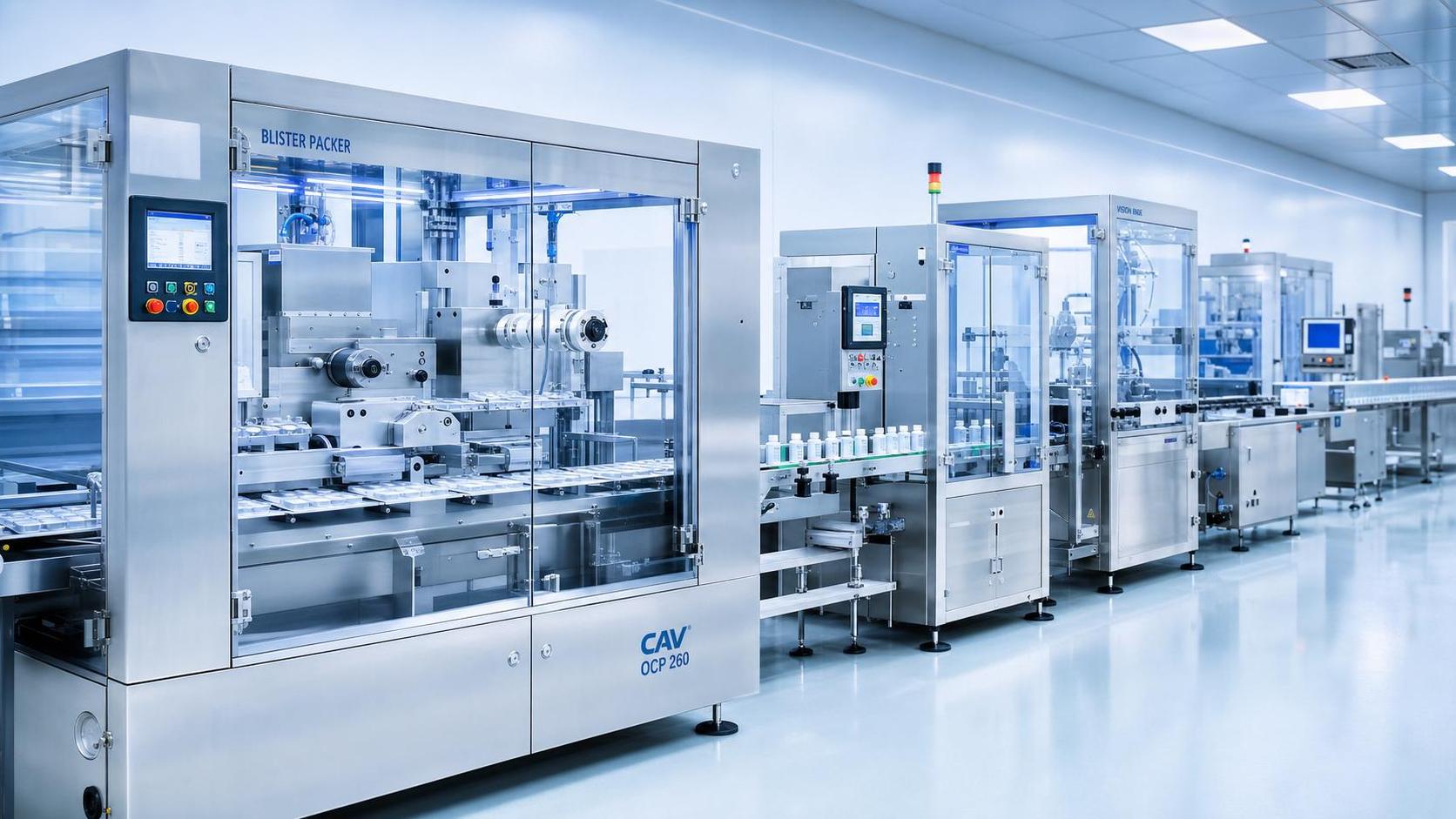
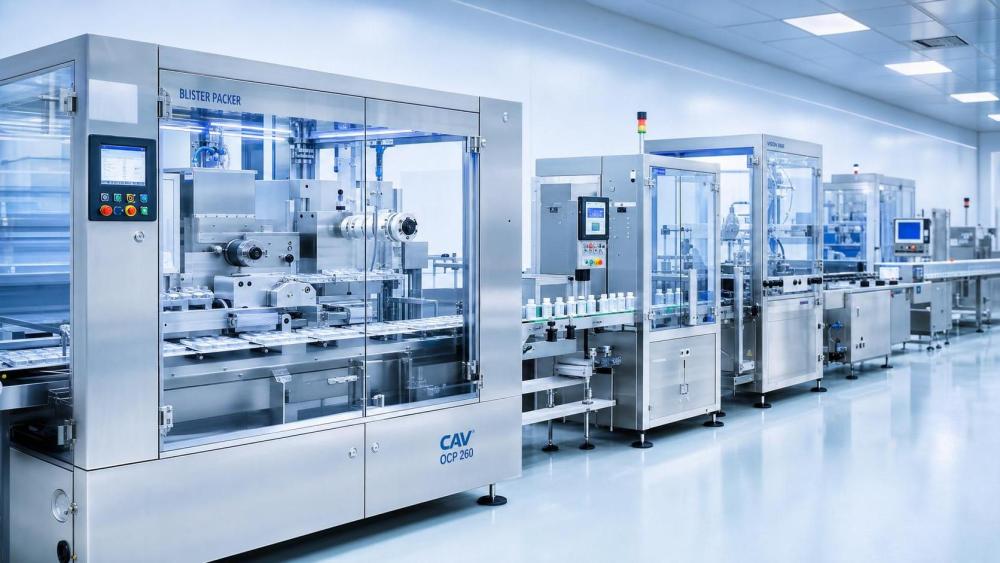
A cartoner, labeler, blister line, vision station, and case packer need compatible timing and buffer logic.
During comparison, request OEE-related data instead of only maximum units per minute.
Good suppliers can explain reject rates, micro-stoppages, line recovery behavior, and expected output across product families.
- Define target output by shift, not by headline speed.
- Measure planned downtime for cleaning and size changes.
- Review reject mechanisms and rework handling.
- Verify stable performance at low, medium, and peak speeds.
A realistic throughput model gives a stronger basis for selecting pharmaceutical packaging equipment with predictable production value.
Compliance, Validation, and Data Integrity
Regulatory fit is often the line between a smooth startup and a delayed project.
Pharmaceutical packaging equipment should support GMP expectations, documented validation, and controlled electronic records where applicable.
The review should include URS alignment, FAT and SAT protocols, IQ, OQ support, and software access control.
More importantly, the supplier should show how the machine design supports repeatable, auditable operation.
Serialization, code verification, batch reporting, and alarm history have become standard decision points in many packaging projects.
If the pharmaceutical packaging equipment connects to MES or plant systems, data structure and interface readiness must be checked in advance.
This is where many projects lose time, especially when software documentation is weak.
- Assess validation document quality and revision control.
- Confirm user permissions, audit trail support, and recipe management.
- Review integration capability for serialization and inspection systems.
- Check spare software backups and change management procedures.
For decision-makers, compliant pharmaceutical packaging equipment is not just a legal issue. It is a production reliability issue.
Mechanical Design, Cleanability, and Maintenance Access
Well-built pharmaceutical packaging equipment should be easy to inspect, clean, adjust, and maintain without extended downtime.
This area gets less attention during sales presentations, yet it strongly affects long-term ownership cost.
Open access points, tool-free change parts, clear cable routing, and hygienic surfaces save time every week.
The same applies to lubrication points, wear parts, and sensor replacement.
A compact footprint may look efficient, but cramped access can slow maintenance and increase setup errors.
During technical evaluation, ask how long routine cleaning, format change, and preventive maintenance actually take.
Then compare those answers against your staffing model and shift structure.
A robust mechanical design keeps pharmaceutical packaging equipment productive long after commissioning is finished.
Automation Level and Human Factors
Higher automation is not always the better investment.
The right level depends on batch size, labor cost, line complexity, and available technical support.
For some operations, semi-automatic pharmaceutical packaging equipment offers faster payback and greater flexibility.
For high-volume regulated lines, fully automatic systems may reduce variability and support better traceability.
Even so, interface design still matters.
Operators should be able to load materials, clear jams, change recipes, and understand alarms without unnecessary steps.
A confusing HMI increases training time and raises the chance of operational mistakes.
This becomes more visible when turnover is high or multi-shift teams share one line.
- Match automation to production volume and labor reality.
- Review HMI clarity, alarm logic, and recipe navigation.
- Check manual intervention points and ergonomic loading positions.
- Assess training needs for operators, maintenance, and quality teams.
The best pharmaceutical packaging equipment supports both machine efficiency and human consistency.
Supplier Capability and Lifecycle Cost
Equipment selection should end with supplier capability, not start there.
Still, long-term results depend heavily on service response, documentation quality, and spare parts availability.
A lower purchase price can quickly lose its advantage if technical support is slow or format parts are difficult to obtain.
That is why pharmaceutical packaging equipment should be compared using total cost of ownership.
Include utilities, change parts, preventive maintenance, software updates, validation support, and expected service intervals.
From a sourcing perspective, reference installations are especially valuable.
They reveal how the pharmaceutical packaging equipment performs after the first year, not just during a polished demo.
- Request lifecycle cost breakdowns over three to five years.
- Check local service coverage and response time commitments.
- Review spare parts lead times and obsolescence planning.
- Speak with users running similar products and batch profiles.
A disciplined comparison often shows that the best-value pharmaceutical packaging equipment is not the cheapest initial option.
A Practical Decision Framework
To simplify the final decision, use a weighted scorecard built around operational risk and business fit.
This keeps pharmaceutical packaging equipment selection grounded in evidence rather than presentation quality.
Typical weighting includes compliance, compatibility, throughput, maintenance, automation, supplier support, and lifecycle cost.
Recent market changes also make scalability more important.
Lines should handle new formats, shorter production runs, and tighter coding requirements without major redesign.
In real projects, the strongest decisions come from pilot testing, cross-functional review, and clear acceptance criteria.
That approach helps teams choose pharmaceutical packaging equipment that stays reliable under daily production pressure.
Before issuing a purchase order, confirm the machine can meet current requirements and still support future line strategy.
A careful, risk-aware selection process turns pharmaceutical packaging equipment from a capital expense into a durable operating advantage.
Industry Briefing
Get the top 5 industry headlines delivered to your inbox every morning.