
Global Supply Chain Updates for Warehouse Equipment: Avoiding Stock Gaps
Staying ahead of global supply chain updates for warehouse equipment is now critical for distributors, dealers, and agents facing longer lead times, shifting freight costs, and uneven inventory availability. This article highlights the latest market signals, sourcing risks, and practical planning strategies to help you reduce stock gaps, improve order reliability, and respond faster to changing demand across industrial equipment channels.
For distributors and channel partners, the core issue is no longer just finding supply. It is deciding what to stock, when to commit, and how to protect customer service levels when conditions change faster than traditional purchasing cycles can handle. In the current market, avoiding stock gaps requires a mix of better market intelligence, broader supplier visibility, and more disciplined replenishment planning.
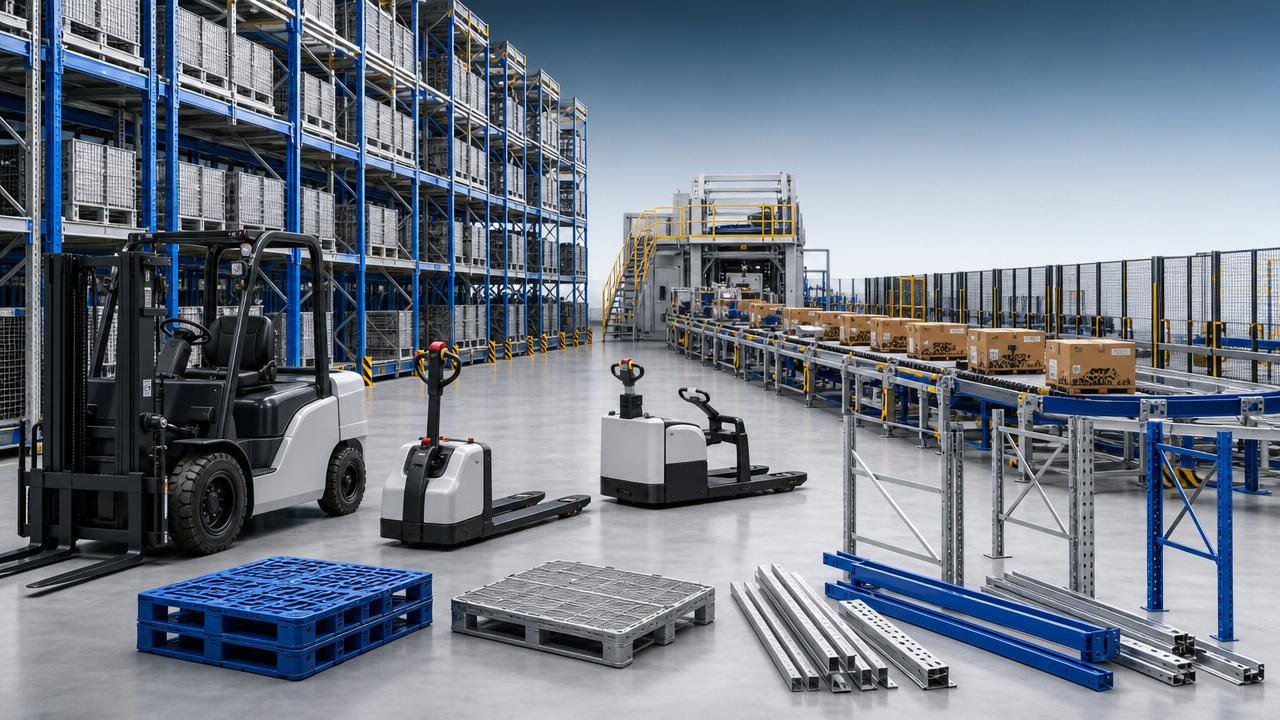
The most useful way to read current global supply chain updates for warehouse equipment is not as isolated news items, but as signals that affect availability, pricing, and delivery reliability across forklifts, racking systems, conveyors, dock equipment, pallet handling solutions, batteries, motors, controls, and replacement parts. Dealers that connect these signals to local demand are in a much stronger position than those reacting only after shortages appear.
What are the most important supply chain signals distributors should watch right now?

The first priority is to identify which updates actually change buying decisions. Not every headline matters equally. For warehouse equipment channels, the most meaningful signals are supplier lead time changes, freight rate volatility, port or route disruption, input cost movement, inventory allocation policies, and regional demand shifts in manufacturing, logistics, and e-commerce.
Lead time remains one of the clearest indicators of supply stress. Even when freight rates soften, production bottlenecks at component level can keep delivery windows unstable. Motors, controllers, bearings, steel structures, hydraulic parts, industrial batteries, semiconductors, and electronic safety devices can all create hidden delays for finished equipment. A supplier that looks stable at headline level may still be constrained in one critical subassembly.
Freight costs also deserve close attention, but not only because they affect landed cost. Rapid changes in ocean or air freight often signal broader instability in route capacity, port congestion, or urgent demand spikes. For distributors, this matters because a price increase can often be passed through in some form, while a missed delivery can damage customer trust and future orders.
Regional demand patterns are another major signal. When warehouse construction, factory expansion, or logistics automation accelerates in one region, suppliers may prioritize those high-volume markets. That can tighten supply for smaller importers or secondary distributors elsewhere. Channel businesses that monitor project pipelines, industrial investment, and local warehouse upgrade activity can anticipate pressure before factories issue formal shortage notices.
Policy developments also shape supply conditions. Changes in tariffs, export controls, energy policy, environmental compliance, and product certification requirements can alter sourcing options quickly. A product line may remain available in theory, yet become slower or more expensive to import due to documentation, testing, or compliance changes. This is especially relevant for electrical equipment, lithium battery systems, and safety-related warehouse products.
Why are stock gaps becoming harder to avoid in warehouse equipment channels?
Stock gaps are becoming more common because the warehouse equipment supply chain is more interconnected than many buyers assume. A distributor may think in terms of finished products, but upstream production depends on steel processing, electronic components, castings, industrial tires, energy storage systems, packaging materials, and transport availability. A disruption in any one layer can reduce finished output weeks later.
Another challenge is the mismatch between customer expectations and supplier flexibility. End users often expect quick shipment, especially for replacement units, critical spare parts, and fast-moving handling products. Yet many manufacturers have become more cautious about carrying excess inventory after recent periods of cost inflation and uneven demand. That shifts more forecasting responsibility downstream to distributors and agents.
Product mix complexity is also increasing. Customers do not only want standard warehouse equipment. They increasingly ask for customized load capacities, energy configurations, dimensions, control features, and safety upgrades. Customization improves margins, but it also makes inventory planning more difficult. If too much capital is tied up in slow-moving variants, essential standard items may be understocked.
At the same time, channel players face more uncertainty in customer ordering behavior. Some buyers place orders early to secure supply, then slow down later. Others delay decisions and expect immediate availability once a project is approved. This creates distorted demand signals. Without clear segmentation between true consumption demand and speculative ordering, distributors can easily overbuy the wrong SKUs and still face stock gaps on the right ones.
Which product categories carry the highest sourcing risk?
Not all warehouse equipment categories deserve the same planning intensity. Distributors should separate products into risk tiers based on lead time, substitution difficulty, margin impact, and service criticality. In most cases, electrified equipment and control-dependent systems carry higher risk than basic mechanical items because they depend on broader component ecosystems.
Forklift batteries, chargers, drive systems, electronic control modules, sensors, and safety components typically require closer monitoring. Even if base equipment production is stable, these items can delay shipment or disable field service readiness. If your business supports electric material handling fleets, battery and charging infrastructure availability should be tracked almost as carefully as finished vehicles.
Racking and structural storage systems face different risks. Their supply is influenced heavily by steel pricing, fabrication capacity, coating schedules, and transport costs due to bulk volume. These products may not always have the same electronics exposure, but they are vulnerable to project demand swings and logistics constraints. When large regional installations absorb fabrication capacity, smaller channel orders may move back in the queue.
Conveyors, automated handling modules, and integrated warehouse systems often carry the highest schedule risk because they combine mechanical, electrical, and software elements. One missing control component can delay the full system. For distributors selling both standard and semi-automated equipment, it is important to distinguish between products that can be stocked in modular form and those that depend on final integration before shipment.
Spare parts deserve separate treatment. The margin on parts may be lower or less visible than on full equipment, but failure to supply critical replacement items can quickly damage service revenue and account loyalty. For many dealers, the biggest operational mistake is applying the same inventory rules to parts and whole equipment. Parts planning should focus more on downtime risk and service contract obligations than on unit value alone.
How can distributors turn market updates into better purchasing decisions?
The practical answer is to build a decision framework instead of relying on supplier promises or broad market sentiment. Global supply chain updates for warehouse equipment are valuable only when translated into actions such as adjusting order cycles, raising safety stock on priority items, changing supplier mix, or revising customer lead time commitments.
Start by classifying inventory into three groups: must-not-stock-out items, margin-sensitive items, and flexible substitute items. Must-not-stock-out products include critical spare parts, high-frequency consumables, and standard equipment models that drive repeat demand. These should have tighter reorder triggers and more proactive supplier coverage. Margin-sensitive items should be watched for cost movement and customer pass-through timing. Flexible substitute items can often be managed with lower stock if equivalent alternatives exist.
Next, shorten your review cycle for volatile categories. Quarterly planning is often too slow for items exposed to freight shifts, component shortages, or fast demand changes. A monthly or biweekly review of supplier lead times, in-transit orders, backlogs, and open customer quotes gives a much clearer picture of where future gaps may emerge.
Scenario planning also helps. Instead of forecasting one expected outcome, model three: stable supply, moderate disruption, and severe delay. For each scenario, define what action you will take on purchase timing, pricing, customer communication, and substitute product offers. This approach reduces hesitation when conditions change because the response has already been prepared.
It is equally important to combine quantitative data with sales intelligence. Numbers alone may not reveal upcoming project launches, account wins, or competitor shortages. Sales teams, field service personnel, and key customers often know demand shifts before they appear in ERP data. Dealers that collect these signals systematically can spot emerging stock pressure much earlier.
What sourcing strategies reduce dependence on one fragile supply line?
Dual sourcing remains one of the most practical risk controls, but it must be applied selectively. Maintaining two approved sources for every SKU is usually unrealistic. Instead, distributors should prioritize alternate sourcing for categories where stockouts would cause the greatest service failure or revenue loss. That often includes batteries, control parts, fast-moving replacement items, and standard handling equipment with broad cross-market demand.
Supplier diversification should also go beyond geography alone. Two suppliers in different countries may still depend on the same upstream component makers. A stronger strategy is to map shared dependencies where possible. If both product lines rely on the same electronic platform or battery cell source, the apparent diversification may offer less protection than expected.
Regional sourcing can help reduce transit uncertainty for selected lines, especially for bulky products or service-critical parts. Nearer supply often improves responsiveness even if unit cost is slightly higher. For distributors, the right question is not only “Which source is cheapest?” but “Which source protects order fulfillment and customer retention most effectively?” In many cases, a higher ex-works price is justified if it lowers delay risk and emergency freight costs.
Framework agreements with suppliers can also improve resilience. When distributors share demand forecasts, commit to rolling purchase volumes, or reserve production slots, they may gain more stable allocation during tight periods. Smaller dealers sometimes assume this option is available only to large buyers, but even modest volume commitments can improve visibility if the relationship is managed consistently.
Finally, build substitution logic into your product strategy. If a customer can accept an equivalent model, alternate battery chemistry, compatible tire type, or different racking accessory with minimal disruption, your sales team should know that before shortages occur. Substitution planning works best when technical, commercial, and service teams agree in advance on acceptable alternatives.
How should dealers manage customer expectations when supply is unstable?
One of the most overlooked ways to avoid stock gaps is to communicate earlier and more clearly with customers. Many fulfillment problems become relationship problems because the channel partner waits too long to explain risk. If lead times are moving, customers need realistic guidance before they finalize procurement schedules or promise project dates internally.
Instead of offering a single delivery date, consider using delivery ranges for volatile items and separating standard products from customized configurations. This gives customers a more accurate planning basis and reduces the damage caused by one missed date. It also creates room to recommend available alternatives before urgency becomes critical.
Transparency is especially important for project-based orders. If a racking installation, dock upgrade, or equipment fleet replacement depends on imported components, customers should understand where the schedule risks are. Serious buyers usually prefer an honest explanation with options over late-stage surprises. Clear communication often protects trust even when supply conditions are difficult.
Distributors can also strengthen retention by packaging supply reliability as part of their value proposition. Stocking discipline, technical support, replacement part readiness, and alternate sourcing capability are not just internal functions. They are reasons customers choose one channel partner over another. In a volatile market, reliability sells.
Which internal metrics actually help prevent stock gaps?
Many companies track inventory value and order fill rate, but those metrics alone are not enough. To act on global supply chain updates for warehouse equipment, distributors need a more operational set of indicators. At minimum, monitor supplier lead time variance, on-time inbound delivery, backorder aging, forecast accuracy by category, and service-level performance for A-class SKUs.
Lead time variance is particularly useful because average lead time can hide instability. A supplier averaging eight weeks may appear acceptable, but if actual delivery ranges from five to fourteen weeks, planning risk is much higher than the average suggests. Variability often matters more than the nominal lead time itself.
Backorder aging helps identify where shortages are becoming customer-visible. If certain categories repeatedly remain open beyond normal cycles, they may need higher safety stock, alternate sourcing, or stricter quotation controls. Forecast accuracy should also be reviewed by product family rather than only in total. Good overall numbers can mask severe errors in critical categories.
Another valuable measure is inventory health by strategic role. Ask how much of your stock supports fast-moving essentials, how much is tied up in slow custom variants, and how much is exposed to obsolescence. This view is more useful than gross inventory value because it shows whether working capital is aligned with service priorities.
A practical planning model for the next 6 to 12 months
For most distributors, the best near-term approach is a balanced model: protect core availability, stay flexible on non-core items, and build faster response loops with suppliers and customers. The goal is not to eliminate all uncertainty. It is to reduce the frequency and business impact of avoidable stock gaps.
Begin with a priority list of top revenue SKUs, top service-critical parts, and top project-sensitive categories. Review current coverage, lead time risk, and alternate source status for each. Then define target actions such as increasing stock, reserving supplier capacity, adding substitutes, or tightening quote validity periods where costs are moving quickly.
Next, establish a regular market update process. This does not need to be complicated. A short monthly review covering supplier notices, freight changes, major policy developments, regional demand signals, and internal backlog trends can materially improve purchasing discipline. The key is consistency and follow-through.
Also revisit your replenishment logic. If reorder points were set during a more stable period, they may no longer reflect actual risk. Update them using recent lead time behavior, not historic assumptions. Where capital is limited, focus on the items that drive customer continuity rather than trying to raise stock across the board.
Most importantly, connect procurement, sales, and service teams. Stock gaps often become worse because each function sees only part of the picture. When customer demand signals, supplier risk, and field service urgency are reviewed together, decisions improve quickly and costly surprises fall.
Conclusion: better visibility beats reactive buying
For dealers, distributors, and agents, global supply chain updates for warehouse equipment are not just background market information. They are decision inputs that directly affect availability, margins, and customer retention. The companies that perform best are usually not the ones with the largest inventory, but the ones with the clearest visibility and the fastest response to risk.
If you want to avoid stock gaps, focus on the categories that matter most, track lead time and demand signals more frequently, diversify selectively, and communicate openly with customers before delays become failures. In the current market, disciplined planning is a stronger advantage than reactive buying. That is what turns supply chain uncertainty into a manageable commercial strategy.


Industry Briefing
Get the top 5 industry headlines delivered to your inbox every morning.