
Equipment Sourcing for Construction Industry: How to Avoid Costly Delays


In today’s fast-moving construction market, equipment sourcing for construction industry projects can make the difference between on-time delivery and expensive setbacks. For project managers and engineering leaders, choosing reliable suppliers, verifying lead times, and balancing cost with performance are critical steps to avoid disruptions. This article explores practical ways to reduce procurement risks, improve sourcing decisions, and keep construction schedules under control.
For most project leaders, the biggest sourcing mistake is not simply paying too much. It is buying the wrong equipment, from the wrong supplier, at the wrong time. In construction, that usually leads to idle crews, missed milestones, contract penalties, and last-minute substitution decisions that create quality or safety risks. The real objective is not lowest purchase price, but dependable supply aligned with site schedules and technical requirements.
That is why equipment sourcing for construction industry work needs to be treated as a project control function, not just a purchasing activity. The best sourcing decisions come from early planning, supplier verification, realistic delivery assumptions, and clear contingency options. When these elements are managed well, procurement supports schedule certainty, budget discipline, and smoother coordination across contractors, engineers, and field teams.
Why equipment sourcing failures cause the most expensive construction delays
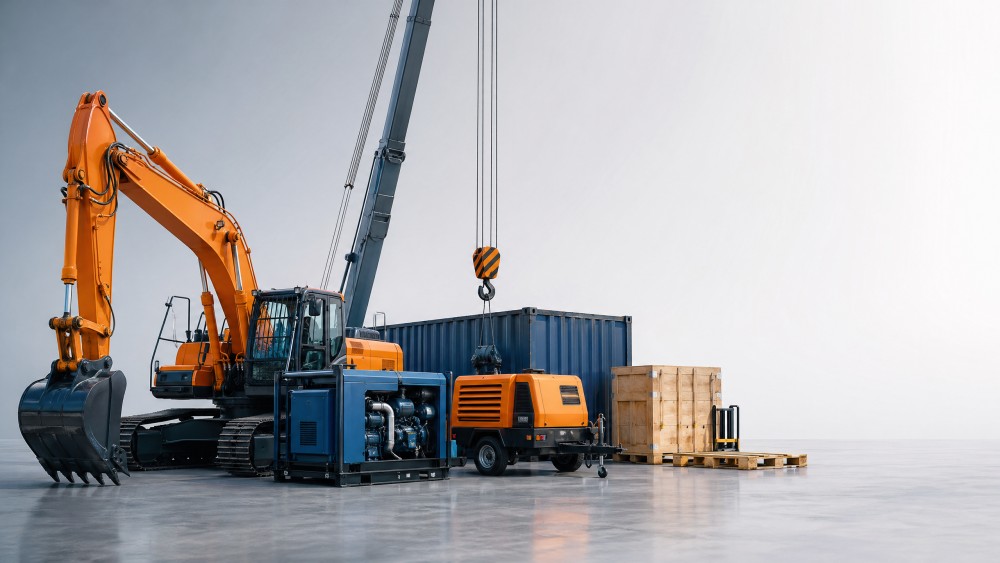
Construction projects depend on timing. A delayed excavator, generator, compressor, lifting system, batching component, or electrical supply package can interrupt multiple work fronts at once. Unlike some office or retail purchasing environments, construction equipment procurement is closely tied to sequencing. If one critical item is late, the schedule impact often spreads beyond a single task and affects labor, subcontractors, inspections, and downstream trades.
Project managers also face a sourcing environment shaped by volatile freight conditions, fluctuating raw material costs, inconsistent factory capacity, and varying export compliance requirements. A supplier may offer an attractive quotation, but that price means little if lead times are unstable or documentation is incomplete. In many cases, the delay begins long before the promised shipping date, with unclear specifications, slow approvals, or poor communication between project and procurement teams.
The most costly sourcing failures usually come from four root problems: incomplete technical scoping, overreliance on one supplier, unrealistic delivery expectations, and weak qualification processes. These are preventable issues. Once a site team understands that delay risk often starts during supplier selection, it becomes easier to build a sourcing strategy that protects both schedule and cost.
What project managers should evaluate before sending RFQs
Before requesting quotations, project leaders should define what is actually critical to project success. That means identifying which equipment categories are schedule-critical, which are technically complex, and which can be substituted if supply conditions change. Not every item needs the same level of sourcing control. A structured priority ranking helps teams focus resources where delays would create the greatest financial or operational damage.
Technical clarity is equally important. RFQs that lack precise specifications often produce misleading supplier responses. One vendor may quote a complete package, another may exclude control systems, spare parts, testing, or installation support, and a third may assume a different duty cycle or environmental condition. The result is not real price competition but apples-to-oranges comparison. Detailed technical definitions reduce rework and improve supplier accountability.
Project managers should also validate commercial and logistical assumptions before sourcing begins. This includes required delivery windows, incoterms, site access limits, packaging needs, inspection requirements, local certification, and commissioning support. When these conditions are discussed only after supplier selection, delays become much more likely. Early RFQ discipline is one of the simplest ways to improve equipment sourcing for construction industry projects.
How to identify reliable suppliers instead of chasing the lowest quote
Low prices are attractive under budget pressure, but the cheapest supplier often becomes the most expensive choice when delivery performance fails. For construction buyers, supplier evaluation should combine price with operational reliability. That means checking manufacturing capability, past export experience, quality control systems, communication responsiveness, and track record on projects with similar scale or technical complexity.
A practical supplier review should include more than brochures and certifications. Ask for recent delivery references, production timelines, quality inspection procedures, major customer examples, and escalation contacts. If possible, verify whether the supplier manufactures the equipment directly, assembles from outsourced components, or acts mainly as a trading intermediary. None of these models is automatically bad, but transparency matters because it affects lead times, customization flexibility, and after-sales support.
Project teams should also assess whether a supplier understands construction site realities. A strong industrial equipment vendor should be able to discuss operating conditions, installation constraints, wear factors, maintenance access, and spare part planning. Suppliers that only talk about unit price but avoid performance details may not be ready for critical project applications. A balanced scorecard often works best, weighting cost, lead time credibility, quality, technical support, and commercial stability.
How to verify lead times and avoid false delivery promises
Unverified lead times are one of the biggest hidden risks in construction procurement. Suppliers sometimes quote aggressively to win orders, assuming they can resolve capacity or component issues later. For a project team, that optimism can be dangerous. Once fabrication is delayed, recovery options shrink quickly, especially for customized equipment or imported systems with long shipping routes.
To validate lead times, ask suppliers to break delivery into stages: engineering confirmation, raw material procurement, fabrication, assembly, testing, packing, inland transport, port handling, ocean or air shipment, customs clearance, and final delivery. A single promised date is not enough. A milestone-based timeline reveals whether the schedule is realistic or simply commercial guesswork. It also creates early warning points if the order begins to slip.
Capacity checks are equally important. Find out how many similar orders are already in production, whether key components are in stock, and which sub-suppliers could become bottlenecks. If the supplier relies on imported motors, electronics, bearings, or hydraulic parts, lead times may depend on third parties outside their control. A credible sourcing plan for construction industry equipment should include documented assumptions behind delivery commitments, not just a date on a quotation.
What sourcing strategy reduces risk on schedule-critical projects
The right sourcing model depends on the equipment category, project timeline, and supply market conditions. For long-lead or mission-critical items, dual-track sourcing can reduce exposure. This may mean qualifying a primary supplier and a backup source at the same time, even if only one ultimately receives the order. While this adds some early effort, it can save weeks or months if the preferred supplier encounters production or logistics issues.
Another effective approach is to separate standard equipment from custom-engineered packages. Standard items may be sourced through framework agreements or prequalified vendor lists to accelerate ordering. Custom packages, by contrast, require more engineering review, design freeze discipline, and approval checkpoints. Treating both categories with the same procurement process often creates unnecessary delay either through over-control of standard items or under-control of complex ones.
Early procurement of long-lead components is also worth considering when project scope is stable enough. In some cases, placing conditional orders for critical subcomponents can protect capacity before final installation details are complete. This should be managed carefully to avoid specification mismatch, but on tight schedules it can be a powerful risk-reduction tool. The main principle is simple: align sourcing strategy with schedule impact, not just purchase value.
How to compare total cost instead of purchase price alone
For engineering leaders, the financial logic of sourcing should go beyond initial quotation value. A lower-priced machine or equipment package can still create a higher total cost if it performs poorly, requires frequent maintenance, consumes more energy, lacks local spare parts, or arrives late enough to disrupt the broader project. In construction, delay-related costs can exceed the equipment price difference many times over.
Total cost comparison should include at least six elements: purchase price, logistics cost, installation or commissioning requirements, operating efficiency, maintenance burden, and risk-adjusted schedule impact. If a premium supplier offers shorter and more reliable lead times, stronger documentation, easier servicing, and lower failure risk, the business case may be stronger than it appears in a simple quote comparison. Decision makers need visibility into that full picture.
This is especially important when equipment will remain in service after project delivery or support ongoing facility operations. The sourcing decision then affects not only the construction phase but long-term asset performance. For project managers accountable for both delivery and handover quality, a total cost perspective helps justify better supplier choices to finance teams, owners, and procurement departments.
What contract and communication controls help prevent sourcing disputes
Even a good supplier can become a source of delay if order documentation is vague. Purchase orders and supply contracts should clearly define specifications, scope inclusions and exclusions, approved drawings, inspection points, packaging standards, warranty terms, liquidated damages where appropriate, and documentation requirements. Ambiguity creates room for disagreement, and disputes consume time that projects cannot afford.
Communication rhythm matters just as much as contract wording. For critical equipment, establish a reporting cadence from the start: weekly updates during engineering, periodic factory progress checks during production, and milestone confirmations before shipment. Procurement teams should not wait until the promised dispatch week to ask for status. By then, problems are often too advanced to fix without significant schedule impact.
Escalation channels should also be defined early. If technical approvals stall, quality issues arise, or logistics plans change, both parties need named decision-makers who can act quickly. Many delays become expensive not because the initial problem was severe, but because no one addressed it in time. Strong process discipline turns sourcing from a reactive activity into an active risk management system.
Common warning signs that a supplier may cause delays
There are usually warning signs before a sourcing failure becomes visible on site. One common indicator is inconsistent communication. If a supplier is slow to answer technical questions, avoids detailed timeline commitments, or frequently changes commercial contacts during the quotation stage, similar issues may appear after order placement. Early behavior often predicts execution quality.
Another red flag is documentation weakness. Missing datasheets, unclear compliance statements, incomplete quality records, or vague packing and shipping plans suggest poor internal control. Suppliers that cannot produce structured information before the order may struggle even more under production pressure. Construction projects need documentation discipline because approvals, customs, inspections, and commissioning all depend on it.
Project managers should also be cautious when a quote looks unusually favorable without a clear explanation. The price gap may result from omitted scope, lower-grade components, unrealistic logistics assumptions, or delivery commitments unsupported by capacity. Healthy skepticism is not negativity; it is part of good sourcing governance. In equipment sourcing for construction industry projects, the safest quote is often the one that is transparent, not merely cheap.
A practical sourcing checklist for construction project teams
To reduce procurement-related delay, teams can use a simple checklist before awarding any major equipment package. First, confirm whether the specification is complete and approved. Second, classify schedule criticality. Third, compare suppliers on a weighted basis rather than price alone. Fourth, verify lead times by production stage. Fifth, review logistics, customs, and site delivery constraints. Sixth, define reporting and inspection milestones.
Seventh, confirm spare parts, manuals, commissioning support, and after-sales contacts. Eighth, identify substitute options in case of disruption. Ninth, check contract language for scope clarity and responsibilities. Tenth, align procurement dates with the latest realistic site need date, including contingency buffers. This kind of structured review helps prevent rushed decisions driven by short-term budget pressure or incomplete market information.
When used consistently, such a checklist improves both internal coordination and supplier performance. It gives project managers clearer visibility, supports more defensible approval decisions, and reduces the chance that hidden sourcing issues will surface only when equipment is urgently needed on site. In complex construction environments, disciplined basics often produce the biggest gains.
Conclusion: better sourcing decisions protect both schedule and profit
Successful equipment sourcing for construction industry projects is not about buying faster at any cost. It is about buying smarter, earlier, and with better risk visibility. Project managers and engineering leaders who focus on supplier reliability, lead time verification, technical clarity, and total cost are far more likely to avoid the delays that damage budgets and project credibility.
The most effective sourcing approach combines planning, market awareness, qualification discipline, and active follow-up after award. Construction schedules are too unforgiving for assumptions, vague quotations, or price-only decisions. When sourcing is treated as a strategic part of project execution, teams gain more control over delivery timelines, reduce costly surprises, and improve the odds of completing work on time.
In a market where supply chain disruptions remain a constant concern, better procurement habits are a competitive advantage. The projects that finish smoothly are rarely the ones with the cheapest quotes on paper. They are usually the ones where equipment decisions were made with realism, structure, and a clear understanding of what delay truly costs.


Industry Briefing
Get the top 5 industry headlines delivered to your inbox every morning.