
How to Plan Global Procurement for Industrial Machinery More Safely

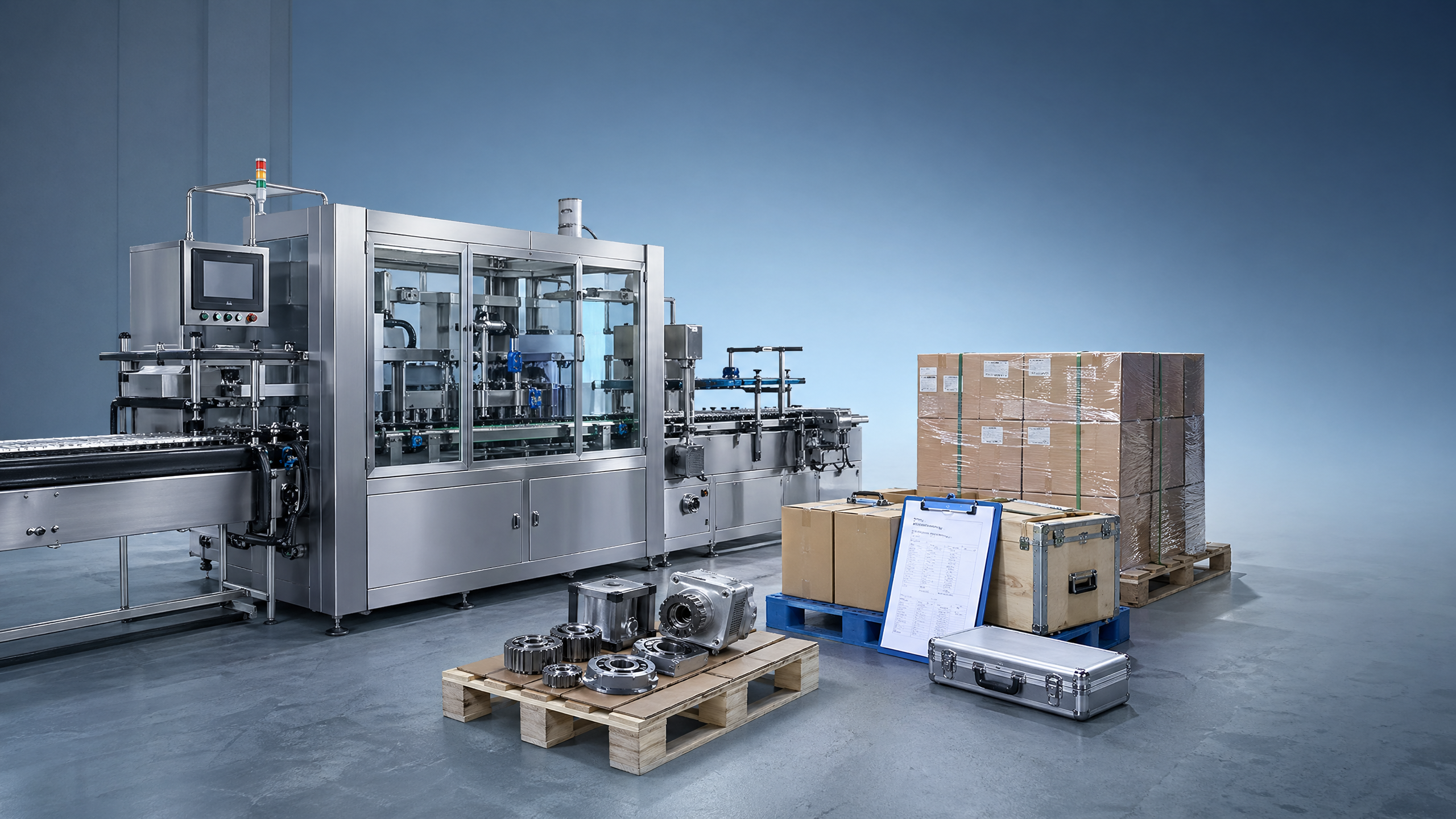
For procurement professionals, global trade procurement for industrial machinery offers access to wider supply options, better pricing, and advanced technologies—but it also brings risks in compliance, quality control, logistics, and supplier reliability. A safer procurement plan starts with clear requirements, careful market evaluation, and stronger risk management across every stage of sourcing. This guide outlines practical steps to help buyers make more informed, secure, and cost-effective international purchasing decisions.
Understanding Safer Global Procurement in Industrial Machinery
In manufacturing and processing industries, industrial machinery procurement rarely depends on price alone. Buyers often compare production capacity, power configuration, component origin, installation requirements, spare parts availability, and after-sales responsiveness before making a final decision. That is why global trade procurement for industrial machinery is best understood as a structured sourcing activity that combines technical evaluation, supplier screening, commercial negotiation, and delivery risk control across multiple countries and supply networks.
The topic matters because equipment purchases typically involve medium to high capital value, long service life, and operational impact that may last 5 to 15 years. A mistake in machine specification can create recurring problems such as unstable output, excessive energy consumption, difficult maintenance, or non-compliance with local electrical and safety requirements. In cross-border buying, these risks are amplified by language gaps, documentation inconsistencies, and lead times that can extend from 6 weeks to 9 months depending on machinery complexity.
For procurement teams working with industrial equipment, components, and electrical supplies, safer planning means reducing uncertainty before a purchase order is issued. It requires translating production needs into measurable criteria, defining acceptable supplier thresholds, and evaluating total acquisition cost rather than invoice price only. In many cases, a machine quoted 8% lower may become 15% to 20% more expensive after freight, customs duties, commissioning support, and replacement part delays are considered.
Why the Industry Pays Close Attention
The manufacturing ecosystem has become more global, but also more exposed to supply chain volatility. Procurement professionals now monitor not only machine prices, but also shipping schedules, export control updates, electrical component shortages, and regional policy changes affecting documentation or customs clearance. For capital equipment, a delay of even 2 to 4 weeks can interrupt factory expansion schedules, postpone installation windows, or affect contract delivery commitments to end customers.
Safer global trade procurement for industrial machinery also supports more disciplined internal decision-making. It creates a shared framework for engineering, purchasing, quality, finance, and operations teams. When stakeholders agree on essential parameters early—such as throughput, voltage, duty cycle, tolerance range, and factory acceptance expectations—the procurement process becomes more resilient and less reactive.
This approach is especially relevant for buyers using industry portals for market analysis, supplier discovery, export trade developments, and supply chain intelligence. Market visibility can shorten sourcing cycles, but only when the information is converted into a practical procurement plan with checkpoints, responsibilities, and verification steps.
Core Elements of a Safer Plan
- A technical requirement sheet covering output targets, power supply, dimensions, material compatibility, and expected operating environment.
- A supplier validation process that checks manufacturing capability, export experience, and documentation discipline.
- A cost model that includes tooling, testing, packaging, freight, duties, installation, and spare parts over at least the first 12 months.
- A quality and compliance plan with inspection milestones before shipment and after arrival.
- A contingency structure for delivery delays, non-conforming goods, or critical component substitutions.
Industry Context and Main Risk Areas Buyers Should Track
In today’s industrial market, machinery procurement decisions are shaped by more than product availability. Buyers are responding to fluctuating steel and electrical component costs, transport capacity constraints, changing energy-efficiency expectations, and a wider range of global suppliers. This makes global trade procurement for industrial machinery both more attractive and more demanding. The opportunity lies in broader choice; the challenge lies in filtering that choice safely.
Different machinery categories carry different risk profiles. Standardized auxiliary equipment may be easier to compare across vendors, while custom production lines require more engineering coordination and a higher level of document control. Equipment involving motors, drives, sensors, control panels, or pressure-bearing parts may also require closer alignment with destination-market rules, utility conditions, and maintenance capabilities at the installation site.
Procurement personnel should think in risk clusters rather than isolated problems. A machine can be technically acceptable yet commercially risky if spare parts lead time exceeds 10 to 12 weeks. Likewise, a supplier with strong pricing may still be unsuitable if it cannot provide stable export packing, FAT records, manuals, wiring diagrams, or remote commissioning support within agreed timelines.
The following overview helps buyers identify the most common risk points in industrial equipment sourcing and the practical controls that can reduce them.
These controls are not expensive compared with the cost of machine downtime or rework. In practice, many procurement failures happen not because buyers ignore risk, but because they identify risk too late. A safer plan moves validation closer to the early sourcing stage, when alternatives are still available and contract terms are still negotiable.
Market Signals Worth Monitoring
Procurement teams should watch a mix of commercial and operational indicators. These include raw material price movements, electrical component availability, export route congestion, policy interpretation related to customs or product documentation, and exhibition coverage that reveals new supplier activity or technology upgrades. Following these signals monthly or at least once per quarter can improve timing and strengthen supplier selection.
It is also useful to distinguish between temporary and structural market change. A 3-week freight disruption may justify schedule adjustment, while repeated shortages in control hardware may require redesign, approved alternative components, or dual-source planning. The more capital-intensive the machinery, the more important this distinction becomes.
For portal users focused on industrial equipment and supply chain intelligence, the value of market information is highest when it supports pre-purchase decisions: whether to accelerate ordering, split orders by component criticality, or prioritize suppliers with stronger regional service support.
Business Value of a Structured Procurement Plan
A safer sourcing plan is not only a defensive tool. It creates measurable business value across cost control, project reliability, and equipment performance. In global trade procurement for industrial machinery, the difference between a rushed purchase and a structured purchase often appears later—in installation speed, process stability, warranty handling, and spare parts consumption during the first 6 to 12 months of operation.
For procurement professionals, one major benefit is better alignment between the quoted machine and the real production objective. Instead of comparing offers on surface features alone, buyers can evaluate line speed, energy profile, automation level, maintenance intervals, and operator skill requirements. This improves internal approval quality and reduces costly post-order changes that may add 5% to 12% to project cost.
Another important value lies in total cost visibility. Machinery imports may involve packaging upgrades, inland transport, unloading equipment, installation supervision, test runs, and local utility adaptation. A lower ex-works price may not be the best option once all these factors are included. Structured planning helps buyers compare suppliers on a landed-cost and lifecycle-support basis rather than headline quotation only.
Where Procurement Value Is Created
The following table shows how value creation differs by procurement stage and why disciplined sourcing contributes to both operational and financial outcomes.
This staged view is useful because industrial procurement value is cumulative. A buyer who defines requirements clearly, validates suppliers carefully, and manages shipment milestones consistently can often reduce avoidable variation across the entire project. That translates into fewer claims, smoother installation, and faster production readiness.
Typical Benefits for Procurement Teams
- Stronger supplier comparison across 6 to 10 practical dimensions instead of unit price alone.
- Better forecasting of full project spend, including transport, compliance, and installation support.
- Lower risk of internal disagreement because engineering, quality, and operations requirements are documented earlier.
- Improved readiness for export trade changes, especially when documentation and shipment conditions are defined contractually.
Typical Machinery Categories and Sourcing Considerations
Not all machinery should be sourced with the same evaluation depth. In global trade procurement for industrial machinery, category-based planning helps buyers allocate time and control resources more effectively. A standard pump, motor, or conveyor may need a compact review process, while a filling line, CNC system, packaging machine, or process-integrated assembly line will require deeper technical and contractual scrutiny.
A practical way to classify equipment is by complexity, customization, and downtime impact. If replacement is easy and alternate suppliers are widely available, sourcing risk is lower. If the machine is highly integrated into production flow, uses specialized controls, or depends on custom tooling, the sourcing and acceptance process should be more detailed and often 2 to 3 times longer than for standard equipment.
Buyers should also consider support intensity. Some imported machines perform well initially but become difficult to maintain because spare parts are unique, manuals are incomplete, or remote service is slow. The procurement decision should therefore account for operating continuity, not just initial delivery.
Category View for Buyers
The following classification table can help procurement personnel decide how much validation is needed for different equipment types.
This classification does not replace engineering review, but it helps define the right procurement intensity. A buyer may only need 1 to 2 rounds of clarification for standard equipment, while a custom system may require multiple technical meetings, revised drawings, and a documented test protocol before manufacturing begins.
Questions Buyers Should Ask by Category
- What is the expected operating load, and does the proposed machine have enough performance margin without creating unnecessary energy cost?
- Which components are standard market items, and which are proprietary or long-lead items with 8-week or longer replenishment cycles?
- What documentation will be delivered before shipment, on shipment date, and after installation?
- How will performance be verified: visual inspection, FAT, no-load test, material test, or site acceptance?
Practical Steps to Plan Procurement More Safely
A safer purchasing strategy should be practical enough for day-to-day procurement work. The goal is not to slow every purchase, but to apply the right level of control according to machinery complexity, sourcing region, and business impact. In global trade procurement for industrial machinery, strong execution usually depends on disciplined preparation before inquiry and disciplined verification before shipment.
Start with requirement clarity. A concise but complete requirement pack should include output targets, duty cycle, material details, utility conditions, available floor space, preferred component brands if needed, and expected documentation. Even a 2-page specification summary can reduce misunderstanding more effectively than long email exchanges that lack measurable criteria.
Then move to supplier evaluation with a balanced lens. Pricing is important, but so are engineering responsiveness, drawing quality, export packing experience, lead time reliability, and service readiness. If two offers are technically close, the supplier that answers deviations clearly and documents assumptions well may be the safer long-term option.
Execution Checklist for Procurement Personnel
- Define mandatory and optional requirements separately so quotations are easier to compare.
- Request lead time split by engineering, production, testing, and shipment stages rather than one total number.
- Confirm whether key electrical and mechanical components are fixed or subject to substitution.
- Require pre-shipment photos, packing details, and document release before final balance payment where appropriate.
- Prepare a spare parts package for the first 6 to 12 months, especially for wear items and long-lead components.
Important Control Points Before Order Placement
Before issuing a purchase order, buyers should verify commercial and technical assumptions line by line. This includes Incoterms alignment, packing responsibility, document list, installation scope, warranty boundaries, and acceptance conditions. For higher-value machinery, staged payments linked to milestones such as drawing approval, FAT completion, or shipment notice can improve control without creating unnecessary complexity.
It is also wise to build a modest schedule buffer. For standard equipment, a buffer of 1 to 2 weeks may be enough. For custom or multi-unit projects, 3 to 6 weeks is often more realistic, especially when shipping, customs, and site preparation are all interdependent. This reduces pressure-driven decisions when a delay occurs.
Finally, document lessons after delivery. Procurement maturity improves when each completed project is reviewed for quotation accuracy, lead time realism, packing quality, startup issues, and supplier response speed. Over time, this creates an internal supplier performance record that is more useful than relying on price memory alone.
A Practical Closing Perspective for Buyers
Safer global trade procurement for industrial machinery is not about avoiding international sourcing. It is about sourcing with enough structure to protect technical fit, delivery reliability, compliance readiness, and long-term operating value. For procurement professionals, the most effective plans usually combine market awareness, clear specifications, supplier discipline, and realistic cost modeling from the beginning.
In a market shaped by technology updates, export trade changes, and supply chain variability, buyers who treat machinery procurement as a managed process are better positioned to secure stable equipment performance and reduce avoidable risk. Whether the project involves standard components, industrial equipment, or more complex manufacturing systems, the same principle applies: better preparation leads to safer decisions.
If you are comparing suppliers, validating specifications, or trying to estimate realistic delivery timelines, early discussion can prevent costly revisions later. Procurement teams often gain the most value when technical and commercial questions are clarified before final supplier commitment.
Why Choose Us
We focus on industry content and market intelligence across manufacturing machinery, industrial equipment and components, and electrical equipment and supplies. That means we can support procurement professionals with practical information that connects sourcing decisions to market trends, export developments, price movements, technology updates, and supply chain signals.
Contact us if you need support with parameter confirmation, machinery category selection, supplier comparison logic, expected delivery cycles, documentation planning, certification-related considerations, spare parts planning, sample or specification review, and quotation communication. If your team is preparing global trade procurement for industrial machinery, we can help you build a safer decision framework before the order is placed.

Industry Briefing
Get the top 5 industry headlines delivered to your inbox every morning.