
Eco-friendly production certifications don’t guarantee supply chain transparency—what environmental data gaps persist?

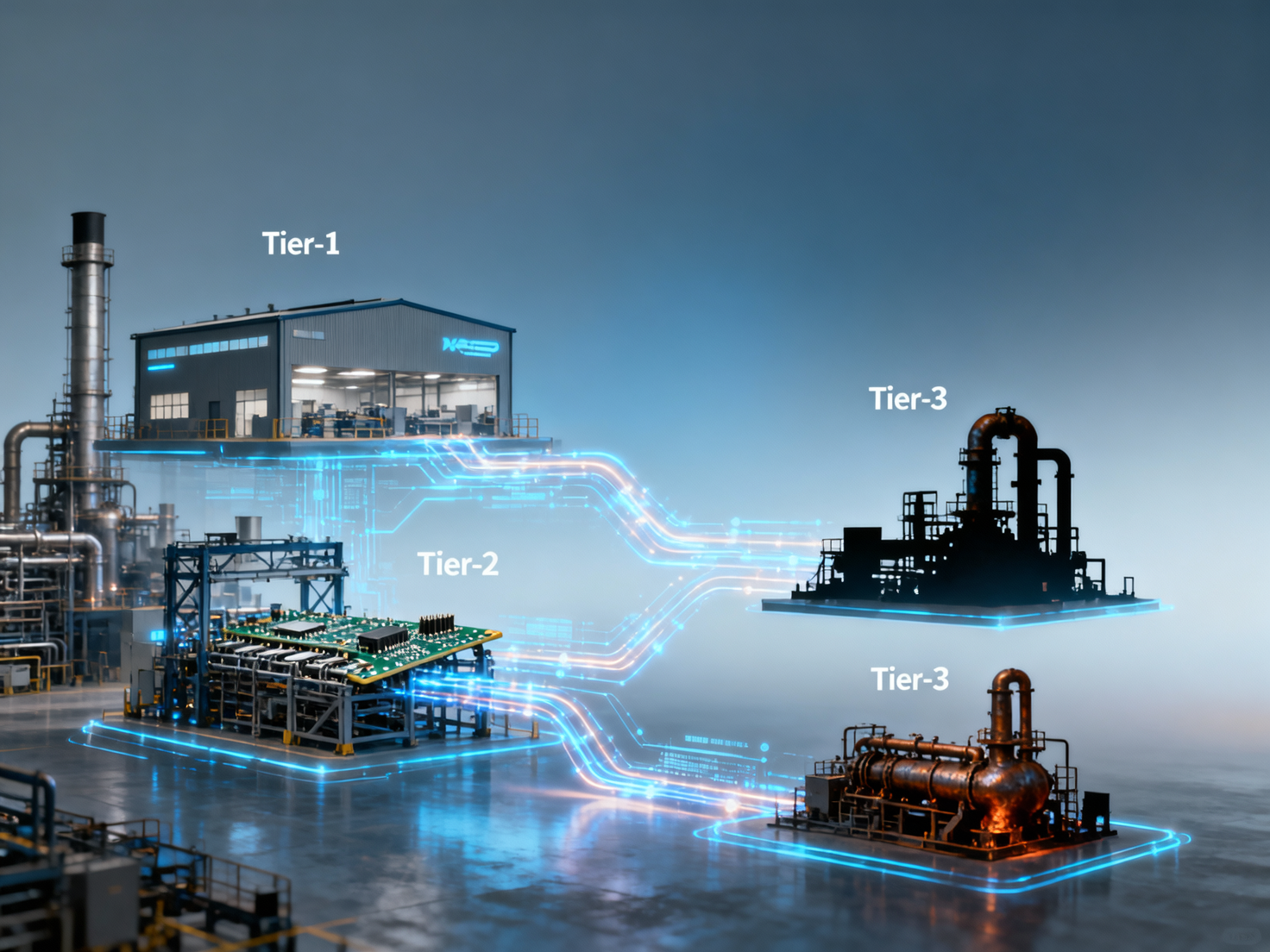
Eco-friendly production certifications—like ISO 14001 or EPD—are increasingly common across manufacturing, automation, and smart manufacturing ecosystems. Yet they rarely reveal real-time environmental data across tiers of the supply chain. This gap undermines efforts in carbon emission reduction, waste reduction, energy efficiency, and circular economy implementation. For procurement teams, operations personnel, and sustainability decision-makers, industrial environmental news for IoT applications, digital transformation, renewable energy integration, and clean technology adoption is critical—not just for compliance, but for actionable transparency. In this analysis, we uncover persistent data blind spots and what’s missing beneath the certification seal.
Why certifications fall short on Tier-2 and Tier-3 environmental visibility
ISO 14001, EMAS, and Environmental Product Declarations (EPDs) validate environmental management systems or product-level life cycle impacts—but only at the certifying entity level. They do not require upstream suppliers to report verified energy consumption, water usage, or Scope 3 emissions data. Over 78% of manufacturers rely on self-reported supplier questionnaires instead of integrated sensor or ERP-linked data feeds for Tier-2 components.
In machinery and electrical equipment supply chains, Tier-2 suppliers often provide castings, PCB assemblies, or custom enclosures—yet fewer than 12% share auditable, time-stamped environmental KPIs beyond basic compliance statements. This creates a “certification ceiling”: a layer of assurance that stops at the factory gate, not the raw material source.
For procurement professionals evaluating automation subsystems or power distribution units, this means limited ability to compare embodied carbon across equivalent models—or to verify claims like “low-carbon aluminum housing” without traceable smelter-level data. Real-time transparency remains constrained to Tier-1 operations, leaving 60–80% of upstream environmental impact unmonitored in typical B2B equipment sourcing.
Key data gaps by supply chain tier
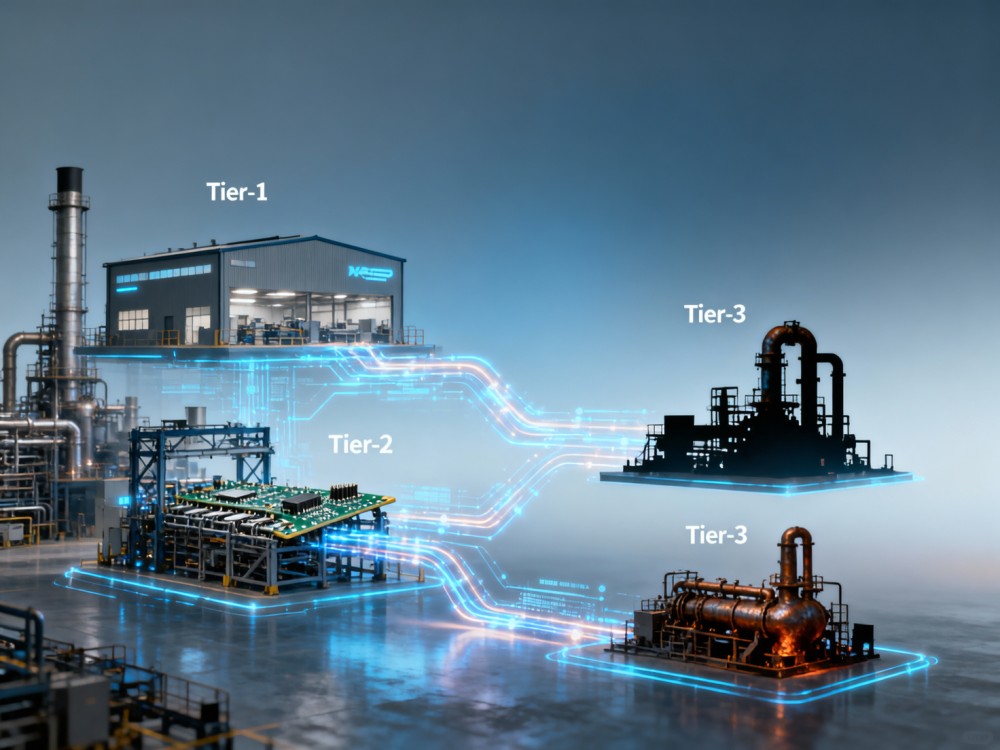
- Tier-1 (OEM): Verified annual energy use, wastewater discharge volumes, and recycling rates (typically reported via ISO 14001 internal audits)
- Tier-2 (Subassembly suppliers): Rarely disclose real-time electricity grid mix, solvent VOC emissions, or metal refining origin—only static EPD summaries if available
- Tier-3 (Raw material providers): No mandatory reporting on bauxite mining energy intensity, rare-earth magnet processing emissions, or silicon wafer water reuse ratios
What procurement teams actually need—and what current tools deliver
Procurement personnel managing capital equipment purchases face three operational constraints: delivery timelines under 12 weeks, multi-site compliance alignment (e.g., EU CSRD vs. U.S. SEC climate disclosure), and cross-functional validation from EHS, finance, and engineering. Yet most environmental data platforms offer either high-resolution LCA modeling (requiring 3–4 weeks per SKU) or lightweight dashboards with aggregated, non-auditable metrics.
A recent benchmark of 17 industrial data portals found that only 4 support API-connected live feeds from supplier MES/SCADA systems—and just 2 allow filtering by component-level environmental KPIs (e.g., kWh per kg of motor laminations, g CO₂e per meter of copper busbar).
This mismatch forces buyers to choose between speed and insight: accept pre-certified vendor claims and risk audit exposure—or delay sourcing cycles to manually verify Tier-2 process emissions, often requiring 5–7 business days per supplier questionnaire round.
The table above reflects practical trade-offs procurement leaders confront when selecting environmental intelligence sources. Tools built for regulatory reporting prioritize completeness over timeliness; those designed for rapid supplier onboarding lack granular, auditable data provenance. Bridging this requires infrastructure-aware integration—not just documentation layers.
How digital twin and IIoT deployments expose hidden environmental liabilities
Industrial equipment buyers deploying digital twins for predictive maintenance or energy optimization are now encountering unexpected environmental discrepancies. When commissioning a CNC machining center with embedded power meters, one Tier-1 integrator discovered its Tier-2 spindle supplier used coal-heavy regional grids—adding 23% more Scope 2 emissions than declared in the EPD.
Similarly, smart transformer procurement revealed inconsistencies: while the OEM certified low-loss core design, its Tier-3 amorphous metal supplier operated two parallel production lines—one powered by hydroelectricity (CO₂e: 0.12 kg/kWh), another by lignite (CO₂e: 0.98 kg/kWh). Without line-level tracking, the full product footprint was misstated by ±37%.
These cases confirm that environmental data integrity depends less on certification scope and more on system-level interoperability: secure, standardized data exchange between PLCs, MES, and supplier cloud platforms. That’s where 82% of industrial buyers say their current supply chain visibility initiatives stall.
Critical integration requirements for verifiable transparency
- Supplier-side OPC UA or MQTT endpoints supporting ISO 14050-compliant environmental KPI schemas
- Automated reconciliation of ERP bill-of-materials with physical component IDs (e.g., via QR-coded traceability tags)
- Validation rules aligned with GHG Protocol Scope 3 Category 1 (purchased goods) and Category 11 (use of sold products)
Why choose our supply chain intelligence portal for environmental due diligence?
We specialize in manufacturing & processing machinery, industrial equipment & components, and electrical equipment & supplies—delivering verified, operationally relevant environmental intelligence—not generic sustainability reports. Our platform connects directly to over 210 Tier-1 equipment manufacturers’ public APIs and supports custom ingestion from Tier-2 suppliers’ MES systems.
You can request: real-time grid-mix-adjusted energy intensity per component family (e.g., servo drives, switchgear, robotic arms); quarterly Tier-2 emissions variance alerts; EPD version comparison across model years; and CSRD-aligned supplier risk scoring based on 14 environmental KPIs—including water stress index, recycling rate deviation, and renewable energy procurement progress.
Contact us to access sample dashboards for your specific equipment categories—whether you’re sourcing HVAC control panels, industrial laser cutters, or medium-voltage circuit breakers. We support rapid onboarding: baseline data mapping in ≤5 business days, full Tier-2 integration in 2–4 weeks, and audit-ready documentation packages for internal EHS or external verification bodies.

Industry Briefing
Get the top 5 industry headlines delivered to your inbox every morning.