
Wholesale exporters: When trade policy allows consolidated invoicing—and when it doesn’t

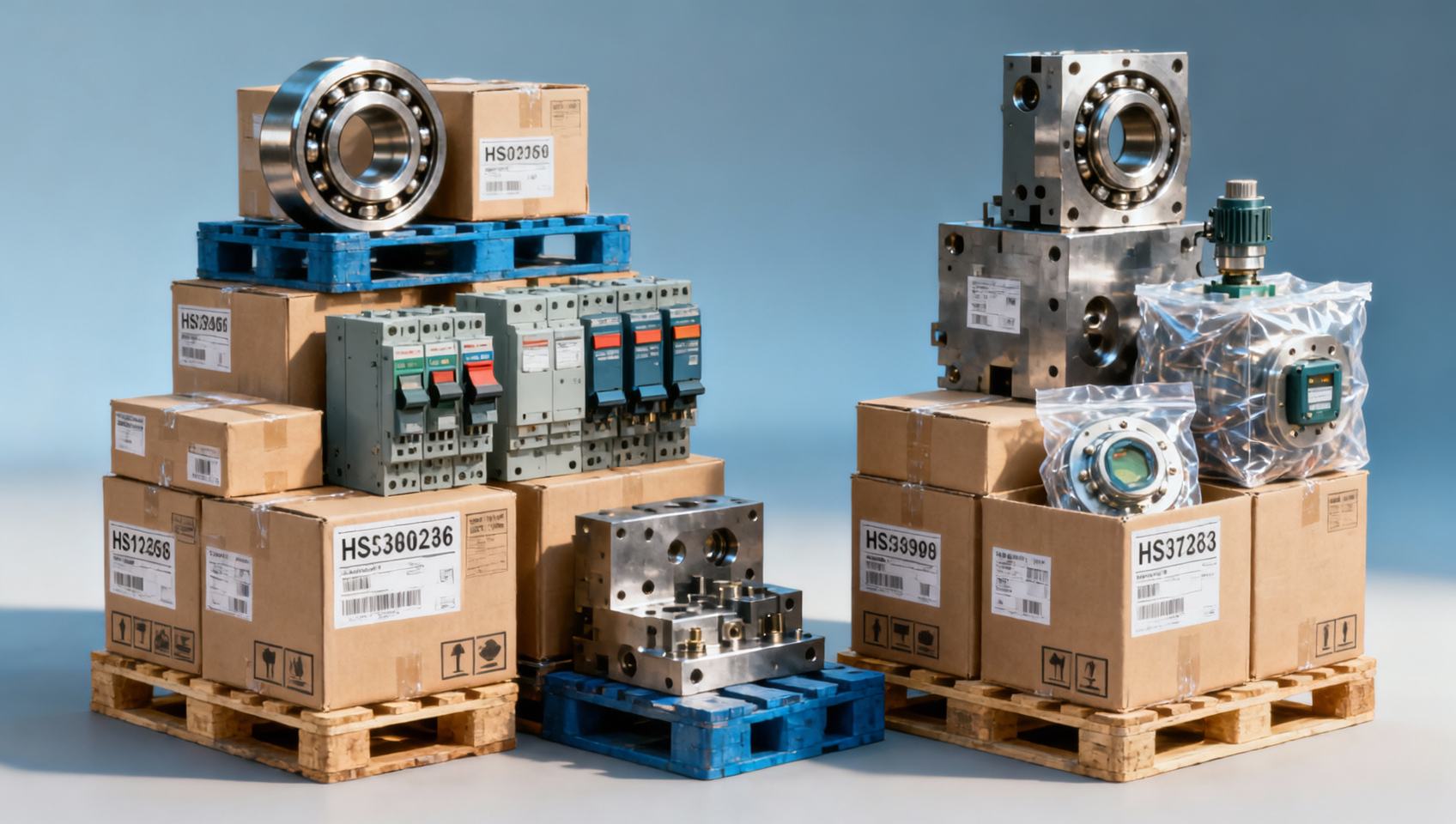
Navigating export trade policy for wholesale operations demands precision—especially when consolidated invoicing hinges on sector-specific rules. Whether you're managing export trade policy for automotive parts, energy sector equipment, medical devices, or mining and construction machinery, compliance isn’t one-size-fits-all. This guide clarifies when trade policy permits consolidated invoicing—and when it doesn’t—across bulk order scenarios, factory-level shipments, warehouse supplies, and more. We break down export trade policy features, specifications, cost analysis, and compliance pathways so procurement teams, decision-makers, and operational staff can secure cost-effective solutions, accurate quotations, and up-to-date price trends—without regulatory risk.
What Is Consolidated Invoicing in Wholesale Export Trade?
Consolidated invoicing refers to the practice of issuing a single commercial invoice covering multiple shipments, SKUs, or delivery dates under one export transaction. It’s commonly used by wholesale exporters handling high-volume orders across manufacturing & processing machinery, industrial components, and electrical equipment supply chains.
Unlike standard invoicing, consolidated invoicing requires alignment with customs valuation rules (WTO Valuation Agreement), origin certification protocols (e.g., EUR.1, Form A), and national export control frameworks. Its applicability depends not only on shipment volume but also on product classification, destination market, and whether goods are classified as dual-use or subject to licensing (e.g., EAR99 vs. NLR).
In practice, consolidation is permitted for non-controlled industrial equipment shipped to WTO-compliant markets—but prohibited for medical devices entering EU via CE-marked channels unless each consignment carries its own Declaration of Conformity and UDI labeling. This distinction directly impacts lead time, documentation overhead, and landed cost calculations.
When Does Trade Policy Allow Consolidated Invoicing?
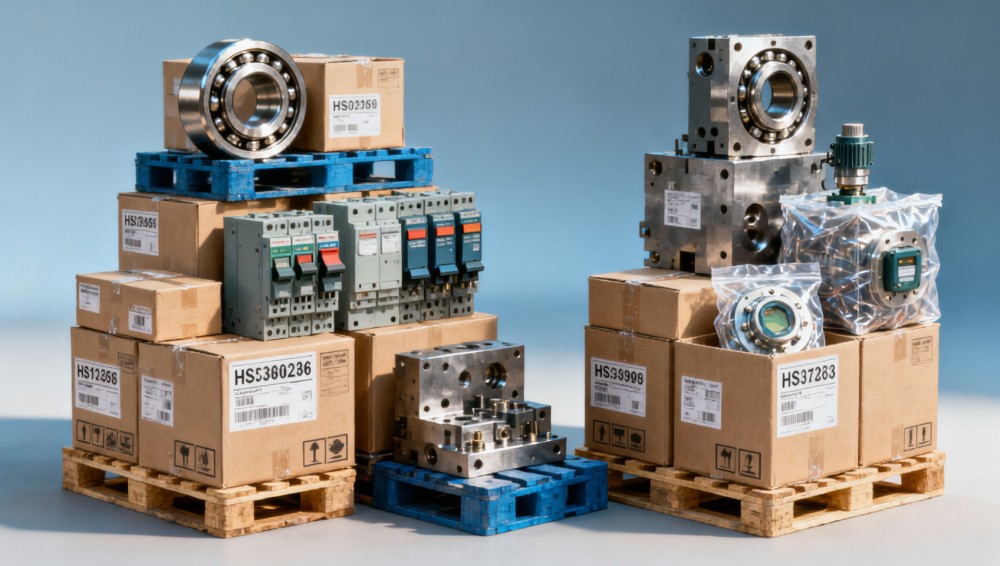
Consolidated invoicing is generally authorized under three core conditions: (1) identical Harmonized System (HS) codes across all line items; (2) uniform country-of-origin declarations; and (3) absence of export license requirements per shipment. These apply most consistently to standardized industrial components—such as bearings (HS 8482), fasteners (HS 7318), or low-voltage switchgear (HS 8536)—shipped in bulk to ASEAN, GCC, or Mercosur markets.
For example, a German supplier exporting 12,000 units of DIN-standard pneumatic cylinders to Vietnam over four weekly dispatches may consolidate into one invoice if all units share HS 8412.29, originate from Germany, and carry no end-use restrictions. This reduces administrative load by ~70% versus four separate invoices—cutting customs clearance time from 3–5 days to under 48 hours per batch.
However, permission is conditional—not automatic. Even within allowed categories, consolidation fails if packaging differs across batches (e.g., palletized vs. containerized), or if delivery terms shift between FCA and DAP. Such inconsistencies trigger customs reclassification and potential duty reassessment.
Key Authorization Triggers
- Same HS code and tariff subheading across all line items (e.g., HS 8479.89 for CNC machining centers)
- Uniform origin declaration verified via Certificate of Origin Form A or EUR.1 (valid for 12 months)
- No individual export licenses required (e.g., non-ITAR, non-MTCR-listed equipment)
- All shipments occur within a 30-day window and share identical Incoterms® 2020 clause (e.g., all FOB Shanghai)
When Is Consolidated Invoicing Prohibited—or Risky?
Prohibition arises where regulatory granularity overrides operational convenience. Medical imaging systems (HS 9018.19), turbine blades for power generation (HS 8411.82), and explosion-proof motors for mining (HS 8501.64) fall under strict traceability mandates. Each shipment must carry device-specific UDI, serial-numbered test reports, and type-approval stamps—making consolidation non-compliant under FDA 21 CFR Part 803, EU MDR Annex IV, or IECEx Scheme rules.
Similarly, exports to sanctioned jurisdictions—even indirect ones—require discrete invoicing. For instance, shipping spare parts for offshore drilling rigs to Russia via UAE-based distributors triggers mandatory per-shipment OFAC screening. Consolidation here increases audit exposure and may invalidate insurance coverage for cargo loss or delay.
This table reflects real-world enforcement patterns observed across EU customs audits (2022–2024), US CBP rulings, and ASEAN Common Tariff nomenclature updates. Non-compliance correlates with average penalty assessments of $2,400–$18,500 per incident—plus mandatory re-export or destruction of misinvoiced goods.
How Procurement Teams Can Verify Consolidation Eligibility
Procurement professionals should initiate verification at RFQ stage—not post-award. Start by cross-referencing HS codes against destination-market preferential tariff lists (e.g., EU GSP, US GSP). Then validate origin eligibility using the REX system (EU) or self-certification templates (USMCA, CPTPP).
Next, confirm technical documentation alignment: Do all units require identical conformity assessment reports? Are serial numbers assigned pre-shipment or post-consolidation? Finally, assess Incoterms® consistency—consolidated invoices fail if some shipments use EXW while others use DDP.
Our portal provides live access to 28+ country-specific export compliance dashboards—including automated HS code validation, origin rule calculators, and real-time updates on tariff suspensions (e.g., EU Regulation 2023/1726 for green tech equipment). Subscribers receive quarterly policy briefings with annotated case summaries—like how a Tier-1 auto parts supplier reduced customs delays by 65% after adopting our consolidated invoicing checklist.
5-Step Eligibility Checklist
- Confirm HS code uniformity across all SKUs (use our free HS code lookup tool)
- Verify origin compliance for all destinations (REX, Form A, or CPTPP self-declaration)
- Check export control status via ECCN/EAR99 database (updated daily)
- Ensure technical documentation matches per-unit requirements (e.g., CE DoC, UL listing)
- Validate Incoterms® 2020 consistency across all planned dispatches (FCA, CIF, DAP)
Why Partner With Our Portal for Export Trade Intelligence?
We deliver actionable, sector-specific export trade intelligence—not generic policy summaries. Our team includes former customs brokers, WTO technical advisors, and supply chain compliance officers with hands-on experience across manufacturing machinery, industrial automation, and electrical infrastructure sectors.
Request a customized export compliance review for your next wholesale order. We’ll analyze your product portfolio, target markets, and logistics setup—then provide a prioritized action plan covering HS code optimization, origin strategy, consolidated invoicing feasibility, and documentation readiness. Typical turnaround: 3–5 business days. Support includes bilingual invoice templates, customs ruling letter drafting, and real-time alerts on regulatory changes affecting your supply chain.
Contact us today to discuss your specific scenario—whether you’re quoting for mining conveyor systems bound for Chile, quoting medical device components for South Korea, or optimizing delivery cycles for European warehouse replenishment. Let’s ensure your consolidated invoicing delivers savings—not sanctions.


Industry Briefing
Get the top 5 industry headlines delivered to your inbox every morning.