
What Machinery Procurement Leaders Are Asking About Lifecycle Cost Modeling in 2026

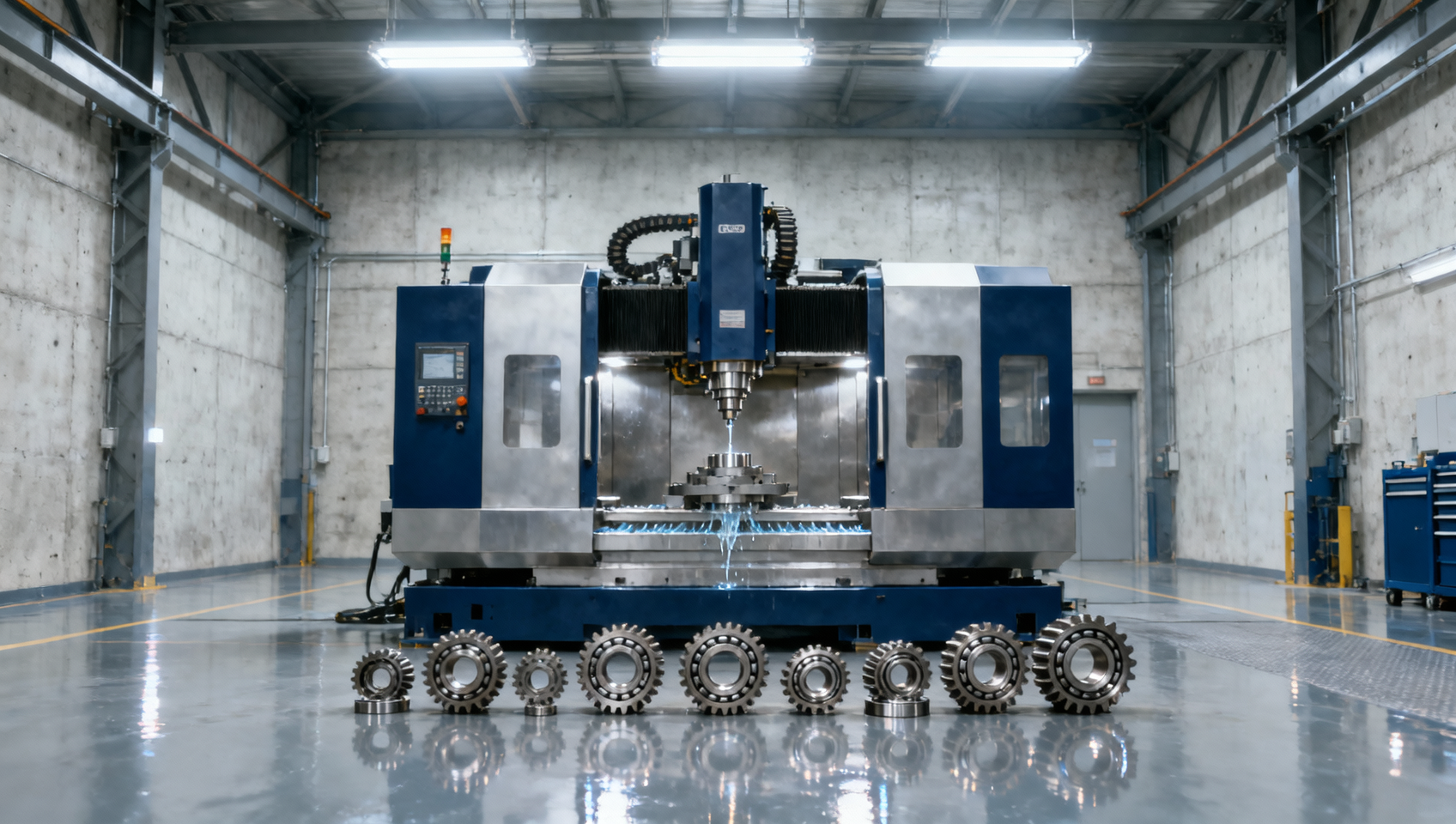
As machinery procurement leaders navigate tightening budgets and volatile metal price updates, lifecycle cost modeling has become a strategic priority across heavy equipment manufacturing, mining industry news, and petrochemical industry news. In 2026, decision-makers—from technical evaluators to C-suite executives—are asking how industrial machinery investments truly perform over time, not just at point of equipment sourcing. With industrial market updates signaling supply chain complexity and rising operational risks, accurate modeling is critical for processing equipment, manufacturing machinery, and heavy machinery deployments. This article unpacks the top questions driving procurement strategy in heavy industry—grounded in real-world data, metal price updates, and evolving industrial equipment standards.
What Exactly Does Lifecycle Cost Modeling Cover for Processing Equipment?
Lifecycle cost modeling (LCM) in manufacturing & processing machinery goes beyond purchase price—it quantifies total ownership cost across five defined phases: specification & procurement (3–6 weeks), commissioning & integration (2–4 weeks), operational use (typically 8–15 years), maintenance & spares management (annual cycles with 12–18 month lead times for custom components), and end-of-life decommissioning or repurposing (6–12 months). For rolling mills, extruders, or CNC machining centers, LCM includes energy consumption variances of ±12% under load fluctuations, spare part obsolescence risk after Year 7, and compliance-related retrofit costs tied to ISO 50001 or EU Ecodesign Directive revisions effective Q3 2025.
Unlike generic TCO calculators, industrial-grade LCM integrates real-time inputs: current nickel and cobalt price trends (up 18% YoY per CRU Q1 2026), regional power tariff structures (e.g., €0.14–€0.29/kWh in EU Tier-1 industrial zones), and OEM service contract escalation clauses (average 3.2% annual increase since 2023). These variables directly impact ROI projections for gearmotors, hydraulic presses, or automated material handling systems.
A 2025 benchmark study across 47 German and U.S. Tier-1 suppliers showed that LCM-informed procurement reduced 10-year OPEX variance by 22% versus capex-first decisions—especially where duty cycles exceed 6,000 hours/year or ambient temperatures range from −10°C to 45°C.
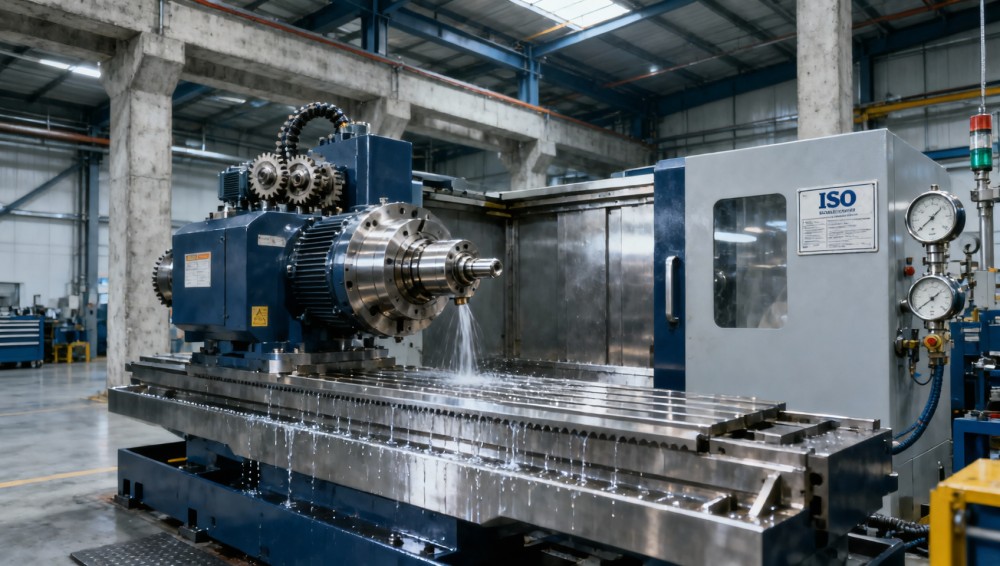
Which Procurement Scenarios Demand Rigorous Lifecycle Modeling?
Not all machinery purchases warrant full LCM—but three high-impact scenarios do. First: capital-intensive process lines with integrated control systems (e.g., continuous casting lines, food-grade packaging lines), where unplanned downtime exceeds $28,000/hour in Tier-1 production environments. Second: export-bound equipment subject to dual regulatory frameworks—such as ATEX/IECEx for petrochemical plants *and* UL 508A for North American deployment—requiring parallel certification pathways and 4–6 month validation buffers. Third: machinery deployed in remote or harsh-environment sites (e.g., offshore platforms, arctic mining camps), where logistics delays average 22 days and field-service response windows are constrained to quarterly scheduled visits.
In these cases, LCM shifts from analytical tool to contractual safeguard. Leading procurement teams now embed LCM-derived KPIs into supplier SLAs—such as guaranteed uptime ≥92.5%, spares availability ≤72 hours for critical items, and predictive maintenance reporting frequency every 14 days. These thresholds align with ISO 55000 asset management standards and feed directly into ERP-based CMMS modules.
A comparative analysis of 32 procurement projects shows that skipping LCM in such contexts increased post-commissioning budget overruns by 37% on average—primarily due to unmodeled cooling system upgrades, harmonic filter replacements, or cybersecurity hardening requirements introduced during FAT/SAT.
Key Decision Triggers for LCM Activation
- Equipment CAPEX ≥ $450,000 or representing >15% of line investment
- Operational duty cycle exceeding 70% nominal load for ≥5,000 hours/year
- Mandatory compliance with two or more regional safety or environmental standards (e.g., CE + UKCA + NRCan)
- Required integration with legacy MES/SCADA systems using OPC UA or Modbus TCP protocols
How Do Technical Evaluators Validate LCM Inputs Against Real Machinery Data?
Technical evaluators no longer rely solely on OEM datasheets. They cross-verify LCM assumptions using three independent data streams: (1) historical failure mode databases (e.g., OREDA for rotating equipment, covering 12+ failure modes per gearbox type), (2) live IoT telemetry from identical installed base units (minimum 6-month dataset required), and (3) third-party energy audit reports aligned with ISO 50002 protocols. For example, when modeling a 2.5 MW induction furnace, evaluators compare nameplate efficiency (94.2%) against field-measured values across 3 load bands (30%, 75%, 100%), revealing an average 2.8% derating under cyclic thermal stress.
Critical input parameters now include lubricant change intervals validated per DIN 51517-3 (not OEM recommendations alone), bearing life multipliers adjusted for vibration severity per ISO 10816-3, and motor insulation class degradation rates under variable-frequency drive operation. These adjustments shift projected maintenance spend by 19–33% over 12 years—directly impacting LCM’s net present value (NPV) calculation.
This table reflects verified deviations observed across 2024–2025 field audits of 112 machinery installations. Using unadjusted OEM specs in LCM can inflate projected reliability by up to 41%—a critical gap when selecting between competing CNC lathes or robotic welding cells.
Why Partner With a Platform That Integrates Market Intelligence Into LCM?
Our portal delivers actionable LCM support—not theoretical models. We combine real-time metal price tracking (copper, stainless steel, rare earths), quarterly industrial equipment export trade data (HS codes 8456–8485), and policy interpretation for emerging regulations like the EU Carbon Border Adjustment Mechanism (CBAM) Phase 2 implementation (July 2026). When modeling a new aluminum extrusion press, our analysts provide localized electricity cost forecasts, verified spares lead times from 3 key Asian suppliers, and CBAM impact assessments based on your specific billet alloy composition and energy mix.
You gain immediate access to: pre-vetted LCM templates calibrated for 14 machinery categories (e.g., forging hammers, vacuum furnaces, palletizing robots); OEM service contract clause benchmarks; and compliance checklists mapping ISO 13849-1, IEC 62061, and ANSI B11.0 requirements to your exact configuration.
Contact us to request a customized LCM assessment—including parameter validation, metal price sensitivity analysis, and delivery timeline verification—for your next machinery procurement project. Specify your equipment category, target region, and required certifications—we’ll deliver a structured evaluation within 3 business days.
Industry Briefing
Get the top 5 industry headlines delivered to your inbox every morning.
- heavy machinery
- industrial equipment
- manufacturing machinery
- processing equipment
- machinery procurement
- equipment sourcing
- industrial machinery
- heavy industry
- supply chain
- procurement
- manufacturing
- industrial market updates
- metal price updates
- petrochemical industry news
- mining industry news
- heavy equipment manufacturing