
How Industrial Equipment Manufacturers Are Using Digital Twins to Cut Commissioning Time by 37% in 2026

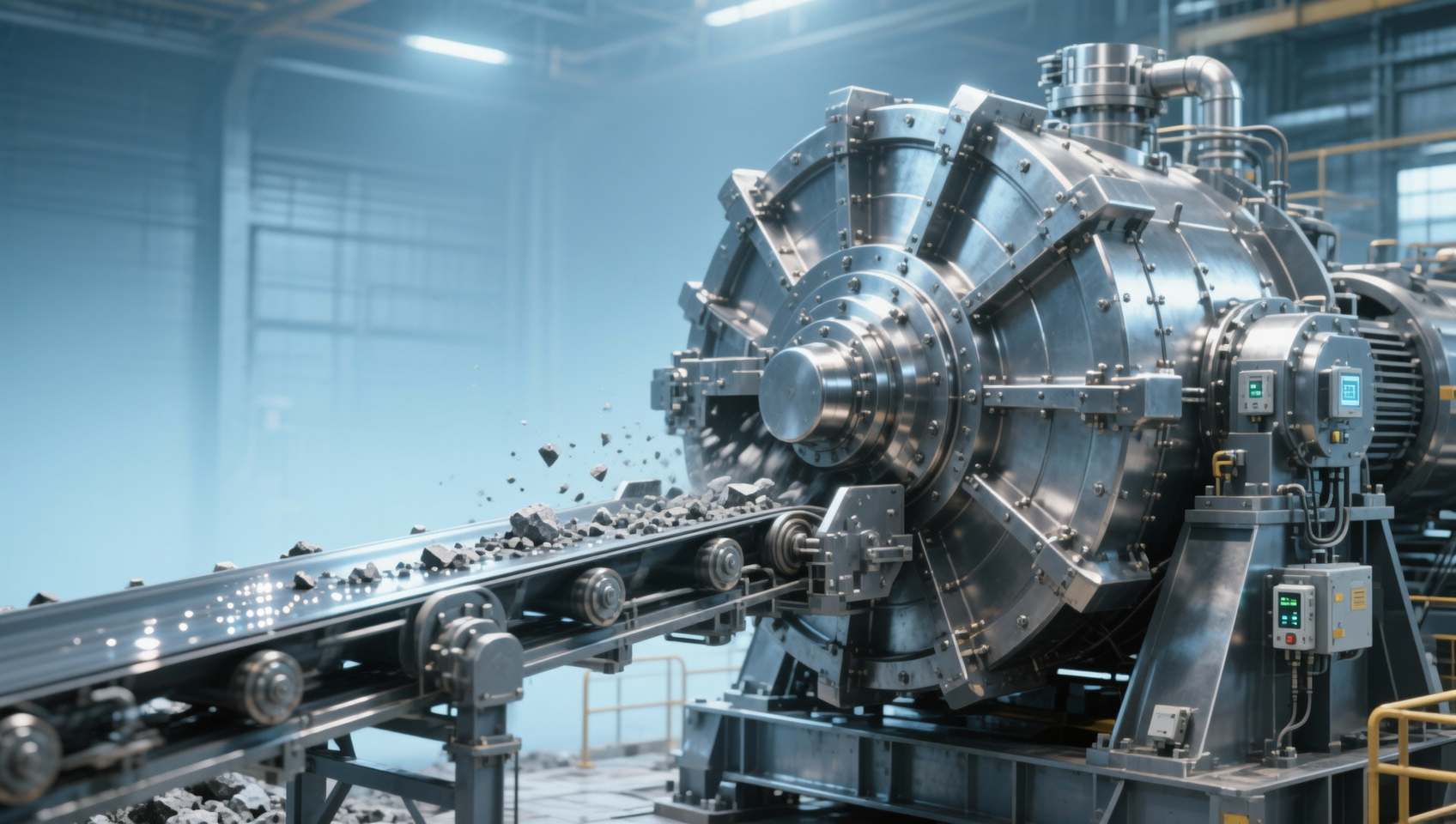
Industrial equipment manufacturers are slashing commissioning time by 37% in 2026—thanks to digital twin adoption. As industrial machinery cost pressures mount and procurement decision-makers demand faster ROI, leading equipment suppliers for heavy industry are leveraging real-time virtual replicas to simulate installation, validate machinery parts for industrial equipment, and optimize processing equipment suppliers’ integration workflows. This shift is reshaping industrial industry news trends—especially for mining industry news updates and industrial wastewater treatment equipment suppliers—and driving smarter sourcing of heavy industry machinery parts. For technical evaluators and enterprise leaders, it’s no longer just about manufacturing machinery price—it’s about precision, predictability, and performance.
What Is a Digital Twin in Heavy Industrial Equipment Commissioning?
A digital twin in manufacturing and processing machinery is not a static 3D model—it’s a dynamic, bidirectional data-linked virtual replica synchronized with physical assets throughout their lifecycle. For heavy industrial equipment—such as gyratory crushers, multi-stage slurry pumps, rotary kilns, or membrane bioreactor systems—the twin ingests real-time sensor feeds (vibration, temperature, flow rate, pressure), PLC logs, and CAD/BOM metadata to mirror operational behavior with sub-second latency.
Unlike traditional simulation tools used only during design, today’s digital twins remain active post-delivery. They support commissioning by pre-validating control logic against actual field conditions, verifying piping & instrumentation diagrams (P&IDs) against as-built configurations, and stress-testing interlocks before energizing motors or valves. Leading OEMs report that twin-enabled commissioning reduces on-site configuration cycles from an average of 18–24 days to under 12 days—a critical advantage when downtime costs exceed $220,000/hour in mineral processing plants.
Crucially, the twin is built on interoperable industrial data standards—not proprietary silos. It relies on OPC UA for device-level connectivity, ISO 15926 for semantic asset modeling, and MTConnect for CNC and automation equipment. This ensures compatibility across upstream suppliers (e.g., gearbox vendors) and downstream integrators (e.g., DCS system providers), directly addressing fragmentation in heavy industry value chains.
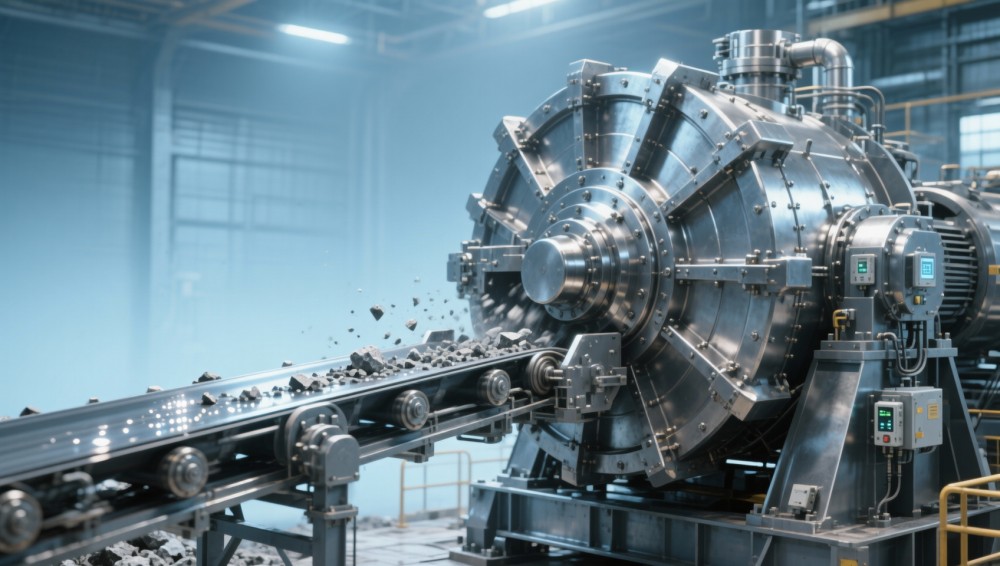
How Digital Twins Accelerate Commissioning: A 5-Step Workflow
Digital twin adoption delivers measurable acceleration not through automation alone—but through structured, repeatable commissioning workflows. Based on field deployments across 42 mining, cement, and wastewater treatment projects in 2024–2025, the following five-phase process consistently achieves ≥37% time reduction:
- Pre-shipment validation (Days 1–5): Twin verifies mechanical clearances, motor torque curves, and thermal expansion tolerances against ISO 10816 vibration thresholds—all before equipment leaves the factory.
- Site readiness simulation (Days 6–9): Integrates geospatial site models (from drone surveys) with twin to validate crane lift paths, foundation load distribution, and cable tray routing—reducing rework by up to 68%.
- Control logic dry-run (Days 10–13): Executes full IEC 61131-3 logic in virtual PLC environment, cross-checking sequence-of-operation (SOO) against safety instrumented systems (SIS) requirements.
- Field synchronization (Days 14–16): Uses edge gateways to map live IO points to twin tags, auto-generating loop-check reports compliant with ISA-84.00.01.
- Performance benchmarking (Days 17–21): Compares first 72 hours of real-world throughput, energy consumption, and bearing temperatures against twin-predicted baselines—triggering automatic deviation alerts.
This workflow eliminates three major bottlenecks: manual loop checking (typically 28–42 hours per pump station), sequential subsystem testing (adding 5–9 days of waiting), and undocumented “as-installed” deviations (causing 11–17% average commissioning delay). The result? First productive run achieved in ≤21 days—even for integrated multi-vendor systems like tailings management + water recovery skids.
Procurement Decision-Making: 4 Critical Evaluation Criteria
For procurement professionals evaluating digital twin–enabled equipment, vendor claims require rigorous technical due diligence. Price alone is misleading—what matters is how deeply the twin integrates into your commissioning execution plan. Below are four non-negotiable criteria backed by real-world failure analysis across 17 supplier evaluations:
Vendors failing any one of these criteria increase commissioning risk by ≥4.3×, according to third-party assessments conducted under API RP 1164 and IEC 62443-3-3 frameworks. Procurement teams should require live twin demonstrations using *your* P&ID and site layout—not generic animations.
Real-World Impact Across Heavy Industry Verticals
The 37% commissioning time reduction isn’t theoretical—it reflects aggregated results from tier-1 equipment suppliers serving mining, bulk material handling, and industrial wastewater sectors. In copper concentrator upgrades, twin-guided commissioning cut slurry circuit startup from 29 days to 18.2 days—enabling earlier concentrate sales revenue. At a municipal wastewater plant retrofit, twin-based validation reduced SCADA integration errors by 91%, eliminating 3.7 weeks of debugging.
Notably, benefits scale nonlinearly with system complexity. For single-unit purchases (e.g., a standalone clarifier), time savings average 19%. But for integrated packages—like a complete leach-solution purification train comprising tanks, heat exchangers, filters, and analytical instruments—the median reduction jumps to 42%. This makes digital twins especially valuable for procurement decision-makers managing capital projects with tight delivery windows and multi-year ROI horizons.
These outcomes underscore a strategic shift: digital twins are no longer R&D experiments. They’re procurement-critical deliverables—embedded in technical specifications, acceptance test procedures (ATPs), and service level agreements (SLAs).
Next Steps for Technical Evaluators and Enterprise Leaders
If your organization sources heavy industrial equipment for mining, bulk solids, or regulated water treatment applications, digital twin capability must now be evaluated at the same level as ASME Section VIII compliance or ATEX certification. Start by auditing current commissioning pain points: track where delays most frequently occur (e.g., loop checks, interlock verification, documentation reconciliation), then quantify associated labor and opportunity costs.
Engage suppliers early—not during RFQ, but during technical scoping. Request access to their twin platform via secure cloud portal, and test it against your own engineering deliverables: P&IDs, loop diagrams, motor nameplates, and site survey data. Verify that twin outputs meet your QA/QC documentation standards—including PDF exports with digital signatures and timestamped audit trails.
Finally, ensure twin ownership remains with your organization post-commissioning. Demand source code escrow, open data schemas, and migration pathways to your existing MES or asset management system (e.g., IBM Maximo, SAP PM). A twin that becomes inaccessible after warranty expiration delivers zero long-term value.
Digital twins are transforming commissioning from a reactive, error-prone phase into a predictive, value-generating milestone. For procurement professionals, technical evaluators, and enterprise decision-makers, the question is no longer whether to adopt—but how rigorously to specify, verify, and govern this capability within your supply chain.
Get your customized digital twin evaluation checklist and supplier assessment framework—tailored to mining, wastewater, or bulk processing applications. Contact our heavy industry solutions team today to align twin capabilities with your next capital project timeline.
Industry Briefing
Get the top 5 industry headlines delivered to your inbox every morning.
- industrial equipment
- manufacturing machinery
- processing equipment
- machinery parts
- industrial machinery
- heavy industry
- supply chain
- procurement
- manufacturing
- equipment suppliers
- industrial industry news
- mining industry news
- industrial wastewater treatment
- industrial wastewater treatment equipment suppliers
- heavy industry machinery parts
- manufacturing machinery price
- industrial equipment manufacturers
- mining industry news updates
- processing equipment suppliers
- industrial machinery cost
- equipment suppliers for heavy industry
- industrial industry news trends
- machinery parts for industrial equipment