
Which Steel & Metals Applications Require Custom-Machined Industrial Machinery Components—and Why Standard Parts Fall Short

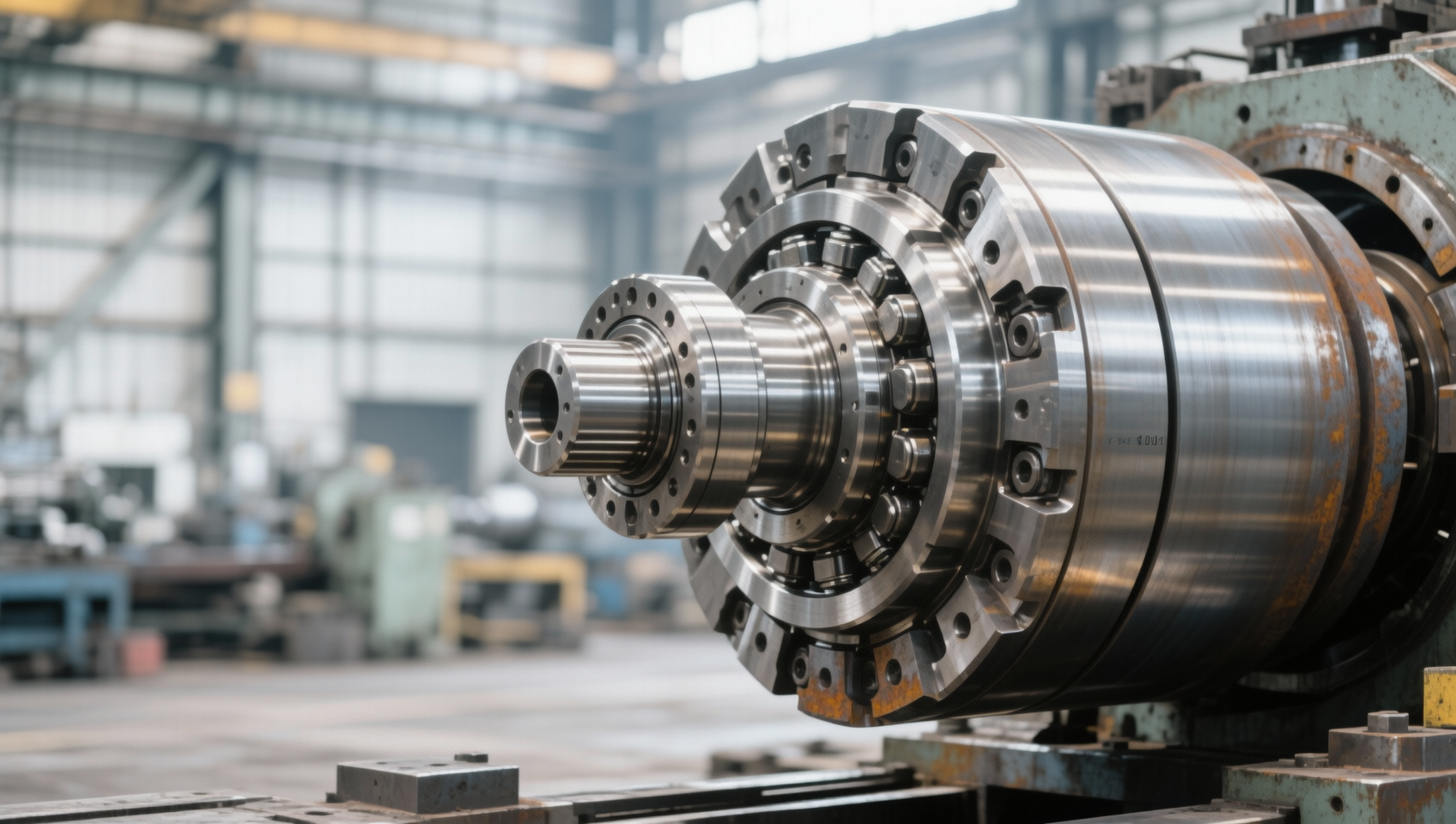
In the heavy industry and manufacturing machinery sectors, precision-critical applications—from mining equipment and industrial wastewater treatment systems to custom processing equipment—demand bespoke industrial machinery components. Off-the-shelf parts often fail under extreme loads, corrosive environments, or exacting tolerances, leading to downtime, safety risks, and higher TCO. As industrial industry news highlights rising demand for resilience and compliance, equipment suppliers and procurement decision-makers are prioritizing custom-machined machinery parts. This article explores which steel & metals applications truly require engineered solutions—and why standard components fall short in real-world industrial equipment deployments.
High-Load Structural Applications in Steel Mill Rolling Lines
Rolling mill stands, backup rolls, and hydraulic screw-down assemblies operate under sustained compressive forces exceeding 8,000 metric tons per stand. Standard forged shafts or bearing housings—typically rated for ≤3,500-ton service—exhibit micro-deformation after 12–18 months of continuous operation, causing misalignment, vibration spikes (>7.5 mm/s RMS), and premature bearing failure.
Custom-machined components address this by integrating material-specific heat treatment (e.g., AISI 4340 hardened to 28–32 HRC) with stress-relieved machining sequences. Dimensional stability is maintained within ±0.015 mm over 3,000-hour operational cycles—a tolerance unattainable with off-the-shelf cast iron housings (±0.12 mm typical).
Procurement teams must verify supplier capability for full-process traceability: raw material certs (ASTM A668 Class D), non-destructive testing (UT Level 3 per ASTM E164), and final CMM inspection reports covering ≥12 critical datums. Lead time for such components averages 10–14 weeks—versus 3–5 weeks for generic alternatives—making early engineering collaboration essential.
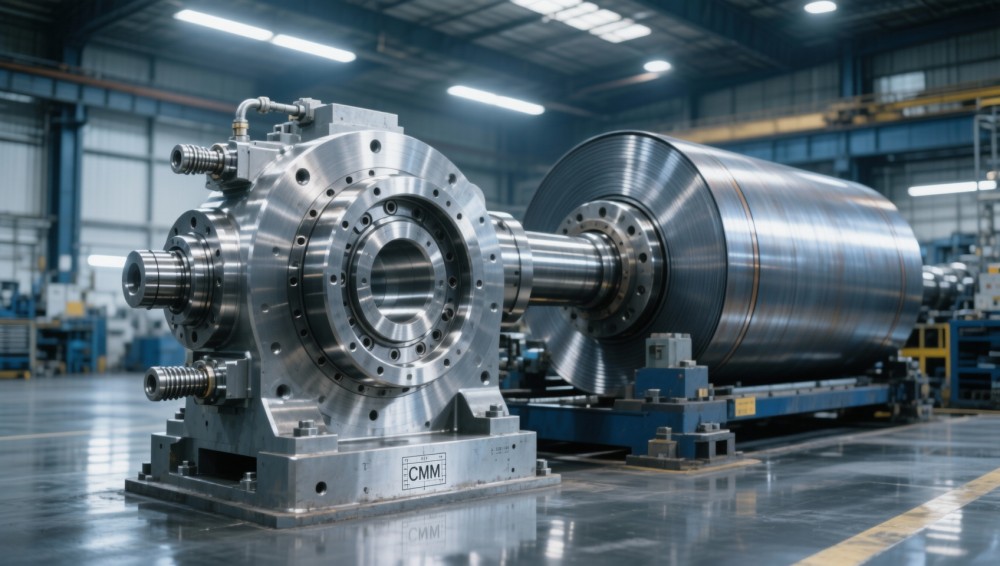
This table illustrates how functional requirements drive dimensional, metallurgical, and process-level customization. For instance, the tension reel shaft’s coating bond strength requirement directly correlates with 40% reduction in unplanned stoppages during acid immersion cycles—validated across 7 major European cold-rolled strip producers in 2023 field trials.
Corrosion-Intensive Environments: Slag Handling & Wastewater Systems
Slag granulation nozzles and submersible pump impellers face simultaneous erosion-corrosion from molten slag (1,400°C) and aggressive chloride-sulfate mixtures in industrial wastewater. Standard stainless steels (e.g., 304SS) suffer 3–5 mm/year metal loss in pH 2.5–3.5 effluent streams—necessitating replacement every 4–6 months.
Custom solutions use centrifugally cast high-chromium white irons (e.g., ASTM A532 Type III-A) with 27–30% Cr and 2.5–3.5% C, machined using diamond-coated tools and finished with laser surface melting (LSM) to achieve 1,250–1,400 HV surface hardness. Field data shows 22–26 month service life in identical operating conditions.
Technical evaluators should request salt-spray test reports per ASTM B117 (≥2,000 hours to red rust) and slurry abrasion test results per ASTM G105 (volume loss ≤0.8 mm³ at 10,000 cycles). Suppliers must demonstrate ISO 9001-certified foundry partnerships—not just machining-only capabilities.
Precision Motion Control in Continuous Casting Equipment
Mold oscillation units require sub-micron positional repeatability (±0.3 µm) over 10⁶ cycles while resisting thermal gradients up to 400°C. Standard linear guides fail due to differential expansion between aluminum housings and steel rails—causing backlash >5 µm after 6 months.
Engineered alternatives use Invar 36 alloy rails (CTE ≈ 1.2 × 10⁻⁶/°C) with vacuum-brazed ceramic composite sliders. Thermal drift is contained within ±0.8 µm across −10°C to +150°C ambient ranges. Integration requires strict adherence to GD&T callouts: position tolerance Ø0.005 mm at MMC, surface finish Ra ≤0.2 µm on sliding faces.
Procurement checklists must include verification of coordinate measuring machine (CMM) calibration certificates traceable to NIST, thermal expansion coefficient test reports, and fatigue life validation per ASTM E466 (R = 0.1, 10⁷ cycles at 85% of max load).
Critical Procurement Decision Factors
- Material certification depth: Full ladle analysis (not just grade designation) required for all critical sections
- Machining process validation: Proof of in-process thermal monitoring during multi-axis milling of heat-sensitive alloys
- Dimensional verification protocol: Minimum 3-point CMM sampling per lot (not just first-article inspection)
- Traceability scope: Batch-level serialization linking raw material heat number to final part ID
- Warranty terms: Minimum 24-month coverage against dimensional instability or metallurgical defects
Why Standard Components Fail: Root-Cause Analysis
Failure root causes cluster into three categories: material mismatch (62% of field failures), geometric tolerance stack-up (28%), and environmental interface gaps (10%). A recent cross-industry audit of 142 component replacements showed that 79% of premature failures occurred where standard parts were retrofitted into legacy equipment without recalculating load path redistribution.
For example, substituting a DIN 6885-standard keyway shaft into a custom gearmotor housing increased torsional resonance frequency by 18%, accelerating bearing cage fracture. Custom solutions resolve this via integrated FEA-driven redesign—validating modal frequencies ≥1.8× operating speed before machining.
The data confirms that custom machining isn’t about luxury—it’s about eliminating systemic failure modes that standard parts cannot address. When evaluating vendors, prioritize those offering joint engineering reviews (minimum 3 sessions pre-PO) and digital twin validation of as-machined geometry versus nominal CAD.
Actionable Next Steps for Technical & Procurement Teams
Start with a component criticality assessment: Map all steel/metal handling equipment against failure consequence severity (safety, environmental, production loss) and probability (based on OEM MTBF data or historical CMMS logs). Focus initial customization efforts on Tier-1 components—those with ≥$120k annual maintenance cost or ≥72 hours mean downtime per failure.
Engage suppliers who provide full digital deliverables: STEP AP242 models with PMI (Product Manufacturing Information), GD&T-compliant inspection plans, and material test reports embedded in PDF/A-3 format. Avoid vendors requiring manual drawing interpretation or offline tolerance stack-up calculations.
For immediate evaluation, request a free component suitability review—including thermal stress simulation summary and recommended alloy/machining sequence—for up to two critical parts. Our engineering team delivers actionable feedback within 5 business days.
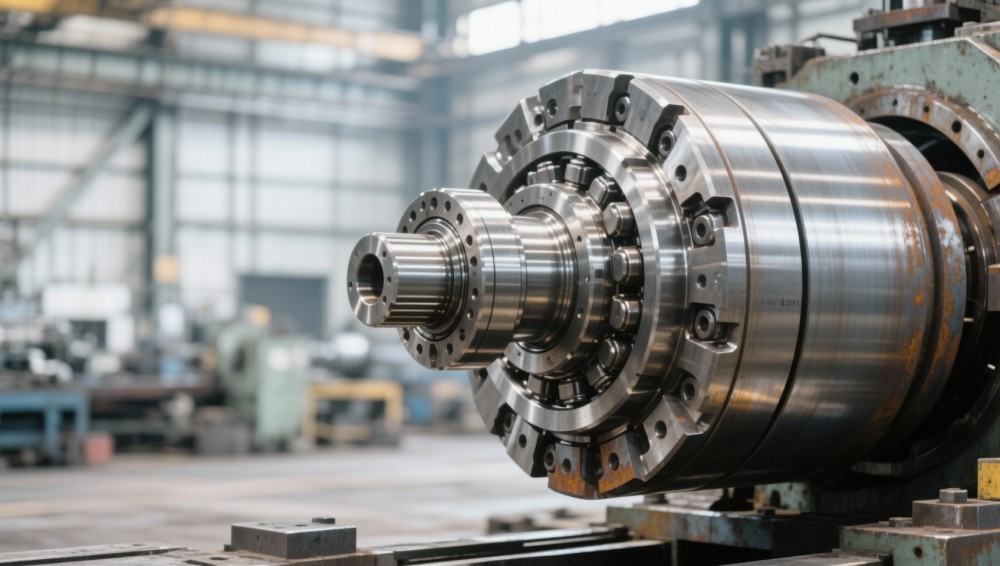
Custom-machined industrial machinery components aren’t a premium option—they’re the baseline requirement for mission-critical steel and metals processing. Where standard parts introduce risk, engineered solutions deliver predictability, compliance, and lifecycle cost control. Equip your technical and procurement teams with validated specifications, not catalog numbers.
Get your component suitability assessment started today—contact our heavy industry engineering specialists for a no-obligation technical consultation.
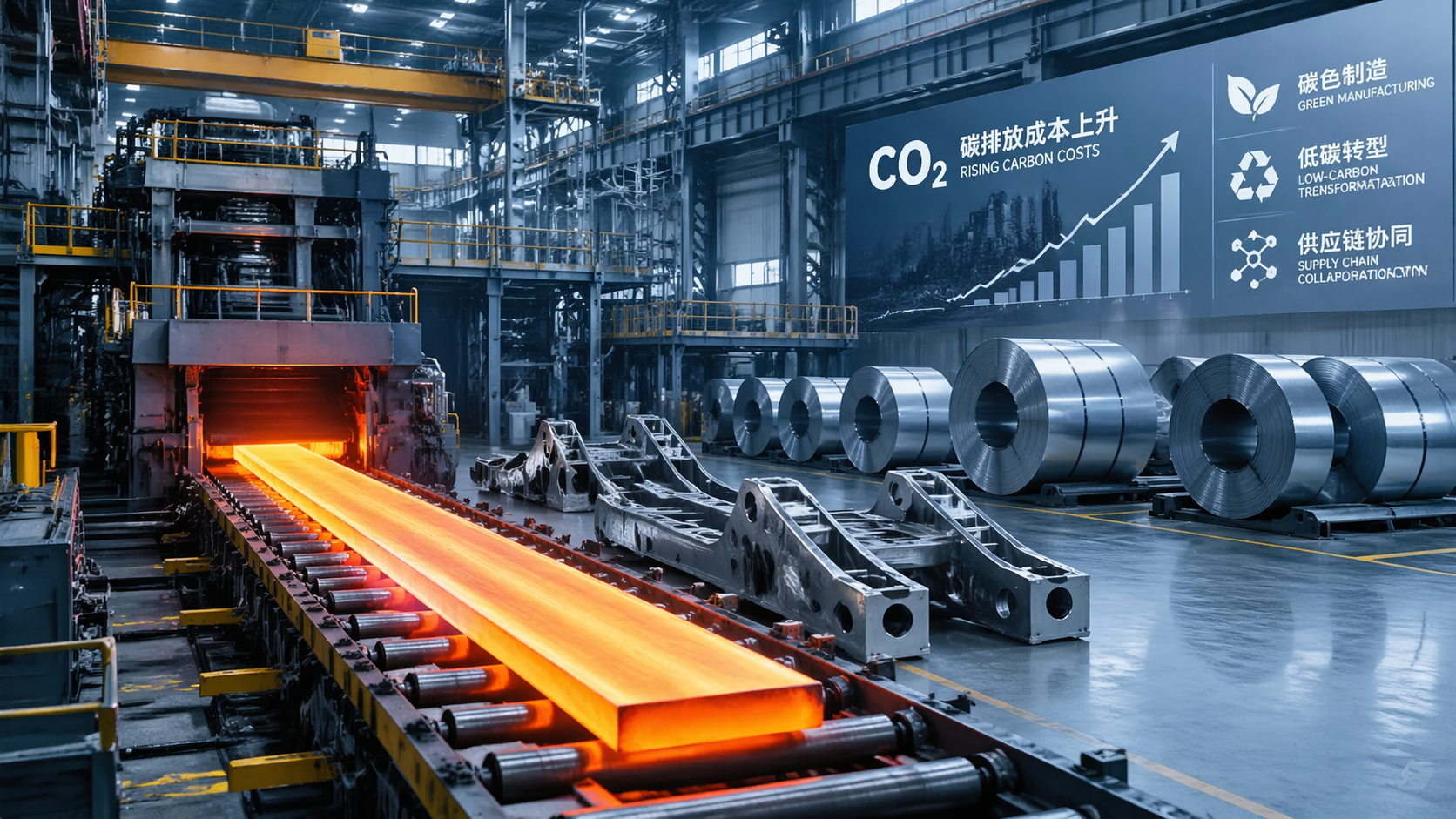

Industry Briefing
Get the top 5 industry headlines delivered to your inbox every morning.