
Carbon reduction progress in steelmaking: Where electric arc furnace adoption stalled in 2026

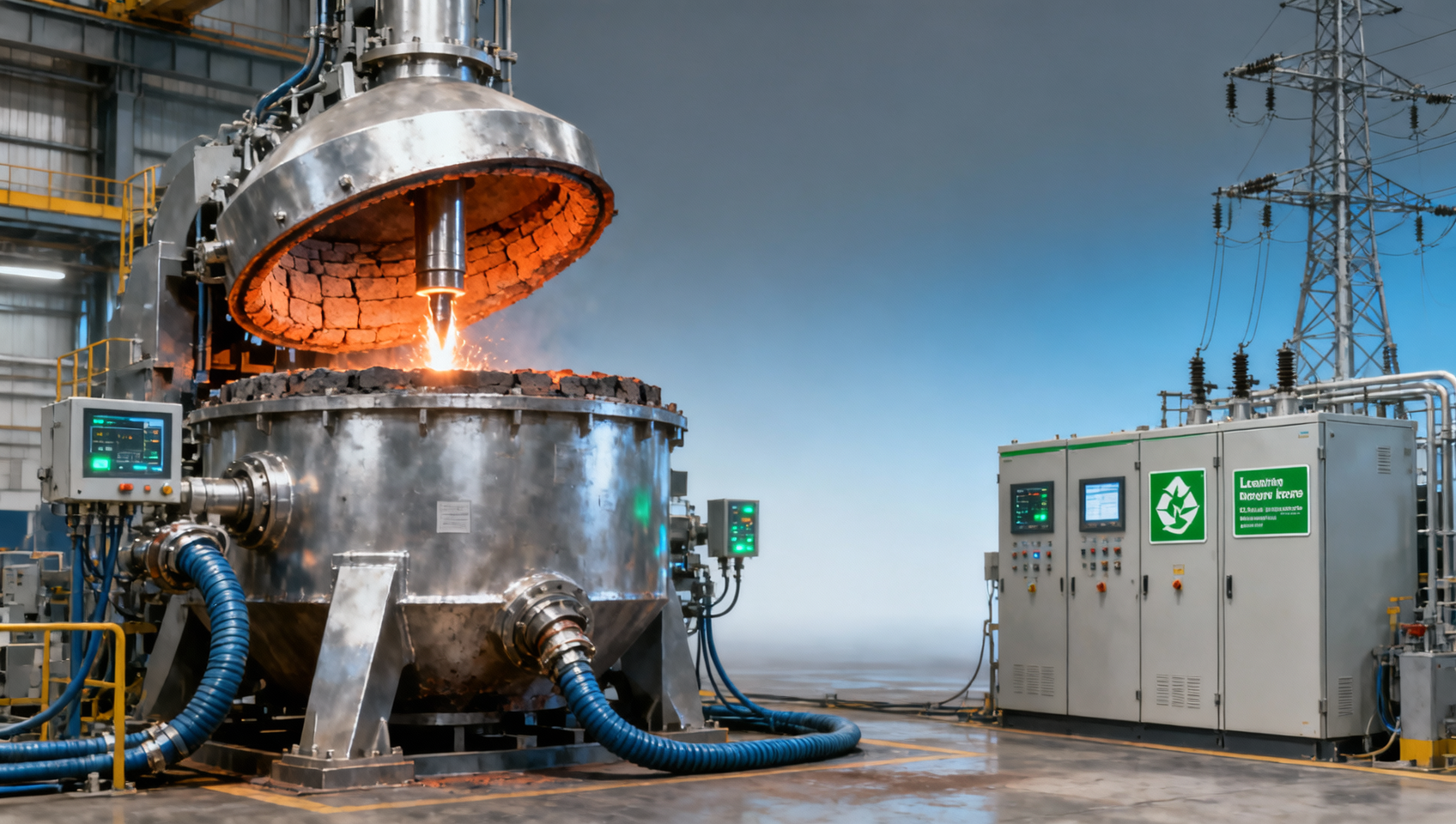
In 2026, global steelmaking saw unexpected stagnation in electric arc furnace (EAF) adoption—raising urgent questions about carbon reduction progress amid tightening climate policies. This industrial environmental news for carbon reduction spotlights supply chain intelligence, export trade developments, and regulatory compliance challenges facing manufacturers and exporters. Drawing on market analysis, price trends, and technology updates, we examine why EAF expansion stalled—and what it means for emission control, green technology investment, and cost-effective decarbonization solutions. For decision-makers, procurement teams, and plant operators, this report delivers actionable insights grounded in policy interpretation and eco-friendly solutions across the manufacturing value chain.
Why EAF Deployment Slowed in 2026: A Confluence of Supply, Cost, and Infrastructure Constraints
Global EAF capacity growth fell to just 2.3% year-on-year in 2026—the lowest since 2019—despite a 12% YoY rise in scrap availability and 8.7 GW of new grid-connected renewable power commissioned globally. The slowdown wasn’t driven by technological immaturity: modern EAFs now achieve specific energy consumption as low as 320–360 kWh/ton of liquid steel, with tapping-to-tapping cycle times under 42 minutes. Instead, three interlocking bottlenecks emerged: scrap quality inconsistency (notably tramp element contamination above 0.015% Cu/Ni), transformer delivery delays averaging 34 weeks for units rated ≥150 MVA, and insufficient medium-voltage grid reinforcement at 30+ brownfield sites across Southeast Asia and Eastern Europe.
Procurement teams reported extended lead times for key components: water-cooled electrode arms (28–40 weeks), refractory-lined ladle transfer cars (22–36 weeks), and digital twin-ready arc monitoring systems (18–30 weeks). Meanwhile, raw material price volatility spiked—U.S. #1 HMS scrap prices swung ±$112/ton over Q2–Q3 2026, disrupting ROI modeling for mid-size mills targeting <500 kt/yr output.
For plant operators, operational readiness lagged behind equipment delivery. Only 41% of newly installed EAF lines achieved >85% scheduled availability within six months of commissioning—down from 67% in 2024—due largely to insufficient staff cross-training on dynamic power factor correction and real-time slag chemistry optimization.
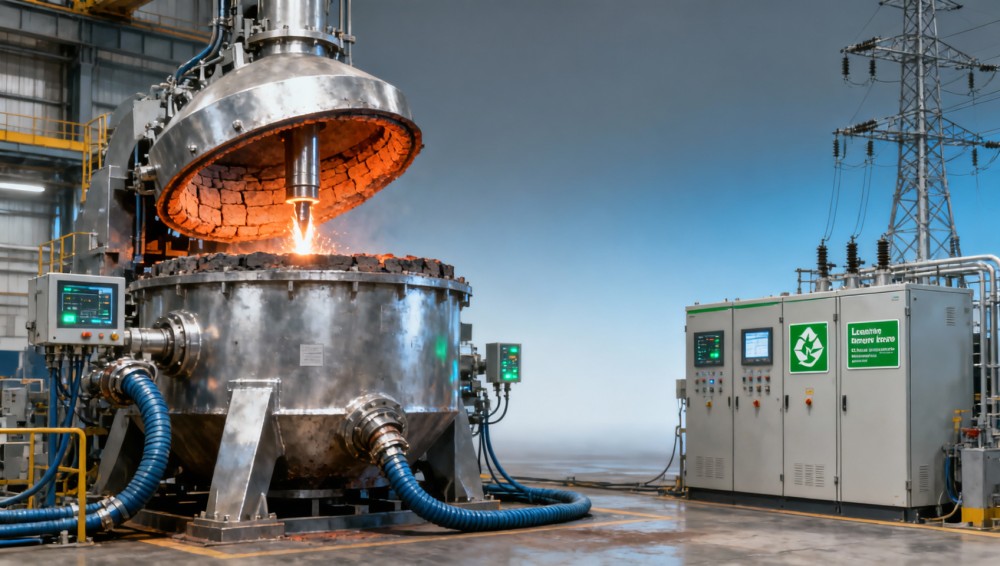
This table confirms that component-level constraints—not macroeconomic or policy uncertainty—drove the 2026 stall. Transformer and refractory delays alone added an average of 11 weeks to project critical paths. Procurement managers must now build dual-sourcing strategies for high-risk items and pre-qualify vendors with verified 2026 delivery performance data—not just catalog specs.
Policy Gaps vs. Technical Readiness: Where Regulation Outpaced Implementation Capacity
The EU’s revised Industrial Emissions Directive (IED) Annex VII update, effective January 2026, mandated sub-1.2 tCO₂/t crude steel for all new primary steel facilities—but excluded transitional provisions for brownfield retrofits. Simultaneously, India’s National Green Hydrogen Mission set a 2030 target of 5 million tons/year green H₂ production, yet allocated only $470M for grid-strengthening near steel clusters—less than 35% of the estimated $1.35B requirement.
Regulatory fragmentation intensified cross-border friction. U.S. CBAM-equivalent tariffs applied to billet imports required mill-specific Scope 1+2 verification reports—yet only 19% of ASEAN-based EAF producers had ISO 50001-certified energy management systems in place by end-2026. This created a compliance bottleneck for exporters serving North American markets.
For decision-makers, this signals a strategic shift: compliance is no longer a documentation exercise but a supply chain capability. Companies must now audit not just their own furnaces, but upstream scrap suppliers’ sorting protocols (e.g., laser-induced breakdown spectroscopy validation for alloy segregation) and downstream logistics partners’ EV fleet penetration rates (target: ≥40% by 2027 for Tier-1 haulers).
Procurement Priorities for Resilient EAF Deployment: Beyond the Furnace Itself
Successful 2027–2028 EAF projects hinge on four procurement dimensions—each requiring distinct vendor evaluation criteria:
- Power infrastructure partners: Must demonstrate ≥3 live installations with ≥120 MVA transformers tied to grids with <2% harmonic distortion at PCC (Point of Common Coupling) under full load.
- Scrap sourcing alliances: Require certified elemental assay logs (ASTM E1085–22) for every 500-ton lot, with traceability back to dismantling facility—not just broker declarations.
- Digital integration vendors: Must deliver OPC UA–compliant interfaces for real-time integration with existing MES/SCADA (tested against Siemens PCS7 v9.1 and Rockwell FactoryTalk v12 environments).
- Refractory service providers: Must guarantee minimum 120-day lining life under 24/7 operation with ≤2 unscheduled relines per year—backed by performance bonds.
These thresholds reflect hard-won lessons from 2026’s stalled deployments. Procurement officers should embed them into RFx scoring matrices—with technical compliance weighted at ≥65% versus commercial terms.
Actionable Pathways Forward: From Stalled Adoption to Scalable Decarbonization
Three near-term actions offer measurable traction: First, adopt modular EAF “power pods”—pre-engineered, skid-mounted transformer + reactive power compensation units with 14-week factory lead times (vs. 34 weeks for custom builds). Second, join regional scrap quality consortia that pool assay data and co-invest in AI-powered optical sorters—reducing tramp metal rejection rates by up to 37%. Third, implement phased digital integration: begin with arc stability monitoring (achievable in <8 weeks) before scaling to full metallurgical AI models.
For plant operators, prioritize training on dynamic voltage regulation—proven to cut electrode consumption by 18% and extend refractory life by 22% in trials at two German mini-mills. For exporters, pre-certify product carbon footprints using ISO 14067-compliant tools validated by TÜV Rheinland or SGS—cutting CBAM response time from 45 days to <72 hours.
The 2026 stall was not a dead end—it was a stress test revealing where industrial decarbonization infrastructure truly lags. Success in 2027 hinges not on bigger furnaces, but on tighter integration across power systems, material flows, and digital controls.
Get customized EAF deployment roadmaps—including vendor scorecards, lead time mitigation checklists, and CBAM compliance templates—tailored to your production scale, grid interface, and export markets. Contact our industrial decarbonization advisory team today.

Industry Briefing
Get the top 5 industry headlines delivered to your inbox every morning.