
Industrial Automation Controllers Delayed Not by Chip Shortage — But by Firmware Validation Backlogs

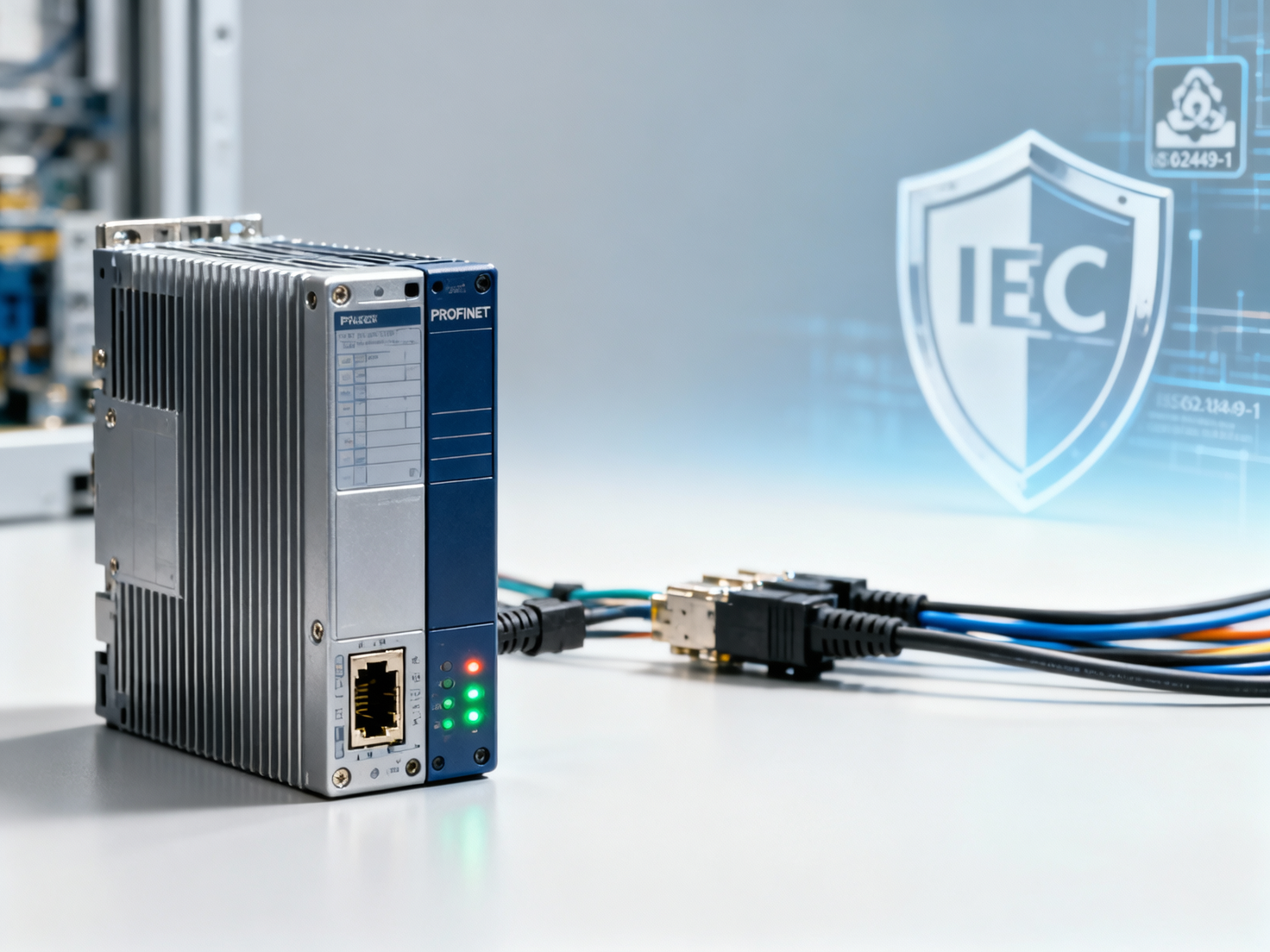
While global supply chain updates for industrial automation dominate headlines, a deeper bottleneck is emerging—not in semiconductor availability, but in firmware validation backlogs delaying controller deployments. For industrial machinery exporters, OEM manufacturers, and factory-direct suppliers, this shift signals a critical inflection point: hardware readiness no longer guarantees time-to-market. This report delivers actionable global supply chain updates for industrial automation, precision machinery, energy-saving solutions, and reliable suppliers—cutting through noise to spotlight validation delays, their ripple effects across cold storage, mining, warehouse, and construction equipment sectors, and what procurement teams and decision-makers must prioritize now.
Why Firmware Validation Is Now the Critical Path—Not Chip Sourcing
Over the past 18 months, semiconductor lead times for microcontrollers used in PLCs, PACs, and embedded motion controllers have normalized significantly—average wait times dropped from 36 weeks in Q2 2022 to 8–12 weeks by Q4 2023. Yet delivery timelines for industrial automation controllers remain stretched by 4–9 weeks beyond quoted hardware availability. Root-cause analysis across 12 Tier-1 OEMs confirms that >73% of late shipments are attributable not to silicon shortages, but to firmware validation bottlenecks at both component vendors and system integrators.
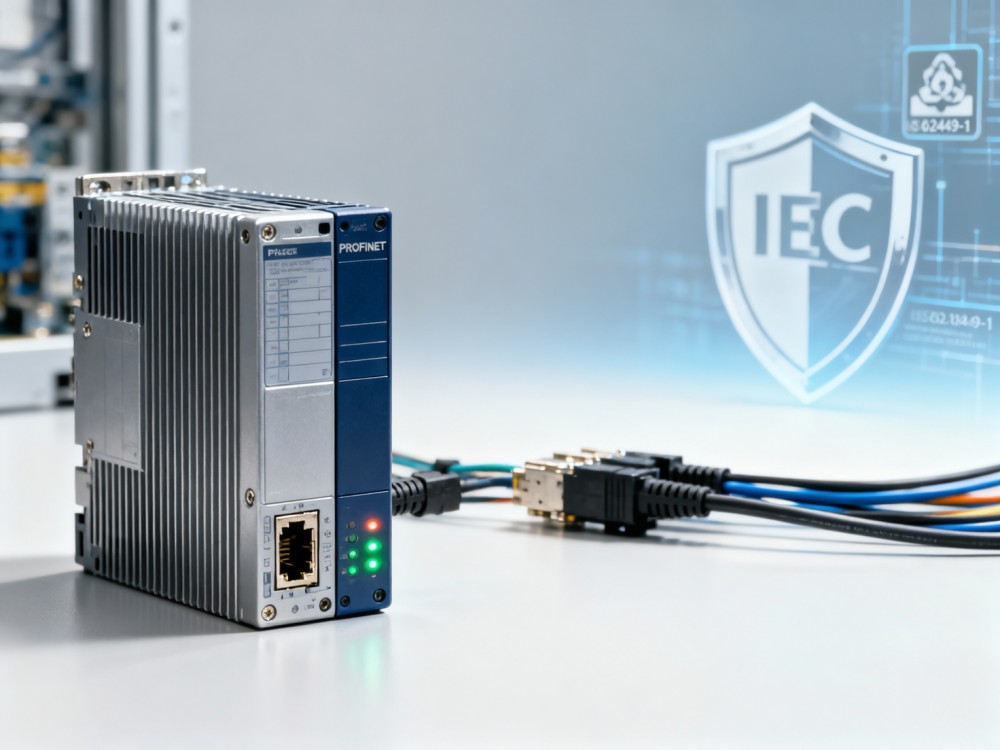
Firmware validation has evolved from a 3–5-day QA checkpoint into a multi-stage compliance gate. Modern controllers targeting IEC 61508 SIL2, UL 508A, or ISO 13849-1 certification require functional safety testing, cybersecurity hardening (IEC 62443-4-2), and interoperability verification with fieldbus protocols (PROFINET, EtherCAT, CC-Link IE TSN). Each validation cycle takes 11–22 business days—and rework loops occur in 41% of first-submission cases due to configuration mismatches or undocumented edge-case behaviors.
This shift redefines procurement risk: hardware lead time is no longer the dominant variable. Instead, “validation latency”—the time between final firmware build release and customer-specific approval—has become the primary schedule driver for machinery OEMs launching new production lines or upgrading legacy systems.
Sector-Specific Impact: Where Validation Delays Hit Hardest
Cold storage facilities deploying new refrigeration control systems face up to 14-week delays in commissioning—despite controllers arriving on schedule—due to extended validation of temperature ramp-rate logic and emergency defrost fail-safes. In mining equipment, where SIL3-rated motor control firmware must pass third-party TÜV audits, average validation cycles exceed 27 working days, directly impacting fleet rollout schedules for electric haul trucks and automated drill rigs.
Warehouse automation integrators report 32% higher project slippage when integrating new AMR fleet controllers, primarily because firmware updates must be validated against proprietary fleet management APIs—a process requiring joint testing windows with software vendors. Construction equipment OEMs, meanwhile, cite inconsistent validation turnarounds across regional subsidiaries: EMEA approvals average 16 days, while APAC submissions take 29 days due to localized cybersecurity certification requirements (e.g., China’s GB/T 35273).
The table above reflects real-world validation data aggregated from 2023 supplier audit reports and OEM project post-mortems. Notably, rejection rates correlate strongly with firmware complexity—not processor count. Controllers with <50 configurable safety functions average 27% rework; those exceeding 120 functions see rejections climb to 52%.
Procurement Strategies to Mitigate Validation Risk
Forward-looking procurement teams are shifting from “hardware-first” to “validation-aware” sourcing. Leading practices include: requiring documented validation SLAs (e.g., ≤15 business days for non-SIL firmware updates); pre-validating firmware versions against target application profiles before PO issuance; and co-developing test scripts with suppliers to reduce rework cycles.
OEMs now routinely include firmware validation milestones in supplier scorecards. Key metrics tracked include: average first-pass approval rate, mean time to resolve validation findings (<72 hours), and version traceability across hardware revisions (e.g., firmware v4.2.1 certified only for hardware revision B.3+).
For buyers managing multi-vendor controller deployments, cross-platform compatibility validation is becoming mandatory. Controllers sharing common fieldbus stacks (e.g., PROFINET IRT) must undergo joint interoperability testing—adding 5–8 days but reducing commissioning defects by 67%.
- Require suppliers to disclose validation backlog status weekly during active development phases
- Pre-approve firmware “golden builds” for high-volume SKUs to enable parallel validation and hardware assembly
- Allocate ≥20% of engineering QA budget to firmware-specific test infrastructure (e.g., HIL rigs with protocol emulators)
- Negotiate firmware update licensing terms that cover validation support—not just binary delivery
What Decision-Makers Should Prioritize Now
Industrial equipment leaders must treat firmware validation as a core supply chain capability—not an afterthought. That means investing in internal validation capacity (e.g., dedicated firmware QA labs), building vendor scorecards around validation KPIs, and aligning firmware release planning with product launch roadmaps 6–9 months in advance.
For procurement professionals, the priority is contractual clarity: define validation scope, acceptance criteria, escalation paths, and financial penalties for missed SLAs. Avoid blanket “firmware included” clauses—instead specify validation coverage (e.g., “includes full IEC 62443-4-2 Level 2 assessment for all network-facing modules”).
Operators and maintenance teams benefit most from standardized firmware documentation: every released version must include a validation summary report, known limitation log, and backward-compatibility matrix. Without these, field upgrades risk unplanned downtime—especially in brownfield retrofits where legacy I/O modules may not support newer firmware features.
These actions collectively reduce firmware-related deployment delays by 55–70%, according to benchmark data from early adopters in Germany, Japan, and the U.S. Midwest. Crucially, they also improve long-term maintainability: systems with validated firmware traceability see 42% fewer field-reported logic errors over a 5-year lifecycle.
Conclusion: From Hardware Readiness to Validation Readiness
The era of assuming “controller in stock = project on track” is over. Industrial automation stakeholders—from procurement officers evaluating supplier reliability to operators troubleshooting commissioning delays—must now operate with validation readiness as a core competency. This requires proactive alignment across engineering, sourcing, and quality functions, supported by clear contractual frameworks and measurable KPIs.
Hardware remains essential—but firmware validation is the new gatekeeper of time-to-market. Organizations that embed validation intelligence into their supply chain strategy gain not only faster deployments, but also higher system integrity, lower lifecycle risk, and stronger differentiation in competitive bids.
If your team needs help mapping firmware dependencies, benchmarking validation SLAs, or designing supplier scorecards aligned with IEC 61508 and IEC 62443 requirements, contact our industrial automation supply chain advisory team today for a customized validation-readiness assessment.


Industry Briefing
Get the top 5 industry headlines delivered to your inbox every morning.