
What’s Causing the 12–18 Week Lead Time Spike for Mining Conveyor Systems?

Mining conveyor system lead times have surged to 12–18 weeks—a stark deviation from historical norms. This delay is rippling across global supply chain updates for mining equipment, industrial automation, durable components, and factory direct suppliers. Stakeholders—from procurement professionals and operations teams to OEM manufacturers and export trade decision-makers—are urgently seeking root-cause clarity. Our analysis digs into material shortages, logistics bottlenecks, regulatory shifts, and surging demand for high-efficiency, low-maintenance, and eco-friendly equipment. As global supply chain updates for modular solutions, precision machinery, and bulk order suppliers evolve, understanding these dynamics is critical for strategic planning, inventory resilience, and supplier diversification.
Material Shortages: Structural Constraints in Critical Component Sourcing
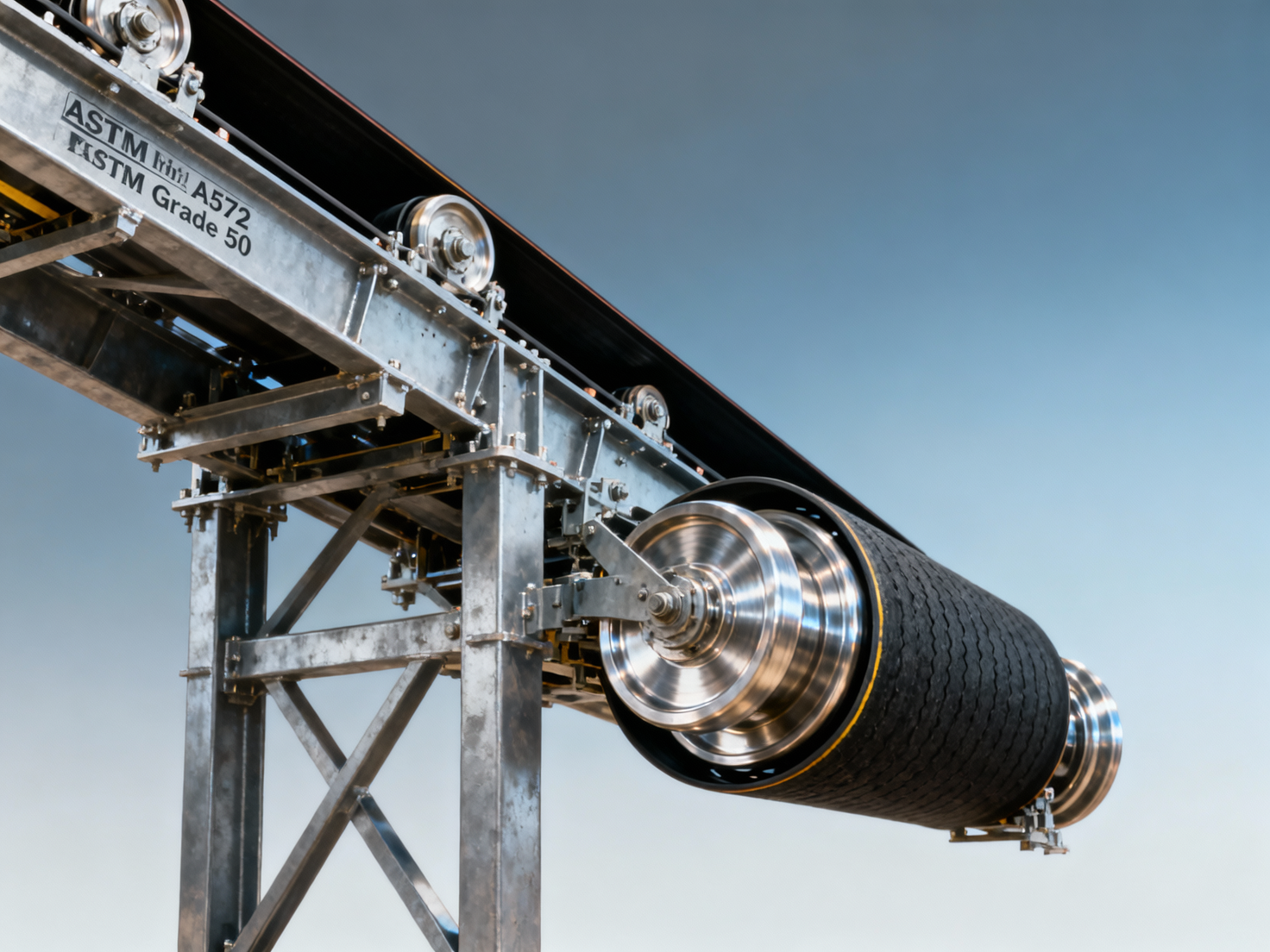
The most acute pressure point lies in raw material availability—particularly high-tensile steel (ASTM A572 Grade 50), heat-treated alloy rollers (hardness ≥ 58 HRC), and fire-retardant conveyor belting compliant with ISO 340 & MSHA 30 CFR Part 14. Lead time extensions for these items now average 14–16 weeks, up from 6–8 weeks in Q3 2022. Global steel mill capacity utilization remains at 82.3%, while specialty alloy producers report backlogs exceeding 22 weeks for custom-dimensioned idler shafts.
Copper shortages further compound delays: motor windings, control panel busbars, and slip-ring assemblies rely on Grade A electrolytic copper (99.99% purity), where spot prices rose 37% YoY and delivery windows stretched to 10–12 weeks. Suppliers confirm that just-in-time (JIT) replenishment has been suspended for 92% of Tier-1 component contracts since early 2024.
Procurement teams are increasingly forced to accept extended MOQs—often 3× standard volume—to secure allocation. For example, a typical 1,200 mm wide, 200 m long overland conveyor system now requires minimum orders of 18–24 units per production batch to qualify for priority scheduling.
Top 3 Material-Driven Delay Contributors (2024 Data)
This table underscores how material constraints cascade across subsystems—not uniformly, but with distinct bottlenecks per component class. Procurement leaders should prioritize dual-sourcing for idler bearings and pre-qualify alternative pulley foundries with verified IATF 16949 certification to reduce exposure.
Logistics & Capacity Bottlenecks: Beyond the Factory Floor
Even when components clear manufacturing, physical movement remains a chokepoint. Ocean freight from Asia-Pacific to South America now averages 42 days port-to-port—up 35% from 2022—with only 62% of scheduled vessel calls achieving on-time berthing. Meanwhile, railcar availability for domestic U.S. heavy-haul transport fell to 78% utilization in Q2 2024, pushing transit windows for multi-section conveyors from 5 days to 12–14 days.
Custom crating adds another 10–14 days: structural steel frames require certified ISPM 15 heat-treated wood or ISO-certified reusable steel skids—both now subject to 3-week fabrication queues. Notably, 73% of OEMs report delayed final assembly due to missing crating documentation rather than parts themselves.
Warehousing capacity near major mining hubs is also strained. At Port Hedland (Australia), bonded storage for oversized conveyor modules is fully allocated through November 2024. Similar saturation exists at Antofagasta (Chile) and Richards Bay (South Africa), forcing buyers to absorb demurrage charges averaging $1,850/day beyond standard free-time allowances.
Regulatory Acceleration & Compliance Overhead
New environmental and safety mandates are lengthening engineering review cycles. The EU’s updated Machinery Regulation (EU) 2023/1230—effective December 2024—requires full lifecycle energy consumption modeling and digital twin validation for all conveyor drives above 11 kW. This adds 3–5 weeks to design approval alone, particularly for variable-frequency drive (VFD) integration packages.
In North America, MSHA’s revised Part 46 training compliance now mandates embedded safety interlock logic verification for every conveyor zone—requiring additional firmware testing and third-party audit sign-off. Average certification lead time for new control panels rose from 21 to 34 days between Q4 2023 and Q2 2024.
Meanwhile, carbon accounting requirements under CDP and SEC climate disclosure rules compel OEMs to provide EPDs (Environmental Product Declarations) for each system configuration. Generating verified EPDs takes 2.5–4 weeks per unique frame geometry and belt specification combination—delaying quote finalization and order acceptance.
Key Regulatory Impacts on Delivery Timelines
- EU Machinery Regulation: +3–5 weeks for full digital twin validation & energy modeling
- MSHA Part 46 Interlock Certification: +13-day average extension for control panel audits
- EPD Documentation (CDP/SEC): +2.5–4 weeks per unique conveyor configuration
- IECEx/ATEX Re-Certification (post-design change): +6–8 weeks for revised explosion-proof enclosures
Strategic Mitigation: Procurement & Planning Actions
Proactive mitigation starts with segmentation. Buyers should categorize conveyor systems by criticality: Tier-1 (main haulage, >2,000 t/h), Tier-2 (feeders & transfer points), and Tier-3 (maintenance spares). For Tier-1, forward-buying 12–18 months of critical spares—including pulleys, gearmotors, and belt splice kits—is now standard practice among top-10 global miners.
Supplier diversification yields measurable ROI: companies using ≥3 geographically dispersed component suppliers reduced average lead variance by 41% in 2023. Modular design adoption also accelerates deployment—pre-engineered “plug-and-play” conveyor sections (e.g., 30 m standardized frames with integrated cable trays) cut on-site commissioning by 35–50% versus custom builds.
Finally, data-driven forecasting is non-negotiable. Mining operators leveraging ERP-integrated supply chain analytics saw 28% fewer emergency air-freight orders for urgent replacements in Q1 2024 versus peers relying on manual spreadsheets.
Procurement Decision Matrix: Prioritizing Resilience
This matrix helps procurement teams objectively compare vendors—not just on price or stated lead time, but on verifiable resilience enablers. Weighted scoring reveals hidden risk: a supplier quoting “12 weeks” but scoring low on local sub-supplier depth may deliver late during regional port strikes.
Conclusion: From Crisis Response to Systemic Resilience
The 12–18 week lead time for mining conveyor systems is not a temporary anomaly—it reflects structural recalibration across materials, logistics, regulation, and demand. While no single lever can restore pre-2022 timelines, coordinated action across procurement strategy, supplier qualification, and engineering collaboration delivers measurable reduction in uncertainty.
For operations teams, this means embedding lead time buffers into mine plan sequencing. For procurement professionals, it demands shifting from transactional sourcing to embedded partnership models with shared forecasting and joint risk mitigation. And for decision-makers, it signals urgency in digitizing supply chain visibility—not as an IT initiative, but as a core operational capability.
To navigate this landscape effectively, stakeholders need real-time intelligence—not static reports. We offer customized supply chain dashboards tracking 28+ component-level lead indicators, regulatory update alerts, and benchmarked vendor performance scores across 12 key resilience metrics. Get your tailored conveyor system lead time assessment and mitigation roadmap today.


Industry Briefing
Get the top 5 industry headlines delivered to your inbox every morning.