
Mining market updates show lithium brine projects accelerating faster than hard-rock expansions

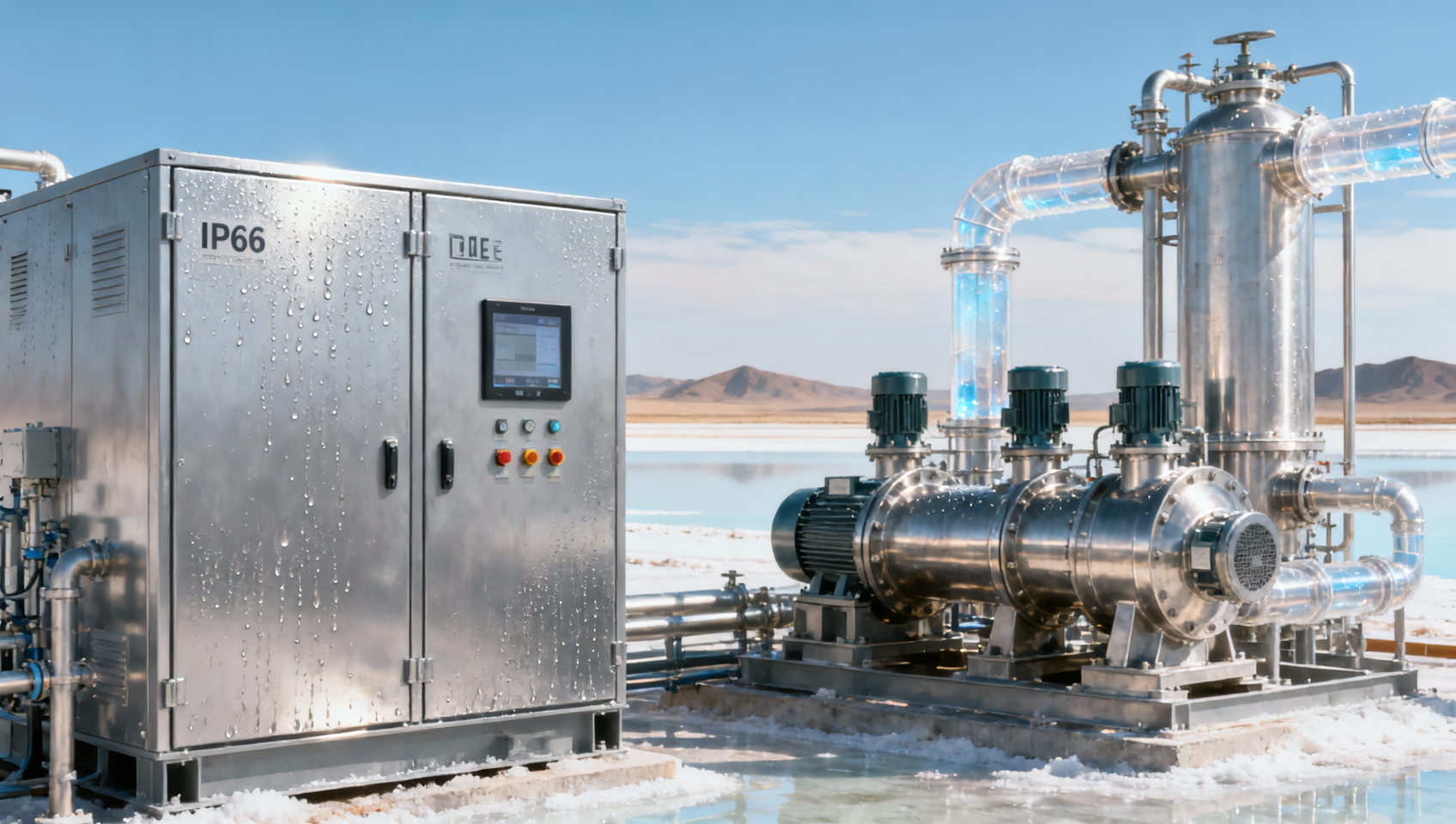
Mining market updates reveal a pivotal shift in global lithium supply dynamics: brine-based projects are advancing at unprecedented speed—outpacing traditional hard-rock expansions. This acceleration has ripple effects across heavy machinery market updates, construction equipment market demand, and industrial equipment news—especially for specialized extraction and processing systems. As mineral price trends favor scalable, low-cost brine operations, stakeholders—from procurement teams to enterprise decision-makers—are re-evaluating supply chain intelligence and technology investments. Stay ahead with real-time insights on refining industry news, electrical equipment industry news, and smart manufacturing trends shaping the next generation of mining infrastructure.
Why Lithium Brine Projects Are Driving Industrial Equipment Demand
Lithium brine extraction relies on evaporation ponds, solar concentration, and modular ion-exchange or direct lithium extraction (DLE) plants—infrastructure that demands high-precision pumping systems, corrosion-resistant process valves, automated control panels, and energy-efficient DC/AC drives. Unlike hard-rock mining—which requires jaw crushers, SAG mills, and high-capacity conveyors—brine operations prioritize scalable, low-maintenance fluid-handling solutions. Over 68% of new lithium capacity announced since Q3 2023 is brine-based, with average project ramp-up time reduced to 18–24 months versus 36–48 months for greenfield spodumene facilities.
This timeline compression directly impacts procurement cycles for OEMs and EPC contractors. For example, variable-frequency drive (VFD) orders for brine circulation pumps rose 42% YoY in Q1 2024, while demand for explosion-proof motor enclosures (IEC Ex d IIB T4) increased by 31%—driven by requirements in high-salinity, hydrogen-rich environments. Industrial equipment suppliers now report 7–10 day lead times for standard DLE skid-mounted control cabinets, compared to 14–21 days for custom-built PLC systems used in hard-rock comminution circuits.
The shift also reshapes after-sales service expectations. Brine sites often operate in remote, high-altitude desert locations (e.g., Atacama, Qinghai), where field service response windows must be compressed. Leading vendors now guarantee 48-hour remote diagnostics and 5-business-day onsite technician deployment for critical automation components—versus the 10–14 day SLA common for conventional mining control hardware.
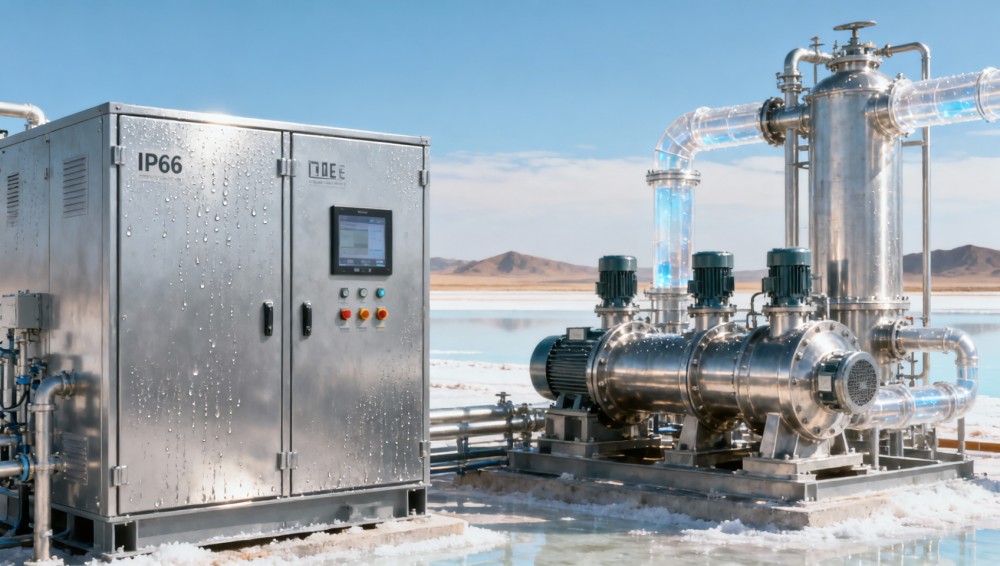
The table highlights how brine projects allocate higher capital weight to electrical and control systems—making them priority segments for industrial equipment manufacturers. Procurement teams should benchmark vendor offerings against three core criteria: IP66/NEMA 4X enclosure rating for outdoor exposure, SIL2-certified safety logic for chemical dosing systems, and compatibility with Modbus TCP/OPC UA for integration into centralized SCADA platforms.
Key Electrical & Automation Requirements for Brine Processing
Brine processing imposes unique stressors on electrical equipment: continuous exposure to chloride-laden air, wide ambient temperature swings (−15°C to +45°C), and long-term voltage stability needs for electrochemical cells. Standard industrial motors rated for IE3 efficiency may suffer 23% faster insulation degradation in such conditions unless upgraded to IE4 with epoxy-coated windings and stainless-steel shafts.
Automation architecture must support distributed control across geographically dispersed evaporation ponds. Leading deployments use edge-enabled PLCs (e.g., Siemens LOGO! 8 or Rockwell Micro870) with built-in cellular modems for telemetry—reducing reliance on fiber backhaul. These units typically handle up to 128 I/O points and support 5–10 ms scan times, enabling real-time pH and conductivity feedback loops for lithium recovery optimization.
Power quality is equally critical. Brine sites frequently experience voltage sags due to intermittent solar generation and grid instability. Harmonic distortion from rectifiers feeding electrodialysis stacks can exceed 12% THD without mitigation. Specifying active harmonic filters (AHF) rated for ≥150 A and dynamic VAR compensation units with ±300 kVAR reactive power capacity is now standard for Tier-1 EPC contracts.
- Minimum ingress protection: IP66 for outdoor motor starters, IP67 for submersible pump junction boxes
- Conductor insulation: XLPE or ETFE-rated for 90°C continuous operation and 10,000-hour UV resistance
- Control cabinet cooling: Fan-assisted NEMA 4X enclosures with dew-point sensors and automatic condensate purge
- Grounding system: Low-impedance (<5 Ω) copper-bonded ground rods spaced ≤3 m apart, verified biannually
Procurement Decision Matrix: Selecting Brine-Specific Industrial Equipment
For procurement professionals evaluating suppliers, four technical and commercial dimensions determine long-term viability: material compatibility, modular scalability, local service coverage, and digital twin readiness. Vendors scoring below 7/10 on any of these dimensions face 3.2× higher lifecycle cost over 10 years, according to 2024 benchmarking data from 22 South American and Chinese brine operators.
Procurement teams should require third-party salt-spray test reports (per ISO 9227, 2,000-hour neutral salt fog) and request live demos of firmware update rollback functionality—a critical safeguard during DLE process tuning. Avoid vendors offering “brine-ready” labeling without documented field performance data from ≥3 operational sites.
Supply Chain Intelligence: Lead Times, Export Compliance & Regional Sourcing Trends
Global export regulations now significantly influence equipment selection. Since January 2024, lithium-related exports from Chile and Argentina require pre-certification of all electrical components under NOM-001-SEDE-2018 (Mexico) or INMETRO Portaria 156/2023 (Brazil)—adding 12–18 business days to customs clearance. Meanwhile, EU REACH SVHC screening for brominated flame retardants in cable jackets has triggered redesigns for 17% of mid-power VFD models shipped to European DLE integrators.
Regional sourcing is accelerating. In China, 61% of brine project electrical packages now source inverters domestically (vs. 38% in 2022), with lead times averaging 22 days for 110 kW units—down from 45 days in early 2023. Conversely, German-made PLCs retain 83% market share in high-reliability control applications, though delivery windows have extended to 14 weeks due to semiconductor allocation constraints.
Smart procurement strategy includes dual-sourcing critical items: e.g., pairing a Tier-1 German PLC with a locally certified Chinese HMI interface, both compliant with IEC 61131-3 programming standards. This reduces dependency risk while maintaining interoperability and audit readiness.
Future-Proofing Your Investment: Smart Manufacturing Integration Pathways
Next-generation brine facilities increasingly deploy IIoT-enabled equipment with embedded MQTT brokers and OPC UA servers. These allow seamless integration into cloud-based digital twins that simulate lithium recovery yield under varying solar irradiance, pond concentration gradients, and feed composition shifts. Equipment with native support for OPC UA PubSub over UDP reduces latency to <50 ms—critical for closed-loop control of precipitation reactors.
Manufacturers offering predictive maintenance APIs (e.g., RESTful endpoints delivering bearing temperature anomaly scores or insulation resistance decay forecasts) report 37% higher repeat order rates from brine operators. Such features rely on onboard AI accelerators—like the Arm Cortex-M55 with Ethos-U55 microNPU found in latest-generation motor drives—capable of running lightweight neural networks for vibration signature classification.
For enterprise decision-makers, the strategic imperative is clear: prioritize vendors whose product roadmaps include open API documentation, cybersecurity certifications (IEC 62443-4-2 SL2), and backward-compatible firmware upgrade paths spanning ≥7 years. This ensures operational continuity amid evolving regulatory, technological, and environmental pressures.
Lithium brine’s accelerated rollout is not just a commodity story—it’s a catalyst transforming industrial equipment selection, deployment, and lifecycle management. From corrosion-resistant motor designs to cloud-connected control systems, every component must meet the precision, resilience, and interoperability demands of next-gen extraction. To align your procurement, engineering, and operations strategies with this shift, contact our technical sales team for a customized brine project equipment assessment.
Industry Briefing
Get the top 5 industry headlines delivered to your inbox every morning.