
How to apply export trade policy in the manufacturing industry step by step

Navigating export trade policy for manufacturing industry can be complex, especially for factories, exporters, and procurement teams facing changing regulations, costs, and global supply chain updates. This guide explains export trade policy factory requirements, key specifications, and cost-effective solutions step by step, while connecting policy analysis with practical insights for warehouse supplies, construction industry needs, and broader industrial environmental news.
For manufacturers of processing machinery, industrial components, and electrical equipment, export policy is not just a legal topic. It directly affects quotation accuracy, delivery schedules, customs clearance, margin control, and buyer trust. A single mistake in product classification, origin documentation, or technical compliance can delay shipment by 7 to 30 days and increase landed cost by 3% to 12%.
Decision-makers, sourcing teams, plant operators, and market researchers often need a practical framework rather than abstract policy summaries. The most effective approach is to connect policy interpretation with production planning, HS code review, export licensing checks, logistics coordination, and after-sales obligations in destination markets. That is the focus of this step-by-step guide.
Understand the policy scope before quoting or producing
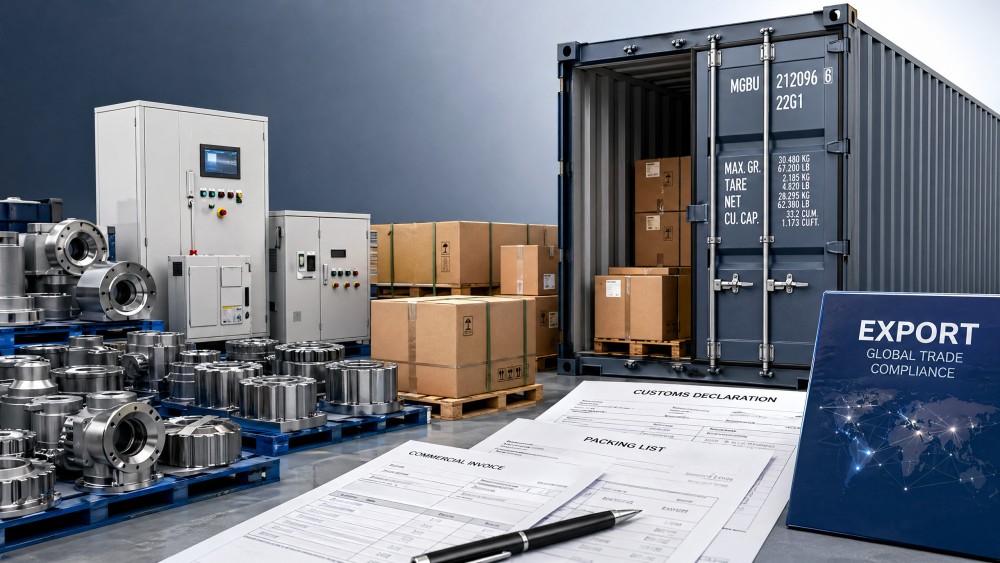
The first step in applying export trade policy in the manufacturing industry is defining which rules actually apply to the goods being sold. Export policy can involve customs classification, export control measures, destination-specific restrictions, tax rebate mechanisms, product safety requirements, and documentation rules. In machinery and electrical supply chains, these layers often overlap, especially when one shipment includes equipment, spare parts, cables, control units, and packaging materials.
Before confirming a sales contract, exporters should review at least 4 core points: product category, destination country rules, transaction terms, and end-use scenario. A motor, inverter, welding machine, or valve may face different treatment depending on whether it is sold as a standalone item, integrated system, replacement part, or industrial line component. This is why early policy screening should happen before mass production starts.
In practical factory operations, the policy review should be assigned to a cross-functional team. Sales understands customer requirements, engineering confirms technical specifications, procurement checks supply risk, and trade compliance reviews export obligations. For mid-sized manufacturers, a 3-stage internal review completed within 2 to 5 working days is often enough to identify major issues before shipment preparation begins.
Key policy checkpoints for industrial exporters
A structured checklist reduces errors. This is especially useful for factories shipping mixed consignments to distributors, EPC contractors, or overseas plants. If the buyer expects one commercial invoice but the shipment contains multiple regulatory categories, the exporter must align documentation and compliance evidence in advance.
- Verify HS code at 6-digit and local tariff line level to avoid duty mismatch and customs queries.
- Check whether the product needs export licensing, dual-use review, or destination approval.
- Confirm if technical files such as test reports, manuals, and labels match the importing market.
- Assess whether Incoterms shift responsibility for customs clearance, insurance, and documentation costs.
Many disputes begin with incomplete product descriptions. For example, stating “industrial equipment parts” is too vague for a customs officer or buyer’s broker. A better description should include material, principal function, voltage range if electrical, capacity if mechanical, and whether the item is a spare part or finished machine. This level of detail improves customs handling and reduces inspection risk.
Common early-stage errors
Export teams often assume that a product approved in one market can be shipped everywhere. In reality, compliance expectations can vary by voltage standards, language labeling, environmental restrictions, or importer registration rules. A 220V control cabinet, for example, may need different markings or supporting files depending on local practice, even when the technical design stays the same.
Another mistake is treating policy review as a final shipping task. By that stage, the factory may already have procured raw materials, finished packaging, and committed delivery dates. If the product then requires additional testing or license review, lead time can stretch from 10 days to 4 weeks, affecting cash flow and buyer confidence.
Build a step-by-step compliance workflow for factory execution
Once the policy scope is clear, manufacturers need an internal workflow that converts policy requirements into factory action. This is where export trade policy becomes operational. A good workflow links commercial review, production scheduling, documentation preparation, inspection, and shipping release. In industrial manufacturing, the goal is not just compliance but predictable throughput.
Most factories can manage export compliance with a 5-step process. The process should be documented and repeated for every order above a defined risk threshold, such as new destination markets, high-value equipment, customized electrical assemblies, or mixed-product shipments. Orders under repeat terms may move faster, but they still need a minimum document review before cargo booking.
Below is a practical workflow that aligns with common manufacturing and processing machinery exports. It is particularly relevant for suppliers serving distributors, project contractors, and industrial users who require stable delivery, traceable paperwork, and lower customs uncertainty.
Recommended 5-step export policy workflow
- Order intake and classification review: confirm item description, HS code, destination, end use, and contract terms within 24 to 48 hours.
- Compliance screening: verify licensing, restricted components, technical documents, and labeling requirements before production release.
- Document preparation: prepare invoice, packing list, origin proof, testing files, and shipping marks 3 to 5 days before dispatch.
- Pre-shipment verification: cross-check carton count, serial numbers, gross weight, and declared values against booking details.
- Shipment release and archive: submit final documents, track customs events, and store records for 3 to 7 years based on internal policy.
The workflow becomes more effective when linked to ERP or document control systems. Even a simple spreadsheet-based matrix can work if it tracks 6 fields consistently: item code, HS code, destination, certification status, licensing status, and document owner. This reduces dependency on individual memory and helps new staff follow the same standard.
The table below shows how different factory functions typically contribute to export trade policy execution. It can help managers assign responsibility more clearly and avoid gaps between departments.
The key lesson is that export trade policy should not sit only with the shipping desk. In manufacturing, compliance starts when the order is defined and ends only after final document archiving. Factories that assign clear ownership usually reduce last-minute document corrections and improve on-time dispatch performance.
Control documentation, classification, and cost impact
Documentation is where many export policy risks become visible. In the manufacturing industry, customs authorities and buyers both expect consistency across invoice descriptions, packing lists, transport records, labels, and technical documents. If the net weight, model description, or declared use differs across files, inspections become more likely and the exporter may face storage or amendment charges.
Classification is equally important because it drives tariff treatment, statistical reporting, and in some cases licensing requirements. A difference of one tariff heading can change duty exposure or documentation obligations. For electrical equipment, details such as power rating, function, and whether an item is assembled or unassembled can influence classification. For machinery parts, the question is often whether the item is a general-use component or a machine-specific part.
From a commercial perspective, policy errors usually show up as hidden costs. These include document amendment fees, port storage, customs broker rework, extra testing, packaging relabeling, and buyer claim exposure. Even when each item costs only a few hundred dollars, the total impact on a container or project shipment can be significant, especially when delivery milestones are tied to payment release.
Documents that deserve special attention
- Commercial invoice: align product description, unit price, quantity, currency, and origin statement where applicable.
- Packing list: confirm package count, dimensions, gross and net weight, and item-package relationship.
- Technical file: include datasheets, manuals, safety notes, and test references that match the shipped version.
- Shipping marks and labels: ensure carton marks, pallet labels, and equipment nameplates use consistent terminology.
A practical internal rule is to conduct a 6-point document match before cargo release: product name, model, quantity, weight, origin, and destination consignee. This review can often be finished in less than 30 minutes for routine orders, but it prevents many of the errors that later create days of delay.
Cost-sensitive export planning table
The table below summarizes common policy-related cost factors for industrial exporters and how teams can control them before shipment. It is especially useful for procurement managers and finance teams assessing total export cost rather than factory cost alone.
The main takeaway is that the lowest factory price does not always mean the best export outcome. Buyers and exporters should evaluate total compliance cost, likely delay exposure, and documentation readiness. In many industrial transactions, a supplier with stronger export process control delivers better project value even if unit price is slightly higher.
Match policy application to different manufacturing scenarios
Export trade policy should be applied differently depending on the shipment type and buyer profile. A standard warehouse consumable order is not managed the same way as a custom machine line for a construction materials plant. Likewise, electrical components sold to a distributor need a different document package from equipment sent directly to an end-user factory. Scenario-based execution helps avoid over-processing low-risk orders and under-controlling complex ones.
In the broader manufacturing and industrial supply space, at least 3 scenarios are common: standard catalog exports, customized equipment projects, and spare parts or after-sales shipments. Each scenario has different policy pressure points. Standard products focus on classification and routine documents. Custom projects often require more technical data and milestone coordination. Spare parts need fast identification and clear machine linkage to support urgent maintenance.
Procurement teams should also evaluate whether the destination market is stable or fast-changing. In volatile trade environments, policy updates on tariffs, environmental restrictions, or documentation practice can shift within one quarter. That means sourcing decisions should be reviewed at least every 90 days for critical export programs involving repeated shipments.
Scenario-based application guidance
Below is a simplified comparison that helps manufacturers and buyers choose the right level of export policy control for common industrial shipments.
This comparison shows that policy application should be proportional to order complexity and downstream risk. Overlooking this can either slow down operations unnecessarily or expose the exporter to avoidable problems. The best performing suppliers typically standardize low-risk orders and escalate only the transactions that require deeper review.
Risk signals that deserve escalation
- New destination country with unfamiliar customs practice or technical import requirements.
- Products combining electrical, mechanical, and software-related functions in one system.
- Orders above internal value thresholds, such as project shipments with multiple containers.
- End-use linked to regulated sectors, public infrastructure, or environmental control systems.
For construction industry supply chains and warehouse-oriented exports, another important factor is packaging and handling declaration. If the goods involve heavy equipment, fragile electrical modules, or mixed pallets, shipment documentation should reflect lifting, stacking, and storage needs. Clear logistics data often reduces destination handling claims and improves installation readiness.
FAQ and practical advice for procurement and decision-making
Procurement teams and decision-makers often need short answers to recurring operational questions. The issue is usually not whether export trade policy matters, but how to apply it efficiently without slowing business. The following questions address common concerns for manufacturing buyers, exporters, and plant-level users.
These answers are designed for practical use in sourcing reviews, supplier qualification, and shipment planning. They also help information researchers compare supplier readiness across industrial equipment, components, and electrical supply categories.
A strong export policy process should support commercial speed, not block it. In most cases, the right structure saves time because fewer corrections are needed after booking or customs submission.
How can a buyer assess whether a factory handles export policy well?
Ask the supplier to explain its order review process in 3 to 5 steps. A reliable factory should be able to describe how it checks HS codes, destination documents, labeling, and pre-shipment consistency. Buyers can also request sample document sets for similar products, with sensitive commercial data removed. If responses are vague, the operational risk is usually higher.
What lead time buffer is reasonable for policy-sensitive shipments?
For routine industrial supplies, a 3 to 5 day documentation buffer is often enough. For customized machinery, first-time destination shipments, or goods needing additional technical validation, a 1 to 3 week buffer is more realistic. The exact buffer depends on order complexity, not just shipment size.
Which indicators should procurement compare across suppliers?
Look beyond unit price and compare at least 4 indicators: document accuracy rate, on-time shipment rate, response time for compliance questions, and completeness of technical files. For strategic sourcing, it is also useful to check whether the supplier updates trade requirements quarterly or only reacts when issues occur.
What are common misconceptions in export trade policy execution?
One misconception is that customs brokers will solve all classification and documentation issues. Brokers are important, but they rely on accurate manufacturer data. Another is that repeated shipments no longer need review. In reality, destination practices, tariff lines, and buyer requirements can change, so periodic revalidation remains necessary.
Applying export trade policy step by step in the manufacturing industry means turning regulation into a repeatable operating discipline. The most effective exporters start with scope definition, build a cross-functional workflow, control classification and document accuracy, and adapt the process to different shipment scenarios. This reduces cost leakage, improves delivery reliability, and supports better buyer confidence across machinery, components, and electrical equipment supply chains.
If you are evaluating suppliers, optimizing export operations, or tracking market and policy changes across industrial sectors, a structured policy approach can provide immediate value. To explore tailored guidance, compare sourcing options, or discuss export trade developments in your segment, contact us now, get a customized solution, or learn more about practical manufacturing export strategies.



Industry Briefing
Get the top 5 industry headlines delivered to your inbox every morning.