
Global Supply Chain Updates for Electrical Equipment: What Changed?
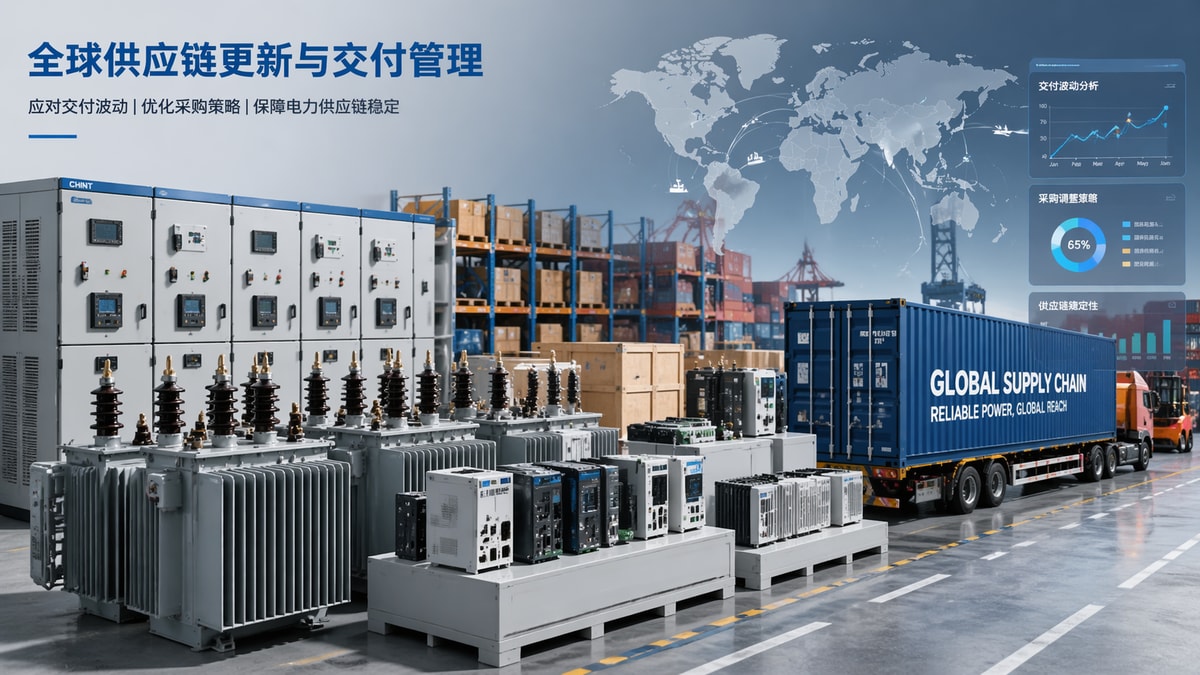
Global supply chain updates for electrical equipment are reshaping sourcing, pricing, and delivery decisions across industrial markets. In this article, we break down the latest global supply chain updates, key disruptions, and emerging trends affecting manufacturers, buyers, and decision-makers. From industrial automation to smart grid and renewable energy, these insights help readers track risks, identify opportunities, and respond faster to changing market conditions.
The core question behind this topic is straightforward: what has actually changed in the electrical equipment supply chain, and what should buyers, operators, and business leaders do next? For most readers, the answer is no longer just about delays. The bigger shifts now involve supplier diversification, uneven price normalization, regional policy impacts, logistics volatility, and rising pressure to secure critical components earlier. In short, supply chains are improving in some areas, but they are becoming more selective, more policy-driven, and more complex to manage.
What has changed most in the global electrical equipment supply chain?
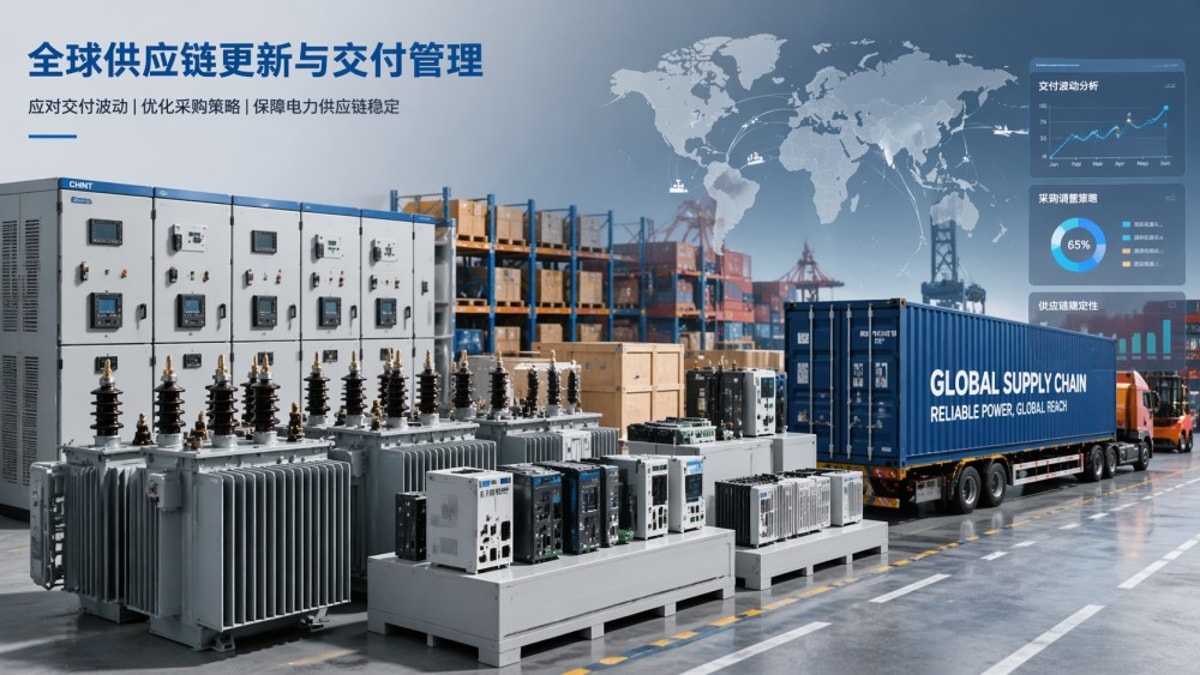
Compared with the peak disruption period of recent years, the global electrical equipment supply chain has entered a new phase. Delivery performance has improved for many standard products, but reliability still varies widely by product category, region, and supplier tier. Companies that expected a full return to pre-disruption conditions are finding that the market now works differently.
Several changes stand out:
- Lead times have improved selectively, not universally. Common low-voltage products, standard components, and some automation items are easier to source than before, but transformers, switchgear, power distribution equipment, semiconductors, and grid-related products may still face extended lead times.
- Supplier concentration is under more scrutiny. Many buyers are reducing dependence on single-country or single-supplier sourcing models, especially for critical electrical components.
- Inventory strategies have shifted. Instead of purely lean procurement, more companies are keeping strategic stock for high-risk parts and long-cycle equipment.
- Policy and trade measures matter more. Tariffs, local content requirements, export controls, compliance rules, and industrial policy incentives now influence sourcing decisions more directly.
- Energy transition demand is tightening parts of the market. Electrification, grid upgrades, EV infrastructure, renewable energy projects, and industrial automation continue to absorb capacity across key electrical equipment segments.
For procurement teams and decision-makers, this means the supply chain is no longer defined only by disruption recovery. It is now shaped by structural demand shifts and regional realignment.
Which electrical equipment categories remain under the most pressure?
Not all product groups are moving in the same direction. Readers tracking the market usually care less about broad headlines and more about where bottlenecks still exist. In today’s environment, the most pressure tends to remain in categories tied to infrastructure expansion, power reliability, and advanced manufacturing.
Key areas to watch include:
- Transformers and grid equipment: Growing grid modernization and renewable integration projects continue to support strong demand. In many regions, transformer supply remains tight due to material constraints, manufacturing capacity limits, and project backlog.
- Switchgear and distribution systems: Large industrial and commercial projects still compete for production slots, especially for customized configurations.
- Industrial automation components: PLCs, drives, sensors, control systems, and power electronics have improved in availability, but shortages can still appear when demand shifts quickly or when specialized chips are involved.
- Cable, copper-linked products, and conductive materials: Pricing remains sensitive to metals markets, project demand, and transportation cost changes.
- Renewable and energy storage electrical systems: Inverters, connectors, protection devices, and related balance-of-system products may experience periodic tightness due to project concentration and regional policy support.
Buyers should also distinguish between standard catalog products and engineered-to-order equipment. Standard items may recover faster, while custom products often remain exposed to labor constraints, component mismatch, and production scheduling delays.
Are prices stabilizing, or should buyers still expect volatility?
Pricing has become more stable in some categories, but stability does not mean predictability across the board. Electrical equipment pricing now reflects a mix of raw material trends, labor costs, freight conditions, factory utilization, compliance requirements, and supplier risk pricing.
Three realities are important:
- Raw material influence remains strong. Copper, aluminum, steel, resins, and electronic materials still affect equipment costs, especially in cables, enclosures, conductors, and power products.
- Localized manufacturing can reduce some risks but add cost. Nearshoring or regional sourcing may improve lead time and resilience, but often at a higher unit price.
- Price declines are uneven. Even if ocean freight or some input costs ease, final equipment prices may stay elevated because suppliers have embedded higher operating and compliance costs into their pricing structure.
For procurement professionals, the practical takeaway is clear: do not assume that lower logistics pressure automatically means lower total landed cost. A better approach is to compare suppliers based on total supply security, delivery credibility, technical support, and lifecycle value, not only headline price.
What risks should procurement teams and business leaders monitor now?
The most relevant risks have become more layered. Instead of one dominant global shock, companies now face a combination of smaller but persistent disruptions that can still affect sourcing plans and project delivery.
The main risks include:
- Geopolitical friction: Trade restrictions, sanctions, regional conflicts, and cross-border compliance changes can alter sourcing feasibility quickly.
- Port, shipping, and route instability: Even when global freight rates soften, route-specific disruptions can still create time and cost surprises.
- Demand spikes from infrastructure and energy projects: Large public and private investments can absorb available capacity faster than expected.
- Single-source dependency for critical parts: A shortage in one semiconductor, insulation material, or specialty component can delay finished equipment.
- Quality and substitution risk: When buyers shift suppliers too quickly to reduce lead times, quality consistency and certification compliance can become new problems.
Business leaders should be especially careful about the hidden cost of delayed electrical equipment. In many industrial settings, the real loss is not only procurement expense, but delayed commissioning, project penalties, idle labor, postponed revenue, and downstream customer dissatisfaction.
How should buyers and operations teams respond to current supply chain conditions?
The most effective response is not simply to order earlier. It is to build a more informed and segmented sourcing strategy. Different categories require different tactics depending on criticality, customization level, and market tightness.
Useful actions include:
- Classify items by supply risk. Separate routine MRO products from long-lead, project-critical, or compliance-sensitive equipment.
- Dual-source where practical. For essential categories, develop backup suppliers before disruption occurs.
- Lock in specifications earlier. Late engineering changes often create avoidable delays, especially for custom electrical assemblies.
- Track supplier health and capacity. Delivery promises mean more when buyers understand the supplier’s actual production load, sub-tier exposure, and logistics model.
- Review inventory policy for critical components. Safety stock may be justified for parts with high downtime impact or unstable replenishment.
- Use market intelligence regularly. Monitoring price trends, export trade developments, policy changes, and project demand signals helps teams act before problems become urgent.
For operators and technical users, closer coordination with procurement is also important. A product that seems interchangeable on paper may differ in certification, compatibility, maintenance profile, or installation requirements. Early technical validation reduces the risk of costly last-minute substitutions.
Where are the biggest opportunities in the next phase of the market?
While much attention goes to disruption, the current market also creates opportunities for companies that adapt quickly. The strongest opportunities are emerging where supply chain intelligence supports faster decisions and better supplier positioning.
Areas with notable potential include:
- Regional supplier development: Companies that qualify capable regional partners can improve responsiveness and reduce exposure to long international lead times.
- Smart sourcing for electrification projects: Demand from smart grid, industrial automation, renewable energy, and energy efficiency upgrades is creating room for suppliers with reliable capacity and compliance readiness.
- Digital supply chain visibility: Better forecasting, order tracking, and supplier collaboration tools can reduce uncertainty and improve planning accuracy.
- Strategic procurement partnerships: Buyers who move beyond transactional purchasing often gain better allocation, earlier production slots, and more dependable support.
For enterprise decision-makers, the broader value is resilience. In the electrical equipment market, resilience is increasingly becoming a competitive advantage rather than just a defensive measure.
What is the overall outlook for global supply chain updates in electrical equipment?
The overall outlook is more stable than during the most severe disruption periods, but not fully normalized. Supply chains for electrical equipment are becoming more regionalized, more demand-sensitive, and more affected by policy and energy transition priorities. Some categories will continue improving, while others may remain constrained because structural demand is rising faster than supply capacity.
That means companies should avoid two extremes: assuming the crisis is over, or assuming all categories remain equally disrupted. The better view is more selective. Buyers need category-level visibility, suppliers need stronger planning discipline, and business leaders need clearer risk-adjusted sourcing decisions.
In summary, global supply chain updates for electrical equipment now point to a market defined by selective recovery, ongoing pressure in critical categories, and a stronger need for smarter procurement. Readers who want to make better sourcing and investment decisions should focus on real lead-time trends, regional policy changes, supplier reliability, and total business impact. Those factors matter more now than broad market averages, and they will continue to shape competitiveness in the months ahead.


Industry Briefing
Get the top 5 industry headlines delivered to your inbox every morning.