
Export Trade Policy for Industrial Equipment Guide
Stay ahead of the latest export trade policy with this practical guide to export trade policy for industrial equipment. Designed for buyers, operators, researchers, and decision-makers, it highlights export trade policy updates affecting the manufacturing industry, electrical supplies, and global supply chain updates for industrial machinery exporters, helping businesses manage compliance, costs, and market opportunities more effectively.
For companies trading manufacturing machinery, industrial components, and electrical equipment, policy shifts rarely stay on paper. A tariff adjustment can change landed cost by 3%–12%, a documentation rule can delay customs clearance by 7–15 days, and a new export control requirement can block shipments of dual-use parts, sensors, drives, or high-precision machine tools.
That is why export trade policy for industrial equipment should be treated as a working management system rather than a legal update. Procurement teams need cost visibility, operators need continuity of spare parts supply, researchers need market signals, and executives need a practical framework for pricing, risk, and regional expansion.
Why Export Trade Policy Matters in Industrial Equipment Trade
Industrial equipment exports sit at the intersection of customs rules, technical standards, financing, and logistics. Unlike consumer goods, many products in this sector involve longer production cycles of 20–90 days, higher unit values, after-sales obligations, and component sourcing from multiple countries. A policy change can therefore affect cost, delivery, compliance, and customer trust at the same time.
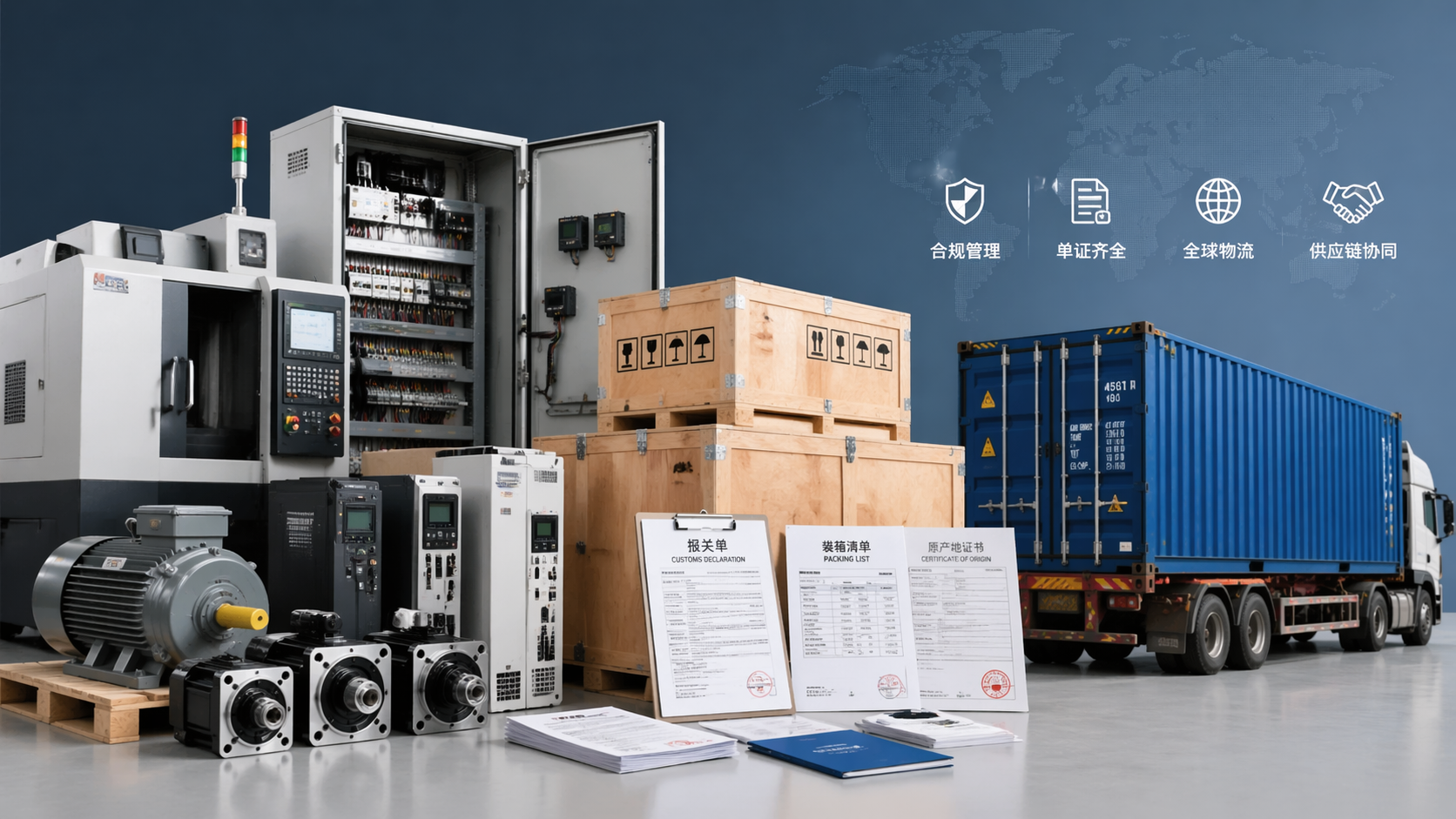
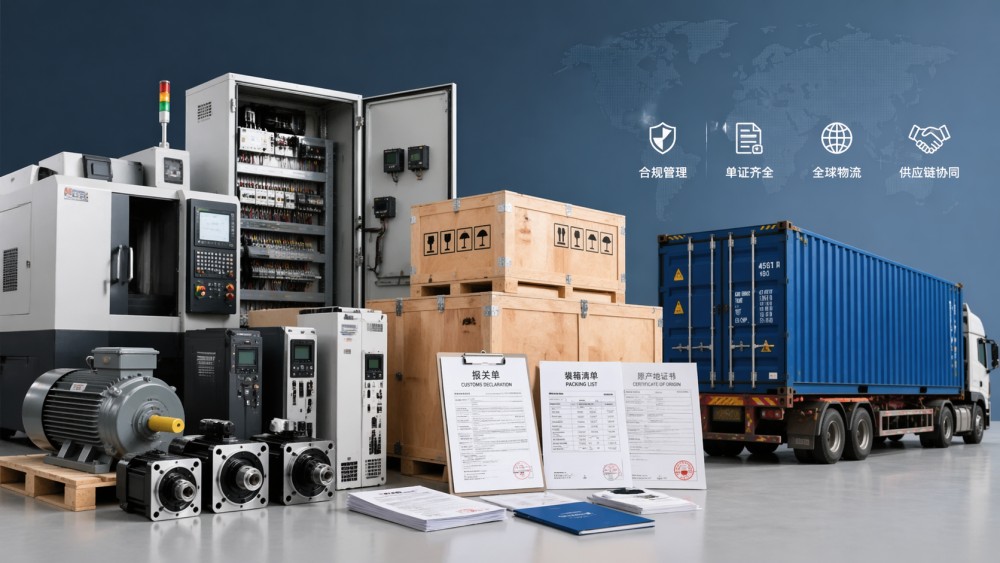
For example, exporting CNC equipment, pumps, motors, switchgear, conveyor systems, welding units, or industrial control parts often requires consistent HS code classification, origin documentation, commercial invoices, packing lists, and in some destinations, product conformity files. Missing one document can turn a normal 3–5 day release into a 2-week customs hold.
Policy attention is especially important for businesses serving multiple buyer types. A distributor may focus on tariff exposure and resale margin, while an end user may care more about spare parts lead time, local technical compatibility, and installation timing. Decision-makers need both views before entering a market or approving annual supplier contracts.
Key policy-sensitive areas
In industrial trade, the most policy-sensitive areas usually include export controls, tariff schedules, rules of origin, sanctions screening, destination-specific technical compliance, and foreign exchange settlement. These issues are not limited to large exporters. Even medium-sized suppliers shipping 1–3 containers per month can face margin erosion if policy checks are weak.
- Tariff and duty changes that alter final quote competitiveness.
- Export licensing requirements for high-performance or dual-use equipment.
- Local certification or labeling rules for electrical equipment and supplies.
- Sanctions and restricted-party screening before payment and shipment.
- Port congestion or rerouting risks that stretch transit from 25 days to 40+ days.
The table below shows how common policy areas typically influence industrial exporters across cost, lead time, and operational risk.
The main conclusion is simple: export trade policy for industrial equipment should be reviewed before quotation, before production, and before shipment. Treating compliance as a final-step document task is one of the most expensive mistakes in cross-border industrial trade.
Core Compliance Checks Before Quotation and Shipment
A strong compliance process begins long before goods leave the warehouse. In industrial machinery and electrical supplies, the quotation stage determines many downstream risks because HS coding, origin assumptions, destination restrictions, and technical specifications are already embedded in the offer. If these points are wrong at the beginning, rework later can cost both time and credibility.
Buyers should ask suppliers to confirm at least 6 items before a formal quote is approved: product description, HS code, country of origin, applicable export control review, destination-specific standards, and selected Incoterm. This basic checklist reduces the chance of pricing errors and helps procurement teams compare offers on a like-for-like basis.
For operators and project teams, shipment readiness is equally critical. Equipment that includes motors, variable frequency drives, PLC modules, pressure parts, or lithium-powered accessories may trigger additional packaging, testing, or declaration requirements. A missed declaration can result in storage charges that accumulate daily after free time expires.
A practical 5-step review flow
- Classify the product correctly, including machine, accessory, and spare part differences.
- Confirm whether the destination market requires import licenses, energy labels, or electrical safety files.
- Review end-user profile, end use, and restricted-party screening before payment release.
- Check packaging, marking, and transport mode requirements for sea, air, or multimodal routes.
- Align shipping documents with the sales contract, insurance terms, and payment instrument.
Documents that often cause delays
In many industrial shipments, delays do not come from manufacturing defects but from avoidable paperwork errors. Common issues include inconsistent model names between invoice and packing list, missing serial numbers for controlled items, unclear valuation of bundled spare parts, and certificates issued after vessel cutoff. Even a 24-hour delay can miss the weekly sailing window in some routes.
The next table summarizes common checkpoints procurement and export teams should validate before goods move to the port or airport.
A disciplined review process does more than avoid penalties. It also supports faster quotations, more accurate cash-flow planning, and smoother project delivery, especially when equipment orders involve installation teams, replacement parts, or staged shipments over 2–6 months.
Cost Control, Pricing Strategy, and Supply Chain Planning
Export trade policy for industrial equipment has a direct effect on quoting strategy. A supplier may win an order on unit price but lose margin later because tariff changes, inspection fees, or rerouted freight were not built into the cost model. In sectors such as motors, bearings, valves, fabrication machinery, and electrical cabinets, even small cost shifts across many SKUs can significantly affect annual profitability.
Procurement teams should separate product cost into at least 4 layers: manufacturing cost, compliance cost, logistics cost, and market-entry cost. This helps buyers compare offers beyond factory price. A quote that is 5% lower can still become more expensive if certification adaptation, packaging reinforcement, or destination inspection is not included.
Supply chain planning also needs policy-aware sourcing. If a finished machine depends on 20–40 imported components, origin rules and export restrictions on a single control unit can disrupt the full assembly. This is why many exporters now maintain approved alternatives for critical items such as inverters, relays, servo parts, hydraulic seals, and sensor modules.
Three pricing models used in policy-sensitive markets
Different markets require different pricing methods. In stable destinations, quarterly review may be enough. In volatile routes, monthly review or project-based revalidation is safer. The choice depends on product complexity, shipping frequency, and policy exposure.
- Fixed validity quotes for 15–30 days, suitable for standard components with predictable freight and duty.
- Indexed quotes linked to metal, freight, or exchange movement, common in cables, copper-based parts, and fabricated assemblies.
- Project pricing with milestone review, used for integrated lines, heavy machinery, or electrical systems with long lead times.
Decision table for sourcing and pricing
The following comparison can help exporters and buyers decide when to prioritize low upfront cost, supply security, or regulatory flexibility.
A practical takeaway is that pricing should not only reflect current cost but also policy resilience. The best exporters usually review their top 10 risk-sensitive SKUs, top 5 routes, and top 3 restricted component categories every quarter to keep quotes realistic and supply plans stable.
How Buyers and Decision-Makers Should Evaluate Export-Ready Suppliers
Not every manufacturer with export experience is equally prepared for policy-sensitive industrial trade. Buyers should evaluate whether a supplier can maintain compliance, delivery discipline, and technical support under changing rules. This is particularly important for enterprises buying production-line equipment, replacement electrical assemblies, or multi-batch components tied to shutdown schedules.
A useful evaluation framework includes 4 dimensions: documentation control, technical adaptability, logistics coordination, and after-sales responsiveness. If one area is weak, the total cost of ownership rises. For example, a supplier may produce acceptable equipment but fail to provide destination-ready manuals, labels, or test files, creating delays at installation or import review.
For researchers and sourcing teams, supplier interviews should go beyond capacity and price. Ask how often export documents are audited, how restricted-party checks are handled, whether the company has a backup source for critical imported components, and how technical changes are communicated when destination standards differ. These questions reveal operational maturity more clearly than generic brochures.
Supplier assessment checklist
- Can the supplier produce consistent document sets within 24–72 hours before shipment cutoff?
- Can product labels, manuals, and wiring information be adapted for different markets?
- Is there a response process for urgent spare parts within 48 hours?
- Can the supplier explain lead times for standard products versus custom assemblies?
- Does the team understand the difference between distributor orders and end-user project orders?
Common warning signs
Warning signs include unclear HS coding responsibility, repeated invoice inconsistencies, weak change management for technical specs, and no defined escalation path when shipments are held. Another red flag is promising unrealistic delivery such as a 10-day turnaround for custom industrial panels that normally require 3–4 weeks for engineering, procurement, assembly, and test.
Decision-makers should also look at service structure. In industrial equipment, post-shipment support is part of export readiness. If spare parts, installation guidance, or troubleshooting documents are unavailable, a lower purchasing price can quickly be offset by downtime costs, especially where a production line loses output every hour.
The strongest suppliers usually combine compliance discipline with transparent communication. They do not promise zero risk, but they can explain lead-time windows, documentation timing, component substitution rules, and destination-specific adjustments in a way that helps buyers plan procurement and operations with fewer surprises.
Frequent Mistakes, Market Trends, and Practical FAQ
Industrial exporters often make the same mistakes when dealing with export trade policy. One is relying on outdated tariff assumptions from previous contracts. Another is treating electrical compliance as a final label issue instead of a design-stage requirement. A third is underestimating the effect of sanctions screening and end-use review on payment timing, especially when project chains involve multiple intermediaries.
Current market trends suggest that buyers are asking for more traceability, shorter compliance response time, and more flexible sourcing structures. In many categories, customers now expect document turnaround in 1–3 business days, clearer spare-parts availability for 12–24 months, and faster notice when a policy change affects price or delivery. This is pushing exporters to integrate trade policy checks with ERP, sourcing, and customer service workflows.
Another clear trend is the growth of regionalization. Rather than depending on one corridor, many industrial businesses are evaluating alternate ports, bonded inventory, and partial localization strategies. This does not eliminate global trade, but it reduces the impact of a single policy shock on mission-critical equipment supply.
FAQ: How often should exporters review policy changes?
For stable commodity-like components, a quarterly review may be enough. For industrial machinery, control systems, and electrical assemblies with higher regulatory exposure, a monthly review is safer. Any business entering a new market, shipping project cargo, or handling dual-use concerns should also perform a transaction-level review before order confirmation and before shipment.
FAQ: Which products usually need closer policy attention?
Products with electronics, precision control, advanced materials, pressure functions, or energy-related specifications often need closer review. Examples include CNC equipment, VFD-driven systems, power distribution gear, industrial batteries, smart sensors, and integrated automation units. Even spare parts can trigger compliance checks if they change equipment function or performance level.
FAQ: What lead time buffer is reasonable for policy-sensitive shipments?
For standard shipments, many companies keep a 5–7 day documentation buffer before cargo cutoff. For custom equipment, project cargo, or destinations with stricter import review, a 10–15 day buffer is more realistic. If the shipment includes multiple packages, batteries, or destination testing requirements, planning even earlier can prevent expensive last-minute changes.
Action-focused closing guidance
Export trade policy for industrial equipment is no longer a narrow compliance topic. It affects quotation accuracy, market access, delivery reliability, spare-parts continuity, and long-term customer confidence. For manufacturers, component suppliers, importers, and procurement teams, the practical advantage comes from turning policy monitoring into a repeatable operating process.
If your business is evaluating machinery exports, electrical equipment sourcing, or cross-border supply chain planning, build your decisions around verified documentation, realistic lead times, market-specific technical checks, and supplier readiness. That approach reduces avoidable cost while improving delivery confidence and buyer satisfaction.
To explore more market analysis, policy interpretation, supply chain intelligence, and industry-focused sourcing guidance, contact us today, request a tailored solution, or consult with us for product and export trade details aligned with your target markets.

Industry Briefing
Get the top 5 industry headlines delivered to your inbox every morning.
- heavy machinery
- industrial equipment
- manufacturing machinery
- equipment sourcing
- industrial components
- industrial machinery
- supply chain
- procurement
- manufacturing
- global trade
- export trade policy
- global supply chain updates
- global supply chain updates for industrial machinery exporters
- export trade policy for industrial equipment
- export trade policy updates
- latest export trade policy