
OEM Manufacturers Are Facing New Global Supply Chain Trade-Offs

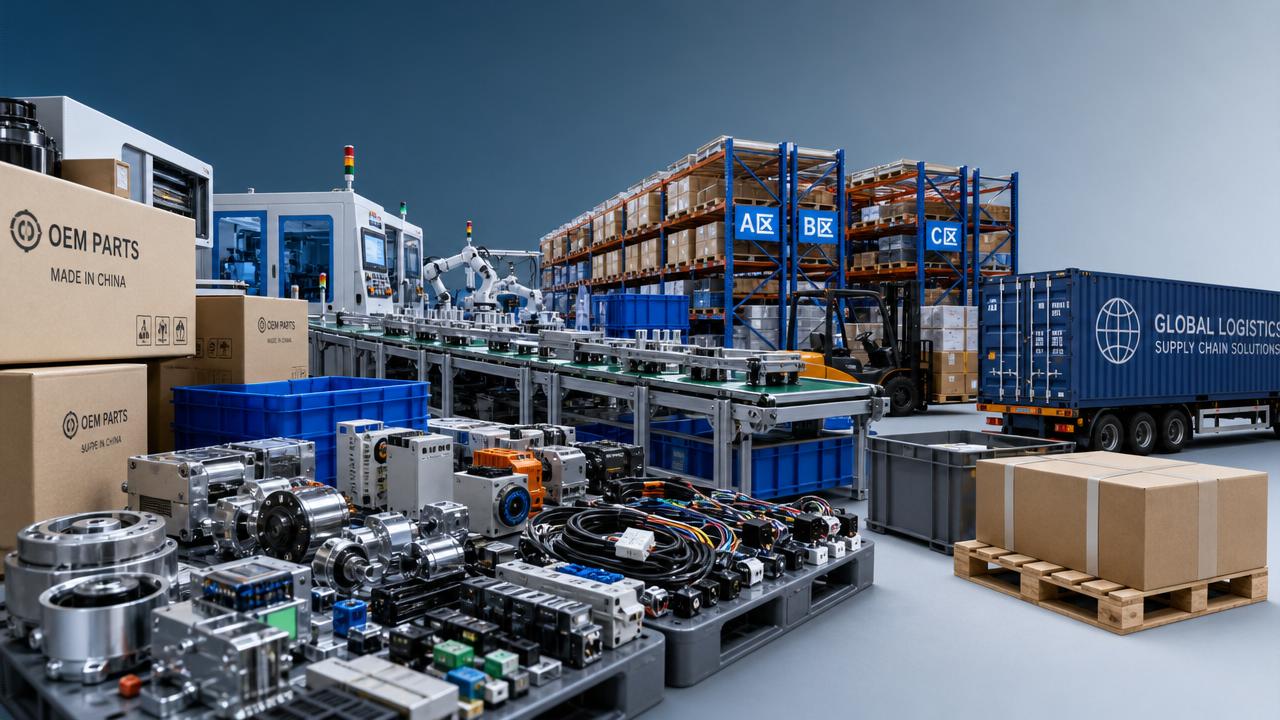
OEM manufacturers are rethinking sourcing, inventory, and regional production as tariffs, geopolitics, and cost pressures reshape global operations. These global supply chain updates for OEM manufacturers reveal the new trade-offs behind resilience, efficiency, and market access. For business decision-makers, understanding these shifts is essential to reducing risk, protecting margins, and building more adaptable supply strategies in a fast-changing industrial landscape.
Why are global supply chain updates for OEM manufacturers changing strategic priorities?
For years, many OEMs optimized primarily for unit cost. That model is under pressure. Industrial buyers in machinery, components, and electrical equipment now face a more complex equation: landed cost, lead-time stability, compliance exposure, market access, and supplier concentration risk all matter at the same time.
This is why global supply chain updates for OEM manufacturers have moved from an operations topic to a board-level issue. A sourcing decision that looks efficient on paper can create hidden problems later, including tariff escalation, customs delays, inconsistent component availability, or inventory build-up in the wrong market.
In the broader industrial landscape, the pressure is especially visible in manufacturing and processing machinery, industrial equipment and components, and electrical equipment and supplies. These sectors depend on multi-tier supply chains, specialized parts, and stable export channels. A disruption in one node can delay final assembly, after-sales commitments, and cash flow recovery.
- Tariff shifts can quickly change the economics of a supplier base that once appeared low-cost and reliable.
- Geopolitical uncertainty is forcing firms to test alternate origins, backup suppliers, and regional assembly options.
- Freight volatility and port congestion continue to affect inventory policy, especially for critical electrical and mechanical components.
- Customers increasingly expect shorter delivery windows, traceability, and documented compliance across borders.
For decision-makers, the key question is no longer whether to adapt, but how to balance efficiency with resilience without damaging margins. That balance requires better market intelligence, trade monitoring, cost modeling, and supplier evaluation frameworks.
What trade-offs are OEMs making across sourcing, inventory, and production?
The latest global supply chain updates for OEM manufacturers show a clear shift away from single-variable decision-making. Companies are no longer comparing suppliers only by quoted price. They are comparing full operating impact across sourcing geography, inventory strategy, and production footprint.
The table below outlines the most common strategic trade-offs industrial OEMs are weighing in 2025 planning cycles and supplier reviews.
The main takeaway is that resilience is not free, but neither is disruption. OEMs that do not model these trade-offs in advance often pay later through expedited freight, missed contract commitments, or emergency supplier switching under poor commercial terms.
Sourcing diversification is rising, but not every category should move first
Not all product categories deserve the same diversification strategy. Standard fasteners, castings, cables, or low-complexity housings may be easier to dual-source. High-precision motion parts, control systems, or tested electrical modules often require longer qualification time and tighter documentation controls.
A practical starting point is to rank purchased items by business criticality, switching complexity, and trade exposure. This prevents teams from spending resources on low-impact items while high-risk components remain vulnerable.
Regionalization helps market access, but can add hidden cost layers
Nearshoring and regional assembly are gaining traction, especially where customer lead times are tight or trade policy is unstable. Yet regionalization is not a universal fix. Local labor cost, tooling duplication, supplier maturity, testing capability, and certification alignment can offset logistics savings.
For many OEMs, a hybrid model works better: core components remain sourced globally, while final assembly, localization, labeling, and service parts positioning move closer to the destination market.
How should decision-makers compare supply chain options in industrial sectors?
In manufacturing and processing machinery, industrial components, and electrical equipment, supply chain choices affect more than procurement. They shape installation schedules, warranty performance, export readiness, and customer confidence. Decision-makers need a comparison framework that goes beyond price sheets.
The following table can be used when reviewing global supply chain updates for OEM manufacturers and evaluating supplier or footprint alternatives.
This framework is useful because it creates a shared language between procurement, operations, engineering, finance, and sales. Without that common lens, teams often optimize different metrics and make slower or conflicting decisions.
A practical procurement checklist for OEM supply reviews
- Map the top revenue-linked parts and identify which ones are exposed to single-source, single-country, or long transit dependencies.
- Calculate total landed cost under multiple tariff and freight scenarios, not only current conditions.
- Separate items by switching complexity so engineering resources go first to high-impact categories.
- Check whether supplier documentation supports origin declarations, testing records, and destination-market compliance needs.
- Build inventory rules by criticality rather than applying one blanket stock target across all SKUs.
When used consistently, this process makes global supply chain updates for OEM manufacturers actionable instead of theoretical. It turns trade and market news into sourcing rules, inventory thresholds, and supplier qualification priorities.
Which cost drivers are most often underestimated?
Many OEMs still underestimate the gap between quoted component cost and the real cost of supply instability. In industrial markets, a cheap input can become expensive if it causes missed commissioning dates, emergency air freight, or field-service disruption for spare parts.
The cost categories below are especially important when reviewing global supply chain updates for OEM manufacturers and redesigning supplier portfolios.
- Expedite logistics: air freight or urgent trucking can erase annual sourcing savings in a single delayed shipment.
- Engineering requalification: dual-sourcing may require testing, drawings review, PPAP-style controls, or customer approval cycles.
- Inventory carrying cost: more safety stock improves resilience but affects cash conversion and warehouse planning.
- Compliance administration: origin documentation, labeling, technical files, and destination-specific declarations take time and discipline.
- Lost commercial opportunity: inability to quote fast or deliver on time can reduce win rates in competitive industrial tenders.
A sound alternative to pure low-cost sourcing is segmented sourcing. In this model, highly critical parts receive resilient, possibly more expensive coverage, while low-risk standard items remain cost-optimized. This keeps margin protection aligned with business risk instead of applying one expensive model to every category.
When is localization worth the investment?
Localization tends to make sense when three conditions appear together: customer lead-time expectations are short, regional trade rules materially affect market access, and the product can be modularized for local final assembly without major quality compromise. Machinery options packages, control cabinet integration, and final electrical adaptation are common candidates.
It makes less sense when supply chains depend on tightly integrated specialist parts that are difficult to duplicate regionally, or when local supplier ecosystems are not mature enough to support stable quality.
What compliance and certification issues should OEMs watch closely?
Compliance has become a bigger part of global supply chain updates for OEM manufacturers because cross-border trade now requires more than shipment execution. Companies also need accurate product data, origin transparency, document consistency, and market-specific conformity support.
In industrial equipment and electrical supply chains, common checkpoints may include product safety requirements, electrical conformity expectations, customs classification accuracy, material declarations, packaging standards, and records needed for destination-market entry. Exact obligations depend on product type and target country, but weak documentation is a frequent source of avoidable delay.
Decision-makers should ask suppliers not only whether they can produce the item, but whether they can support the full documentation chain behind that item. This includes revision control, test records where applicable, origin statements when required, and traceable specifications across engineering changes.
Key risk signals in compliance management
- Technical documents are available, but not aligned with the latest product revision or customer-specific configuration.
- The supplier can provide certificates on request, but there is no routine process for document control and version tracking.
- Origin information is treated as a sales issue rather than a supply chain data issue, creating customs risk later.
- Engineering and procurement teams do not jointly review specification changes before source transfers or alternate approvals.
A disciplined compliance process does not only reduce legal exposure. It also supports faster quote response, smoother customs handling, and greater confidence when entering new export markets.
How can business leaders turn supply chain intelligence into better decisions?
The value of global supply chain updates for OEM manufacturers increases when market signals are linked to action. News about freight, policy, exhibitions, price trends, and export developments is useful only if it informs sourcing timing, supplier strategy, and customer commitments.
This is where industry-focused information services matter. For companies active in machinery, components, and electrical equipment, decision quality improves when procurement teams can compare price trends, track policy interpretation, monitor trade developments, and understand technology shifts in one place rather than through fragmented sources.
A portal with consistent coverage of industry news, market analysis, technology updates, export trade developments, company news, exhibition coverage, and supply chain intelligence can support multiple management tasks at once:
- Procurement can benchmark supply risks and identify alternative sourcing regions earlier.
- Operations can adjust inventory rules based on lead-time and logistics pattern changes.
- Sales leaders can align delivery promises with actual upstream constraints and trade realities.
- Strategy teams can assess where localization, regional partnerships, or export expansion make commercial sense.
The strongest industrial organizations do not wait for disruptions to become visible in late deliveries. They build early-warning capability through regular monitoring, cross-functional review, and structured supplier data.
FAQ: common questions behind global supply chain updates for OEM manufacturers
How should OEMs prioritize which suppliers to diversify first?
Start with parts that combine high revenue impact, long replenishment time, and limited substitution options. In many industrial businesses, these include control assemblies, precision machined parts, motors, drives, specialty castings, and approved electrical subassemblies. Review both direct supplier dependence and sub-tier material exposure before deciding where to invest qualification effort.
Are higher inventory levels always the right response to supply chain risk?
No. Broad inventory increases can weaken cash flow and hide planning problems. A better approach is selective buffering for critical and volatile items, combined with improved forecasting, supplier communication, and route planning. Inventory should be a targeted risk-control tool, not the only answer.
What should executives ask when evaluating regional production?
Ask whether regional production improves market access, response time, and tariff position enough to offset duplicate tooling, labor, quality management, and coordination cost. Also confirm whether local suppliers can support the required specification, testing discipline, and service parts continuity.
What are common mistakes when reading global supply chain updates for OEM manufacturers?
One mistake is reacting to headlines without category-level analysis. Another is focusing only on price changes while ignoring origin risk, documentation gaps, or lead-time variability. A third is assuming all products should follow the same sourcing model. Good decisions require segmentation by criticality, complexity, and market requirements.
Why choose us for supply chain insight and next-step planning?
For industrial decision-makers, timely information is most useful when it supports concrete action. Our portal focuses on manufacturing and processing machinery, industrial equipment and components, and electrical equipment and supplies, with coverage designed to help teams respond to real sourcing and trade challenges rather than general headlines.
We help readers track global supply chain updates for OEM manufacturers through industry news, market analysis, price trend monitoring, policy interpretation, technology updates, exhibition coverage, export trade developments, and practical supply chain intelligence. This supports faster evaluation of sourcing options, market entry conditions, and operational risks.
If your team is reviewing supplier diversification, regional production options, or procurement risk in industrial categories, contact us to discuss the topics that matter most to your next decision cycle:
- Parameter confirmation for machinery, components, or electrical supply requirements before supplier comparison
- Product selection support based on application scenario, compliance expectation, and delivery target
- Lead-time and delivery cycle assessment for different sourcing regions or supplier combinations
- Custom solution discussion for regional assembly, alternate sourcing, or category-level risk planning
- Certification and document requirement review for export markets and cross-border procurement
- Quotation communication support tied to market conditions, price trends, and supply timing
Better supply chains are built on better visibility. If you need a clearer view of cost pressure, sourcing alternatives, compliance implications, or trade-driven risk in industrial markets, reach out with your target category, destination market, and delivery priorities so the discussion can start with practical answers.

Industry Briefing
Get the top 5 industry headlines delivered to your inbox every morning.