
Bulk order suppliers: how to avoid hidden lead time risks

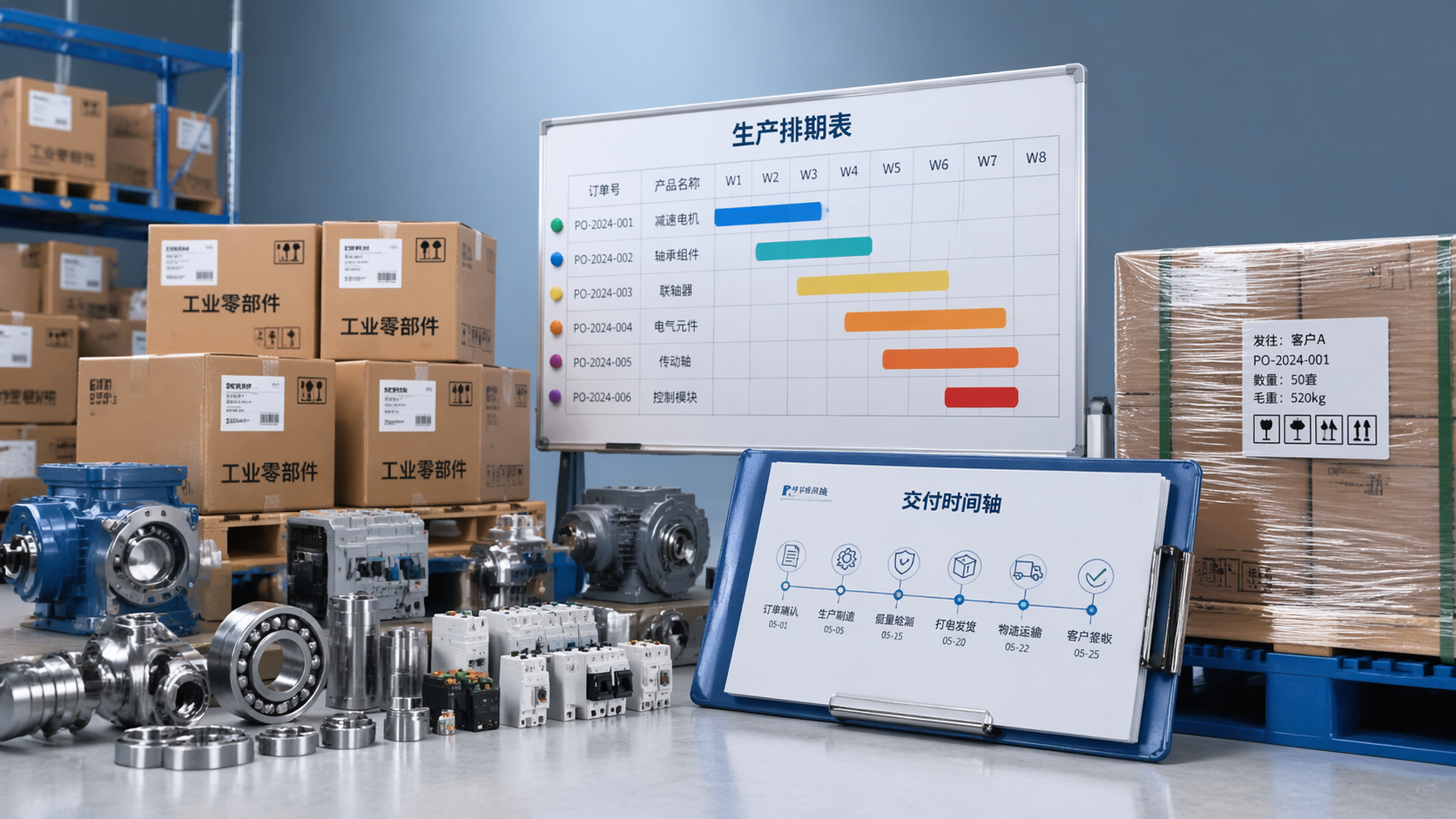
Bulk order suppliers can turn a competitive quote into a costly delay when hidden lead time risks are ignored. Drawing on global supply chain updates for bulk order suppliers, global supply chain updates for reliable suppliers, and global supply chain updates for quick delivery, this article shows buyers and decision-makers how to identify warning signs, compare factory capacity, and use supply chain intelligence to reduce disruption, control costs, and secure more predictable procurement outcomes.
Why do hidden lead time risks happen even when the quotation looks attractive?
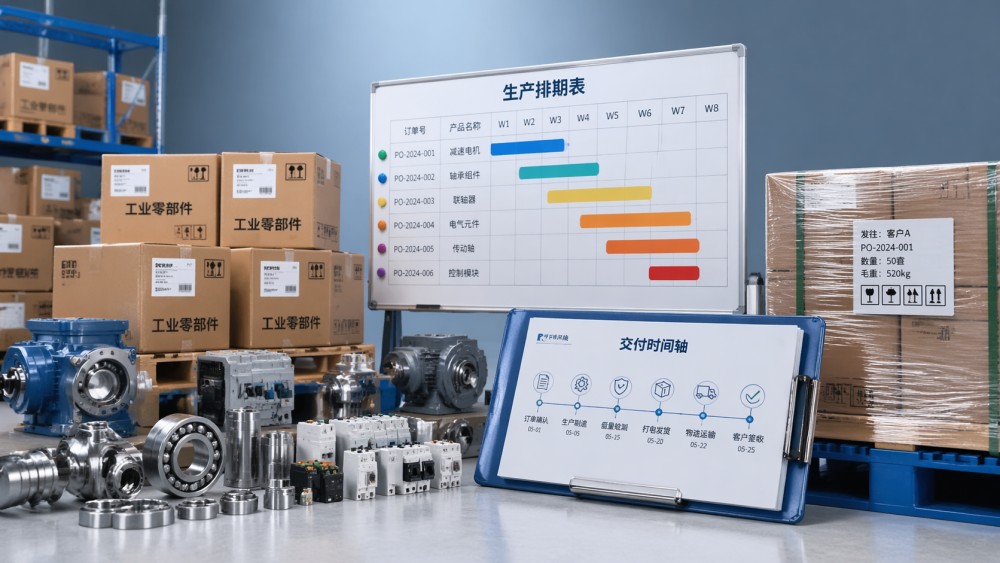
In manufacturing and industrial procurement, bulk order suppliers often win attention with low unit prices, broad product catalogs, or promises of fast shipment. Yet lead time risk rarely starts on the shipping date. It usually begins earlier, in production planning, material allocation, subcontracting, component availability, and export coordination. For buyers of machinery parts, industrial components, and electrical equipment, a delay of 7–15 days can affect installation schedules, spare-part readiness, and even downstream contractual obligations.
This is especially relevant for information researchers, operators, procurement teams, and business decision-makers who are comparing suppliers across regions. A factory may quote a 20-day production cycle, but if it relies on two external process suppliers, imports critical electrical parts on a 4–6 week cycle, or reserves capacity only after deposit receipt, the practical lead time is very different from the stated one. Hidden lead time risk is often not a single failure; it is a chain of small unverified assumptions.
In the comprehensive industrial sector, lead time volatility is also linked to market conditions. Raw material price fluctuations, exhibition season order surges, power supply constraints, port congestion, and policy changes in export documentation can all lengthen delivery windows. This is why supply chain intelligence matters. Buyers should not evaluate bulk order suppliers only by quoted days, but by whether those days are supported by capacity evidence, process visibility, and stable upstream coordination.
A practical way to understand the issue is to separate visible lead time from hidden lead time. Visible lead time is the number written in the quotation or proforma invoice. Hidden lead time includes raw material booking, tooling queue, quality rework, packaging preparation, inland transport scheduling, customs paperwork, and booking availability. In many industrial orders, these hidden steps can add 10%–30% to the original timeline if they are not checked before order confirmation.
Four common sources of hidden delay
- Capacity overcommitment: a supplier accepts several bulk orders in the same 2–4 week window without ring-fencing production slots for your project.
- Material dependency: one key bearing, motor, contactor, PCB, or casting is available only from a secondary vendor with a longer replenishment cycle.
- Process fragmentation: coating, heat treatment, calibration, or final assembly is outsourced, creating extra handoff risk and queue time.
- Export readiness gaps: packaging specification, HS code review, labeling, inspection files, or booking documents are prepared late instead of in parallel.
These hidden issues are not always signs of a poor supplier. Sometimes they reflect normal industrial complexity. The real procurement challenge is whether the supplier reveals them early, quantifies the risk clearly, and offers a realistic plan with milestone control. Reliable suppliers tend to discuss constraints before order placement. Risky suppliers often speak only about price and headline delivery.
How should buyers compare bulk order suppliers beyond quoted delivery days?
When bulk order suppliers are screened only by price and nominal lead time, procurement teams miss the factors that determine actual delivery performance. A stronger approach is to compare suppliers across production structure, supply resilience, communication quality, and shipment control. This is particularly important in machinery, industrial equipment, and electrical supply chains, where one delayed component can stop a full batch from shipping.
The table below gives a practical comparison framework that buyers can use during RFQ review, supplier interviews, and internal approval. It is designed for industrial sourcing teams that need more than a simple “fast” or “slow” answer. It also helps decision-makers identify which risks are negotiable and which are structural.
This comparison shows why the fastest quote is not always the quickest delivery in practice. A supplier with a 30-day lead time and clear control points may outperform one promising 20 days without raw material assurance or export preparation. For procurement personnel, the key is not to eliminate all risk, but to choose a supplier whose risk can be measured, discussed, and managed.
What should be verified during supplier screening?
Before placing a bulk order, ask suppliers to break delivery into at least 4 stages: material confirmation, in-process production, final inspection, and shipment readiness. If the supplier cannot explain how many days each stage requires, the quoted timeline may be little more than a sales estimate. Buyers sourcing industrial components should also ask whether critical parts are made in-house, outsourced domestically, or imported.
For operators and technical users, another useful check is product complexity. A standard fastener batch, cable accessory order, or common motor configuration usually has more predictable lead times than customized assemblies, control panels, precision housings, or mixed-SKU industrial kits. A quote that combines standard and customized items into one shipment can hide bottlenecks. Splitting the order into two delivery waves may reduce operational disruption.
Decision-makers should also look at commercial terms. For example, does production start after PO, after drawing approval, or after deposit clearance? A 5-day delay in technical confirmation can become a 12-day delivery shift if the supplier runs fixed weekly schedules. In export business, shipment dates may also depend on container booking windows, local trucking availability, and destination documentation requirements.
A practical 5-point screening checklist
- Request a milestone lead time breakdown instead of one total number.
- Identify 1–3 long-lead materials or components in the order.
- Confirm whether testing, certification files, or labeling add extra days.
- Check if peak season, public holidays, or exhibition periods affect the schedule.
- Ask how delays are reported and what corrective options are available.
Which procurement signals reveal whether a supplier can really deliver on time?
Reliable bulk order suppliers usually leave a traceable operational pattern. They provide production photos or process updates at agreed intervals, clarify quality checkpoints, and speak openly about constraints. In contrast, risky suppliers often rely on generic assurances, especially when buyers are under pressure to secure quick delivery. In industrial procurement, warning signals often appear in communication long before they appear in shipment performance.
One useful approach is to separate supplier claims into three categories: verifiable, partially verifiable, and unverifiable. A verifiable claim might be “assembly takes 5–7 working days after components arrive.” A partially verifiable claim might be “material is usually available.” An unverifiable claim might be “no problem, shipment will be very fast.” Procurement teams should build decisions around the first category and treat the third as a risk premium.
For manufacturing and processing machinery, industrial equipment, and electrical supplies, the ability to meet lead time also depends on after-quotation engineering control. Drawing confirmation, voltage or frequency matching, packaging method, and inspection format can all affect schedule stability. A supplier may appear fast simply because it has not yet considered these details. Once details surface, the lead time stretches.
The table below summarizes practical warning signs that buyers can use during supplier evaluation. It supports faster judgments for procurement teams while also helping executives understand where schedule risk originates.
These signals help buyers identify whether a supplier’s quick delivery promise is process-based or simply sales-driven. In many B2B transactions, the most expensive delay is not the latest one. It is the delay discovered too late for corrective action. Early visibility creates options: alternate sourcing, phased shipment, substitute materials, or revised installation planning.
Why supply chain intelligence makes a difference
A portal focused on industry news, market analysis, price trends, technology updates, policy interpretation, company news, exhibition coverage, export trade developments, and supply chain intelligence offers a practical advantage to buyers. It helps procurement teams see whether a delay is supplier-specific or part of a wider market pattern. If copper, steel, motors, relays, castings, or shipping space are tightening regionally, the right response is different from a single-factory issue.
For example, if export trade developments point to extended customs review or freight volatility over the next 2–3 weeks, buyers can adjust purchase timing, ask for ex-works readiness earlier, or prioritize urgent SKUs. If industry news shows strong seasonal demand in a product category, procurement personnel can expect longer queue times and negotiate production booking sooner. Good decisions come from context, not just quotations.
Information researchers benefit as well. Instead of collecting isolated supplier claims, they can compare factory messages with market signals, policy changes, and price trends. This reduces the chance of relying on outdated assumptions. In industrial sourcing, a small timing insight can protect a much larger project budget.
How can buyers reduce lead time risk before, during, and after placing a bulk order?
Managing lead time risk is not only about selecting the right bulk order suppliers. It is also about structuring the procurement process to absorb uncertainty. A sound process usually has 3 phases: pre-order verification, in-order monitoring, and shipment-close control. Each phase should include specific actions, owners, and timelines. This is especially important for companies sourcing multiple industrial product categories from different factories.
In the pre-order phase, buyers should confirm technical scope, identify long-lead items, and decide whether the order needs phased delivery. During production, they should monitor milestone completion rather than waiting for the final shipping notice. In the shipment-close phase, they should verify packing, labeling, documentation, and booking progress. This disciplined sequence is often more valuable than pushing suppliers for unrealistic speed.
The table below outlines a practical service and control flow that buyers can apply to machinery parts, industrial equipment components, and electrical supply orders. It supports both procurement execution and management reporting.
This flow reduces surprises because it converts a single promised date into a series of monitored events. It also helps internal teams cooperate better. Operators understand when equipment or spare parts may arrive. Procurement tracks supplier action. Decision-makers can intervene earlier if a delay threatens production, maintenance, or customer delivery.
Five practical actions that reduce disruption
- Split critical and non-critical items when one order contains mixed urgency levels or custom configurations.
- Use agreed milestone reporting, such as every 7 days, instead of waiting for ad hoc updates.
- Lock technical details early, including voltage, dimensions, material grade, and packaging method, to avoid rework.
- Request alternatives for 1–2 vulnerable components if the original source becomes constrained.
- Align commercial terms with production reality so the start date is clear and measurable.
These actions are simple, but they improve resilience across the full supply chain. In practice, reducing uncertainty by even one week can be more valuable than negotiating a small unit-price reduction, especially when downtime, line stoppage, or missed customer commitments are involved.
FAQ: what do buyers most often ask about bulk order suppliers and delivery risk?
How long is a normal lead time for industrial bulk orders?
There is no single answer because lead time depends on product type, customization level, material source, and export route. For standard industrial components, a common production window may be 2–4 weeks. For customized assemblies, electrical control products, or machinery parts involving multiple processes, it can extend to 4–8 weeks. Buyers should focus less on averages and more on what drives the timeline in each case.
Is a supplier with the shortest quote always the best option?
Not necessarily. The best option is the supplier with the most reliable and transparent path to delivery. A shorter quote without material confirmation, capacity allocation, or shipping preparation can become slower than a slightly longer but better-managed plan. Procurement teams should compare evidence, not only promises.
What are the biggest mistakes buyers make when ordering in bulk?
Common mistakes include approving quotations without milestone review, mixing urgent and non-urgent items in one batch, delaying technical confirmation, and assuming export documentation takes no extra time. Another frequent error is treating all suppliers as if they had the same in-house capabilities. In reality, one outsourced finishing step or one imported electrical part can change the schedule materially.
How can information researchers support procurement more effectively?
They can track industry news, supply chain intelligence, price trends, policy interpretation, and export trade developments that affect supplier performance. This broader market view helps procurement distinguish between temporary market-wide constraints and factory-specific weakness. It also strengthens internal recommendations with context rather than isolated supplier statements.
Why choose us when evaluating bulk order suppliers and supply chain risk?
For buyers navigating manufacturing and processing machinery, industrial equipment and components, and electrical equipment and supplies, the challenge is rarely just finding a quote. The real task is understanding whether a quoted lead time can stand up to market fluctuations, process complexity, and export execution. Our content and intelligence focus on exactly these decision points: industry news, market analysis, price trends, technology updates, policy interpretation, company developments, exhibition signals, export trade changes, and supply chain intelligence.
That means you can use our platform not only to discover bulk order suppliers, but also to evaluate delivery realism, compare sourcing conditions, and track the factors that influence procurement timing. If you are screening reliable suppliers, checking quick delivery claims, or preparing a sourcing plan for the next 30–90 days, we can help you build a more informed view before commitment.
You can contact us for practical support around supplier comparison, lead time assessment, product selection references, delivery cycle clarification, export readiness questions, certification-related document checks, sample planning, and quotation communication priorities. If your team needs a clearer basis for choosing among bulk order suppliers, we can also help structure the evaluation around capacity, risk points, and supply chain visibility.
In complex B2B procurement, better timing decisions come from better information. If you want to reduce hidden lead time risks, improve supplier judgment, and make procurement outcomes more predictable, reach out with your product category, order scope, timing requirement, and target market. That gives us a practical starting point to help you assess the next move with greater confidence.



Industry Briefing
Get the top 5 industry headlines delivered to your inbox every morning.