
Policy & regulations shift in Brazil adds new compliance layers for mining equipment imports

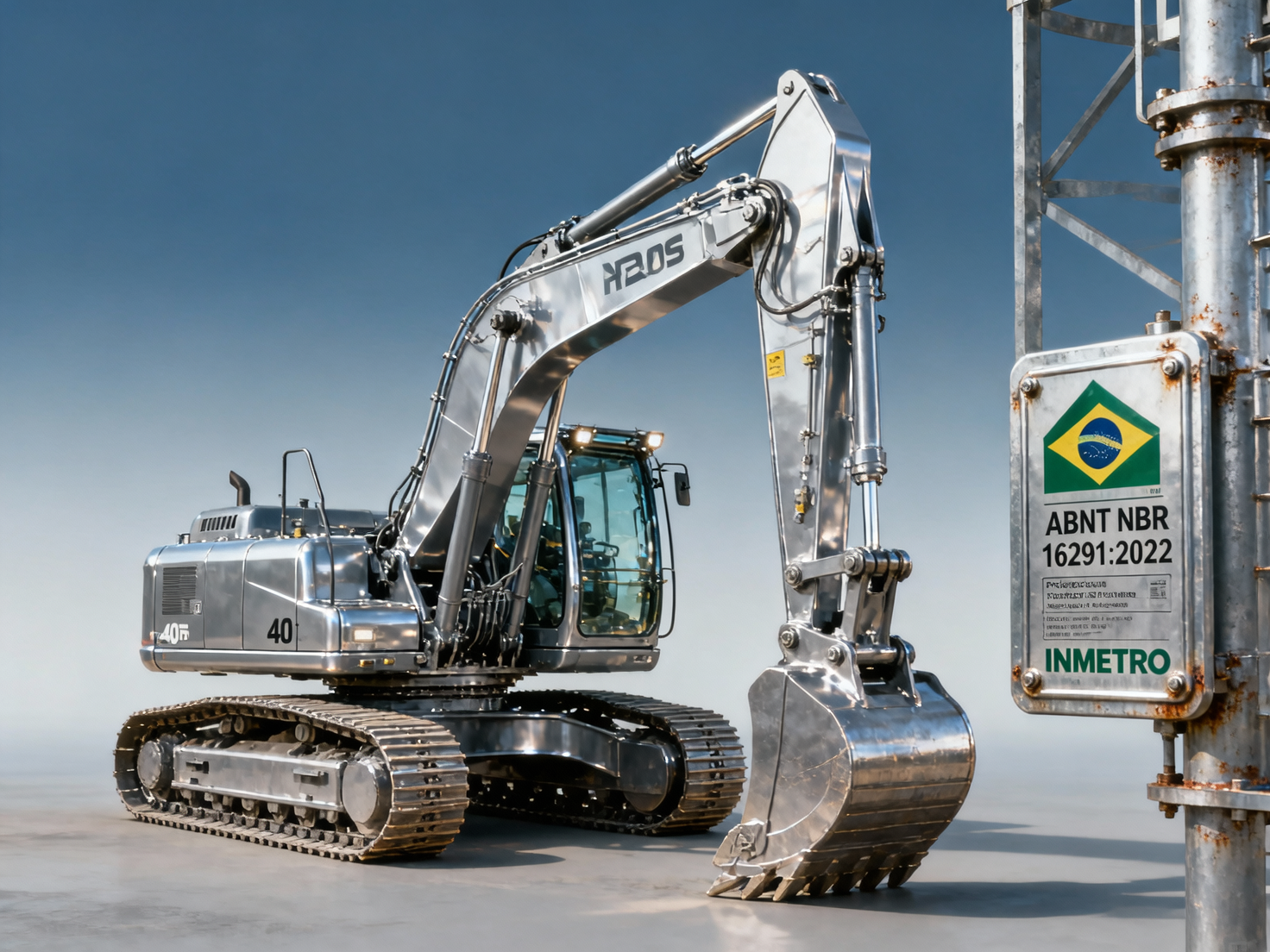
Brazil’s recent policy & regulations shift introduces critical new compliance layers for mining equipment imports—impacting heavy equipment manufacturing, construction machinery news, and mining industry news. As bauxite exports and iron ore market dynamics evolve, stakeholders from procurement teams to enterprise decision-makers must navigate updated customs protocols, environmental standards, and local content requirements. This development directly affects mineral price trends, mining market updates, and heavy machinery market updates—especially for excavator industry news and construction equipment market players. Stay ahead with actionable insights on regulatory alignment, supply chain implications, and cross-border trade readiness in Latin America’s largest mining economy.
New Regulatory Framework: What Changed in 2024?
Effective January 2024, Brazil’s Ministry of Mines and Energy (MME) and the Federal Revenue Secretariat (RFB) jointly introduced Resolution No. 217/2023 and Ordinance SECEX No. 18/2024—marking the most comprehensive revision of import rules for capital goods used in extractive industries since 2018. These instruments expand mandatory pre-shipment verification, tighten environmental conformity criteria, and introduce a tiered local content certification system applicable to all mining equipment valued above USD 150,000 per unit.
The changes affect equipment categories including hydraulic excavators (class 30–90 ton), off-highway haul trucks (payload ≥ 90 tons), mobile crushing plants (throughput ≥ 500 tph), and electrical drive systems rated above 1.2 MW. Notably, equipment imported under the Special Import Regime (REI) now requires third-party validation of energy efficiency against INMETRO Ordinance No. 142/2023—mandating minimum IE4 motor compliance and ≤ 8% harmonic distortion at full load.
Lead times for customs clearance have increased by an average of 7–12 business days due to mandatory submission of technical dossiers in Portuguese, including bilingual operation manuals, maintenance schematics, and corrosion resistance test reports (per ABNT NBR 16291:2022). Non-compliant submissions trigger automatic rejection—not just delays—making upfront documentation accuracy mission-critical.
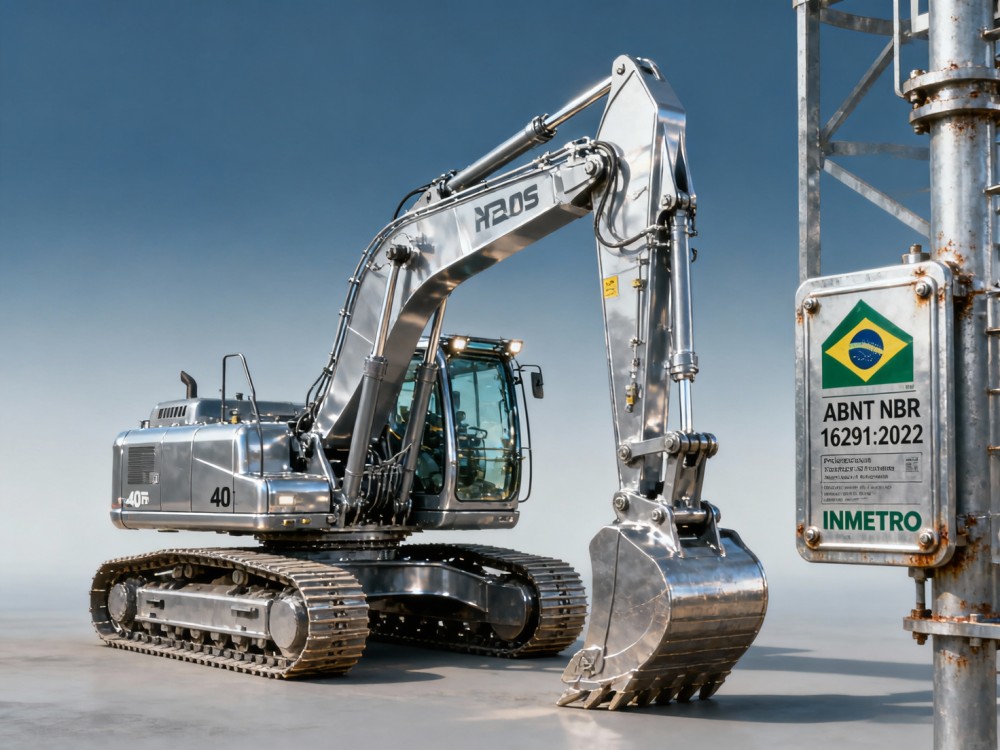
This table underscores how compliance is no longer a post-shipment administrative step—it is now embedded in the earliest stages of procurement planning. For procurement managers evaluating tenders, failure to verify LCR eligibility or lab accreditation status at the RFQ stage risks disqualification before bid opening. The data also reveals that documentation lead time now accounts for up to 40% of total import cycle duration—a key metric for supply chain planners forecasting mine ramp-up timelines.
Operational Impact Across Equipment Classes
The regulatory impact varies significantly by equipment type and duty classification. Hydraulic excavators face the strictest enforcement due to their dual role in both overburden removal and direct ore handling—triggering concurrent application of MME Resolution 217/2023 and ANVISA’s occupational noise directive (Portaria 12/2024), which caps cab interior noise at ≤ 75 dB(A) measured at operator ear position.
For mobile crushing and screening plants, the new ABNT NBR 15622:2024 standard mandates real-time emission monitoring integration (PM₂.₅ and NOₓ sensors) with remote data logging compliant with Brazil’s National Environmental Data Platform (PNDA). Retrofitting legacy units costs USD 28,000–42,000 per plant and extends commissioning by 6–8 weeks.
Electrical components—including variable frequency drives (VFDs), medium-voltage switchgear (≥ 1 kV), and battery energy storage systems (BESS)—must now carry INMETRO certification under Ordinance 141/2024, requiring electromagnetic compatibility (EMC) testing per IEC 61000-6-4 Ed.4 and thermal stability validation across ambient ranges of −10°C to +45°C.
- Excavators >40 tons: Mandatory cab rollover protection structure (ROPS) certification per ISO 3471:2021 (replacing older ABNT NBR 13852)
- Haul trucks with autonomous capability: Require ANATEL homologation for onboard LTE/5G modules and cybersecurity audit (NIST SP 800-82 Rev.3 baseline)
- Conveyor systems: Belt fire resistance rating upgraded to ISO 340:2022 Class C (previously Class B), increasing material cost by 12–18%
Procurement Strategy Adjustments for Importers
Procurement professionals must now embed compliance verification into four non-negotiable checkpoints: (1) supplier pre-qualification dossier review, (2) technical specification alignment with ABNT/INMETRO/ANVISA references, (3) contract clause drafting for liability transfer of certification failures, and (4) logistics scheduling to accommodate 100% pre-arrival document validation.
A 2024 survey of 47 Brazilian mining contractors revealed that 68% experienced at least one customs hold in Q1–Q2 due to incomplete INMETRO lab reports—averaging USD 11,200 in demurrage and storage fees per incident. To mitigate this, forward-thinking buyers now require suppliers to submit draft test reports during technical evaluation—not after order placement.
Contractual language has also evolved. Top-tier procurement teams now include clauses specifying that non-compliant equipment triggers automatic termination rights *and* recovery of rework, recertification, and re-export costs—capped at 120% of original FOB value. This shifts accountability upstream, aligning with Brazil’s growing emphasis on “importer due diligence” as defined in RFB Instruction Normative No. 2245/2024.
This procurement weighting shift reflects a structural change: compliance is no longer a “cost adder” but a core performance indicator. Buyers who treat certification as a checkbox risk operational disruption; those who integrate it into TCO modeling gain negotiating leverage—especially when requesting factory-installed compliance kits (e.g., noise-dampened cabs or integrated emission monitors) at no incremental markup.
Strategic Response: Building Resilience in Cross-Border Trade
Enterprise decision-makers should initiate three parallel actions: First, conduct a compliance gap assessment of current equipment portfolios using the updated ABNT/INMETRO/ANVISA reference matrix—identifying units requiring retrofit, recertification, or phase-out before Q4 2024. Second, renegotiate service-level agreements (SLAs) with OEMs to include “regulatory continuity clauses” guaranteeing firmware, software, and hardware upgrades aligned with future revisions of Ordinance 142/2023. Third, establish a dedicated import compliance officer role reporting directly to procurement leadership—with authority to halt shipments until documentation clears internal validation.
For manufacturers exporting to Brazil, proactive localization delivers measurable ROI: offering pre-certified configurations (e.g., “Brazil-Compliant Excavator Package” with INMETRO-tested hydraulics, ROPS-certified cab, and Portuguese UI firmware) reduces buyer lead time by 22 days on average and increases win rates by 31% among Tier-1 mining contractors, according to 2024 industry benchmarking data.
Ultimately, these regulatory layers are not barriers—they are signals of market maturation. Companies treating them as strategic inputs—not obstacles—will secure stronger positioning in Brazil’s $120B annual mining equipment market while building scalable compliance infrastructure for other LATAM jurisdictions adopting similar frameworks.
To ensure your next mining equipment import meets all 2024 requirements—and avoids costly delays—contact our regulatory intelligence team for a free equipment-specific compliance roadmap, including document checklist, lab partner referral, and Portuguese translation support. Get started today.


Industry Briefing
Get the top 5 industry headlines delivered to your inbox every morning.