
Industrial environmental price trends: buy now or wait for 2026?

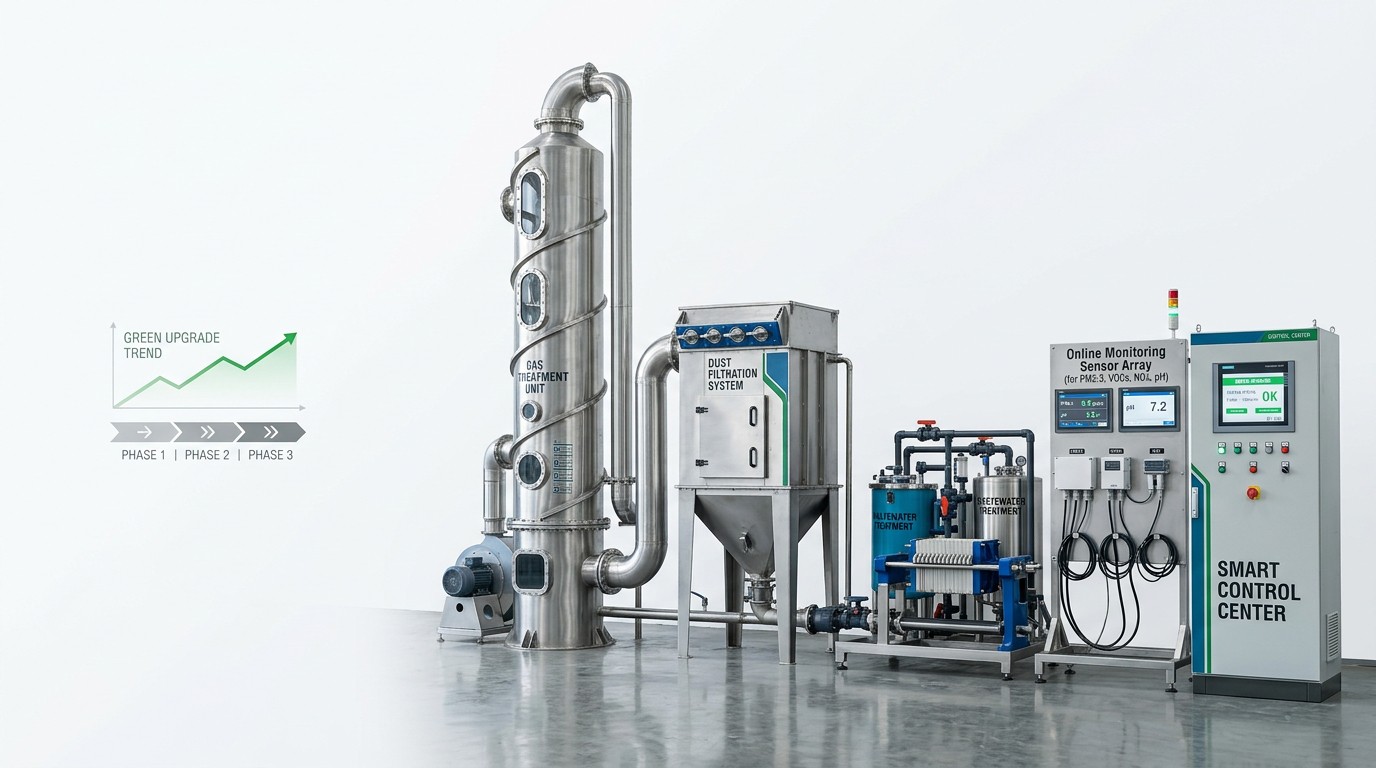
As industrial environmental price trends remain volatile, buyers across manufacturing, mining, and chemical plants are asking whether to buy now or wait for 2026. This industrial environmental news market analysis combines price trends, policy interpretation, technology updates, and export trade developments to help procurement teams, operators, and decision-makers assess risks, compare green technology and eco-friendly solutions, and plan smarter sourcing for emission control, carbon reduction, and wastewater treatment.
The short answer is: for most buyers, a full “wait until 2026” strategy is risky. A more practical approach is to buy in phases now, lock in critical equipment and components where pricing or compliance risk is high, and keep some flexibility for technologies that may become more cost-effective in 2026. This matters especially for companies dealing with air pollution control, wastewater treatment, carbon reduction systems, dust collection, monitoring equipment, and industrial environmental upgrades tied to policy deadlines or export requirements.
The core search intent behind this topic is clear: readers do not just want to know whether prices may rise or fall. They want a decision framework. Procurement teams want to know when to place orders, operators want reliable and serviceable equipment, researchers want market direction, and business leaders want to balance capex, compliance, and operational risk. So the key issue is not simply “price,” but total timing value: acquisition cost, delivery risk, regulation pressure, energy savings, maintenance burden, and return on investment.
Should industrial buyers purchase now or wait for 2026?
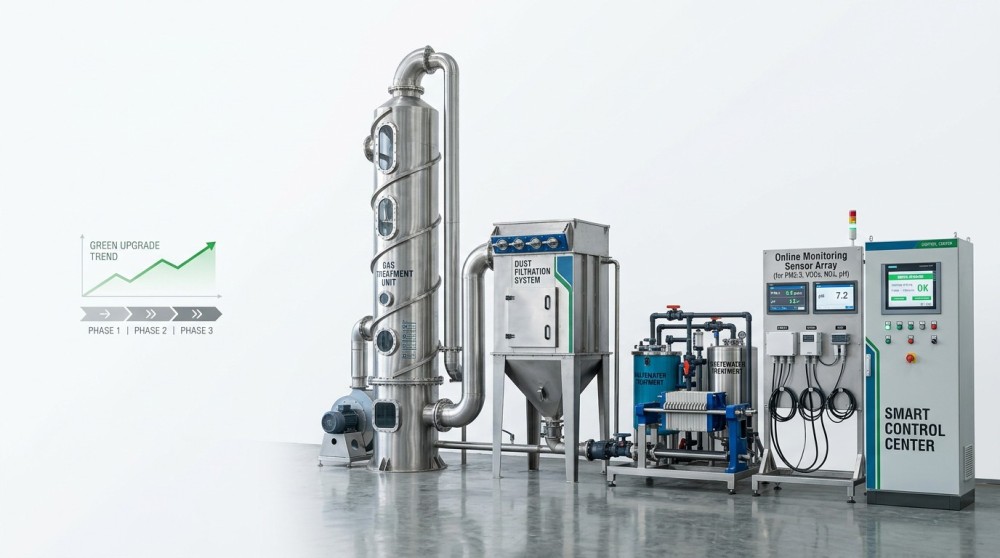
For most industrial environmental projects, the best choice is neither “buy everything now” nor “wait completely.” It is selective early purchasing.
Buy now if your project involves:
- Mandatory compliance deadlines for emissions, wastewater discharge, or energy efficiency
- Long-lead imported components, especially sensors, control systems, membranes, specialty filters, or electrical parts
- Facilities with unstable operations caused by aging environmental equipment
- Projects where downtime, penalties, or rejected export orders would cost more than current price premiums
Wait or stage procurement if your project involves:
- Non-urgent upgrades with unclear production expansion plans
- Technology categories still seeing rapid iteration, such as some digital monitoring platforms or integrated carbon-management software
- Markets where local competition is increasing and likely to compress equipment margins by 2026
In other words, if the cost of delay is higher than the possible savings from waiting, buying now makes sense. If the technology is still evolving and compliance timing is flexible, a staged approach may create better value.
What is driving industrial environmental price trends right now?
Industrial environmental price trends are being shaped by several forces at the same time, which is why many buyers feel the market is hard to read.
1. Raw material and component costs remain uneven.
Steel, specialty alloys, pumps, valves, motors, electronic controls, and instrumentation have not moved in one uniform direction. Some categories have stabilized compared with earlier peaks, but high-spec or imported components still face cost pressure.
2. Policy and compliance pressure is changing demand patterns.
When environmental enforcement strengthens, companies often rush to place orders for filtration systems, scrubbers, VOC treatment units, wastewater modules, and online monitoring equipment. This can create temporary price firmness even if broader industrial demand is soft.
3. Export trade developments are affecting supply and pricing.
Cross-border trade friction, shipping costs, currency movement, and regional sourcing shifts all influence final project budgets. Buyers that depend on imported environmental technology may face different cost trends than those sourcing locally assembled equipment.
4. Technology upgrades are creating a split market.
Conventional systems may become more price-competitive, while high-efficiency, digitalized, low-energy, or low-carbon solutions can still command a premium. Buyers are increasingly paying not just for equipment, but for lifecycle performance.
5. Project financing conditions matter.
Even when equipment prices are stable, borrowing costs, internal budget controls, and cash-flow caution can change buying behavior. For many companies, the timing decision is now as much a finance question as a supply question.
Which product categories are most likely to stay volatile before 2026?
Not all environmental equipment categories carry the same price risk. Buyers should pay closest attention to the segments where supply complexity, policy sensitivity, or imported content is high.
High-volatility categories often include:
- Advanced air pollution control systems using specialized media or high-performance components
- Wastewater treatment membranes, dosing systems, and automated monitoring instruments
- Continuous emissions monitoring systems and precision sensors
- Electrical control cabinets and industrial automation modules tied to environmental systems
- Carbon reduction and energy recovery systems with custom engineering requirements
More stable categories may include:
- Standardized tanks, ducts, basic piping assemblies, and simpler mechanical structures
- Locally manufactured conventional dust collection or water treatment units with broad supplier competition
- Routine replacement parts that have multiple regional sources
This distinction matters because it supports smarter sourcing. Instead of waiting or buying across the board, companies can secure high-risk items earlier and leave standardized items for later bidding rounds.
What do procurement teams need to compare besides the quoted price?
A low initial quote can become an expensive decision if buyers ignore installation complexity, maintenance costs, energy consumption, spare parts availability, and process compatibility.
For industrial environmental equipment, procurement teams should compare at least six factors:
- Total installed cost — not just equipment price, but also civil work, commissioning, integration, and operator training
- Lead time and delivery certainty — especially for projects tied to audits, inspections, or customer certification
- Operating cost — power consumption, consumables, chemical use, filter replacement, and water use
- Maintenance and serviceability — availability of local support, spare parts response time, and required technical skill
- Compliance reliability — whether the system can consistently meet actual emission or discharge thresholds, not just test conditions
- Upgrade flexibility — whether the solution can scale with future production or tighter regulations
This is where many “wait until 2026” decisions fail. Buyers may focus on potential future price declines but underestimate the cost of unstable plant performance, rework, non-compliance, or emergency replacement.
How should operators and plant users evaluate whether newer green technology is worth the premium?
Operators and end users usually care less about abstract market trends and more about whether equipment works reliably under real plant conditions. For them, the key question is practical: does the newer eco-friendly solution reduce workload, improve process stability, and lower failure risk enough to justify the price?
Newer green technology may be worth the premium when it offers:
- Lower energy consumption in continuous operation
- Reduced sludge, chemical, or consumables usage
- Simpler automation and easier daily control
- More stable compliance under fluctuating production loads
- Lower maintenance frequency and safer operation
It may not be worth paying extra when:
- The plant lacks the technical team to operate more advanced systems properly
- The production process itself is unstable, making high-spec precision less useful
- The supplier cannot provide dependable after-sales support
- The projected savings are too small relative to the premium
For many factories, a hybrid choice works best: adopt proven core equipment now and reserve budget for selected intelligent monitoring or efficiency upgrades later.
What should business decision-makers watch between now and 2026?
Enterprise decision-makers should not treat industrial environmental spending as a narrow compliance purchase. It increasingly affects market access, operating resilience, energy cost, ESG positioning, and customer confidence.
From now to 2026, leaders should monitor:
- Regulatory tightening in emissions, wastewater, carbon disclosure, and industrial energy efficiency
- Customer and export market requirements that may demand cleaner production or traceable environmental performance
- Supplier concentration risk in key environmental components
- Technology maturity curves to distinguish hype from commercially proven upgrades
- Internal ROI benchmarks for energy savings, reduced penalties, lower downtime, and improved process efficiency
In practice, the smartest companies are already moving away from one-time reactive purchases. They are building rolling sourcing plans, qualifying multiple suppliers, and linking environmental investment with broader manufacturing strategy.
A practical buying strategy: how to reduce regret whether prices rise or fall
If buyers want to avoid making the wrong call on industrial environmental price trends, they need a strategy that works under different market scenarios.
A practical framework is:
- Prioritize mission-critical systems first. Secure equipment where delay would create compliance, safety, or production risk.
- Separate standard items from high-risk items. Lock in volatile components early; rebid standardized items later if needed.
- Negotiate price-validity and delivery terms. Focus on escalation clauses, spare parts pricing, and service response commitments.
- Request lifecycle cost comparisons. Do not approve purchases using equipment price alone.
- Use phased budgeting. Commit now to essential modules, while preserving capital for 2026 optimization or digital upgrades.
- Monitor policy and export signals quarterly. Buying decisions should adjust with enforcement, trade shifts, and technology availability.
This approach helps procurement teams control cost, gives operators workable systems, and allows management to reduce both financial and compliance risk.
Conclusion: buy now, wait, or do both?
If you are asking whether to buy now or wait for 2026, the most realistic answer is: do both, but with priorities. Buy now where environmental compliance, lead times, plant reliability, or export exposure make delay expensive. Wait selectively where technology is evolving quickly or local market competition may improve pricing.
Industrial environmental price trends will likely remain uneven rather than move in one simple direction. That means better decisions will come from category-level analysis, lifecycle cost evaluation, and phased sourcing plans—not from trying to perfectly time the entire market. For procurement teams, operators, and business leaders, the goal is not just to catch the lowest price, but to secure the best overall value with the lowest operational risk.

Industry Briefing
Get the top 5 industry headlines delivered to your inbox every morning.