
Industrial Export News: 5 Trade Shifts That May Affect Lead Times

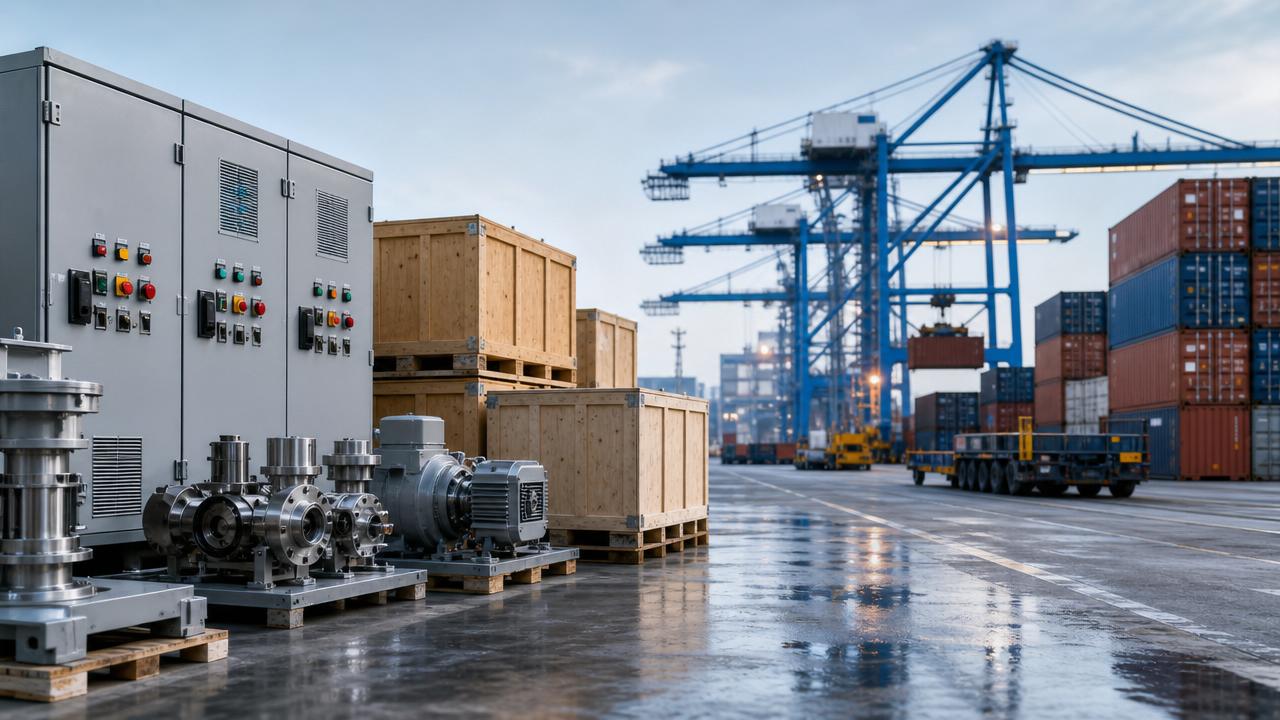
Why lead times are becoming harder to predict
Industrial export news has become a practical planning tool, not just a market update.
A tariff revision, customs rule change, or vessel delay can now move delivery dates by weeks.
That matters across manufacturing machinery, industrial components, and electrical equipment, where project schedules often depend on tightly sequenced deliveries.
Current industrial export news also shows a wider pattern.
Lead times are no longer shaped only by factory capacity.
They are increasingly influenced by trade policy, logistics congestion, supplier concentration, regional demand shifts, and compliance expectations.
For sectors covered by industrial intelligence platforms, this means export trade developments and supply chain signals must be read together.
The most useful question is not whether disruption exists.
It is where disruption is likely to hit first, and how fast it will affect delivery promises already built into procurement plans.
Trade shifts now reach deeper into project execution
In earlier cycles, many schedule risks could be managed at the supplier level.
Today, the picture is broader.
Industrial export news often links company announcements, freight conditions, policy interpretation, and price trends into the same timeline.
That is especially relevant when sourcing motors, control parts, fabricated assemblies, processing machinery, switchgear, or precision components from multiple regions.
A shipment can be ready at origin and still miss the planned installation window.
Customs classification, booking rollover, or a supplier’s delayed subcomponent can create the gap.
That is why lead-time analysis now needs to include upstream trade signals, not only purchase order dates.
1. Policy adjustments are changing landed timing, not only landed cost
Tariffs usually get the headlines, but timing effects can be more disruptive than the direct cost impact.
When new duties, licensing requirements, or product origin reviews are introduced, importers often rush orders forward.
That front-loading fills production slots and port capacity quickly.
Industrial export news frequently captures these behavior changes before formal lead-time revisions appear in supplier quotations.
Electrical equipment and industrial assemblies are especially exposed because documentation standards are stricter and product codes can be interpreted differently across markets.
A minor customs reclassification issue may hold cargo that was expected to move routinely.
The practical takeaway is simple.
Whenever trade policy changes are announced, review not only supplier pricing but also booking behavior, certificate readiness, and customs clearance assumptions.
What to watch
- New tariff schedules affecting machinery parts or electrical subassemblies
- Revised origin rules for processed or multi-country products
- Additional certification checks at destination ports
- Changes in export licensing for dual-use or high-spec equipment
2. Logistics bottlenecks are becoming less visible and more regional
Not every freight problem looks like a global crisis.
Some of the most damaging delays now happen in specific corridors, inland transfer nodes, or secondary ports.
This is where industrial export news adds value beyond headline shipping rates.
Port congestion may improve in one region while rail bottlenecks or container shortages worsen in another.
For industrial equipment, the problem is often magnified by cargo profile.
Oversized machinery, sensitive electrical cabinets, or mixed-component shipments cannot always move through substitute routes without repacking or delay.
The result is a quieter form of schedule risk.
Transit time may appear stable on paper, while actual handoff time expands at intermediate points.
That difference matters when installation crews, site access, and commissioning sequences are fixed weeks ahead.
3. Supplier concentration is raising the cost of a single weak link
Many supply chains became more efficient by narrowing approved sources.
The tradeoff is reduced flexibility when one location faces disruption.
Industrial export news increasingly highlights this risk through factory expansions, labor issues, power constraints, and raw material tightness.
In practice, the final exporter may not be the real bottleneck.
The pressure can sit two or three tiers deeper, especially for castings, control chips, copper-based parts, bearings, or insulation materials.
This is common in manufacturing and processing machinery, where assemblies depend on specialized inputs that are not easy to replace quickly.
When industrial export news reports a capacity squeeze in one material segment, it often foreshadows delayed completion across several product categories.
That is why approved supplier lists should be reviewed alongside component-level exposure, not only finished-goods supplier performance.
4. Regional demand swings are redirecting supply faster than many forecasts
Lead times often lengthen because supply becomes scarce in the wrong market at the wrong moment.
A surge in infrastructure, energy, or automation spending in one region can absorb production previously assumed to be available globally.
Industrial export news helps track these shifts through exhibition coverage, order announcements, company expansion plans, and price movement reports.
This matters because capacity rarely moves instantly.
If switchboards, pumps, conveyors, cable accessories, or fabricated modules are suddenly prioritized for domestic or regional demand, export orders may slide even without formal shortages.
The useful signal is not only rising price.
It is the combination of longer quote validity pressure, tighter allocation language, and reduced willingness to guarantee shipment windows.
5. Compliance expectations are adding hidden days into the schedule
Trade compliance is taking a larger share of total lead time.
That includes technical documentation, traceability records, environmental declarations, safety labeling, and destination-specific testing evidence.
For industrial equipment and electrical supplies, these requirements can delay release even after manufacturing is complete.
Industrial export news often treats compliance as a policy topic, but its schedule impact is operational.
A missing document, outdated marking, or inconsistent specification sheet can stop cargo at the final stage.
This is especially important when multiple vendors contribute to one project package.
Even if each supplier is individually compliant, file formats and data quality may not align for shipment approval.
Where delays often appear
How to use industrial export news in daily planning
The value of industrial export news is highest when it is tied to specific milestones.
General awareness is not enough if schedules depend on multi-country sourcing.
A practical approach is to map trade signals against long-lead items, clearance-critical items, and installation-sequence items.
That creates a better filter for which news matters now and which can simply be monitored.
It also helps to combine several information types.
Market analysis may show demand direction, while company news reveals capacity moves, and policy interpretation explains why documentation burdens are rising.
Used together, these signals support earlier decisions on buffer time, route alternatives, split shipments, or source diversification.
Useful review points
- Check whether quoted lead times include current export documentation and inspection steps
- Separate production time from total delivery time in every critical package
- Flag components tied to one country, one port, or one specialist sub-supplier
- Monitor regional exhibition and order news for signs of capacity diversion
- Refresh contingency assumptions when freight routes or customs rules change
A better next step than waiting for delays to appear
The most useful response to changing trade conditions is earlier interpretation, not louder escalation later.
Industrial export news becomes more valuable when it is treated as an input to schedule control, sourcing review, and risk prioritization.
That is particularly true in sectors connected to machinery, industrial components, and electrical systems, where one delayed item can hold back an entire work package.
A sensible next move is to review the current procurement list through these five shifts.
Identify which items are most exposed, which assumptions are outdated, and which suppliers need a deeper timing check.
That kind of review turns industrial export news from background reading into a decision tool with direct schedule value.

Industry Briefing
Get the top 5 industry headlines delivered to your inbox every morning.