
Shipbuilding Technology Automation Trends Reshaping Yard Productivity in 2026


Shipbuilding Technology Automation Trends Reshaping Yard Productivity in 2026 is not just a headline theme. It reflects a structural shift in how shipyards are expected to deliver complex projects.
Delivery windows are tightening. Skilled labor remains uneven. Rework costs are harder to absorb. At the same time, owners expect more traceability, better quality records, and fewer schedule surprises.
That is why shipbuilding technology automation now matters far beyond equipment selection. It is becoming a management issue tied directly to planning discipline, production flow, cost control, and execution certainty.
For industrial market observers such as NEXUSINSIGHTS, this topic also sits at the intersection of machinery, automation systems, electrical equipment, and global supply chains. Yard productivity in 2026 will depend on how those pieces work together.
What shipbuilding technology automation really covers
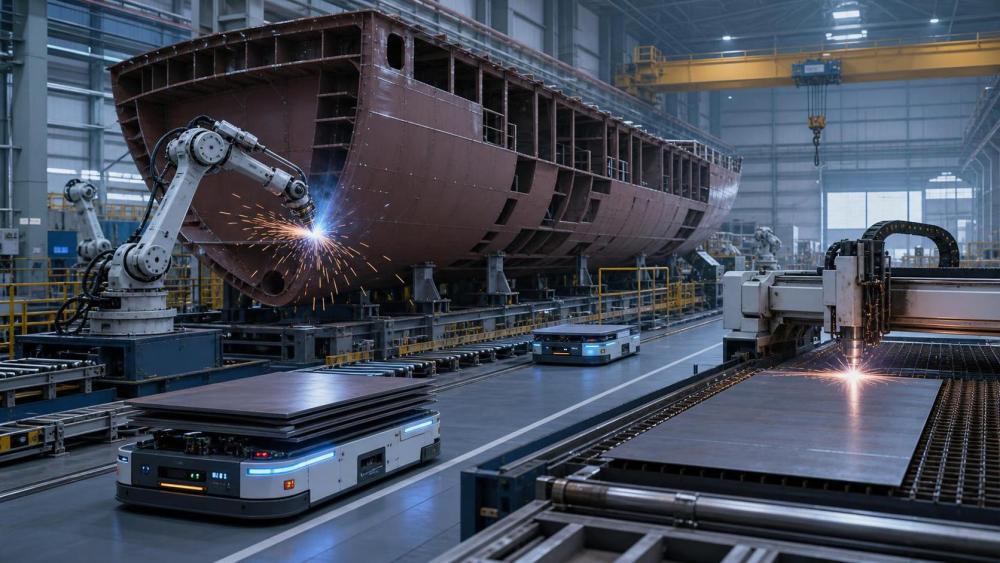
The image fits the point: automation in shipbuilding is not one machine, but a connected operating model across steel processing, assembly, outfitting, inspection, and material movement.
In practical terms, shipbuilding technology automation includes robotic welding, CNC cutting, automated panel lines, digital work packages, sensor-based quality checks, smart warehousing, and production data systems.
It also includes the software layer. Planning platforms, digital twins, MES tools, and integration with procurement or inventory systems are now part of the same productivity conversation.
Simple automation reduces manual effort. Mature automation improves coordination. The bigger value comes when separate tools stop working as islands and begin supporting one production logic.
Why 2026 is a turning point for yard productivity
Several pressures are converging at once. Newbuilding demand remains active in multiple vessel segments, while retrofit activity tied to emissions and energy upgrades is also competing for yard capacity.
This means more schedule compression inside already busy facilities. Manual coordination, spreadsheet-based sequencing, and fragmented reporting struggle under that kind of pressure.
Shipbuilding technology automation becomes attractive because it addresses bottlenecks that directly affect throughput. Welding consistency, plate handling speed, block alignment accuracy, and real-time progress visibility all shape daily output.
Another reason is labor structure. Many yards do not only face labor shortages. They face experience gaps, uneven skill transfer, and higher dependence on temporary or subcontracted teams.
Automation helps standardize parts of execution. It does not remove the need for skilled people, but it can reduce variation, support training, and keep critical processes more repeatable.
Where automation is delivering measurable value
The strongest gains usually come from areas where cycle time, quality, and coordination overlap. In shipyards, that often means steel preparation, welding, block assembly, logistics, and inspection workflows.
Production flow improvement
Automated cutting and nesting reduce material waste and speed release to fabrication. Robotic welding improves consistency on repetitive joints. Smart transport systems reduce waiting time between workstations.
Quality control improvement
Digital inspection records, machine parameter tracking, and sensor-driven verification make defects easier to detect earlier. That matters because late-stage rework is one of the most expensive productivity losses in shipbuilding.
Planning accuracy improvement
When production data feeds planning systems, schedule decisions become less theoretical. Managers can see constraint points, compare actual versus planned progress, and reassign resources with better timing.
The systems view matters more than isolated upgrades
One of the common mistakes in shipbuilding technology automation is treating hardware investment as the full answer. A new robot cell can underperform if drawings, work sequencing, and parts availability stay disorganized.
A productive yard needs continuity from engineering release to fabrication and outfitting. That continuity depends on interfaces between machines, production software, operators, and supply chain data.
This is where broader industrial intelligence becomes useful. Platforms tracking machinery trends, component sourcing, electrical integration, and supplier movement can support more realistic automation decisions.
NEXUSINSIGHTS fits this context because automation choices in a shipyard are rarely local decisions. They are connected to equipment availability, vendor capability, retrofit pathways, policy direction, and international supply risk.
Typical deployment scenarios in modern yards
Automation priorities differ by yard profile. A high-volume commercial yard will not evaluate investment in the same way as a specialized builder or repair-focused facility.
Steel-intensive newbuilding lines
These operations usually target automated cutting, panel lines, welding robots, and digital production scheduling. The goal is stable throughput and lower variance at scale.
Complex outfitting environments
Here the focus often shifts to work package control, digital documentation, material traceability, and coordination across electrical, piping, HVAC, and mechanical installation teams.
Repair and retrofit yards
In these settings, flexibility matters more than repetitive line speed. Mobile scanning, digital inspection, prefabrication support, and agile planning tools often create stronger returns than heavy fixed automation.
How to judge automation options without losing project control
A good automation decision starts with constraints, not with marketing claims. The central question is where delay, waste, or rework actually occurs inside the yard value stream.
Several checkpoints help keep the evaluation grounded:
- Check whether the target process is repetitive enough for automation to deliver stable value.
- Review data readiness, including drawings, part coding, routing logic, and machine interface requirements.
- Confirm utility and infrastructure needs, especially electrical load, control systems, software compatibility, and floor layout.
- Measure labor impact realistically, including training time, role changes, and maintenance support.
- Assess supplier resilience and spare parts access, not only initial machine performance.
- Define success metrics before deployment, such as weld repair rate, throughput per shift, queue time, or schedule adherence.
Shipbuilding technology automation often fails when the implementation scope is vague. It works better when linked to one operational bottleneck and one measurable outcome at a time.
What deserves close attention in 2026
Three signals are worth tracking. The first is tighter integration between automation hardware and production software. Equipment is no longer judged only by mechanical capability.
The second is modular deployment. Many yards prefer staged adoption instead of a single large transformation. That lowers disruption and helps validate returns in live production conditions.
The third is supply chain visibility. Component lead times, controller availability, electrical system compatibility, and service networks can shape project timing as much as the automation concept itself.
For that reason, shipbuilding technology automation should be reviewed as part of a wider industrial sourcing and investment picture, not as a stand-alone capital item.
A practical next step
The most useful next move is to map one production stream in detail. Identify where waiting time, quality loss, or coordination failure is most expensive. Then compare automation paths against that exact pressure point.
That approach creates a clearer basis for vendor comparison, internal budgeting, and implementation timing. It also makes market intelligence more actionable when reviewing equipment trends, supplier movement, and technology upgrades.
In 2026, shipbuilding technology automation will not be defined by how much equipment a yard installs. It will be defined by how effectively automation improves flow, protects schedule, and strengthens execution across the full industrial chain.
 How to Evaluate Rail Transit Traction Systems for Energy Efficiency and Lifecycle Cost?Time : Aug 23, 2026
- Shipbuilding Technology Market Trends: Which Upgrades Are Gaining Investment?Time : Jul 12, 2026
 Transport Equipment Industry Standards: Key Compliance Checks Before Product ApprovalTime : Jul 11, 2026
Industry Briefing
Get the top 5 industry headlines delivered to your inbox every morning.