
Mining sector environmental news: where are compliance costs rising?


As industrial environmental news for the mining sector grows more urgent, compliance costs are rising fastest in four areas: permitting, air emissions control, wastewater treatment, and carbon reduction. For mining operators, equipment buyers, suppliers, and decision-makers, the main question is no longer whether environmental compliance spending will increase, but where the pressure is building most quickly and which investments can reduce long-term cost exposure. This article reviews the main cost drivers, explains why policy and market signals are changing capital and operating budgets, and highlights where green technology and eco-friendly solutions can improve compliance efficiency.
Where are mining compliance costs rising the fastest?
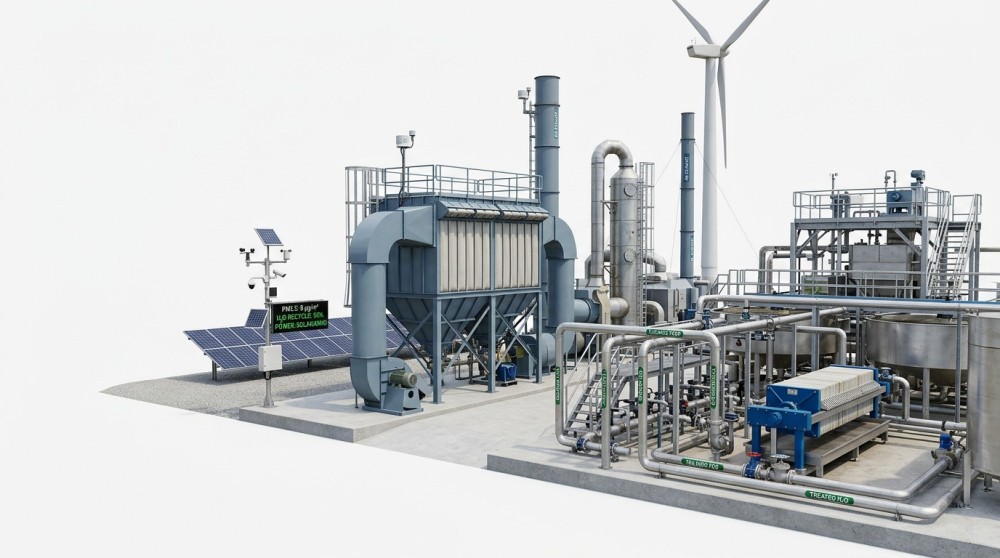
The sharpest cost increases are typically appearing in projects and operations exposed to stricter environmental review, higher monitoring standards, and more demanding discharge or emissions limits. In practical terms, cost pressure is rising most in the following areas:
- Permitting and environmental impact assessment: longer approval timelines, more baseline studies, more community engagement requirements, and greater legal or consulting expense.
- Air emissions control: tighter dust, particulate, NOx, SOx, and diesel emissions management standards, especially for sites using heavy mobile fleets and processing equipment.
- Wastewater and tailings management: higher treatment standards, more testing frequency, additional containment measures, and more capital spending on water reuse and treatment systems.
- Carbon reduction and energy transition: rising reporting obligations, carbon pricing exposure in some markets, and investment needs for electrification, energy efficiency, and renewable integration.
- Monitoring, reporting, and traceability: more continuous monitoring systems, data collection platforms, audits, and supplier disclosure requirements.
For most companies, wastewater and tailings-related compliance now represent some of the heaviest risk-adjusted costs, while carbon-related costs are becoming more important in export-oriented supply chains and investor-facing operations.
Why are environmental compliance costs rising now?
Several forces are pushing costs upward at the same time. First, regulators in many jurisdictions are moving from broad environmental rules to more measurable and enforceable standards. That means more testing, more documentation, and less room for informal interpretation.
Second, major mining projects are facing stronger scrutiny from investors, insurers, local communities, downstream industrial buyers, and export customers. Even where regulation has not yet become dramatically stricter, expectations around water stewardship, tailings safety, emissions transparency, and carbon intensity are already affecting financing, procurement, and project approvals.
Third, inflation in industrial equipment, chemicals, engineering services, monitoring instruments, and energy has increased the real cost of compliance implementation. A wastewater treatment upgrade that looked manageable two years ago may now involve higher equipment prices, longer lead times, and more expensive specialist support.
Fourth, global export trade developments are indirectly raising compliance pressure. Mining products entering international supply chains may increasingly need documented environmental performance, especially where they feed into manufacturing, electrical equipment, battery materials, and processed industrial inputs.
Which cost categories matter most for operators, buyers, and decision-makers?
Different target readers focus on different layers of cost, but the most useful way to assess the issue is to separate compliance costs into five categories:
- Upfront capital expenditure: filtration systems, dust suppression equipment, water treatment units, process upgrades, electrified equipment, monitoring devices, and tailings infrastructure improvements.
- Operating expenditure: chemicals, spare parts, maintenance, energy use, disposal fees, environmental staff, training, and external laboratory testing.
- Administrative and reporting cost: permitting, audits, data management, ESG disclosure, legal review, and certification processes.
- Delay and disruption cost: project approval delays, production interruptions, shipment restrictions, and shutdowns tied to non-compliance findings.
- Strategic market cost: lost access to customers, export barriers, financing penalties, reputational damage, and weaker competitiveness in procurement decisions.
For enterprise decision-makers, the biggest mistake is to focus only on visible capex. In many cases, hidden costs from delays, reporting burdens, and water or emissions inefficiency create the larger long-term burden.
How are permitting and policy interpretation affecting mining project economics?
Permitting has become a major source of cost escalation because environmental approval now often extends beyond technical file submission. Projects may need broader biodiversity studies, water impact modeling, cumulative impact assessments, social consultation, and more detailed closure planning.
This matters economically in three ways:
- Longer pre-production timelines increase financing pressure and delay revenue realization.
- More complex documentation requirements increase dependence on consultants, engineering firms, and legal specialists.
- Greater uncertainty in approval outcomes raises project risk and can alter procurement timing for machinery and equipment.
For manufacturers, suppliers, and industrial service providers serving the mining sector, this means demand may shift toward equipment and systems that help clients meet approval conditions faster, such as enclosed handling systems, efficient dewatering equipment, emissions monitoring tools, and modular treatment solutions.
Policy interpretation is also becoming more important. Companies that understand not only the current rule but also the likely enforcement direction can make better timing decisions on retrofits and procurement.
Why are wastewater treatment and tailings management becoming major cost centers?
Water-related compliance is moving to the center of mining sector environmental news because it touches operational continuity, community risk, and regulatory exposure at the same time. Treatment standards are tightening, sampling is becoming more frequent, and tolerance for discharge incidents is lower than before.
Key cost drivers include:
- Upgrades to treatment plants for dissolved metals, suspended solids, acidity, or salinity control
- Higher consumption of reagents and treatment chemicals
- More advanced filtration, thickening, and dewatering systems
- Water recycling and reuse infrastructure
- Tailings dam monitoring, lining, seepage control, and emergency planning
Although these investments are expensive, they can also generate measurable returns. Better water reuse reduces freshwater intake costs, lowers discharge volumes, and can improve operational resilience in water-stressed regions. For procurement teams and plant operators, technologies that improve treatment consistency and reduce manual intervention are often the most practical options.
How is carbon reduction changing equipment, energy, and supply chain spending?
Carbon compliance in mining is not only about formal carbon taxes. It increasingly includes emissions disclosure, customer pressure, internal sustainability targets, and access to export markets or financing. This is particularly relevant for mines supplying raw materials into manufacturing and electrical equipment value chains.
Main spending areas include:
- Fleet electrification or hybridization for mobile equipment
- Energy efficiency upgrades in crushing, grinding, ventilation, pumping, and processing systems
- On-site renewable integration and power management systems
- Carbon monitoring and reporting tools
- Low-emission process redesign where technically feasible
Price trends remain a challenge. Cleaner technology often involves higher initial procurement cost, but the long-term value can come from lower fuel use, reduced carbon exposure, better customer acceptance, and stronger alignment with future policy. Buyers should compare options using total cost of ownership rather than purchase price alone.
What should procurement teams and industrial buyers evaluate before investing?
For procurement professionals and operational users, the most important question is which solutions reduce compliance risk without creating excessive complexity. A practical evaluation framework should include:
- Regulatory fit: Does the equipment or system clearly address current and likely future standards?
- Operating reliability: Can it perform consistently under real site conditions?
- Lifecycle cost: What are the maintenance, energy, consumables, and labor implications?
- Monitoring capability: Does it improve data visibility and reporting readiness?
- Scalability: Can it support expansion or tighter standards later?
- Supply chain resilience: Are spare parts, service, and technical support available?
This is especially important in a market where industrial environmental news, policy shifts, and equipment price trends are changing quickly. Choosing a lower-cost system that fails under stricter monitoring can create much larger downstream losses.
Which technologies are most promising for improving compliance efficiency?
Not every mine needs the same technology pathway, but several solution categories are attracting stronger interest because they combine compliance performance with operating efficiency:
- Automated water treatment and dosing systems that reduce chemical waste and improve treatment stability
- Real-time emissions and water quality monitoring for faster response and stronger audit readiness
- Dust control and enclosure systems for bulk material handling and processing zones
- Energy-efficient pumps, motors, and process drives that lower both power use and emissions intensity
- Filter presses, thickeners, and dewatering equipment that improve water recovery and tailings handling
- Digital compliance platforms that centralize environmental records, inspections, and reporting
For suppliers and exporters, this also creates opportunity. Buyers are increasingly interested in eco-friendly solutions that deliver compliance evidence, lower operating costs, and support future audits or sustainability disclosures.
How can companies manage rising compliance costs without losing competitiveness?
The most effective approach is not to treat compliance as a standalone burden. Companies that manage costs better usually do three things well:
- Prioritize by risk and payback: focus first on areas where non-compliance would cause shutdowns, fines, permit delays, or customer loss.
- Link environmental investment to operational efficiency: favor projects that also reduce energy use, water consumption, waste generation, or labor intensity.
- Use phased implementation: combine quick upgrades with longer-term capital planning to avoid budget shock.
Management teams should also track external signals closely: environmental policy interpretation, market analysis, export trade developments, industrial equipment price trends, and customer sustainability requirements. In many cases, early action costs less than rushed compliance under regulatory pressure.
Conclusion
Mining sector environmental compliance costs are rising most clearly in permitting, emissions control, wastewater and tailings management, and carbon reduction. The pressure is being driven by stricter regulation, stronger market expectations, equipment and service inflation, and changing export and supply chain requirements. For operators, buyers, and business leaders, the right response is to identify where risk-adjusted costs are increasing fastest, evaluate technology by lifecycle value rather than headline price, and invest in systems that improve both compliance and operating efficiency. Companies that act early and selectively will be in a stronger position to control costs, protect market access, and adapt to the next stage of environmental policy and industrial change.

Industry Briefing
Get the top 5 industry headlines delivered to your inbox every morning.