
When does an industrial system upgrade project justify the downtime?
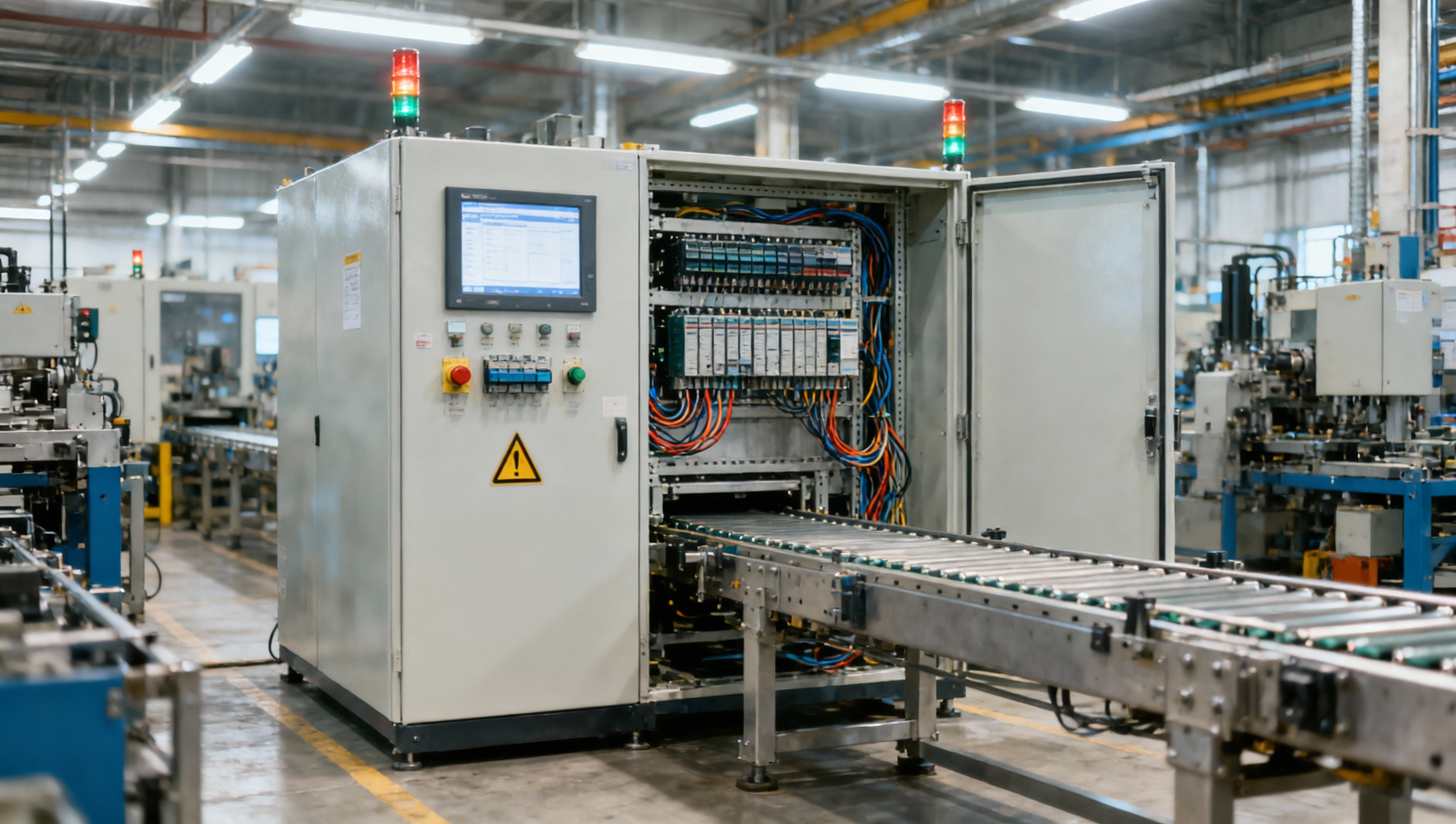
The production meeting is nearly over when the maintenance manager raises the same issue again: the control system is becoming harder to support, replacement parts take longer to source, and operators are relying on workarounds that nobody wants to document. The proposed fix requires a planned shutdown. Finance sees lost output. Operations sees missed delivery windows. Engineering sees a growing technical risk that may be much more expensive if the system fails without warning.
This is where many upgrade discussions stall. A plant may agree that an old drive system, PLC network, machine control platform, power distribution arrangement, or production-line interface should eventually be replaced. The harder question is whether the disruption is justified now. An industrial system upgrade project should not be approved simply because equipment is old, nor rejected simply because downtime is visible on the production schedule. The decision becomes clearer when the cost of waiting is measured with the same discipline as the cost of shutting down.
The uncomfortable cost that is easiest to see
Planned downtime is highly visible. It appears in production plans, labor schedules, shipment commitments, contractor quotations, and cash-flow discussions. It may require inventory to be built ahead of time, alternative production routes to be arranged, or customer delivery dates to be renegotiated. Because these effects are immediate, they often dominate the conversation.
The cost of deferring an upgrade is usually spread across several departments and therefore easier to underestimate. It may appear as longer troubleshooting calls, rising scrap during unstable operation, energy losses from inefficient equipment, restricted process changes, repeated emergency purchases, unplanned maintenance windows, or the inability to obtain technical support for obsolete components. None of these items automatically proves that a shutdown is justified. Together, however, they can show that the organization is already paying for the old system—just in smaller, less visible installments.
A useful starting point is to separate three questions that are often mixed together:
- Is the existing system creating a material operational or commercial risk?
- Will the proposed scope remove that risk rather than merely replace familiar hardware?
- Can the work be executed within a shutdown window with controlled commissioning risk?
If the answer to any one of these is unclear, the project needs more investigation before a shutdown date is committed.
Start with the operating problem, not the equipment age
Age can be a warning sign, but it is a poor business case by itself. Some older equipment remains stable, maintainable, and well understood. Other systems become risky much earlier because their operating environment has changed. A machine may now run more shifts, use different materials, require tighter traceability, or depend on interfaces that did not exist when the original controls were installed.
Before comparing upgrade quotations, define the current operating problem in plain language. For example: “The line cannot restart reliably after a power interruption,” “critical I/O modules cannot be sourced with acceptable lead times,” or “the existing controls do not provide the alarms needed to isolate recurring faults.” These statements are more useful than a general claim that the equipment is outdated.
Then verify the problem using evidence available inside the operation. Maintenance records can reveal repeated fault categories. Production logs may show startup losses or recurring stops. Spare-parts history can expose declining availability. Quality records may identify conditions that correlate with control instability. Energy and utility readings can help determine whether modernization has a credible efficiency component rather than an assumed one.
It is important to distinguish a system limitation from a process discipline issue. If failures are caused mainly by poor preventive maintenance, unclear change control, damaged cabling, inadequate operator training, or unstable upstream material, replacing the control system may not deliver the expected result. An upgrade can still be appropriate, but the scope should include the conditions that created the problem.
A practical way to compare the cost of acting and waiting
The financial discussion does not need false precision. In fact, a highly detailed spreadsheet can create confidence that the assumptions do not deserve. What matters is that the model includes the major cost categories and makes uncertain assumptions visible.
For the shutdown side, consider lost contribution from unavailable production, planned labor, contractor work, engineering time, temporary equipment, travel where relevant, commissioning materials, inventory carrying costs, and the contingency needed for issues discovered during installation. If production can be shifted to another line or another site, include the real incremental cost of doing so rather than treating all scheduled output as permanently lost.
For the delay side, estimate the annualized exposure from unplanned outages, repair effort, premium freight, obsolete-part substitution, quality losses, energy waste, safety-related interventions, and constrained capacity. Add the potential impact of a failure that cannot be repaired promptly because a component, software tool, or specialist is unavailable. This is not a prediction that failure will occur on a particular date. It is an exposure that should be recognized in the decision.
Some benefits should be treated separately from direct savings. Improved data visibility, easier integration with other equipment, stronger cybersecurity controls, and better operator diagnostics may support future projects, but they should not be used to hide a weak core justification. A sound proposal can explain these strategic benefits while still standing on reliability, capacity, quality, compliance, or maintainability grounds.
When an upgrade earns priority
A planned outage becomes easier to justify when the current system has crossed from inconvenience into material exposure. The clearest situations include a credible risk of extended unplanned downtime, inability to obtain essential components or vendor support, recurring quality or safety issues linked to the system, a necessary compliance change, or a capacity constraint that cannot be solved through normal maintenance.
There is also a timing factor. A project may be economically sound but poorly timed if it is proposed during a peak-demand period with no inventory buffer. Conversely, a scheduled turnaround, facility maintenance closure, product changeover, or major line reconfiguration can create an opportunity to complete work with less incremental disruption. The best shutdown window is not always the shortest one. It is the one that allows adequate installation, testing, recovery time, and access to the people who understand the process.
Decision-makers should be cautious when the proposal depends on an overly optimistic commissioning period. A system upgrade is not complete when cabinets are installed or devices are energized. It is complete when the process runs safely, operators understand the new workflow, alarms are meaningful, documentation is available, and performance has been confirmed across normal operating conditions.
The scope question that prevents expensive surprises
Many projects become difficult because the purchased scope is based on a simplified view of the system. A controls replacement may uncover deteriorated field wiring, undocumented modifications, incompatible sensors, insufficient panel space, grounding problems, network limitations, or mechanical issues that had been masked by manual intervention. These are not necessarily reasons to avoid modernization. They are reasons to investigate before selecting a supplier and setting a firm outage duration.
For an industrial system upgrade project, the pre-shutdown work often has more influence on cost and schedule than the installation itself. A serious preparation phase normally includes a current-state survey, asset and I/O verification, review of electrical drawings, backup of existing software and parameters, identification of critical interfaces, and confirmation of what can be tested off-line. Where possible, panels, cables, software, and interface assemblies should be prepared before the outage. Factory or bench testing can reduce commissioning uncertainty, but it does not replace site acceptance testing under real process conditions.
Procurement should ask suppliers to state assumptions clearly. Does the quotation include field verification? Who is responsible for legacy drawings that are inaccurate? Are software licenses, source files, configuration backups, training, spare parts, and post-startup support included? What conditions would trigger a change order? A lower initial quotation can be misleading if these responsibilities are left undefined.
Choosing between a full shutdown, phased work, and limited intervention
A full replacement during one outage is appropriate when components are tightly integrated, isolation is impractical, or partial modification would introduce unacceptable operating risk. It can also be preferable when the existing system is so obsolete that temporary fixes consume resources without improving resilience.
Phased implementation may make sense when production can be divided into independent areas, when a parallel control path can be tested safely, or when a single shutdown would create unacceptable delivery exposure. The trade-off is that phased work often requires more temporary interfaces, more engineering coordination, and a longer period of mixed old and new technology. The apparent reduction in downtime should be weighed against added complexity.
Limited intervention—such as replacing critical spares, correcting a specific bottleneck, improving monitoring, or securing documentation—may be the responsible choice when the evidence does not yet support a full upgrade. It should be described honestly as risk reduction or life extension, not as a permanent modernization strategy. This distinction matters when budgets are being allocated across multiple assets.
Build the approval around recovery, not installation
The project plan should show how the operation returns to stable production. That means defining acceptance criteria before shutdown begins. Criteria may include safe startup, correct interlocks, verified communication with upstream and downstream equipment, validated recipes or settings, alarm testing, operator sign-off, and a process for resolving defects after handover.
A recovery plan also needs decision points. If commissioning reveals an issue, who can authorize additional work? Is there a safe rollback option? Are critical spare components available on site? Which specialists must be available during startup, including process, electrical, controls, maintenance, and operations personnel? These details may feel operational, but they determine whether downtime remains planned or becomes open-ended.
Do not overlook the first weeks after restart. Maintenance teams need updated drawings, configuration files, spare-parts lists, access credentials, and clear ownership of support requests. Operators need practical instruction on changed screens, alarms, reset procedures, and escalation routes. Without this transfer, the organization can inherit a newer system while retaining the same dependency on emergency troubleshooting.
A decision that can withstand scrutiny
The question is not whether downtime is desirable. It rarely is. The question is whether a controlled interruption now is less damaging than continuing to operate with rising technical, commercial, or safety exposure. The strongest approval case does not rely on a dramatic failure scenario or vague promises of modernization. It shows the present condition, the cost of postponement, the defined scope, the execution readiness, and the conditions for a stable return to production.
If those elements cannot yet be demonstrated, postponing the shutdown may be sensible—but only if the organization uses the time to close the information gaps. If they can be demonstrated, the downtime is no longer merely a cost. It is a managed investment in keeping the operation supportable, predictable, and capable of meeting future requirements.

Industry Briefing
Get the top 5 industry headlines delivered to your inbox every morning.