
Warehouse Equipment Supply Chain Updates Before You Reorder

Before placing your next order, understanding global supply chain updates for warehouse equipment can help you avoid delays, control costs, and secure the right inventory at the right time. From freight volatility and component shortages to shifting export policies and supplier capacity, today’s market is changing fast. This update gives procurement professionals a clear view of the latest risks, trends, and sourcing signals that matter most.
What global supply chain updates for warehouse equipment really mean
For procurement teams, global supply chain updates for warehouse equipment are not limited to shipping headlines or sudden price changes. They describe the full set of market signals that influence how warehouse racks, forklifts, conveyors, dock systems, pallet handling tools, industrial batteries, motors, sensors, and spare parts move from factories to end users. These updates include raw material availability, lead-time shifts, export controls, labor conditions, energy prices, port congestion, and supplier production schedules.
In today’s industrial environment, warehouse equipment sits at the intersection of manufacturing, industrial components, and electrical systems. A delay in steel processing can affect racking and shelving. A shortage of semiconductors can slow automation modules and control panels. Battery cell constraints can influence electric forklifts and material handling fleets. Because the category is broad, buyers need a structured view rather than isolated news items.
That is why global supply chain updates for warehouse equipment matter as a practical planning tool. They help purchasing managers judge when to place orders, whether to split demand across regions, how much safety stock to hold, and which product lines are most exposed to disruption. In a market where service reliability often matters as much as unit price, early visibility becomes a competitive advantage.
Why the industry is watching these changes more closely
Several structural factors have raised the importance of global supply chain updates for warehouse equipment. First, warehouse operations are under pressure to become faster and more automated. E-commerce fulfillment, regional distribution networks, and manufacturing replenishment models all depend on stable equipment availability. Even small interruptions can delay expansion projects, maintenance work, or replacement cycles.
Second, sourcing has become more geographically diverse but also more complex. Buyers may source frames from one country, rollers from another, electronics from a third, and final assembly from yet another location. This creates exposure to multiple transport routes, customs rules, and regulatory environments. A localized disruption can quickly affect a broader equipment package.
Third, cost volatility has become harder to absorb. Ocean freight may normalize in one quarter and rise in another. Steel prices, copper costs, packaging materials, and energy charges can reshape supplier quotations with little notice. For buyers responsible for annual budgets, the challenge is no longer only getting the best price. It is securing dependable supply under changing market conditions.
Current market signals affecting warehouse equipment supply
Recent global supply chain updates for warehouse equipment point to a mixed market rather than a single clear trend. In heavy steel-based categories such as racking, shelving, platforms, and storage cages, production capacity is generally more available than during peak disruption periods, but project timelines can still be affected by coating capacity, local labor shortages, or inland transport delays. This means nominal lead times may look stable while actual delivery windows remain uneven.
In powered and automated systems, the situation is more sensitive. Conveyors, automated storage modules, dock levelers with electronic controls, and fleet charging systems depend on motors, drives, sensors, PLC-related components, cables, and battery technologies. Any imbalance in electrical equipment and supplies can ripple into warehouse equipment schedules. Buyers should pay close attention to whether suppliers are quoting complete systems or only partially secured bill-of-materials.
Trade policy is another major signal. Tariff adjustments, export compliance requirements, product certification rules, and customs inspections can change the landed cost and approval timeline of imported warehouse equipment. For multinational buyers, monitoring policy interpretation is now as important as tracking freight rates. A product that is competitively priced at origin may become less attractive after duty, compliance testing, and final-mile handling are considered.
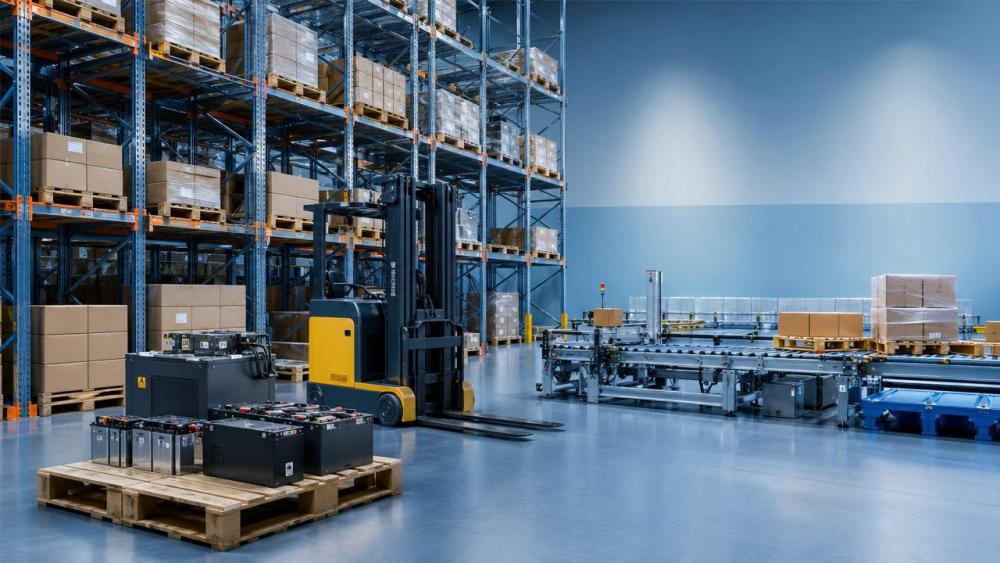
Industry overview: where risks and opportunities are concentrated
To make global supply chain updates for warehouse equipment easier to use, procurement teams should separate the market into practical sourcing layers. The table below highlights how different equipment groups are typically affected.
Business value for procurement professionals
For purchasing teams, the value of following global supply chain updates for warehouse equipment is both operational and financial. On the operational side, better visibility reduces the risk of idle labor, incomplete installations, and missed go-live dates. If a new warehouse depends on synchronized arrivals of racking, forklifts, charging cabinets, and loading equipment, one delayed item can slow the entire launch.
On the financial side, timely market intelligence supports stronger negotiation and budgeting. Buyers can compare quotations based not only on headline price, but also on freight assumptions, surcharge clauses, parts commitments, and production slot availability. This often reveals that the lowest offer carries the highest execution risk. In many cases, a slightly higher but more stable supply option leads to lower total cost over the project lifecycle.
There is also strategic value. Companies that track global supply chain updates for warehouse equipment are more likely to diversify suppliers before a disruption intensifies. They can prequalify alternative sources, revise specification flexibility, and prioritize essential SKUs. Instead of reacting when delivery dates slip, they move earlier and with better internal alignment across procurement, operations, engineering, and finance.
Typical sourcing scenarios where updates matter most
Not every purchase is equally sensitive to market shifts. The following scenarios usually benefit most from close attention to global supply chain updates for warehouse equipment.
- New facility launches that require multiple equipment categories to arrive in sequence.
- Automation upgrades where control components and commissioning teams are critical path items.
- Fleet replacement programs dependent on batteries, chargers, and imported spare parts.
- Cross-border procurement projects exposed to tariffs, certification, or export documentation changes.
- Maintenance-heavy environments where part availability matters more than initial capital cost.
These scenarios show why market intelligence should be matched to equipment type and project stage. A standard hand pallet truck order may be relatively easy to replace, while a conveyor line with customized controls may require months of planning and deeper supplier validation.
How to evaluate supplier signals before you reorder
Reading global supply chain updates for warehouse equipment is useful only if buyers translate them into practical supplier questions. Start with capacity visibility. Ask whether the quoted lead time is based on open production capacity, reserved component stock, or estimated replenishment. A supplier with reliable scheduling discipline is often easier to work with than one offering optimistic but weakly supported timelines.
Next, verify component dependency. If the equipment includes imported electronics, branded drives, special bearings, battery modules, or compliance-sensitive parts, ask for the critical items that could affect delivery. This does not require full engineering disclosure. It requires enough transparency to identify bottlenecks. Strong suppliers can explain where risk sits and what substitutions are possible.
Then review logistics assumptions. Incoterms, packaging design, route selection, and delivery split plans all influence final execution. Bulky warehouse structures may move slowly through inland networks even when factory output is ready. For urgent replenishment items, buyers should check whether the supplier can support partial shipment, local stocking, or regional warehousing.
Practical recommendations for reducing reorder risk
A disciplined response to global supply chain updates for warehouse equipment does not always require dramatic supplier changes. Often, it begins with better planning habits.
- Segment equipment by risk level rather than managing all items the same way.
- Maintain rolling visibility on high-impact spare parts, especially electrical and motion-control items.
- Build second-source options for standard categories such as shelving, pallets, and general accessories.
- Use total landed cost models that include freight, compliance, service response, and downtime exposure.
- Coordinate sourcing decisions with operations and engineering before finalizing reorder timing.
It is also wise to combine short-term and medium-term actions. In the short term, confirm current lead times, pricing validity, and parts availability before placing the order. In the medium term, review supplier concentration by region and identify categories where local or nearshore sourcing could improve resilience. This balanced approach supports continuity without overreacting to every market fluctuation.
Common mistakes when interpreting market updates
One common mistake is assuming that freight normalization means all supply risk has disappeared. Transport may improve while component shortages remain. Another is focusing only on the initial equipment unit and ignoring the supply chain for consumables, service kits, and replacement modules. Warehouse equipment delivers value over time, so continuity depends on the full support ecosystem.
A third mistake is treating every update as universal. Global supply chain updates for warehouse equipment must be filtered by product type, supplier model, destination market, and order size. A local assembler with imported controls may face a different risk profile from a vertically integrated manufacturer. Procurement decisions improve when buyers ask which specific link in the chain is under pressure and how that affects their exact order.
FAQ for buyers tracking warehouse equipment supply conditions
How often should procurement teams review supply chain updates?
For strategic categories, monthly review is a reasonable baseline, with more frequent checks during active projects or periods of policy and freight volatility.
Which warehouse equipment categories are usually most sensitive?
Automation systems, battery-powered handling equipment, and products with specialized electrical components are often more sensitive than simple steel structures.
Can long-term contracts fully solve supply risk?
Not fully. Contracts improve visibility and commitment, but they work best when paired with realistic lead-time reviews, alternative part planning, and ongoing supplier communication.
A practical way to move forward
Global supply chain updates for warehouse equipment are most valuable when they become part of regular procurement discipline rather than occasional crisis reading. For buyers in manufacturing, industrial equipment, and electrical supply chains, the goal is not to predict every disruption. It is to identify the most meaningful signals early, connect them to actual equipment categories, and make better reorder decisions with less uncertainty.
Before your next reorder, review supplier capacity, parts exposure, logistics assumptions, and policy-related cost factors together. That simple step can improve timing, protect budgets, and reduce operational risk. In a market shaped by changing freight patterns, component availability, and trade conditions, informed procurement remains one of the strongest tools for securing dependable warehouse equipment supply.

Industry Briefing
Get the top 5 industry headlines delivered to your inbox every morning.