
Processing Machinery Environmental News: What to Fix First

For after-sales maintenance teams, staying ahead of compliance risks and equipment performance starts with the right priorities. In today’s industrial environmental news for processing machinery, the most urgent fixes often involve emissions control, energy efficiency, waste handling, and preventive maintenance gaps. This overview helps maintenance professionals identify what to fix first, reduce downtime, and align service actions with evolving industry standards and operational demands.
What should after-sales teams fix first in industrial environmental news for processing machinery?
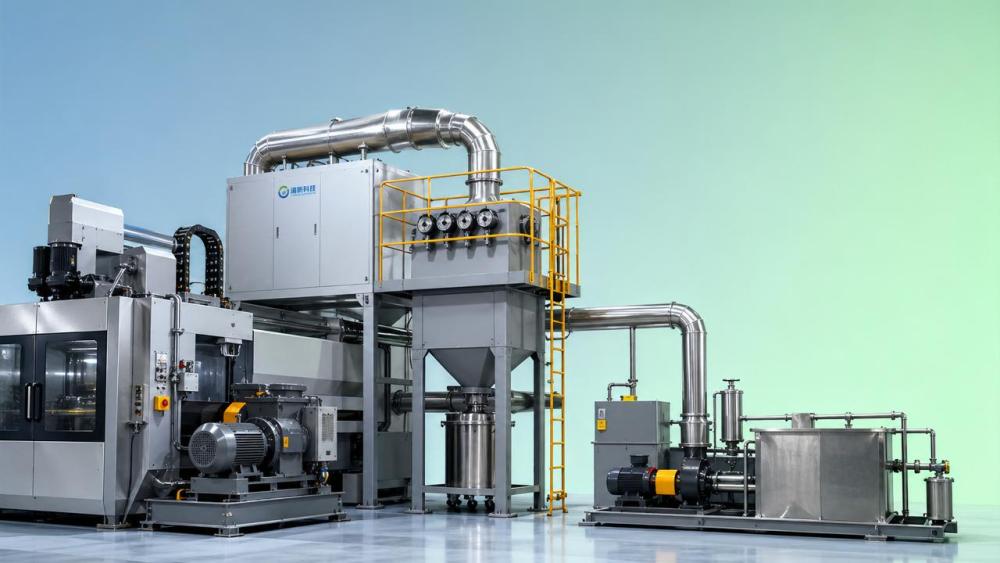
After-sales maintenance personnel are usually the first to see the gap between environmental policy and real machine conditions. A production line may still run, yet hidden issues such as leaking seals, unstable burners, clogged filters, overloaded motors, or poor waste segregation can quickly become compliance and uptime problems. In practical terms, industrial environmental news for processing machinery matters most when it points to corrective actions that can be implemented during inspection, service shutdowns, retrofit planning, or spare parts replacement.
In the broad manufacturing and industrial equipment landscape, the first fixes should be ranked by operational risk, regulatory exposure, and payback speed. Maintenance teams do not need abstract sustainability slogans. They need a clear order of action: what threatens the plant today, what could trigger a customer complaint tomorrow, and what will cost more if delayed for another quarter.
A practical priority order
- Stabilize emissions-related components first, including exhaust fans, filters, dust collectors, combustion tuning points, and sealing interfaces that influence air leakage.
- Correct abnormal energy use next, especially where motors, pumps, compressors, heaters, or variable frequency drives show rising power draw without matching throughput.
- Close waste handling gaps, such as fluid leakage, sludge accumulation, poor scrap sorting, contaminated containers, and missed housekeeping controls around process residues.
- Repair preventive maintenance weaknesses that create repeated environmental incidents, including overdue lubrication, sensor drift, blocked drains, and unverified alarm logic.
This order reflects how industrial environmental news for processing machinery affects day-to-day service work. Most urgent fixes are not always the most expensive ones. They are often the failures that combine small repair cost with large downstream impact on emissions, energy waste, or unplanned stoppage.
Which environmental risks create the fastest operational damage?
Maintenance teams in processing machinery environments face a mixed risk profile. Dust-generating systems, heat-processing units, fluid-based production equipment, and electrically intensive lines each create different environmental pressure points. The challenge is not only identifying the issue, but also deciding which one deserves immediate service resources when labor hours, spare parts, and shutdown windows are limited.
The following table helps translate industrial environmental news for processing machinery into a maintenance-first decision map. It focuses on issues commonly seen across manufacturing equipment, industrial components, and electrical support systems.
The table shows that the fastest operational damage usually comes from failures that touch several departments at once. A dust collector problem does not stay inside the maintenance room. It can affect safety, production quality, environmental reporting, and customer audits. That is why industrial environmental news for processing machinery should be filtered through a maintenance impact lens rather than read as policy news alone.
How do you rank fixes when budget and shutdown time are limited?
Many after-sales teams work under strict service budgets. They may support multiple customer sites, older machine fleets, or mixed-brand processing lines where spare part compatibility is inconsistent. In those conditions, ranking fixes is more valuable than simply listing all defects. A workable method is to score each issue by four factors: compliance risk, downtime impact, energy loss, and repair complexity.
A simple field ranking model
- Fix now: defects linked to emissions exceedance, active leakage, electrical overheating, or safety-related interlock failure.
- Fix in the next planned stop: abnormalities causing inefficient operation, unstable exhaust performance, or repeated process residue buildup.
- Monitor with data: noncritical drift in power consumption, moderate wear, or components showing decline but still within acceptable operating range.
- Bundle for retrofit: old systems with chronic inefficiency where repeated repair costs are approaching upgrade cost.
This approach helps maintenance managers convert industrial environmental news for processing machinery into service plans that customers can approve. A fix is easier to justify when tied to avoided energy waste, lower disposal burden, reduced complaint risk, or fewer emergency callouts.
It also helps bridge communication between plant maintenance, procurement, and management. Procurement often asks for price first. Maintenance teams should answer with impact first, then cost. That changes the conversation from “Can this wait?” to “What happens if this is delayed?”
What maintenance checkpoints matter most for emissions, energy, and waste?
A strong service routine is built around checkpoints that are measurable and repeatable. In industrial environmental news for processing machinery, broad themes become useful only when they turn into inspection items. Maintenance teams should standardize field checks so technicians can compare one visit to the next and identify degradation before it becomes visible to operators or auditors.
The checkpoint matrix below is designed for mixed industrial settings, including processing machinery, industrial components, and electrical support systems.
These checkpoints reduce guesswork. They also support better service records, which are increasingly important when customers ask how maintenance actions align with industrial environmental news for processing machinery and stricter plant reporting expectations.
Why do many plants still miss early warning signs?
Plants often miss early signals because environmental issues rarely start as dramatic failures. They begin as small deviations: a fan running louder than normal, a slight increase in compressed air demand, recurring oil mist near a guard, or a filter replacement interval that keeps shortening. Each sign may look manageable on its own. Together, they point to system decline.
Common maintenance blind spots
- Treating housekeeping as separate from maintenance, even though residue buildup often reveals airflow, sealing, or drainage failure.
- Replacing parts without checking root cause, which leads to repeated filter clogging, seal wear, or overheating.
- Focusing only on mechanical condition while ignoring controls, sensor calibration, and energy trend data.
- Using calendar-based maintenance alone, even when process load and operating hours vary significantly.
For after-sales teams, this is where a specialized information portal adds value. Industrial environmental news for processing machinery is more useful when paired with market analysis, technology updates, policy interpretation, and supply chain intelligence. That combination helps technicians understand not only what failed, but also whether spare parts availability, export changes, or new compliance pressure will influence the repair decision.
How should maintenance teams choose between repair, retrofit, and replacement?
This is one of the hardest decisions in after-sales work. Repair is attractive because it is fast and familiar. Retrofit can improve environmental performance without replacing the full machine. Replacement offers long-term gains, but often requires approval cycles, lead times, and commissioning support. The correct path depends on failure frequency, energy penalty, parts availability, and expected compliance pressure.
When reading industrial environmental news for processing machinery, maintenance teams should ask whether the issue is temporary wear or structural obsolescence. The difference changes the investment logic.
Decision guide for service planning
The decision is strongest when supported by service history. If a plant has repaired the same leak path three times, replaced the same motor twice, or cleaned the same waste collection point every month, the issue is no longer a simple repair case. It has become a system-design problem.
What standards and compliance signals should after-sales personnel watch?
After-sales staff do not need to become full-time compliance officers, but they should recognize the signals that affect service priorities. In many industrial settings, the most relevant references involve air emissions control, energy management, electrical safety, waste handling, and documented maintenance procedures. Depending on market and equipment type, customers may also align maintenance practices with broader management frameworks such as ISO-based systems.
Useful compliance checkpoints
- Verify whether environmental control devices are maintained according to documented intervals rather than only after failure.
- Check whether energy-intensive equipment has trend records that can justify maintenance actions or retrofit proposals.
- Confirm that waste streams from oils, coolants, filters, and process residues are separated and transferred using site-approved procedures.
- Review whether alarm events, calibration actions, and corrective measures are logged in a way that supports audit follow-up.
This is another reason why industrial environmental news for processing machinery should come from a source that also covers policy interpretation, technology updates, and supply chain changes. Maintenance work becomes more accurate when service teams understand both the equipment issue and the wider operating environment behind it.
FAQ: practical questions from maintenance teams
How do I know whether an environmental issue is urgent or can wait for the next shutdown?
Treat it as urgent if it involves active leakage, visible emissions, overheating electrical loads, failed interlocks, or any condition that can escalate within days rather than weeks. If the issue mainly affects efficiency without immediate compliance or safety exposure, it may be grouped into the next planned stop, provided trend monitoring is active and stable.
Which data points are most helpful when reading industrial environmental news for processing machinery?
Focus on differential pressure, motor current, power consumption per unit output, exhaust flow stability, vibration trend, leak frequency, waste volume changes, and alarm history. These indicators make news and policy updates actionable because they connect external pressure to measurable machine behavior.
What are common procurement mistakes when sourcing environmental maintenance parts?
The most common mistake is buying by part description alone without confirming operating load, material compatibility, duty cycle, and installation tolerance. Another frequent error is choosing the lowest initial price for filters, seals, or sensors while ignoring service life, calibration stability, or disposal burden. A slightly higher-cost part may reduce downtime and total maintenance labor.
When is retrofit more cost-effective than repeated repair?
Retrofit becomes attractive when repeated repairs continue to restore only basic function, not environmental performance. Examples include recurring fan imbalance caused by poor airflow design, chronic motor overloading due to incorrect control logic, or old monitoring systems that cannot deliver reliable trend data. If the same failure mode appears several times in a year, compare annual repair cost and lost production time against upgrade cost.
Why choose us for ongoing industrial environmental news for processing machinery?
After-sales maintenance teams need more than general news. They need information that supports decisions on parameters, replacement timing, compliance direction, sourcing risk, and field implementation. Our portal is built around manufacturing and processing machinery, industrial equipment and components, and electrical equipment and supplies, so the content stays relevant to real service environments.
We connect industrial environmental news for processing machinery with market analysis, price trends, technology updates, policy interpretation, company developments, exhibition signals, export trade changes, and supply chain intelligence. That helps maintenance professionals judge whether to repair, retrofit, reschedule, source alternatives, or escalate a compliance-sensitive issue.
What you can contact us about
- Parameter confirmation for filtration, drives, motors, sensors, and related maintenance components.
- Selection support for repair versus retrofit pathways under budget, lead time, and compliance pressure.
- Delivery cycle checks and sourcing updates for critical spares affected by market or supply chain changes.
- Guidance on certification-related questions, maintenance documentation focus, and practical site-readiness concerns.
- Quote communication and solution comparison for planned shutdown projects, service bundles, and customized maintenance programs.
If your team is deciding what to fix first, what to monitor, and what to upgrade next, contact us with your equipment condition, maintenance pain points, and sourcing questions. We can help you turn industrial environmental news for processing machinery into a practical action list that supports uptime, compliance, and more disciplined service planning.
Industry Briefing
Get the top 5 industry headlines delivered to your inbox every morning.