
How to Select Metric Industrial Fasteners for Load, Corrosion, and Assembly Needs
Selecting Metric Industrial Fasteners Starts with the Joint, Not the Catalog
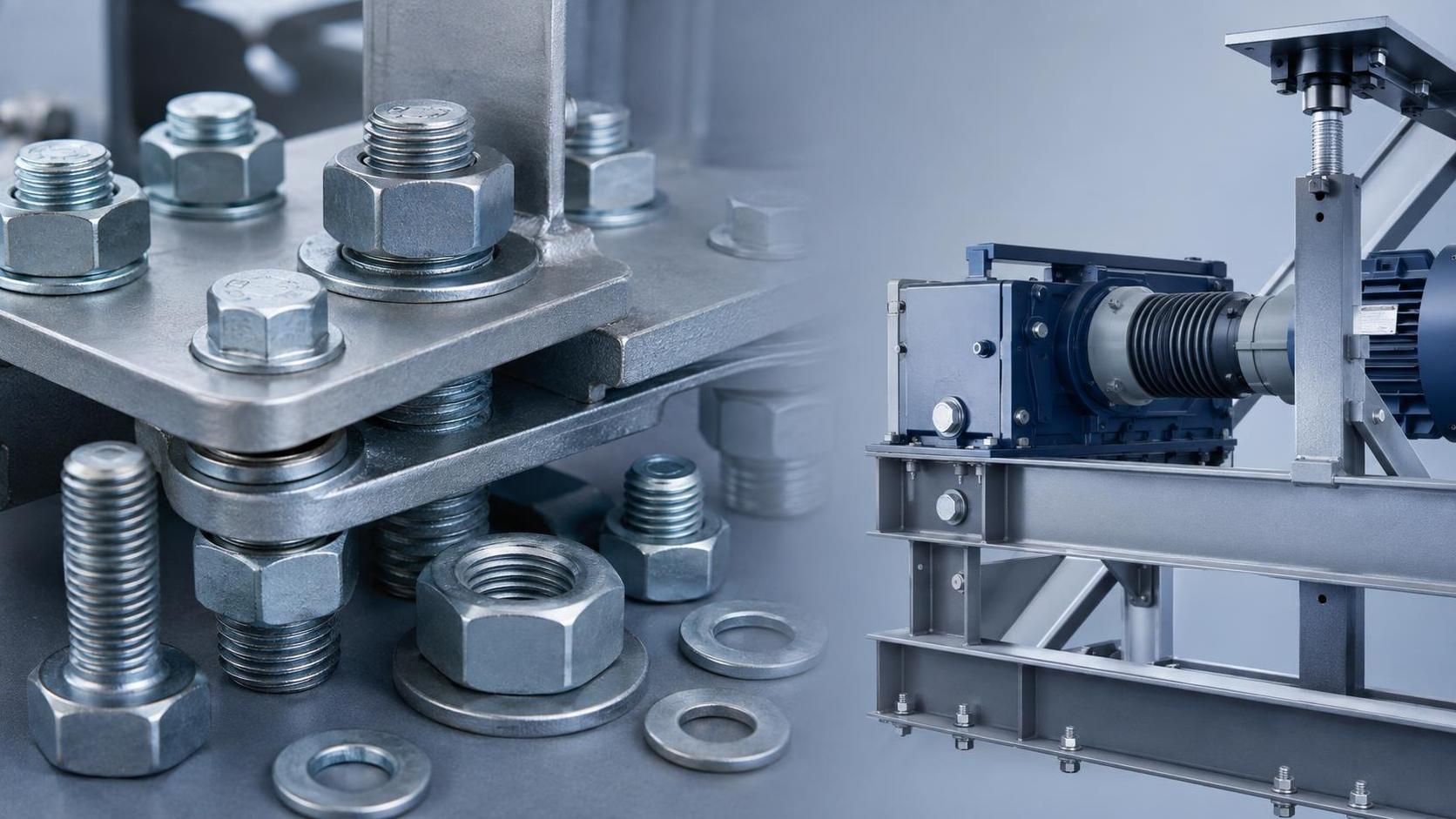
Selecting metric industrial fasteners is often treated as a simple exercise in matching a bolt diameter, pitch, and material. In practice, those details are only the visible part of the decision. A fastener is part of a joint system that includes the clamped materials, load direction, vibration level, installation method, service environment, inspection access, and maintenance plan.
For technical evaluators, the real question is not “Which M-size bolt fits?” It is whether the selected fastening arrangement can maintain sufficient clamp load throughout the equipment’s operating life without yielding, loosening, corroding, damaging the mating parts, or creating avoidable assembly variation. This applies equally to industrial machinery frames, motor assemblies, electrical enclosures, process equipment, automation cells, and export-oriented equipment supplied into varied climatic conditions.
A sound specification therefore begins with the function of the joint. Some joints carry direct shear. Others depend on friction generated by bolt preload. Some need frequent removal for servicing, while others are intended to remain untouched for years. A fastener that is acceptable for a guarded machine panel may be unsuitable for a vibrating conveyor, a coastal outdoor cabinet, or a high-temperature process skid.
Define the Load Path Before Choosing Strength Class
Metric thread designation identifies geometry, not performance. An M12 bolt tells a buyer its nominal thread diameter, but it does not establish the required property class, head style, coating, tolerance, or installation torque. Those must be selected against actual joint conditions.
The first distinction is between tensile loading, shear loading, and combined loading. A tension-loaded joint may be affected by external separation forces, thermal expansion, pressure cycles, or suspended equipment weight. A shear-loaded joint may experience static side loading, intermittent impacts, or repeated directional reversal. In many machine assemblies, both occur at once. The fastener must be evaluated together with the bracket thickness, hole clearance, contact surfaces, washers, and any locating features such as dowels or shoulders.
Where a bolted joint relies on friction to resist slip, consistent preload matters more than simply selecting a higher strength grade. If preload is too low, vibration and cyclic loading can allow joint movement. If it is too high, the bolt may yield, threads may strip, or softer clamped materials may deform. A larger fastener is not automatically safer if the surrounding structure cannot carry the resulting compression or if the assembly process cannot control tightening reliably.
For carbon and alloy steel bolts, ISO 898-1 is commonly referenced for mechanical properties of certain fastener categories. Property classes such as 8.8, 10.9, and 12.9 are frequently encountered in industrial equipment. Higher classes can provide greater strength, but they also demand closer attention to coating processes, tightening control, mating-thread capacity, and susceptibility to installation errors. A high-strength bolt in a poorly designed joint is not a substitute for proper engineering.
Thread engagement deserves similar care. Engagement requirements depend on the strength of both the fastener and the internally threaded component. A bolt entering a steel nut behaves differently from one installed into aluminum, cast iron, stainless steel, or a thin-walled tapped plate. If the internal thread is the weaker element, stripping may govern the joint capacity before the bolt reaches its intended preload. Inserts, through-bolting, flange nuts, or redesigned local reinforcement may be more appropriate than merely increasing bolt grade.
Corrosion Resistance Is a System Decision
Corrosion selection is often reduced to a choice between “zinc plated” and “stainless.” That shortcut misses the way exposure, material pairing, and joint geometry influence field performance. A fastener can appear well protected while corrosion begins inside a crevice, beneath a washer, around damaged coating, or at the interface between dissimilar metals.
For indoor, controlled industrial environments, carbon steel fasteners with an appropriate protective finish may be practical when exposure to moisture and chemicals is limited. For outdoor machinery, washdown areas, chemical handling zones, food-related equipment, marine-adjacent installations, or humid export destinations, the corrosion assessment needs to be more deliberate. It should consider salt exposure, condensation cycles, cleaning agents, trapped water, temperature, and whether maintenance teams can inspect the joint.
Stainless steel fasteners are not a universal answer. Their corrosion behavior depends on grade, environment, surface condition, and crevice geometry. Stainless grades are often specified using ISO 3506 designations, but the designation alone does not settle suitability for chloride-rich or chemically aggressive environments. Technical teams should also consider the risk of galling, particularly when stainless bolts and nuts are assembled at speed or without suitable lubrication and process control.
Galvanic compatibility deserves attention whenever fasteners join aluminum, copper alloys, stainless components, coated steel, or mixed-metal assemblies. The presence of an electrolyte can accelerate corrosion of the less noble material. Isolation washers, compatible coatings, sealing methods, or a revised material combination may be necessary. These choices should be tested against electrical grounding requirements, thermal conditions, and the load-bearing function of the joint rather than applied as generic rules.
For high-strength steel fasteners, certain finishing processes require particularly careful review because hydrogen-related embrittlement can be a concern in susceptible parts. This is not a detail to leave until after purchase order release. The fastener grade, manufacturing route, coating specification, baking requirements where applicable, and supplier quality controls need to be aligned with the project specification and relevant standards.
Assembly Method Often Determines Whether the Design Works
Even a correctly selected fastener can fail in service if installation produces inconsistent clamp force. Torque is widely used because it is convenient, but torque is only an indirect indicator of tension. Friction under the bolt head, in the threads, and on washers can vary with plating, lubrication, surface roughness, contamination, reuse, and tool condition. Two nominally identical bolts tightened to the same torque can produce meaningfully different preload.
This does not mean torque-controlled assembly is unsuitable. It means the process should reflect the criticality of the joint. For non-critical covers and brackets, documented torque values with calibrated tools may be enough. For joints where loss of preload, slip, or fatigue failure would create significant operational or safety consequences, technical teams may need a more controlled method, such as torque-angle procedures, direct tension approaches, or validated assembly trials.
Fastener head style also changes assembly behavior. Hex bolts and nuts are familiar and robust for many structural joints. Socket head cap screws may help where access is restricted, but tool engagement and recess cleanliness matter. Flange-head fasteners can distribute load and simplify part count, while countersunk designs introduce different bearing stresses and should not be chosen solely for flush appearance. Captive screws, thumb screws, and quarter-turn solutions may be justified for panels that require regular access, but they should not be substituted into load-critical locations without a separate review.
Threadlocking compounds, lock nuts, prevailing-torque nuts, wedge-locking washers, and tab washers are all used to manage loosening risk. Their suitability depends on temperature, vibration, reuse expectations, surface condition, and service practice. A locking feature cannot compensate for an inadequate joint design or a bolt that was never properly tensioned. It should be selected as part of the overall retention strategy.
Avoid Treating Thread Standards as Interchangeable
Metric industrial fasteners are widely available, but availability should not encourage casual substitution. Metric coarse threads are common for general-purpose assemblies because they offer practical durability and are broadly stocked. Fine-pitch metric threads can provide advantages in certain applications, including limited engagement length or specific adjustment needs, yet they can be more sensitive to damage and may be less convenient to source consistently across regions.
The drawing should state nominal diameter, pitch, length, property class or material designation, coating or finish, applicable product standard, and any special requirements such as marking, lubrication, prevailing torque, or inspection documentation. “M10 stainless bolt” leaves too much open to interpretation. It does not define thread pitch, steel grade, head form, length measurement convention, thread length, or corrosion performance in the intended environment.
Legacy DIN references still appear in equipment documentation and global supply chains, while ISO and regional standards may govern current sourcing. Before approving alternates, confirm functional dimensions, tolerances, mechanical requirements, and head geometry rather than assuming that similar naming means full interchangeability. This is especially relevant when automated feeders, sockets, fixtures, or assembly robots are involved.
Build a Specification That Procurement Can Actually Source
A technically sound fastener selection can still become a supply-chain problem if the specification is ambiguous, over-customized, or disconnected from market availability. Procurement and engineering should review long-lead items early, especially for uncommon dimensions, special coatings, certified batches, nonstandard head forms, or mixed fastener kits. Standardization across machine families can reduce part proliferation, simplify spare-parts support, and limit the risk of assembly-line substitution.
That does not mean forcing every application into one universal bolt. It means defining rational families: for example, one set for protected indoor equipment, another for exposed assemblies, and a separate controlled specification for load-critical joints. The bill of materials should distinguish fasteners that are functionally interchangeable from those that only look similar. Color, finish, or supplier packaging should never be the sole control against incorrect use.
Supplier evaluation should extend beyond unit price. Ask how incoming material is identified, how lot traceability is handled when required, whether mechanical and coating documentation can be supplied where specified, and how changes in manufacturing location or finishing source are managed. For assemblies subject to regulated project requirements, the applicable standards and documentation obligations should be confirmed by the responsible engineering and quality teams rather than inferred from a catalog listing.
Industrial information platforms such as NEXUSINSIGHTS can help evaluators place these decisions in a broader context: supplier developments, machinery trends, manufacturing capacity, international trade activity, technology updates, and changing sourcing conditions may all affect the practical availability of a fastener solution. Market visibility does not replace joint design validation, but it can help teams identify where a technically preferred specification may carry supply, lead-time, or regional sourcing risk.
A Practical Review Before Release
Before finalizing a fastener specification, review the joint with a short set of disciplined questions. What loads must the joint resist, and are they static, cyclic, vibratory, or thermal? Does the design depend on preload? What are the clamped materials and minimum thread engagement conditions? Which environment reaches the joint in real operation, not just in the equipment brochure? Can the specified finish, lubrication, and locking method be assembled consistently with available tools?
Then check what happens after installation. Will service personnel remove the fastener? Is reuse permitted? Can torque be applied with the available access? Does the assembly need visual inspection, traceability, or controlled replacement parts? These questions often reveal that the best choice is not the strongest or most corrosion-resistant item in isolation, but the option that keeps the complete joint reliable and manageable.
The most reliable metric industrial fasteners are selected through a clear chain of reasoning: joint function, load path, material compatibility, environment, assembly control, standard requirements, and sourcing reality. When any one of those links is assumed rather than verified, small hardware can become a disproportionate cause of downtime, rework, or field maintenance.
Industry Briefing
Get the top 5 industry headlines delivered to your inbox every morning.