
Choosing Sheet Metal Equipment by Material Thickness and Production Volume

Choose sheet metal equipment around the material range you process routinely and the output your complete production route must deliver. Maximum thickness determines whether a machine can perform an operation; production volume determines whether it can perform that operation economically, consistently, and without creating a bottleneck.
When comparing metalworking equipment for sheet metal, start with representative parts rather than machine specifications. A machine that handles your thickest sheet may be unnecessarily expensive for everyday work. A fast cutting system may add little capacity if bending, deburring, or unloading cannot keep pace. The right investment matches material, geometry, quality requirements, and production demand across the full workflow.
Define the work before comparing machines
Build a short production profile from drawings and expected orders. Include material grade, actual thickness, sheet dimensions, finished part size, bend length, minimum flange dimensions, hole requirements, surface finish, and acceptable variation. Thickness alone is insufficient: stainless steel, aluminum, and mild steel place different demands on cutting and forming equipment.
Specify thickness in an explicit dimensional unit. Gauge designations can differ by material and convention, making them an unreliable basis for comparing quotations. Include the material’s strength or temper where relevant, particularly for bending and forming.
Separate recurring work from occasional exceptions. If thick plate appears only in a few orders, outsourcing those operations may be more economical than sizing every machine around them. Conversely, equipment should comfortably support a demanding material that appears throughout the normal production schedule.
Production volume also needs definition. Annual part count can conceal very different operating conditions. Long runs of identical components favor dedicated tooling and automated handling. The same quantity divided among many designs places greater value on quick programming, short setups, and flexible tooling.
- Typical workload: the materials, thicknesses, and part families that occupy most machine hours.
- Demanding recurring work: the combination of strength, dimensions, geometry, and tolerances that tests capacity regularly.
- Production pattern: batch sizes, design changes, shifts, and delivery peaks.
- Acceptance criteria: the dimensional, edge, and surface conditions required before the next operation.
Thickness changes cutting requirements beyond nominal capacity
A published maximum cutting thickness establishes a capability boundary, but it does not describe the quality or speed available throughout that range. Near the upper limit, cutting may become slower, piercing more demanding, and edges more likely to need secondary work. Compare usable production capacity on your actual material rather than selecting solely from a maximum-thickness headline.
For straight cuts and rectangular blanks, a shear can provide a direct, economical route. Its suitability depends on material strength, thickness, cutting length, blade condition, and clearance adjustment. Cut strips may show bow, twist, or edge distortion, so assess whether the result meets downstream requirements. A shear does not replace a contour-cutting machine when parts require complex profiles.
Fiber laser cutting is often a strong candidate for varied profiles, especially when flexibility and detailed features matter. Thickness, material, assist gas, and cutting parameters influence speed, edge condition, and operating cost. Laser power alone does not establish production performance. Piercing time, nesting, small-feature quality, sheet loading, and finished-part removal can change the result substantially.
Plasma cutting can suit thicker conductive material when its edge quality and dimensional capability meet the application. Fine holes, narrow features, and heat effects deserve attention. Waterjet cutting can be useful when avoiding a heat-affected zone matters, although abrasive use, cutting time, and maintenance must be included in the comparison.
A CNC punch press becomes attractive when a recurring part family contains many holes, louvers, embossed features, or other forms that suitable tooling can produce. Its advantage depends on tool availability and repeated use. Changing designs, limited tool access, and surface marking can reduce that advantage.
For bending, evaluate force, geometry, and tooling together
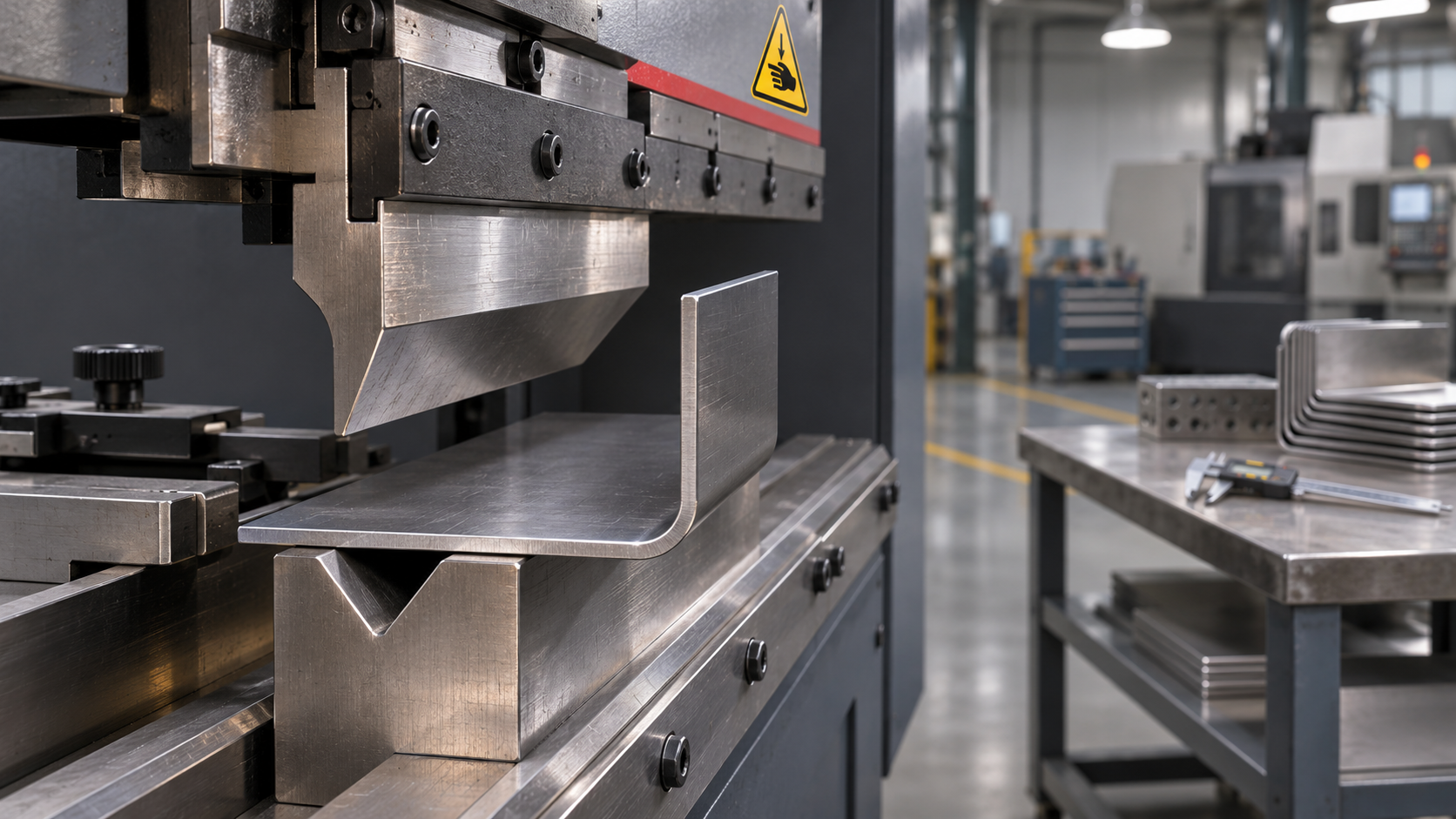
Press brake selection requires more than matching sheet thickness to machine tonnage. Required bending force also depends on material strength, bend length, die opening, and the bending method. For air bending, force rises roughly with the square of thickness when other conditions remain comparable. A modest thickness increase can therefore require a substantial increase in force.
A wider die opening can reduce force, but it also affects the achievable inside radius and minimum flange length. This creates a practical tradeoff: a machine may have enough capacity with one die arrangement while that arrangement cannot produce the drawing’s geometry. Evaluate the part, machine, punch, and die as a single system.
Check usable bending length, backgauge travel, daylight, stroke, and throat depth. Deep boxes, return flanges, and complex bend sequences may encounter clearance or tooling interference even when the force requirement is acceptable. Tool load ratings and permitted concentrated loads also matter; total machine tonnage should not be assumed available over every short section.
Long parts introduce another concern: maintaining a consistent angle along the bend. Frame and tooling deflection, crowning, material variation, and setup quality all contribute. Tight angle requirements may justify angle measurement or compensation features, but those features must be assessed on the intended work.

For repeated panels, panel bending or folding equipment may reduce handling and improve production flow. Suitability depends on blank size, flange geometry, material range, surface requirements, and access for the bending sequence. For curved components, rolling capacity must likewise be evaluated against material strength, working width, target diameter, and prebending requirements.
Volume should influence the production method, not just machine speed
Low-volume work usually benefits from equipment that changes tasks easily. Programming support, accessible tooling, straightforward material handling, and short setup times can matter more than peak cutting or bending speed. A flexible machine may complete a mixed schedule sooner than a faster system that requires lengthy changeovers.
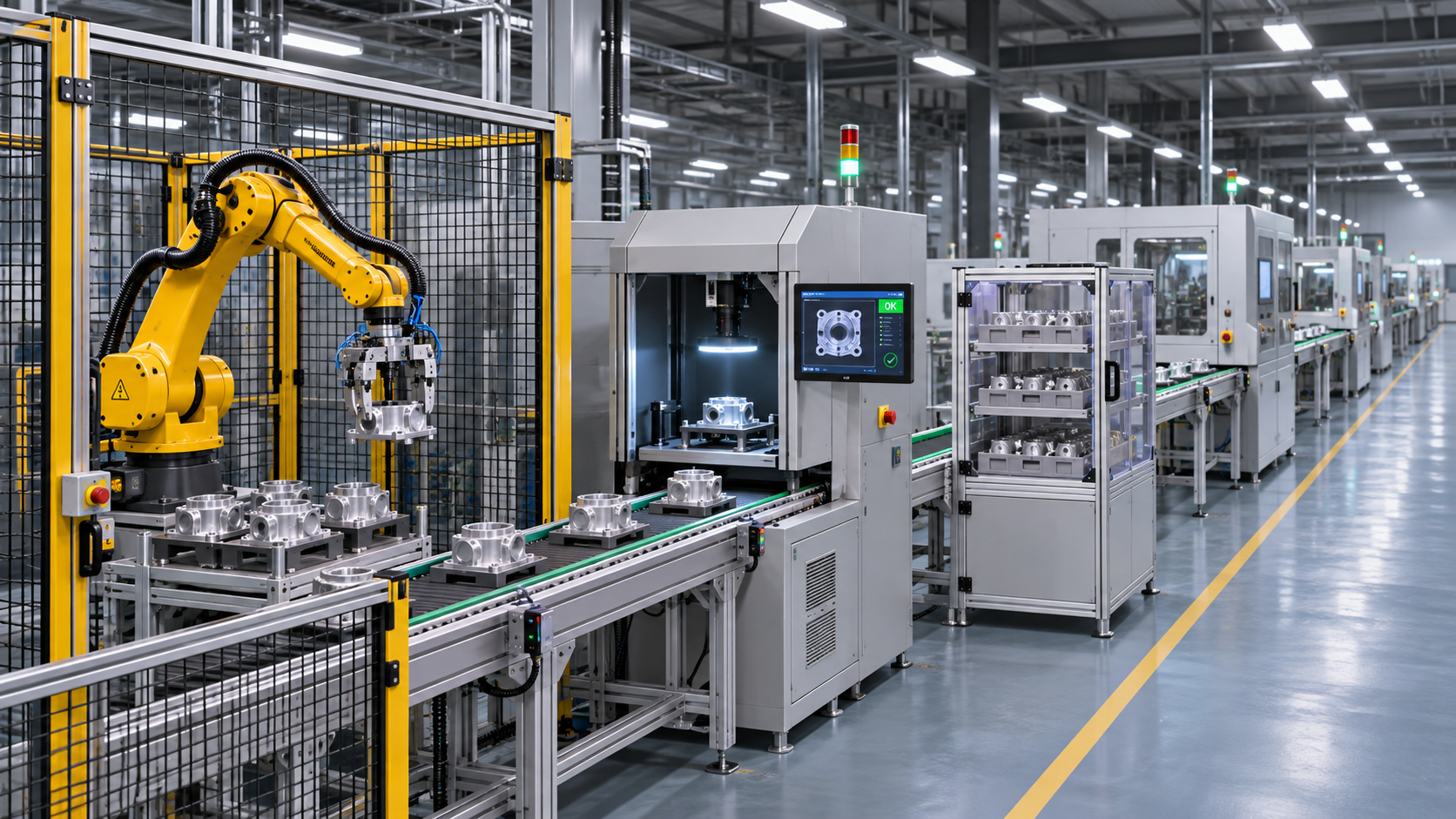
As batches grow, repeated manual handling becomes a larger share of production cost. Automatic sheet loading, part separation, robotic bending, or conveyor transfer may improve output when the parts and schedule support reliable operation. Automation requires compatible blanks, predictable presentation, suitable gripping surfaces, and a workable route for scrap and finished components.
For stable, recurring designs, dedicated press tooling or a coil-fed line may be worth evaluating. Tooling cost and development effort become easier to justify across repeat production. Frequent engineering changes, uncertain demand, or diverse part families can favor laser cutting and flexible bending instead.
Consider two typical workloads: an enclosure shop producing many variants, and a supplier producing the same bracket repeatedly. Both may process similar sheet thicknesses, yet the enclosure shop is likely to value flexible nesting and fast bend setups. The bracket supplier may gain more from dedicated tooling and automated feeding. Thickness narrows the equipment options; repetition determines how to organize production.
Calculate output through the complete route
Machine cycle time is only one part of capacity. Include loading, alignment, programming, tool changes, unloading, inspection, scrap removal, and planned maintenance. For cutting equipment, assess complete sheets and nests. For bending, include repositioning between bends and handling large or awkward components.
A useful calculation is available production time divided by the observed complete cycle time. Use realistic time allowances based on trials and operating conditions. Keep setup time separate when comparing batch sizes, because a setup that is negligible in a long run may dominate a short order.
Then compare every operation in the route. Faster cutting can create a queue ahead of bending, deburring, or hardware insertion. Expanding a downstream operation may deliver more finished parts than replacing the cutting machine. Where product mix varies, check several representative schedules; the bottleneck can move with the work.
Automation also needs physical support. Sheet storage, lifting equipment, floor space, compressed air, extraction, gas supply, electrical service, and access for maintenance can determine whether the proposed output is achievable. Thin sheets need support against distortion; heavier blanks need handling arrangements that permit consistent, controlled positioning.
Compare cost per acceptable finished part
Purchase price should sit within a broader operating comparison. Include tooling, installation, utilities, consumables, software, maintenance, labor, and secondary processing. Equipment that produces a cheaper blank may still create a more expensive finished component if it requires extensive deburring or correction.
Material utilization deserves separate attention. Sheet dimensions, nesting constraints, grain direction, remnants, and scrap handling affect consumption. Coil processing may reduce repeated sheet handling for suitable parts, but introduces its own feeding, leveling, tooling, and changeover requirements.
Build the cost comparison around your workload, using the same assumptions for every proposal. Include a lower-demand scenario and a busier production schedule. This reveals whether an automation investment depends on sustained utilization, or whether a lower-cost machine becomes labor-intensive as demand rises.
Service support belongs in that calculation. Review access to technicians, replacement components, consumables, tooling, and control-system support. A production plan with little spare capacity is particularly sensitive to prolonged downtime. An unusually demanding process may also require operator training and programming skills that are not currently available.
Make the supplier trial a purchasing requirement
A demonstration should use parts selected to expose the limits relevant to your production. Include everyday work and demanding recurring geometry: a long bend, a small flange, a detailed cut profile, or a surface-sensitive component. Use the intended material grade and thickness rather than accepting a convenient substitute.
Ask suppliers to document the process conditions and complete cycle. An impressive finished sample provides limited evidence if it required extensive manual correction, unusual tooling, or slow settings that cannot support the schedule.
- Check the finished part: measure the dimensions, bend angles, edge condition, and surface quality that affect assembly.
- Observe the full operation: include programming, setup, loading, processing, unloading, and required finishing.
- Run repeated parts: assess consistency and adjustment needs beyond the first acceptable sample.
- Review changeovers: establish the time and skills needed to move between representative jobs.
- Record included equipment: identify the tooling, handling systems, software, and utilities required to reproduce the result.
Use these results to define purchasing acceptance criteria. Specify the material range, representative parts, quality requirements, and output conditions the supplied system must support. Select the configuration that delivers acceptable finished parts across the expected workload, with a practical allowance for growth. If occasional extreme jobs drive the investment far beyond everyday needs, compare outsourcing those jobs before committing to the larger machine.
 Choosing Sheet Metal Forming Equipment: Material, Thickness and Part ShapeTime : Nov 09, 2026
- Choosing Automation Equipment for a Manufacturing Production LineTime : Nov 08, 2026
- Sealing Technology Trends: Advances in Leak Control for Industrial PumpsTime : Oct 27, 2026


Industry Briefing
Get the top 5 industry headlines delivered to your inbox every morning.