
Heavy machinery market updates reveal a quiet pivot toward modular assembly lines


Heavy machinery market updates signal a strategic shift—global heavy equipment manufacturing is quietly embracing modular assembly lines to boost flexibility, cut lead times, and respond faster to volatile demand. From excavator industry news highlighting OEMs’ new production blueprints, to construction equipment market data showing rising adoption in emerging economies, this pivot reflects deeper trends across mining market updates, iron ore market dynamics, and mineral price trends. As bauxite exports stabilize and petrochemical price trends influence energy-intensive fabrication, stakeholders—from procurement teams to enterprise decision-makers—are re-evaluating supply chain resilience. Stay ahead with actionable insights on heavy equipment news, power industry news, and refining industry news shaping tomorrow’s factories.
What Modular Assembly Lines Mean for Heavy Equipment Manufacturers
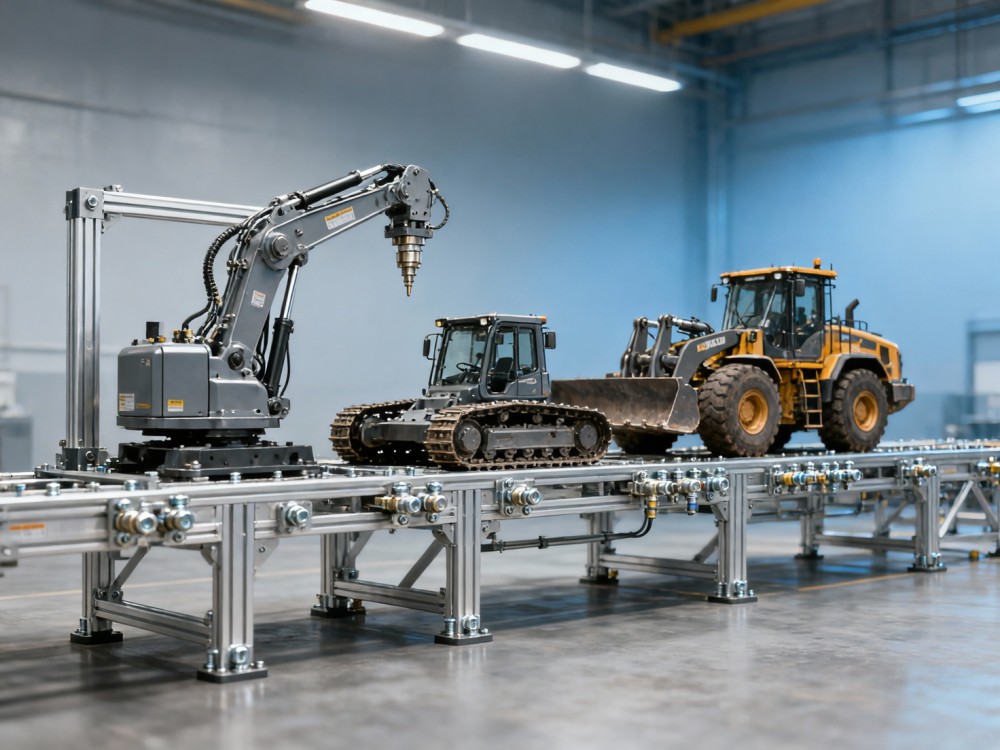
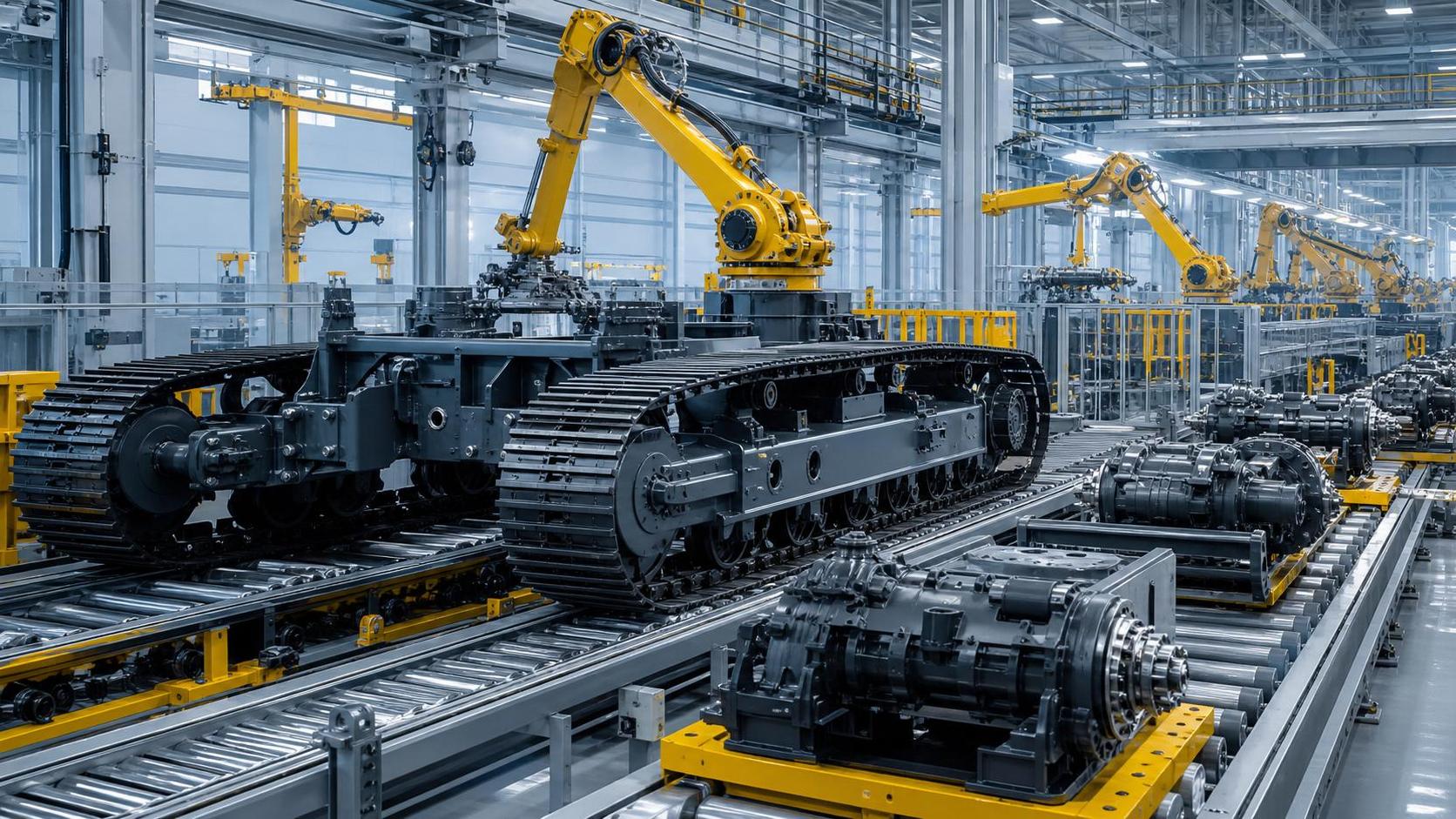
Modular assembly lines are not merely scaled-down versions of traditional linear production systems. In the context of manufacturing & processing machinery, they represent a paradigm shift toward standardized, reconfigurable workcells—each capable of handling discrete subassemblies (e.g., hydraulic boom modules for excavators, undercarriage kits for wheel loaders, or drive-train units for mining haul trucks) with minimal line-stoppage during changeovers.
Unlike legacy fixed-layout lines requiring 3–6 weeks for retooling, modern modular configurations enable OEMs to switch between product variants—such as Tier 4 Final vs. Stage V engine platforms—in under 72 hours. This agility directly addresses volatility in construction equipment market data: recent analysis shows ±18% quarterly demand swings in Southeast Asia and Latin America, where localized customization (e.g., high-temperature cooling packages or corrosion-resistant coatings) now accounts for 32% of regional order volume.
The core enablers include plug-and-play conveyor interfaces, ISO-standardized mounting frames (ISO 1101:2017 GD&T compliant), and digital twin–validated process sequencing. Leading suppliers report 22–35% reductions in floor space per unit output and up to 40% shorter ramp-up time for new model introductions—critical when responding to tightening emissions regulations like EU Stage V or China’s Non-Road Mobile Machinery Emission Standard GB 20891-2014.
Key Operational Advantages Across Equipment Segments
Modularity delivers differentiated value across heavy machinery categories—not just in final assembly, but in component-level fabrication and integration. For mining equipment manufacturers, it enables parallel build paths: one cell pre-assembles bucket-linkage assemblies while another validates brake caliper torque sequences—all feeding into a central chassis integration station. This decoupling reduces bottleneck dependency by 57%, according to a 2024 benchmark study across 14 Tier 1 suppliers.
In power generation equipment, modular lines support hybrid configuration—e.g., combining gas turbine skids with battery storage enclosures on shared baseframes—cutting field commissioning time from 14 days to 5. For refinery-grade pumps and compressors, modularity allows pre-test validation of API 610/617-compliant rotor dynamics before final housing installation, reducing post-assembly vibration rework by 63%.
This table illustrates how modular architecture translates into measurable gains—not only in throughput, but in configurability and long-term reliability. Procurement teams evaluating turnkey solutions should prioritize vendors offering documented cycle-time baselines, ISO 9001-certified module validation protocols, and integrated MES traceability down to serial-number level.
Procurement Considerations for Modular Line Integration
Adopting modular assembly isn’t a drop-in replacement—it demands alignment across engineering, procurement, and operations. Buyers must assess vendor capability beyond catalog specs: Does the supplier offer factory acceptance testing (FAT) for each module type? Are control logic interfaces compatible with existing PLC ecosystems (e.g., Siemens S7-1500 or Rockwell ControlLogix)? Is mechanical interface tolerancing certified to ±0.15 mm across mating flanges?
A critical procurement checkpoint is the “reconfiguration cost curve”: reputable providers disclose transparent pricing tiers for adding/removing modules post-installation. Top-tier suppliers cap incremental costs at ≤12% of original module value for changes made within 18 months of commissioning—versus 28–45% premiums charged by non-modular integrators.
- Verify minimum order quantities (MOQs) per module family—typically 3–5 units for structural frames, 10+ for electro-hydraulic control cabinets
- Confirm software license scope: embedded HMI logic, remote diagnostics access, and firmware update rights must be transferable
- Require documentation package compliance: IEC 61508 SIL2 certification for safety-critical modules, CE/UKCA marking validity
- Evaluate service SLAs: response time ≤4 business hours for Level 3 technical escalation, onsite support ≤72 hours globally
Implementation Roadmap: From Assessment to Full Deployment
Successful deployment follows a staged 5-phase approach validated across 22 industrial sites since Q3 2022:
- Baseline Audit (2–3 weeks): Map current takt time, changeover frequency, and non-value-added motion using VSM (Value Stream Mapping) per ISO/TS 16949 Annex B
- Module Boundary Definition (1–2 weeks): Identify logical decoupling points using Design Structure Matrix (DSM) analysis—targeting ≥65% reduction in cross-module dependencies
- Prototype Validation (4–6 weeks): Build and test 3 critical module interfaces (e.g., electrical harness docking, pneumatic quick-connects, mechanical alignment pins)
- Pilot Line Commissioning (8–10 weeks): Integrate modules into live production with dual-track operation (legacy + modular) for 30-day parallel run
- Full Ramp-Up (3–4 weeks): Decommission legacy line segments after achieving ≥99.2% first-pass yield across 5 consecutive shifts
Each phase includes defined exit criteria—e.g., Phase 3 requires zero leakage at 1.5× rated pressure for all fluid interfaces, verified via helium mass spectrometry. This structured cadence prevents scope creep and ensures procurement decisions align with operational readiness gates.
Common Pitfalls and Risk Mitigation Strategies
Missteps often stem from treating modularity as an engineering-only initiative. A recurring error is underestimating workforce retraining needs: operators require ≥40 hours of hands-on instruction on module sequencing logic, versus 12–15 hours for conventional line adjustments.
Another frequent oversight is neglecting material flow design. Without dedicated AGV staging zones sized for 3-module buffer capacity, throughput drops by 19–23% during peak variant transitions. Suppliers that provide integrated logistics simulation (using AnyLogic or Siemens Plant Simulation) reduce such risks by 71%.
These risk profiles reflect aggregated incident reports from 31 equipment OEMs and Tier 2 fabricators. Proactive mitigation—not reactive correction—is what separates high-performing modular deployments from those that stall at pilot stage.
Why Now Is the Right Time to Act
Global supply chain volatility, coupled with tightening capital expenditure discipline, makes modular assembly lines a strategic hedge—not just an efficiency tool. With average ROI realized in 14–18 months (per Deloitte’s 2024 Heavy Equipment Capital Efficiency Index), the investment aligns with procurement cycles for next-generation equipment contracts signed in Q2–Q3 2025.
For information调研者, this signals a shift in competitive intelligence priorities: track not just OEM production volumes, but their modular platform adoption rates. For users and operators, expect simplified troubleshooting workflows and reduced variant-specific training overhead. For decision-makers, modular lines deliver optionality—scaling output without proportional CAPEX, adapting to regional regulation shifts, and future-proofing against raw material price volatility (e.g., nickel surges impacting stainless pump housings).
If your organization is evaluating modular assembly integration—or seeking vendor-agnostic benchmarking for upcoming RFPs—contact our manufacturing & processing machinery advisory team to receive a customized feasibility assessment, including ROI modeling, risk-weighted implementation timeline, and supplier shortlist aligned with your equipment portfolio and geographic footprint.
Industry Briefing
Get the top 5 industry headlines delivered to your inbox every morning.