
Water Purification Equipment News: What Improves Treatment Efficiency

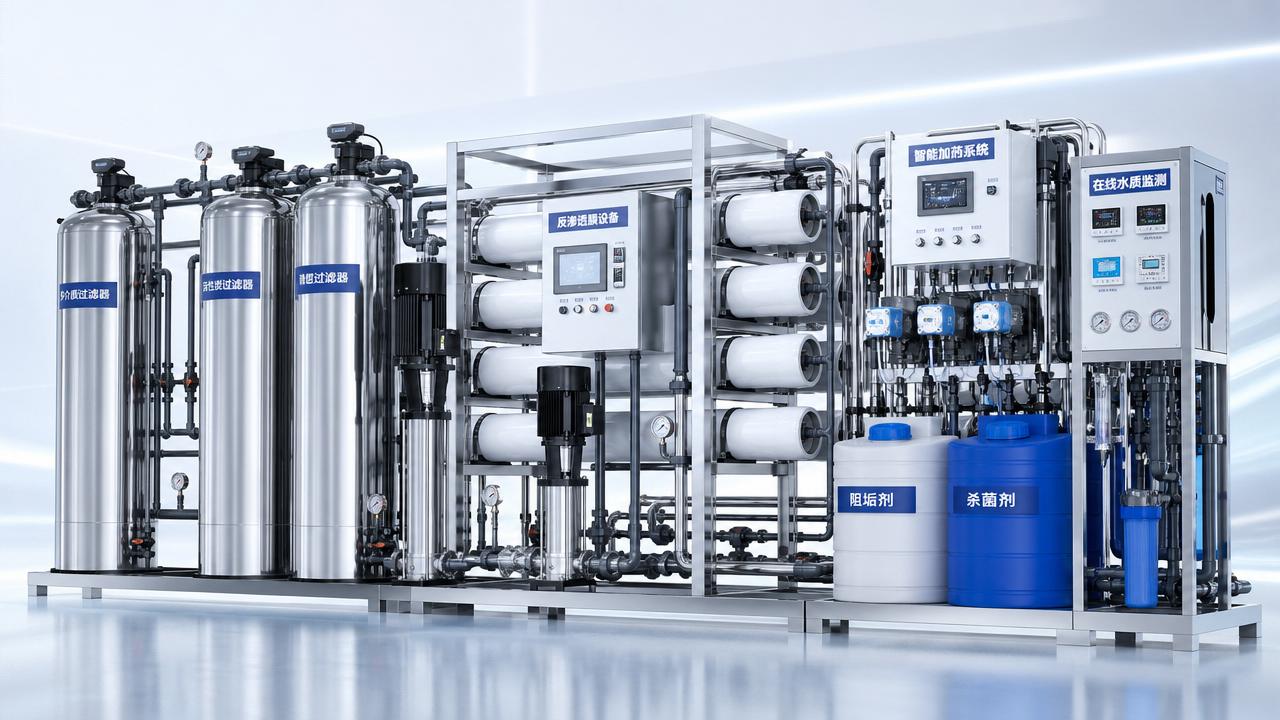
For technical evaluators tracking process upgrades, environmental equipment news for water purification offers practical insight into how new systems, component design, automation, and operating strategies improve treatment efficiency. This update highlights the factors shaping performance, cost control, and compliance, helping industry professionals compare solutions and identify technologies with stronger operational value.
Why environmental equipment news for water purification matters in different operating scenes
Water treatment performance never depends on one device alone. It depends on feed quality, target water standard, utility cost, maintenance access, and operating stability.
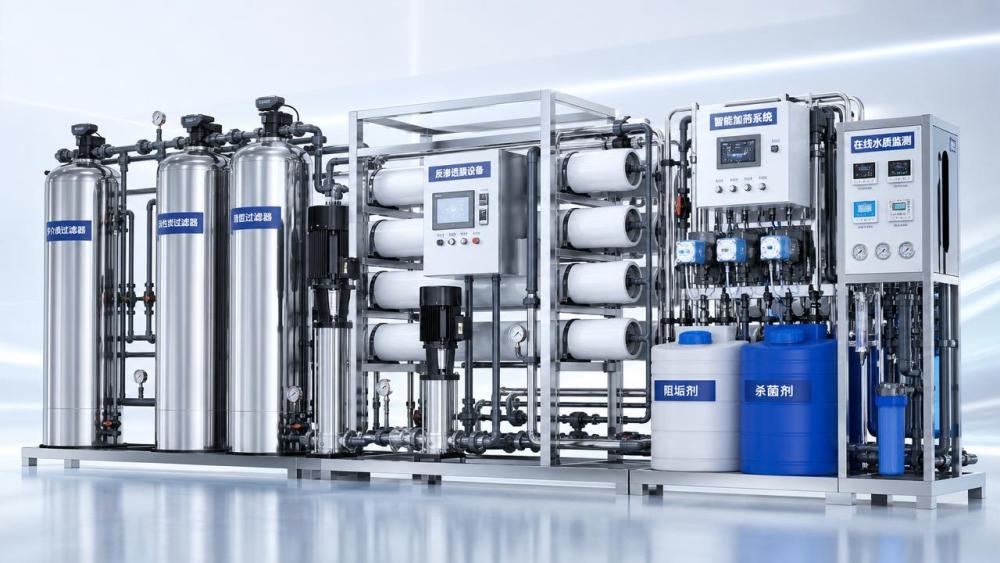
That is why environmental equipment news for water purification should be read through a scene-based lens. A useful upgrade in one plant may create waste, fouling, or overspending in another.
Across manufacturing and industrial utilities, the best efficiency gains usually come from matching technology to load variation, contaminant profile, and control requirements.
Recent environmental equipment news for water purification often focuses on membranes, smart dosing, energy recovery, modular pretreatment, and digital monitoring. Their value changes by application scene.
When source water quality fluctuates, pretreatment becomes the main efficiency driver
Scene 1: Surface water or mixed source intake with unstable solids and organics
In variable source conditions, treatment efficiency improves first through better solids separation. Clarification, media filtration, dissolved air flotation, and oxidation need tighter process sequencing.
Environmental equipment news for water purification shows that upgraded pretreatment reduces membrane fouling, cuts chemical shocks, and stabilizes downstream conductivity and turbidity.
Key judgment points include seasonal turbidity peaks, algae risk, organic loading, and filter backwash frequency. If these swing widely, automation alone will not solve instability.
Scene 2: Groundwater with hardness, iron, manganese, or silica concerns
Here, treatment efficiency often depends on protecting high-value units from scaling and deposit formation. Softening, oxidation, catalytic media, or antiscalant strategy becomes central.
Environmental equipment news for water purification increasingly highlights hybrid pretreatment trains. These combine selective removal methods to reduce overdesign and improve recovery.
The practical question is simple: does the pretreatment remove the exact foulants limiting uptime, or is it treating every parameter without operational return?
When discharge limits tighten, biological and polishing steps decide operating value
Scene 3: Industrial wastewater with higher COD, ammonia, or color
In wastewater upgrading, treatment efficiency is not only removal rate. It also includes sludge output, aeration energy, chemical demand, and resilience during shock loading.
Environmental equipment news for water purification often reports improvements in MBR systems, fine-bubble aeration, biofilm carriers, and real-time nutrient control.
These technologies matter most where discharge standards are strict and footprint is limited. They matter less where influent is highly toxic and equalization remains weak.
Scene 4: Reuse-focused plants targeting process water recovery
Reuse projects evaluate efficiency through recovery ratio, concentrate management, and water quality consistency. Reverse osmosis and advanced oxidation often need stronger pretreatment support.
Environmental equipment news for water purification shows a clear shift toward reuse systems with modular skids, CIP optimization, and sensor-based maintenance planning.
The best recovery numbers are not always the best business result. Excessive recovery can increase scaling risk, cleaning frequency, and concentrate disposal cost.
Typical efficiency levers in water purification scenes
Across reported projects, several factors repeatedly improve treatment performance. Their impact becomes clearer when linked to the operating scene rather than treated as general features.
- Better pretreatment alignment with actual foulants
- Automation that adjusts dosing and flow to load changes
- Membrane selection based on fouling pattern, not headline flux
- Energy-efficient blowers, pumps, and aeration devices
- Online monitoring for conductivity, SDI, TOC, turbidity, and ORP
- Maintenance access that shortens cleaning and replacement time
Environmental equipment news for water purification is most useful when these levers are tied to measurable outcomes, such as lower specific energy, longer membrane life, or fewer compliance deviations.
How scene requirements differ across industrial water purification tasks
This comparison helps interpret environmental equipment news for water purification more accurately. The same technology headline can imply very different value across these scenes.
Practical suggestions for matching upgrades to the right scene
- Start with the bottleneck, not the newest device. Identify whether fouling, energy, instability, or discharge risk causes the highest loss.
- Review influent variability over time. Average values hide the peaks that usually drive cleaning frequency and compliance events.
- Check how upgrades affect the whole train. A faster unit may overload sludge handling, chemical storage, or concentrate disposal.
- Use pilot or phased testing when feed composition changes seasonally. Short trials reduce design bias and support cleaner investment logic.
- Prioritize instrumentation that improves decisions. Useful sensors often deliver more value than adding process complexity without visibility.
Environmental equipment news for water purification often emphasizes performance claims. A stronger evaluation compares those claims against fouling history, labor input, spare parts access, and downtime cost.
Common misjudgments that reduce treatment efficiency
Assuming automation can replace weak process design
Control systems improve consistency, but they cannot fix poor equalization, bad chemical compatibility, or undersized pretreatment. Stable data still requires a stable process base.
Selecting membranes by flux alone
High nominal flux can look attractive, yet lifecycle performance depends on feed quality, cleaning chemistry, pressure profile, and recovery target.
Ignoring maintenance layout and operator access
Environmental equipment news for water purification increasingly notes modular layouts for a reason. Faster service access lowers downtime and helps preserve designed efficiency.
Overlooking disposal and by-product management
A treatment step may improve water quality while increasing sludge, brine, or spent media handling costs. True efficiency must include these downstream burdens.
What to track next in environmental equipment news for water purification
The most relevant developments will likely center on integrated skids, lower-energy separation, intelligent dosing, predictive maintenance, and reuse-oriented process combinations.
Attention should also stay on component-level changes. Pump efficiency, diffuser design, valve reliability, sensor accuracy, and media durability often create measurable gains.
Environmental equipment news for water purification becomes actionable when it answers three questions: which scene benefits, what metric improves, and what trade-off appears elsewhere?
Next-step evaluation approach
Build a short review sheet for each candidate upgrade. Include source water range, target standard, energy use, cleaning interval, chemical cost, serviceability, and compliance impact.
Then compare current pain points against reported advances in environmental equipment news for water purification. This method filters out generic claims and highlights operational fit.
A scene-based review delivers better decisions than trend tracking alone. It connects technology updates with real treatment efficiency, lifecycle cost, and dependable performance.

Industry Briefing
Get the top 5 industry headlines delivered to your inbox every morning.