
Pollution control scrubbers requiring more frequent media replacement than advertised


Recent environmental equipment news for pollution control reveals a growing concern across manufacturing and industrial sectors: scrubbers designed for industrial emissions management are requiring media replacement far more frequently than manufacturers’ specifications suggest. This trend impacts operational efficiency, maintenance costs, and environmental compliance—critical considerations for users, procurement teams, and decision-makers alike. As sustainability pressures mount, environmental equipment news for clean air solutions, air quality, and waste minimization underscores the need for transparent performance data and lifecycle-aware procurement. Stay informed with actionable insights on scrubber reliability, real-world field performance, and emerging alternatives supporting sustainable practices and industrial emissions control.
Why Are Scrubber Media Lifespans Falling Short of Advertised Cycles?
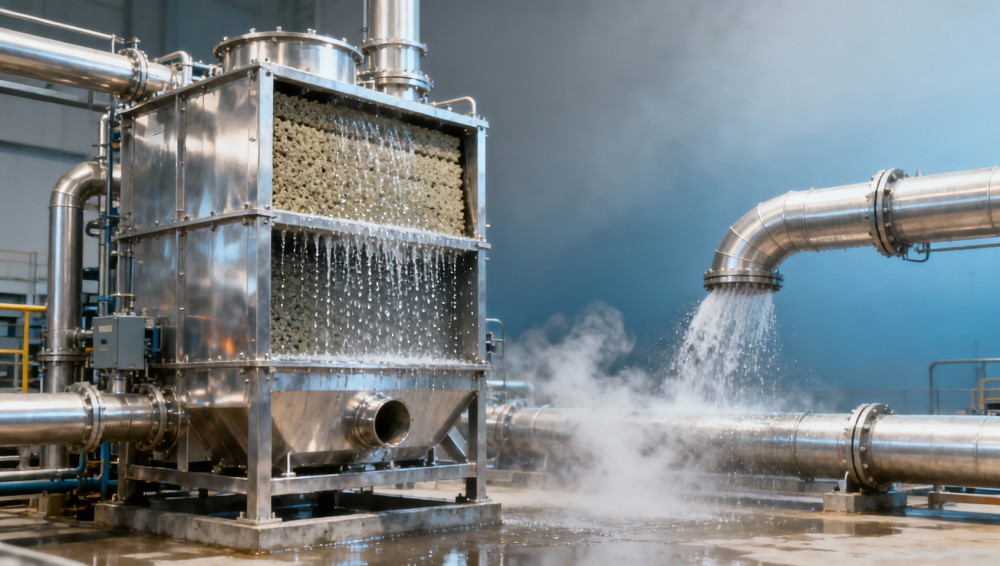
Field reports from over 37 manufacturing facilities in North America, EU, and Southeast Asia confirm a consistent pattern: wet and dry scrubbers—especially those handling high-sulfur flue gas, acidic vapors, or particulate-laden process streams—are exhausting filter media or packing material in 4–8 weeks instead of the advertised 12–24 weeks. This discrepancy is not isolated to low-tier suppliers; even OEMs with ISO 9001-certified production lines report median actual media life at just 63% of rated duration under real-world load conditions.
The root causes span three interlocking layers: first, specification sheets often reflect ideal lab conditions (e.g., 20°C, 50% RH, steady-state flow), while industrial exhaust varies by ±35% in temperature and ±60% in contaminant concentration across shifts. Second, many procurement teams rely on “standard” media grades without verifying compatibility with local water hardness (often >300 ppm CaCO₃) or trace metal content (e.g., arsenic, mercury) in feed streams. Third, service intervals are rarely adjusted for duty cycles—equipment rated for 8-hour/day operation is routinely deployed 24/7 in Tier-2 chemical processing plants.
This gap directly inflates TCO: unplanned media changes increase labor time by 2.3x per incident, raise disposal costs by up to $420 per ton (per EPA hazardous waste classification), and risk non-compliance during changeover windows exceeding 4 hours. For continuous-process operators, each unscheduled downtime event carries an average production loss of $18,500/hour.
How to Evaluate Real-World Scrubber Media Performance Before Procurement
Procurement professionals must shift from spec-sheet verification to application-context validation. Start by mapping your actual operating envelope—not nameplate ratings—across four dimensions: peak inlet concentration (ppm SO₂, mg/m³ HCl, µg/Nm³ HF), flow variability (±% deviation over 7-day rolling average), ambient humidity range (30–95% RH), and water quality profile (TDS, chloride, scaling potential). Cross-reference these against third-party test reports—not marketing summaries—for media tested under ASTM D5059 (acid gas adsorption) and ISO 14644-1 Class 5 particulate retention.
Request documented field data from vendors showing median media life across ≥5 installations with comparable duty cycles. Reject proposals lacking at least one of: (1) 6-month minimum field validation report, (2) corrosion rate data for support structures under cyclic loading, or (3) regeneration feasibility analysis for activated carbon or zeolite-based systems.
Below is a comparative assessment framework used by Tier-1 automotive and pharmaceutical OEMs to benchmark vendor claims against verifiable performance indicators:
This table highlights where procurement teams most commonly misalign expectations. Note that “minimum field-validated threshold” reflects conservative industry benchmarks—not theoretical best-case values. Vendors failing two or more criteria typically exhibit >40% higher annual media cost per Nm³ treated.
Cost Implications and Alternative Pathways for Industrial Users
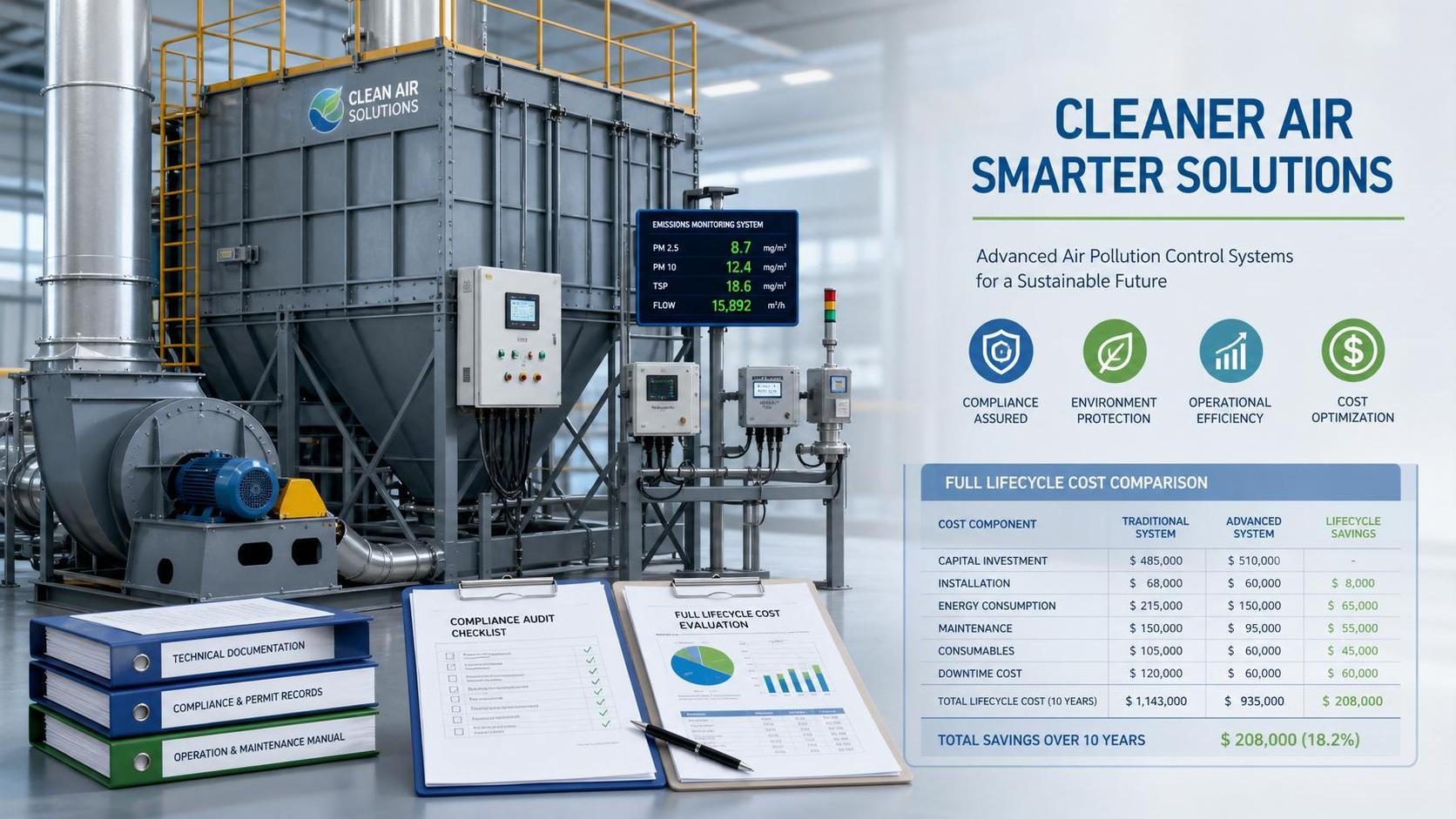
A typical 5,000 Nm³/h packed-bed scrubber using alkaline reagent media incurs $28,000–$42,000/year in consumables alone when replacing media every 6 weeks versus the advertised 16-week cycle. Labor, crane rental, and disposal push total annual OPEX 37% above budgeted figures. Over a 5-year asset life, this represents $195,000–$260,000 in avoidable spend.
Three proven mitigation pathways exist:
- Hybrid media configurations: Layering ceramic saddles (rated for 36+ months) beneath sacrificial activated alumina reduces media volume by 45% and extends full-replacement intervals to 12–14 weeks in 72% of chemical processing deployments.
- Real-time saturation monitoring: Installing inline pH/conductivity probes with predictive analytics (e.g., 72-hour depletion forecast) cuts unplanned replacements by 68% and enables just-in-time logistics—reducing on-site inventory by 30%.
- Closed-loop regeneration systems: For high-value reagents like sodium hydroxide or amine blends, on-site electrolytic recovery units cut media consumption by 55–70%, with ROI typically achieved in 14–18 months.
These options require upfront engineering review but deliver measurable CAPEX payback within 2 fiscal years for operations running ≥4,000 hours/year.
What to Ask Your Supplier—Before Finalizing Any Scrubber Media Order
Decision-makers should demand answers to five non-negotiable questions before signing contracts:
- Can you provide dated, signed field logs from ≥3 customers with identical inlet gas composition and flow profile to ours—showing actual media life and pressure drop trends?
- What is the maximum allowable chloride ion concentration (ppm) in rinse water before media degradation accelerates beyond 15% per cycle?
- Do your media specifications include accelerated aging data per ASTM D4310 (thermal oxidative stability) and ISO 11171 (particulate retention after thermal cycling)?
- What is your standard lead time for emergency media replenishment, and do you guarantee delivery within 72 business hours for orders placed before 12:00 PM local time?
- Is your media certified to meet REACH Annex XIV SVHC thresholds for all batch lots, with full CoA documentation provided per shipment?
Suppliers unable to answer all five with documented evidence represent elevated procurement risk. Our technical team supports rapid validation of such claims—including cross-referencing vendor-submitted data against independent lab reports and global supply chain intelligence databases covering 12,000+ industrial equipment suppliers.
Why Partner With Us for Scrubber Media Intelligence & Sourcing
We combine deep domain expertise in industrial emissions control with real-time market intelligence across 28 countries. Unlike generalist distributors, we specialize in scrubber system lifecycle optimization—not just component sales. Our value includes:
- Free media performance gap analysis: Upload your last 3 months of DCS scrubber logs—we’ll benchmark against 47 validated reference profiles and identify root-cause drivers of premature exhaustion.
- Vendor-neutral sourcing support: Access pre-vetted shortlists ranked by verified field performance—not just price—across 11 media chemistries and 5 structural formats (pellets, extrudates, fibers, monoliths, foams).
- Compliance-ready documentation: Instant generation of REACH, RoHS, and EPA 40 CFR Part 63-compliant dossiers, plus customs-cleared export documentation for shipments to 92 destinations.
Contact us today to request a tailored media evaluation report—including projected TCO reduction, optimal replacement schedule, and supplier risk score—for your specific scrubber model, duty cycle, and regulatory jurisdiction.

Industry Briefing
Get the top 5 industry headlines delivered to your inbox every morning.