
Industrial Environmental News for Construction Industry: New Compliance Pressure

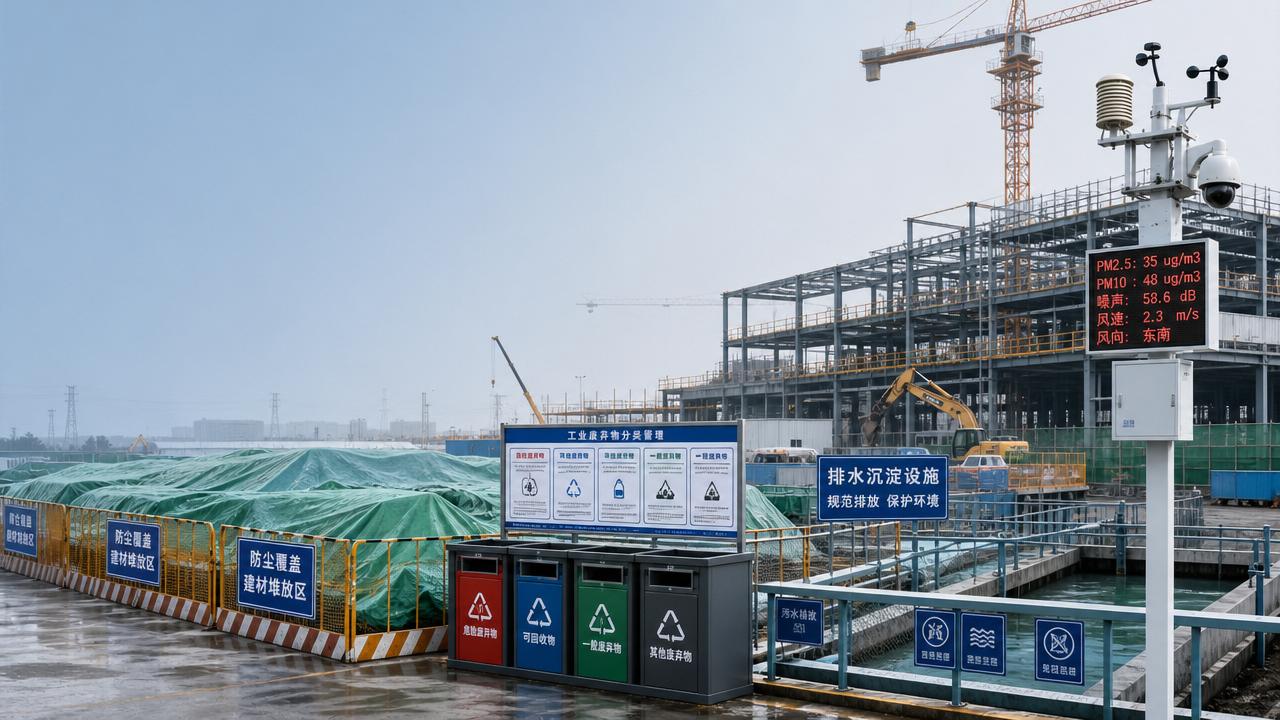
Industrial environmental news for construction industry is becoming essential reading for quality control and safety managers facing tighter compliance demands. From emissions rules and waste handling to supplier accountability and site risk controls, new policies are reshaping daily operations. Staying ahead of these changes helps teams reduce violations, improve audit readiness, and protect both project timelines and corporate reputation.
Why a checklist approach is the fastest way to respond
For quality control teams and safety managers, industrial environmental news for construction industry is not just a stream of headlines. It is an early warning system. Regulations often change faster than site procedures, procurement standards, and subcontractor habits. If teams only react after an inspection notice or a customer audit, the cost is usually higher: rework, delayed handover, supplier disputes, permit issues, and reputational damage.
A checklist-based review helps turn broad environmental news into practical action. Instead of asking whether a new rule matters in theory, managers can ask more useful questions: Which activities on site are exposed? Which records must be updated first? Which suppliers create hidden environmental risk? Which process controls are already weak? This structured method is especially valuable in a mixed industrial ecosystem where construction depends on machinery, electrical equipment, processed materials, logistics partners, and outsourced waste services.
First-screen checklist: what to confirm before reacting to any new policy update
When reviewing industrial environmental news for construction industry, begin with a rapid screening process. The goal is to judge relevance, urgency, and operational impact within the same day.
- Identify the trigger type. Check whether the update concerns air emissions, dust control, noise limits, wastewater discharge, hazardous substance use, solid waste transfer, carbon reporting, energy efficiency, or supplier traceability.
- Confirm geographic scope. Some rules apply nationally, while others are local or project-zone specific. Site-level permits may be stricter than general legal baselines.
- Review enforcement timing. Distinguish between immediate enforcement, phased transition, draft consultation, and future mandatory deadlines.
- Map the affected activities. Focus on excavation, concrete work, coating, welding, fuel storage, generator use, equipment washing, transport loading, temporary power systems, and waste staging areas.
- Check documentation impact. Determine whether the news requires updates to SOPs, inspection forms, training records, supplier declarations, emergency plans, or permit files.
- Assess exposure level. Ask whether the issue creates legal risk, customer audit risk, public complaint risk, or supply chain disruption risk.
This first-screen process prevents overreaction to low-impact news and underreaction to high-risk developments. It also makes industrial environmental news for construction industry easier to translate into site controls, procurement decisions, and management reporting.
Core compliance checklist quality and safety managers should prioritize
The most useful way to read industrial environmental news for construction industry is to convert it into a live compliance checklist. The following areas deserve priority because they affect inspections, audit outcomes, and project continuity most directly.
1. Air emissions and dust suppression
Check whether new rules tighten standards for PM, VOCs, diesel exhaust, or open-air particulate releases. On construction and equipment-intensive sites, common weak points include unsealed material piles, dry cutting without capture, poorly maintained generators, and transport vehicles without covering. Quality control teams should verify monitoring frequency, calibration records for detection devices, and corrective action closure speed.
2. Waste classification and transfer control
Environmental news often signals tighter oversight of mixed waste, hazardous containers, sludge, used oils, paint residues, and electrical component scrap. The key check is not only whether waste is removed, but whether it is identified, stored, labeled, logged, and transferred by qualified parties. A missing transfer record or wrong container can become a larger problem than the waste volume itself.
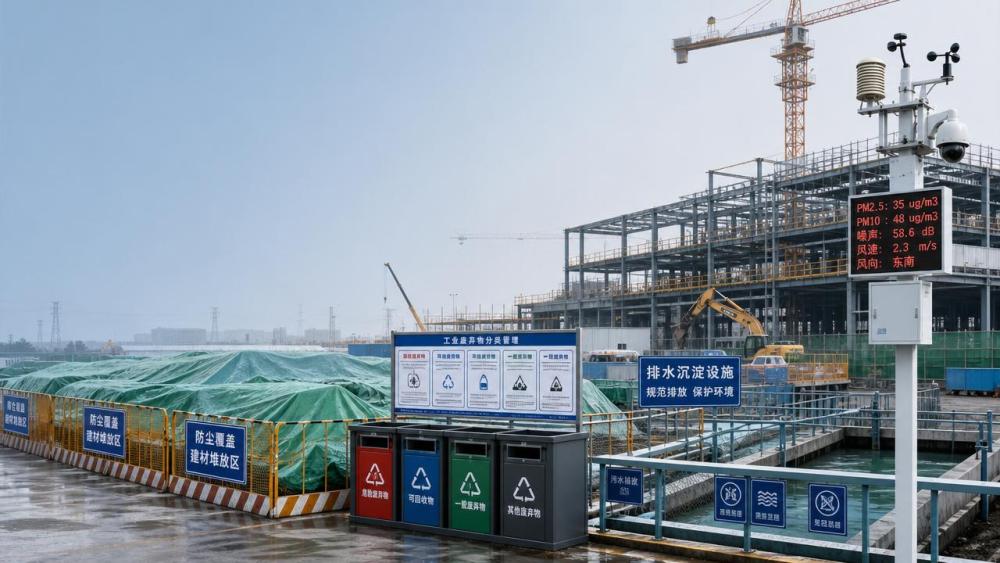
3. Wastewater and runoff management
Construction sites often underestimate runoff risk, especially during cleaning, rain events, concrete operations, and surface treatment processes. Industrial environmental news for construction industry increasingly points to stricter control of discharge points, sediment traps, pH management, and contamination of surrounding drains. Safety managers should inspect temporary drainage paths, treatment units, and incident reporting routines.
4. Chemical and hazardous material handling
Many compliance pressures begin with small storage failures: damaged drums, poor segregation, unclear labels, outdated SDS files, or missing secondary containment. If new environmental policy affects coatings, cleaners, solvents, batteries, adhesives, or process chemicals, managers should review storage maps, spill response kits, personnel training, and supplier substance declarations at once.
5. Energy use, fuel systems, and carbon-related reporting
A growing part of industrial environmental news for construction industry is tied to energy efficiency and carbon accountability. Even where mandatory carbon reporting is not yet universal, clients and investors may already require fuel-use logs, equipment efficiency data, and evidence of reduction measures. Track generator runtime, idle control, temporary power usage, and transport energy intensity before external reporting starts.
How to judge whether a news item is high priority or routine monitoring
Not every environmental update deserves a full process redesign. Use a simple decision standard to rank urgency.
Scenario-based checks for different operational roles
The same industrial environmental news for construction industry can create different action points depending on who owns the process. That is why role-based checks improve response quality.
For quality control personnel
- Verify whether environmental specifications now affect incoming material acceptance, especially for coatings, insulation, cables, lubricants, and prefabricated components.
- Check if supplier test reports, compliance statements, or restricted-substance disclosures must be updated.
- Review whether nonconformance procedures include environmental defects, not only dimensional or performance defects.
- Ensure traceability links material batches to environmental documentation for audit readiness.
For safety and EHS managers
- Confirm whether site risk assessments reflect new environmental triggers such as spill exposure, airborne particulates, or chemical substitution requirements.
- Review training content for contractors, night shifts, and temporary labor, since these groups often miss environmental updates first.
- Inspect incident escalation rules so environmental events are reported with the same rigor as safety events.
- Check emergency resources for containment, isolation, evacuation support, and authority notification.
For procurement and supplier management teams
Supplier-related environmental risk is rising quickly. Managers should examine whether vendors can provide updated permits, waste disposal qualifications, source data for recycled content, energy consumption information, and evidence of compliance with restricted chemical or emissions rules. Construction projects increasingly inherit supplier risk, especially when off-site fabrication and processing are involved.
Common gaps that teams often overlook
Even organizations that actively follow industrial environmental news for construction industry can miss practical weak points. These are the gaps that most often turn minor issues into findings.
- Relying on old permit assumptions while local enforcement practice has already changed.
- Treating waste contractors as low-risk vendors without checking licenses, transfer chain integrity, and disposal destinations.
- Keeping environmental records in separate systems that cannot be retrieved quickly during audits.
- Updating head office procedures but failing to retrain subcontractors and site supervisors.
- Ignoring temporary works, maintenance yards, storage corners, and equipment refueling areas where violations often occur.
- Focusing only on fines while overlooking schedule disruption, permit suspension, and customer confidence loss.
Execution plan: how to turn environmental news into site action within 30 days
A practical response to industrial environmental news for construction industry should be staged. The aim is to move from awareness to evidence-based control without creating confusion.
Days 1 to 3: rapid review
Assign one owner to summarize the update, list affected processes, and rank legal or audit urgency. Do not circulate a long policy text without interpretation. Teams need a short action brief, not raw information only.
Days 4 to 10: gap check
Inspect permits, site controls, material handling, contractor behavior, and record quality. Photograph physical issues, identify missing evidence, and note whether the problem is procedural, technical, or supplier-driven.
Days 11 to 20: corrective alignment
Update SOPs, retrain relevant teams, revise supplier requirements, and confirm budget needs for equipment, containment, monitoring, or waste handling changes. If the update affects machinery use or electrical equipment practices, include maintenance and engineering teams early.
Days 21 to 30: verification
Run a targeted internal audit. Confirm that actions are visible on the ground, not only closed on paper. This step is critical because many organizations react to industrial environmental news for construction industry at the document level but fail at execution level.
FAQ: fast answers to recurring compliance questions
How often should teams review industrial environmental news for construction industry?
At minimum, weekly for general monitoring and immediately when major policy, enforcement, or customer-driven changes are announced. High-risk projects may require a standing monthly review meeting with procurement, quality, and EHS representatives.
What evidence is most useful during inspections?
Current permits, monitoring logs, waste transfer records, training attendance, SDS files, supplier compliance documents, incident reports, and corrective action closure records. Inspectors usually value consistency between documents and field conditions more than polished paperwork alone.
What if a supplier cannot meet new environmental requirements quickly?
Classify the risk first. If the issue affects legal compliance, regulated substances, emissions exposure, or customer commitments, start alternate sourcing or controlled phase-out planning. Do not wait for a project-critical delivery point to solve an environmental qualification problem.
What to prepare before seeking external support or internal approval
If your company needs to deepen its response to industrial environmental news for construction industry, prepare a short decision package. Include the affected regulation or market signal, current control status, top three gaps, supplier exposure, estimated timeline pressure, probable cost items, and the operational consequence of doing nothing. This will make internal approval faster and external advisory support more precise.
For teams evaluating solutions, the most useful questions are practical ones: Which permits or records need revision first? Which site controls require hardware investment? Which suppliers must be requalified? What implementation cycle is realistic? How should responsibilities be divided across quality, safety, procurement, and project management? Clear answers to these questions turn environmental news into manageable action rather than ongoing uncertainty.
 Choosing Industrial Dust Collectors: Airflow, Dust Type, and Filter MediaTime : Oct 26, 2026
- Industrial Wastewater Treatment Equipment Suppliers: Verifying Performance GuaranteesTime : Oct 23, 2026
 Planning retrofit shutdowns when installing modular carbon capture unitsTime : Oct 16, 2026


Industry Briefing
Get the top 5 industry headlines delivered to your inbox every morning.