
Construction Emissions Rules That Matter Most This Year


This year’s construction emissions rules are reshaping how sites manage compliance, equipment use, and supplier selection. For quality control and safety managers, staying ahead means understanding not only legal requirements but also their impact on operations and risk. In this industrial environmental news for construction industry update, we highlight the regulations, enforcement trends, and practical priorities that matter most right now.
For most quality control and safety teams, the key question is not whether emissions rules are tightening, but which requirements will affect equipment availability, project schedules, inspections, and supplier approvals first. The short answer is clear: rules targeting diesel exhaust, engine standards, dust and particulate control, idling, fuel choices, and emissions reporting are having the fastest operational impact this year.
That matters because construction emissions compliance is no longer handled only at the corporate sustainability level. It now reaches the jobsite through bid requirements, municipal permitting, low-emission zone restrictions, public project specifications, and more active enforcement. In practice, quality and safety managers are becoming the people who must verify that machines, subcontractors, and site procedures match regulatory expectations before problems become shutdowns, citations, or reputational damage.
Which construction emissions rules deserve the most attention right now?
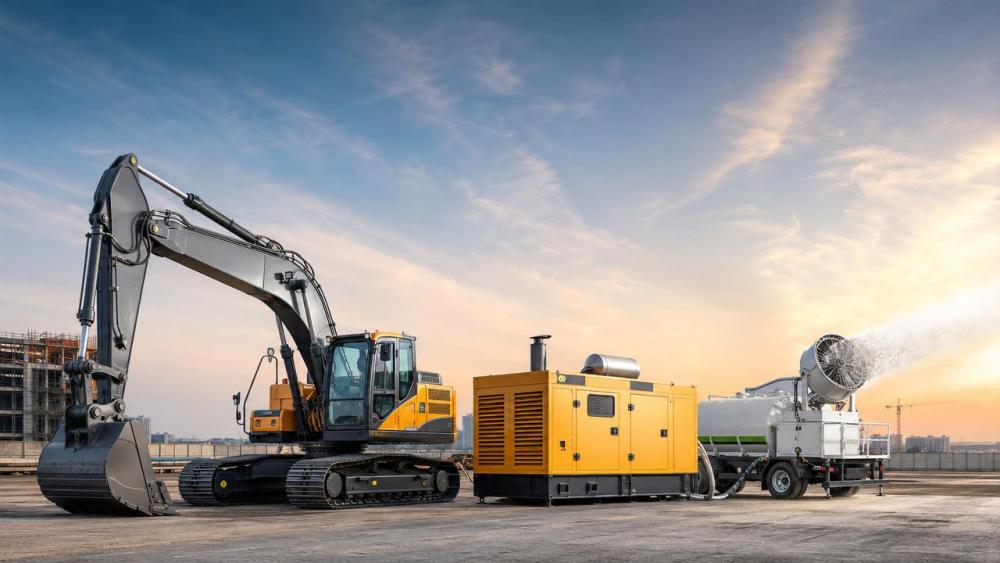
The most important rules this year are the ones that directly change day-to-day site operations. These include stricter non-road diesel engine requirements, local clean air mandates for construction equipment, anti-idling enforcement, tighter dust suppression expectations, and procurement rules that favor lower-emission or zero-emission machinery on certain public and urban projects.
In many markets, the biggest shift is not the publication of completely new legislation, but the stronger enforcement of existing clean air standards. Cities, ports, and regional authorities are checking whether older excavators, generators, loaders, compressors, and trucks still meet approved emissions tiers. Equipment that was once tolerated may now trigger documentation requests, restricted access, or replacement pressure.
For industrial environmental news for construction industry readers, this means following not only national policy updates but also local implementation. A contractor may technically own compliant equipment under one framework, yet still face issues if a city project, airport authority, university campus, or logistics zone imposes stricter fleet rules than the national baseline.
Another area drawing attention is particulate matter control. Regulators are increasingly focused on visible dust, fine particle emissions, and the combined effect of machine exhaust plus earthmoving activity. On paper, this can look like a simple environmental issue. On site, it quickly becomes a quality, health, and safety problem tied to worker exposure, neighborhood complaints, and stop-work risk.
Why are quality control and safety managers now central to emissions compliance?
Because emissions compliance now overlaps with inspection readiness, worker protection, process control, and supplier verification. Quality control personnel often manage records, check equipment condition, and confirm whether incoming materials and subcontracted activities meet project requirements. Safety managers monitor exposure risks, operator behavior, emergency response, and site discipline. Emissions rules sit directly at the intersection of those responsibilities.
For example, an anti-idling rule is not just an environmental clause. It affects fuel management, operator training, equipment staging, noise, heat, and local air quality around crews. A low-emission equipment requirement is not just a procurement issue. It influences machine performance, maintenance schedules, spare-parts planning, and whether a subcontractor can legally enter the site.
This is why the most effective companies are no longer treating emissions as a separate compliance box. They are integrating it into prequalification, work method statements, equipment inspections, permit reviews, and supplier onboarding. That approach reduces the chance that a noncompliant machine arrives on site after mobilization, when correction becomes more expensive and disruptive.
What types of equipment are under the most pressure?
Non-road diesel equipment remains the main focus. Excavators, bulldozers, wheel loaders, skid steers, telehandlers, mobile compressors, generators, pumps, and cranes are especially important because they are common on large and medium-sized projects and often operate for long periods in dense work zones.
Portable power units are also receiving more scrutiny. Temporary generators and compressors may be overlooked during early planning, yet they can become a weak point during inspection because they are easy to identify, easy to document, and often older than core production machines. In urban environments, these assets can quickly attract complaints related to exhaust, noise, and odors.
Heavy-duty on-road vehicles linked to construction activity are part of the picture as well. Dump trucks, concrete mixers, and material delivery fleets may fall under separate transportation rules, but from a site compliance perspective, they still affect your emissions profile. Quality and safety teams should therefore review vehicle entry policies and not assume that only owned off-road machines matter.
The practical takeaway is simple: if a machine burns diesel, runs for extended hours, or operates in a sensitive area, it deserves review this year. Older assets with uncertain engine documentation, modified exhaust systems, or inconsistent maintenance histories carry the highest risk.
What enforcement trends are creating the biggest operational risks?
The first trend is documentation-based enforcement. Inspectors and project owners increasingly ask for engine tier information, maintenance logs, emissions-related retrofit records, and proof that specific equipment meets contract or local requirements. A company may have relatively clean equipment but still fail a check if records are incomplete or scattered across departments.
The second trend is complaint-driven enforcement. Dust, smoke, excessive idling, and visible exhaust often trigger neighbor reports or client escalation before an official inspection happens. Once complaints start, scrutiny usually expands beyond the original issue and may include site practices, housekeeping, vehicle routing, and worker exposure controls.
The third trend is procurement-linked enforcement. Public clients and large industrial owners are embedding emissions standards into tender documents and contractor scorecards. In that environment, enforcement does not always begin with a regulator. It can begin with a buyer who rejects a supplier, withholds access approval, or downgrades future bid eligibility based on environmental performance.
Finally, digital reporting is making comparisons easier. Where project owners require equipment lists, fuel consumption data, or sustainability updates, underperforming sites become more visible. This does not mean every contractor needs a complex carbon accounting system immediately, but it does mean rough assumptions and undocumented practices are becoming harder to defend.
How should teams evaluate compliance risk across active projects?
Start with a simple risk matrix built around three variables: project location, equipment profile, and client requirements. Location matters because urban districts, ports, campuses, hospitals, schools, and government-funded projects tend to apply stricter expectations. Equipment profile matters because older and heavily used diesel assets create more exposure. Client requirements matter because many emissions obligations now arise from contract language rather than general law alone.
Next, map all major machines and temporary power assets by engine standard, age, fuel type, and operating hours. If engine tier status cannot be verified quickly, classify the asset as high review priority. This exercise often reveals that the real problem is not only noncompliance, but also poor visibility over rented units and subcontractor-owned equipment.
Then review site routines that influence emissions performance. These include warm-up practices, idle time, refueling controls, maintenance intervals, dust suppression frequency, haul-road conditions, traffic flow, and staging layout. Small operational weaknesses in these areas can create repeated emissions issues even when the fleet itself is technically acceptable.
Finally, look at response capability. If an inspector or project owner asks tomorrow for proof of compliance, can the site produce it within hours? The answer should include equipment records, subcontractor declarations, maintenance evidence, and a named responsible person. Fast response reduces escalation risk.
What supplier and subcontractor questions should be asked before mobilization?
Supplier selection is becoming one of the most important emissions-control decisions. Quality control and safety managers should ask equipment rental partners and subcontractors for verified engine standard information, machine serial details, maintenance records, and any retrofit documentation before arrival on site.
It is also wise to ask whether they can provide lower-emission alternatives if project conditions change. A supplier that cannot substitute a cleaner generator, electric compressor, or newer excavator may become a bottleneck if the client tightens requirements mid-project or if a local authority increases scrutiny.
Another critical question is who is responsible for compliance failures tied to subcontracted equipment. Contracts should define obligations for documentation, maintenance condition, anti-idling practices, and replacement timing if a machine is rejected. Without this clarity, disputes can delay work while the site remains exposed.
For readers following industrial environmental news for construction industry developments, this is a major pattern: environmental compliance is moving upstream into sourcing decisions. The safest strategy is to treat emissions data like any other quality-critical supplier qualification item, not as an afterthought handled at the gate.
What practical controls can reduce emissions risk without disrupting productivity?
One high-value measure is a site-specific anti-idling program. This should define where idling is prohibited, how exceptions are approved, and how supervisors verify compliance. Even modest reductions in unnecessary idling can lower fuel use, exhaust exposure, and complaint risk without affecting output.
Another effective control is maintenance discipline. Dirty filters, poor injector performance, fluid leaks, and delayed servicing can increase emissions and produce visible smoke. A machine that is mechanically available but poorly maintained is still a compliance risk. Linking emissions checks to routine equipment inspection forms is a practical step.
Dust control deserves equal attention. Water application, road surface management, wheel-wash measures, material covering, and real-time adjustment for wind conditions are basic but still highly relevant. Dust incidents are among the most visible emissions-related failures and often create immediate friction with nearby communities.
Traffic and layout planning can help as well. Congested movement patterns increase idle time and fuel burn. Better routing for delivery trucks, defined staging areas, and coordinated loading schedules reduce both exhaust concentration and site confusion. This is an example of how environmental control can support, rather than oppose, operational efficiency.
How are cleaner equipment trends affecting planning and budgets?
Cleaner equipment is no longer only a long-term sustainability topic. It is becoming a near-term planning issue because access to compliant machines can influence schedule certainty. If a project requires newer diesel tiers, hybrid units, battery-electric equipment, or shore power connections for temporary operations, availability and lead times matter.
For many firms, the challenge is not an immediate full-fleet replacement. It is selective upgrading in the categories most exposed to regulation and client review. Temporary power, compact urban equipment, and high-visibility machines often provide the quickest compliance benefit when upgraded first.
Budgeting should therefore compare more than purchase price or rental rate. Teams should include the cost of delays, rejected equipment, penalty exposure, lost bid competitiveness, fuel use, maintenance burden, and administrative time spent resolving compliance gaps. In many cases, a cleaner asset is financially justified not only by emissions performance but by reduced operational friction.
That said, managers should remain realistic. Not every site can transition rapidly to zero-emission equipment, and not every region has the charging or power infrastructure to support it. The best decisions come from matching project requirements, site conditions, and equipment duty cycles rather than adopting broad claims without testing.
What should a strong emissions compliance checklist include this year?
A practical checklist should begin with equipment verification: engine tier, fuel type, machine ID, maintenance status, visible exhaust condition, and approved use for the specific project. This should cover owned, rented, and subcontracted equipment equally.
It should then include site controls such as anti-idling rules, dust suppression procedures, fueling practices, operator briefing records, complaint handling steps, and escalation contacts. Many emissions failures happen because a site lacks a clear routine, not because it lacks technical knowledge.
Documentation is the third pillar. Maintain one accessible file or dashboard containing machine records, supplier declarations, inspection logs, maintenance evidence, and project-specific environmental requirements. If information is fragmented, even a compliant site can appear unprepared.
Finally, include review triggers. Reassess emissions risk when a new subcontractor enters, when temporary power demand changes, when weather raises dust exposure, when the project moves into a more sensitive zone, or when a client updates reporting requirements. Compliance this year is dynamic, not static.
What is the clearest takeaway for construction quality and safety leaders?
The emissions rules that matter most this year are the ones that affect equipment approval, urban access, public project eligibility, dust control, and documentation readiness. For quality control and safety managers, the priority is to translate broad environmental policy into site-level checks that prevent disruption.
The strongest teams are doing three things well: they know which assets create the highest exposure, they verify suppliers before mobilization, and they keep records ready for fast review. That combination supports compliance, protects workers, and improves client confidence at the same time.
In today’s industrial environmental news for construction industry landscape, the companies that respond early will not only reduce regulatory risk. They will also gain an advantage in bidding, project reliability, and stakeholder trust. Construction emissions compliance is no longer a side topic. This year, it is part of core operational control.
 Choosing Industrial Dust Collectors: Airflow, Dust Type, and Filter MediaTime : Oct 26, 2026
- Industrial Wastewater Treatment Equipment Suppliers: Verifying Performance GuaranteesTime : Oct 23, 2026
 Planning retrofit shutdowns when installing modular carbon capture unitsTime : Oct 16, 2026


Industry Briefing
Get the top 5 industry headlines delivered to your inbox every morning.